
Which versions and settings did we actually test?
This compares Nano Banana 2.1 with GPT Image 2.5 Sunburst through the site’s KIE request path. The stable Nano Banana page/key still contains “2,” but its current API mapping is 2.1. Flare, Nano Banana Pro and older GPT Image versions are excluded.
| Setting | Nano Banana 2.1 | GPT Image 2.5 Sunburst |
|---|---|---|
| Existing model information page | /models/nano-banana-2 | /models/gpt-image-2 (GPT Image 2 archive) |
| Stable website selection key | nano-banana-2 | gpt-image-2-5-sunburst |
| Actual supplier API ID | nano-banana-2-1 | gpt-image-2-5-sunburst-image-to-image |
| Reference field | image_input | input_urls |
| Requested size / ratio | 2K / 3:4 | 2K / 3:4 |
| Other submitted parameters | output_format: png | background: opaque |
| Website 2K quote | 8 website credits | 5 website credits |
| Quality / seed | No separate quality or seed sent | No separate quality or seed sent |
The existing GPT model information page contains archived GPT Image 2 examples and a current Sunburst generation entry. Those archived images are not 2.5 samples. The new results in this article are Sunburst outputs; select Sunburst in Studio to generate with the tested version.
“High” is the website’s 2K label for GPT Image, not evidence that this supplier request exposes OpenAI’s native quality: high option. The requested 2K category does not imply identical pixel dimensions, compression, compute or native quality between providers. Every output’s actual dimensions are in the record.
One original adult, one fixed identity reference
We reused an original fictional adult from the site’s Brick Street asset archive: dark curly bob with a warm streak, gold hoops, burgundy bomber, black tee, charcoal jeans and black boots. Every repeat receives this same original. No result becomes a later input. Only the fourth task adds garment and product references.
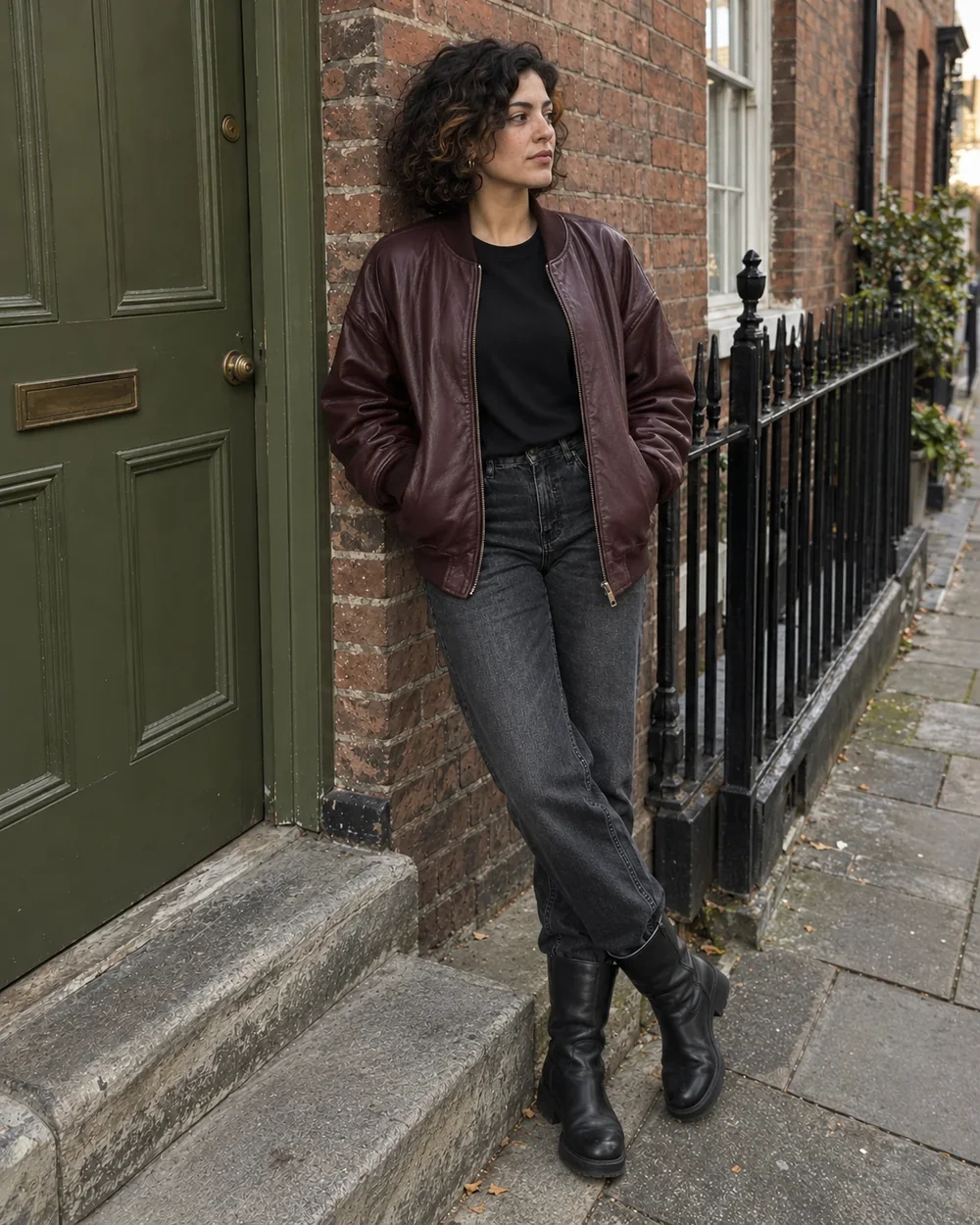
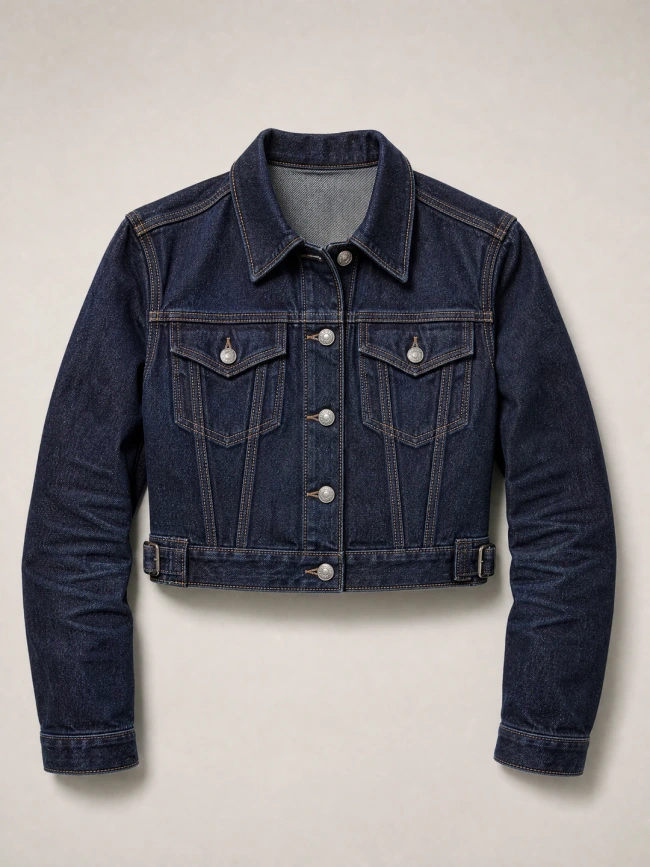
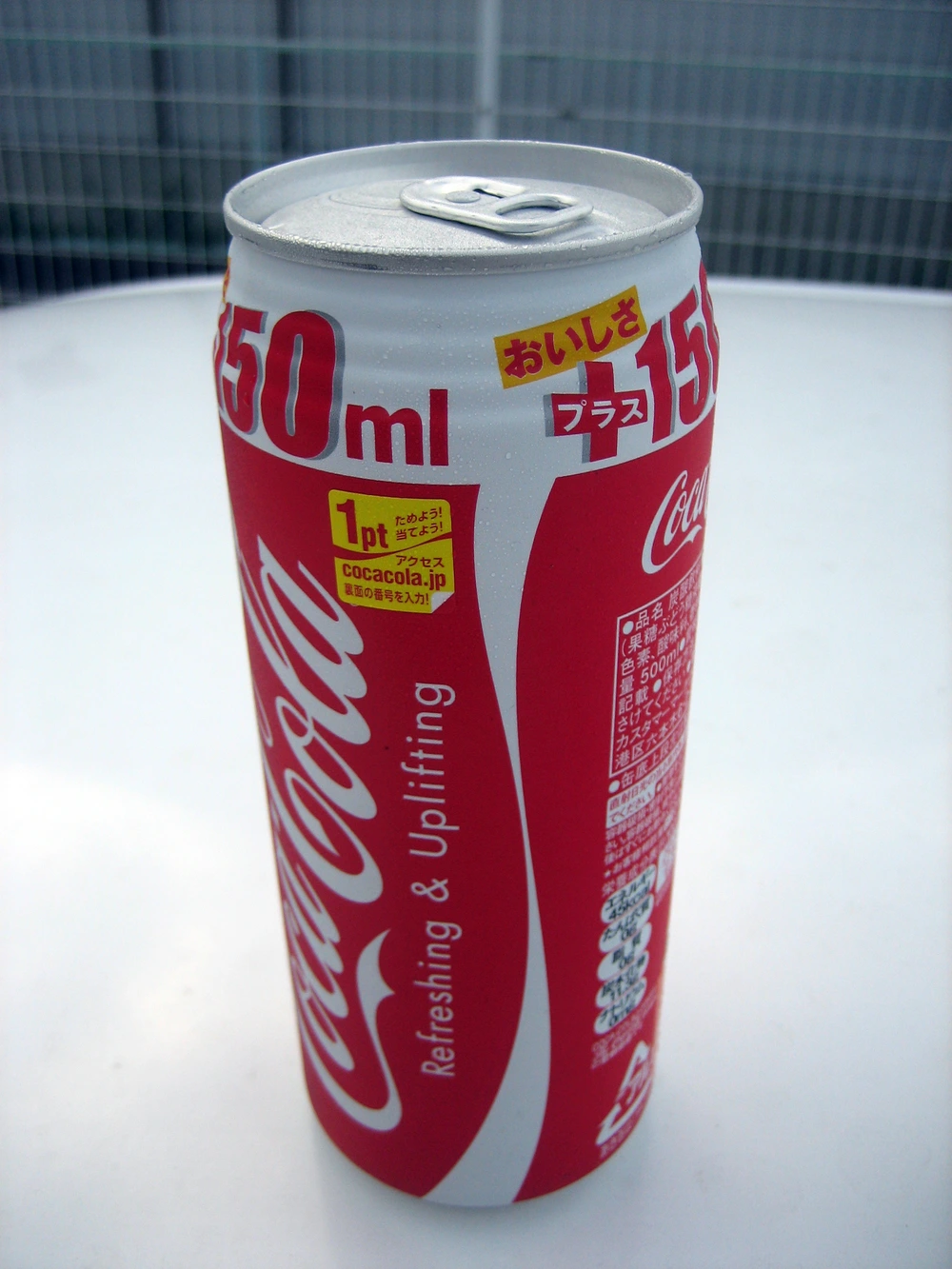
The identity reference shows a three-quarter face and a clothed full body. It cannot establish unseen facial geometry or exact anatomy under clothes. The source was made with the conversation’s image tool; its precise model/version was not exposed in the archive, so source-model preference is not controlled.
What counts as publishable?
A usable image must satisfy the assigned brief without an obvious visible repair. We fixed the rubric before inspecting generated outputs, then used 0 = fail, 1 = review and 2 = pass for each of the six categories below.
| Criterion | What we inspect |
|---|---|
| Face Identity Consistency | Facial structure, complexion, brows, hairline, curl shape and age cues against the original; a changed angle or expression alone is not a failure |
| Body Proportion Consistency | Only the visible build, head/body scale and neck/limb proportions; hidden features are not certified |
| Outfit & Product Detail Preservation | Original clothes for tasks 1, 2, 3 and 5; specified new denim and actual can reference for task 4 |
| Prompt Adherence | Requested angle, crop, visible hands, action, scene and lighting |
| Photographic Realism | Skin, eyes, anatomy, contact, light and plausible camera behavior |
| Commercial Usability | Technically ready for this editorial/social concept without a visible repair; not legal clearance, proof of a real product test or an endorsement |
A publishable result for the assigned brief requires face identity, prompt adherence, photographic realism and commercial usability all equal 2, no criterion equal 0, and outfit/product detail equal 2. Body proportion must be at least 1 and only evaluates visible build, not hidden anatomy. Commercial usability means technically ready for this editorial/social concept without a visible repair; it is not rights clearance or evidence of sponsorship. A packaging text mismatch fails task 4 even if the portrait is attractive. An output can look attractive yet fail because the requested hands are hidden or the can’s text is rewritten. The wardrobe task is judged against the requested new jacket, not penalized for changing the old bomber.
Five real-world tests: switch the task and inspect every repeat
Compare the same task and repeat on both sides before forming a preference. Repeat 1 is the default, not a best-of selection. Use the detail crops for faces, garment construction, hands and label checks; no crop was independently sharpened or retouched.
Front-Facing Portrait · Repeat 1. No best-image selection; repeat 1 is the default.
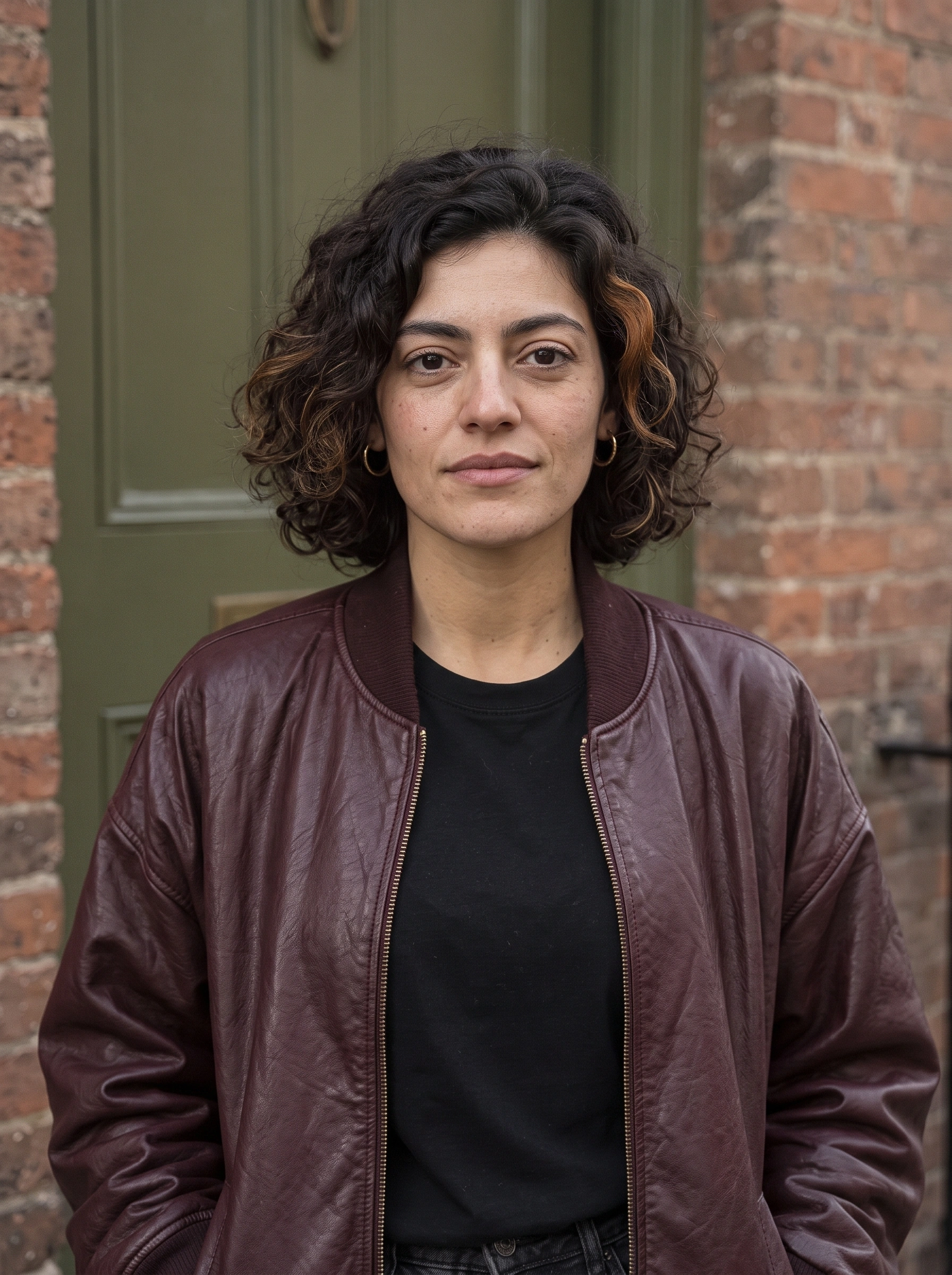
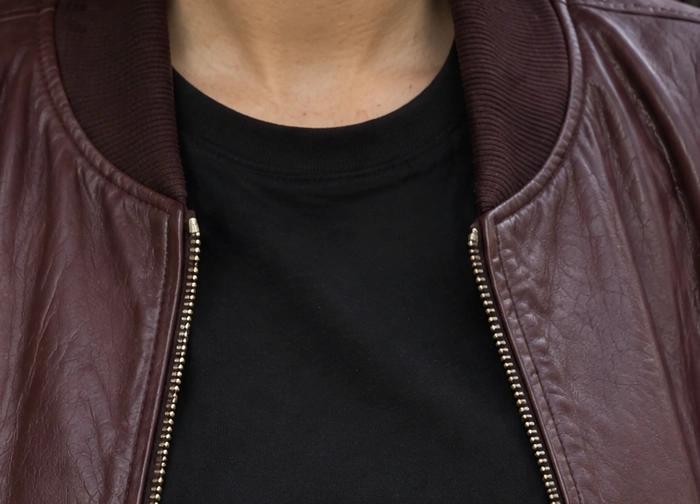
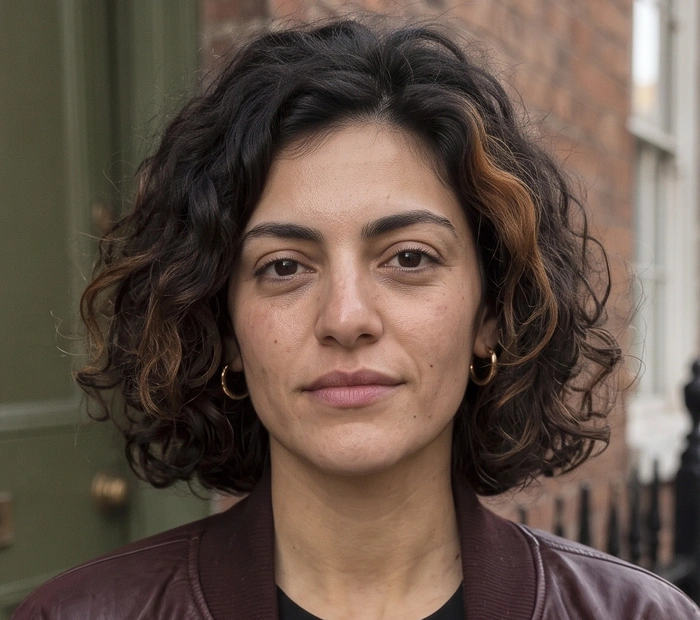
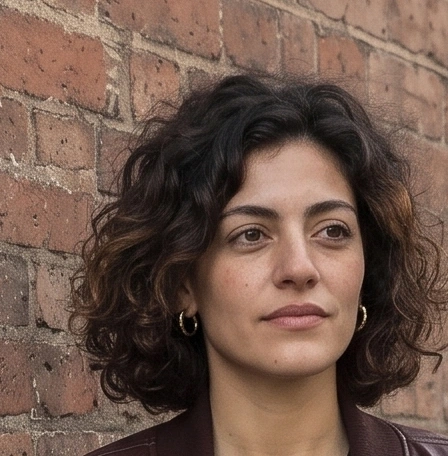
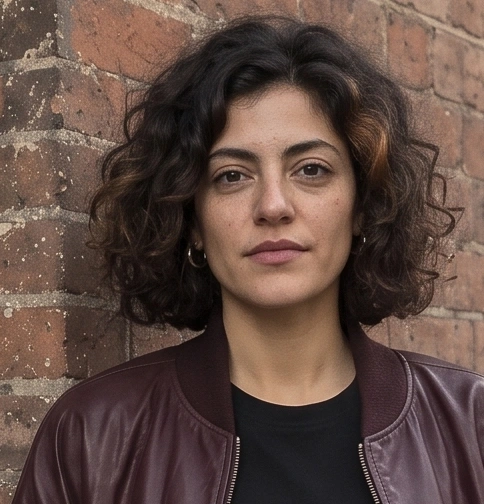
A square frontal view with both eyes visible follows the chest-up portrait brief; the same curls, warm streak and gold hoops remain readable. Fine skin texture and under-eye variation are visible without plastic smoothing. Only visible shoulder/neck proportions are evaluated.
Zoom into face & task details
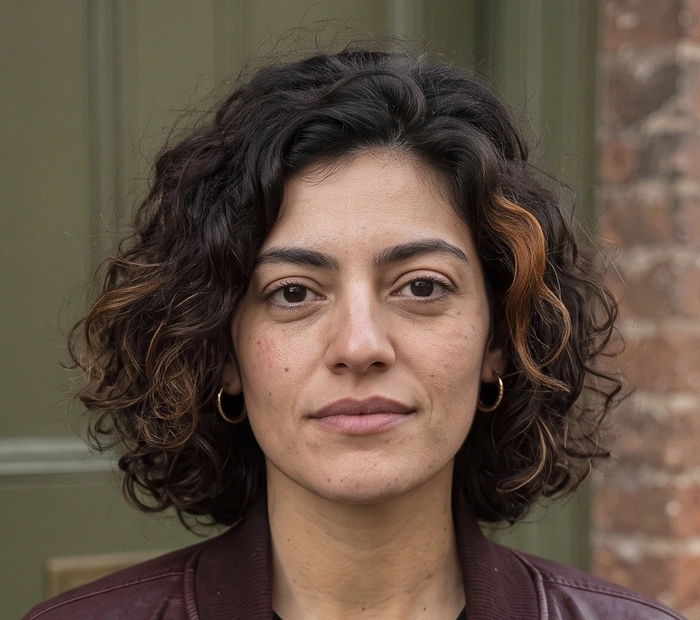
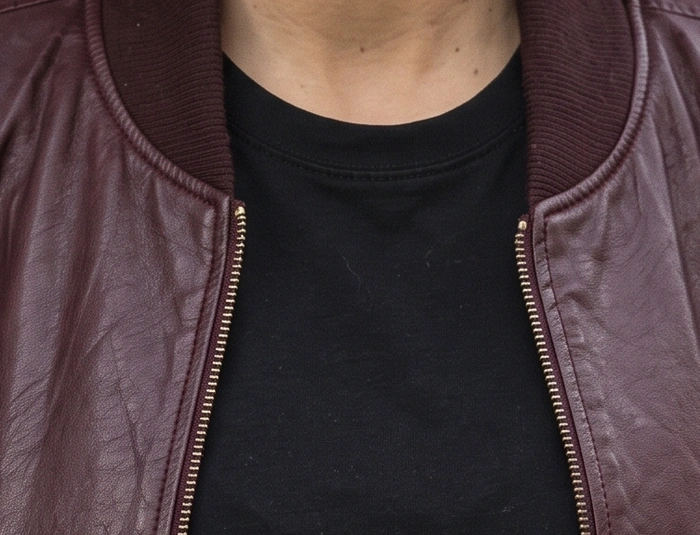
Pixel crops only. Click for full crop; open the main image for the original-resolution view.
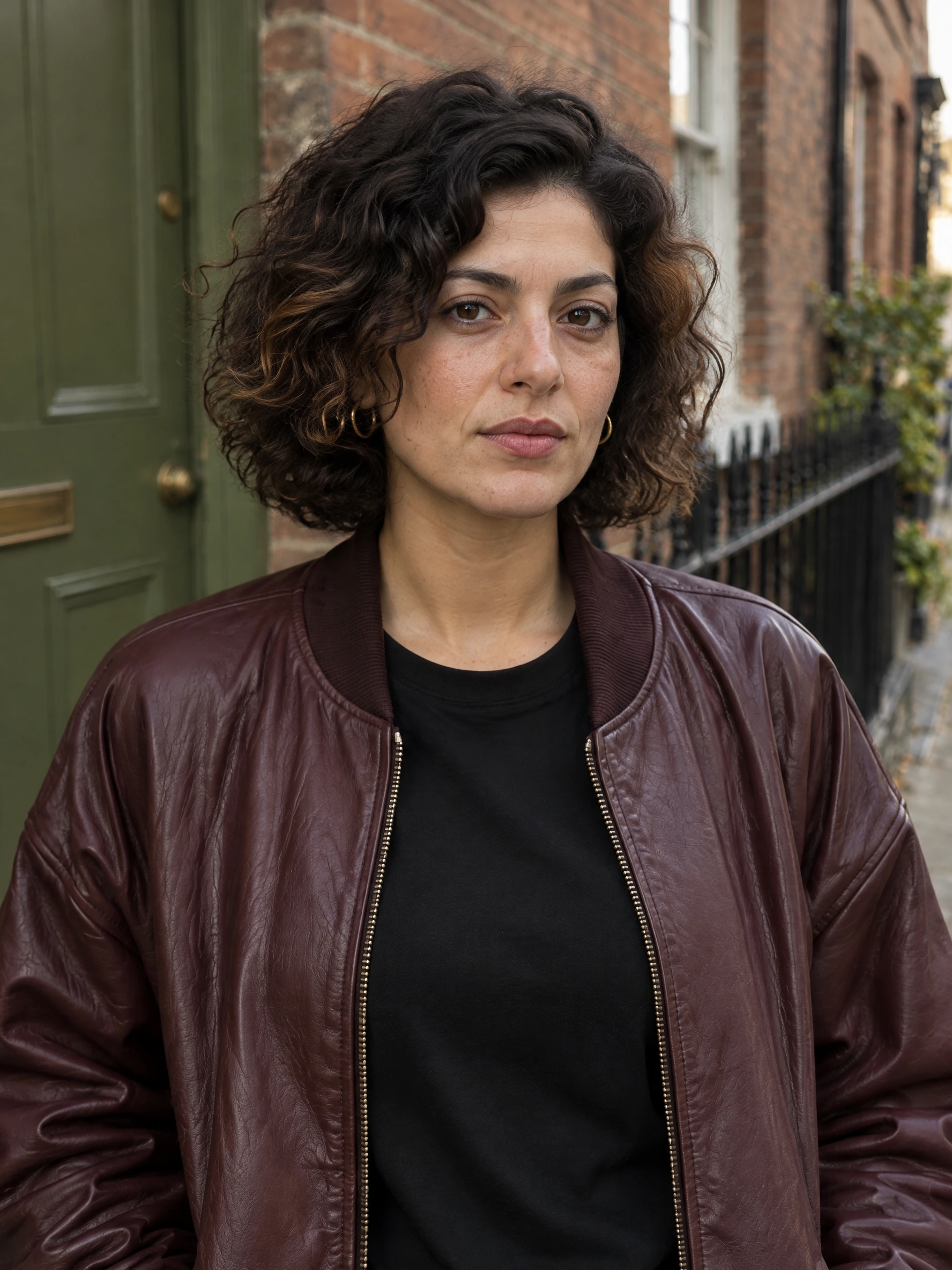
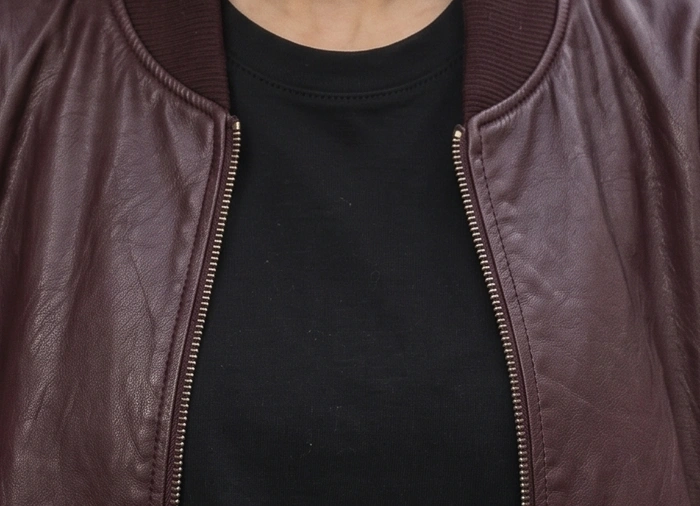
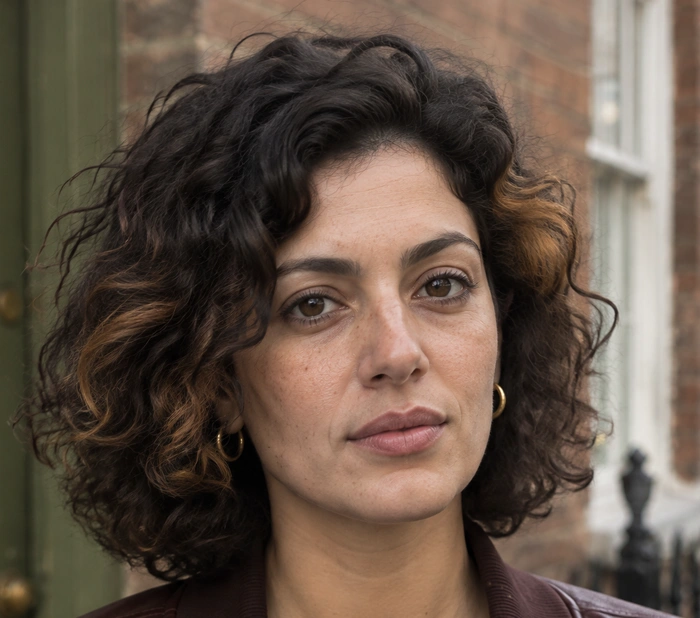
Both eyes are readable in a near-frontal chest-up portrait; curls, warm streak, nose and complexion remain compatible with the reference. Visible pores, small facial marks and leather creases avoid a uniformly smoothed finish; body score concerns shoulders and neck only.
Zoom into face & task details
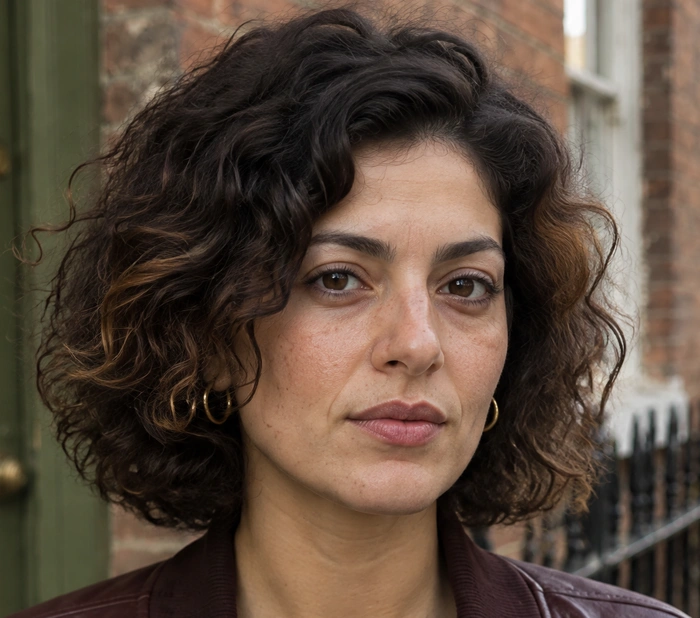
Pixel crops only. Click for full crop; open the main image for the original-resolution view.
| Task | Nano Banana 2.1 | GPT Image 2.5 Sunburst | What the images establish |
|---|---|---|---|
| Front-Facing Portrait | 3/3 publishable; 3/3 final images | 3/3 publishable; 3/3 final images | Both models passed 3/3 frontal portraits: recognizable face, natural visible skin texture and the original outfit. This rubric found no identity winner. |
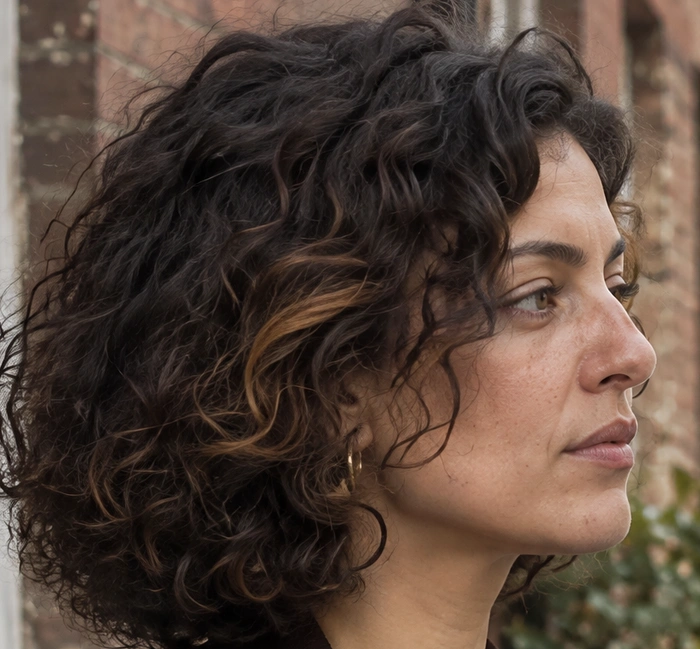
| Side-Profile Portrait | 3/3 publishable; 3/3 final images | 1/3 publishable; 3/3 final images | Nano Banana passed 3/3 near-profile briefs; Sunburst passed 1/3. Two Sunburst outputs kept a clearly visible far eye at three-quarter angle. This was angle adherence, not a face-identity failure. |
| Full-Body Photo | 3/3 publishable; 3/3 final images | 3/3 publishable; 3/3 final images | Both passed 3/3 full-body briefs with boots, two visible hands and coherent build. Hidden finger surfaces and exact measurements remain unverified. |
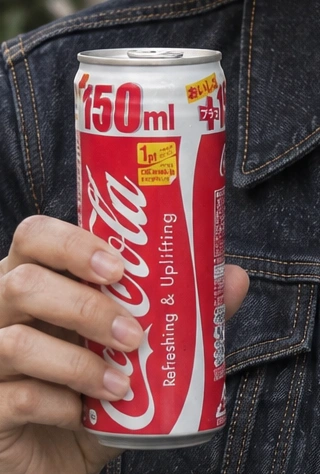
| Outfit Change & Product Details | 0/3 publishable; 3/3 final images | 0/3 publishable; 3/3 final images | Neither passed (0/3 each). Denim construction and recognizable identity survived, but can lettering or wordmark visibility needed repair. Nano repeat 2 changed the specified 150ml label marking to +50ml; a recognizable brand alone was insufficient. |
| Low-Light Selfie | 0/3 publishable; 3/3 final images | 2/3 publishable; 3/3 final images | Sunburst passed 2/3 one-adult night-selfie briefs; Nano passed 0/3. The remaining images included café patrons behind the window, contradicting the shared one-adult instruction. Faces and low-light realism still passed. |
Front-Facing Portrait: what to look for
Both models passed 3/3 frontal portraits: recognizable face, natural visible skin texture and the original outfit. This rubric found no identity winner.
Same recognizable face and hair; frontal composition; reference outfit; natural skin and eyes. Body build only where visible.
View complete shared prompt · Front-Facing Portrait
Image 1 is the sole identity and body reference: the original fictional adult woman with an olive complexion, dark curly bob with a warm brown streak, small gold hoop earrings, burgundy leather bomber, black crewneck tee, faded charcoal straight-leg jeans and black heeled ankle boots. Preserve her own facial proportions, nose, eyebrows, hairline, complexion, apparent adult age and body build. Make a new photograph of this same adult, not a new lookalike or a crop of the original. Keep the original outfit unless the task explicitly replaces the jacket. Natural skin texture and plausible anatomy; no beauty-filter smoothing. Exactly one adult and one complete photograph. No added caption, watermark, graphic overlay or invented campaign claim.

TASK: Eye-level chest-up portrait facing the camera squarely, both eyes clearly visible, relaxed closed lips and shoulders. Stand on the same weathered brick residential street, with the olive-green door softly out of focus behind her. Soft overcast daylight, natural 70mm portrait perspective. Keep her burgundy jacket, black tee and gold hoops. Hands below the crop. Preserve pores, subtle under-eye texture, individual hair edges and ordinary eye reflections. No skin retouching.
Side-Profile Portrait: what to look for
Nano Banana passed 3/3 near-profile briefs; Sunburst passed 1/3. Two Sunburst outputs kept a clearly visible far eye at three-quarter angle. This was angle adherence, not a face-identity failure.
Recognizable visible facial structure and hair; near side profile rather than a front-facing rerun; original clothing and believable neck.
View complete shared prompt · Side-Profile Portrait
Image 1 is the sole identity and body reference: the original fictional adult woman with an olive complexion, dark curly bob with a warm brown streak, small gold hoop earrings, burgundy leather bomber, black crewneck tee, faded charcoal straight-leg jeans and black heeled ankle boots. Preserve her own facial proportions, nose, eyebrows, hairline, complexion, apparent adult age and body build. Make a new photograph of this same adult, not a new lookalike or a crop of the original. Keep the original outfit unless the task explicitly replaces the jacket. Natural skin texture and plausible anatomy; no beauty-filter smoothing. Exactly one adult and one complete photograph. No added caption, watermark, graphic overlay or invented campaign claim.

TASK: Eye-level waist-up photograph from her left side, nose pointing toward the right of the image, near side profile at about 75 degrees so the far eye is mostly hidden. Keep her visible nose bridge, lip profile, jaw and curly bob recognizable from Image 1. She looks along the same brick street, shoulders relaxed, hands below the crop. Original burgundy bomber and black tee, soft overcast daylight and natural 70mm perspective. Do not rotate her back into a frontal portrait.
Full-Body Photo: what to look for
Both passed 3/3 full-body briefs with boots, two visible hands and coherent build. Hidden finger surfaces and exact measurements remain unverified.
Whole body including both boots; same visible build; two readable hands; faithful original outfit and grounded anatomy.
View complete shared prompt · Full-Body Photo
Image 1 is the sole identity and body reference: the original fictional adult woman with an olive complexion, dark curly bob with a warm brown streak, small gold hoop earrings, burgundy leather bomber, black crewneck tee, faded charcoal straight-leg jeans and black heeled ankle boots. Preserve her own facial proportions, nose, eyebrows, hairline, complexion, apparent adult age and body build. Make a new photograph of this same adult, not a new lookalike or a crop of the original. Keep the original outfit unless the task explicitly replaces the jacket. Natural skin texture and plausible anatomy; no beauty-filter smoothing. Exactly one adult and one complete photograph. No added caption, watermark, graphic overlay or invented campaign claim.

TASK: Eye-level full-body street-style photograph on the same pavement beside the olive door and brick facade. Show her entire head, both boots and a small margin of ground. She stands with weight on one leg, both arms relaxed down beside her body, both hands visible with naturally loose fingers. No crossed limbs and no hand in a pocket. Preserve her reference height-to-head and torso-to-leg proportions, build, burgundy jacket construction, black tee, charcoal jeans and black heeled boots. Soft overcast daylight and a natural 50mm perspective.
Outfit Change & Product Details: what to look for
Neither passed (0/3 each). Denim construction and recognizable identity survived, but can lettering or wordmark visibility needed repair. Nano repeat 2 changed the specified 150ml label marking to +50ml; a recognizable brand alone was insufficient.
Same identity; specified new denim construction rather than original bomber; coherent grip; recognizable wordmark and retained visible label layout/wording. A readable but wrong label is a detail failure.
View complete shared prompt · Outfit Change & Product Details
Image 1 is the sole identity and body reference: the original fictional adult woman with an olive complexion, dark curly bob with a warm brown streak, small gold hoop earrings, burgundy leather bomber, black crewneck tee, faded charcoal straight-leg jeans and black heeled ankle boots. Preserve her own facial proportions, nose, eyebrows, hairline, complexion, apparent adult age and body build. Make a new photograph of this same adult, not a new lookalike or a crop of the original. Keep the original outfit unless the task explicitly replaces the jacket. Natural skin texture and plausible anatomy; no beauty-filter smoothing. Exactly one adult and one complete photograph. No added caption, watermark, graphic overlay or invented campaign claim.

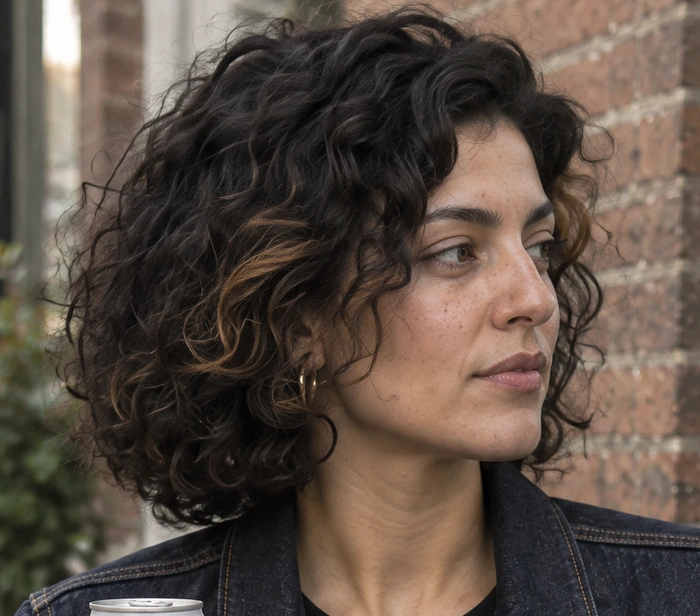
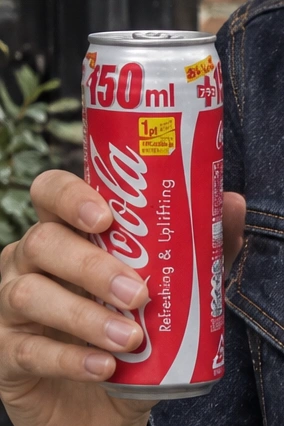
TASK: Image 2 is ONLY the new garment reference, not a second identity. Replace her burgundy bomber with that exact dark indigo denim trucker jacket: retain its copper buttons, warm contrasting topstitching, two pointed-flap chest pockets and panel seams. Keep her black tee and charcoal jeans. Image 3 is ONLY the product reference: use the same red-and-silver Coca-Cola Japan can, with the same package shape, visible Coca-Cola wordmark, yellow promotional block, large 150ml marking and vertical Refreshing & Uplifting lettering. Do not invent new label text or a generic replacement can. Eye-level mid-thigh-up photograph at an outdoor cafe table beside the same brick street, soft overcast light, natural 50mm perspective. Her right hand supports the lower third of the upright can just below chest height, leaving the central wordmark and upper label visible toward the camera; her left hand rests on the worn wooden table. Natural scale, grounded contact and separate fingers. This is an editorial object-and-wardrobe fidelity test, not a testimonial, sponsorship or beverage claim.
Low-Light Selfie: what to look for
Sunburst passed 2/3 one-adult night-selfie briefs; Nano passed 0/3. The remaining images included café patrons behind the window, contradicting the shared one-adult instruction. Faces and low-light realism still passed.
Same face, hair and visible build; plausible low-light phone capture with shadow detail and natural texture; original outfit; readable arm ownership.
View complete shared prompt · Low-Light Selfie
Image 1 is the sole identity and body reference: the original fictional adult woman with an olive complexion, dark curly bob with a warm brown streak, small gold hoop earrings, burgundy leather bomber, black crewneck tee, faded charcoal straight-leg jeans and black heeled ankle boots. Preserve her own facial proportions, nose, eyebrows, hairline, complexion, apparent adult age and body build. Make a new photograph of this same adult, not a new lookalike or a crop of the original. Keep the original outfit unless the task explicitly replaces the jacket. Natural skin texture and plausible anatomy; no beauty-filter smoothing. Exactly one adult and one complete photograph. No added caption, watermark, graphic overlay or invented campaign claim.

TASK: A casual chest-up front-phone selfie outside a small late-night cafe after rain. Her left forearm extends naturally toward the phone just outside the frame; right arm relaxed below the crop. Keep the same curly bob, burgundy bomber, black tee and gold hoops. Dim warm cafe window light from one side and cool street spill from the other. A little fine shadow noise, slightly imperfect handheld framing and ordinary low-light skin texture; a quiet, tired half-smile. Natural phone-wide perspective with modest perspective distortion, no ring light, studio beauty lighting, plastic smoothing or invented neon text. Preserve her recognizable face despite the different light.
Task 4 protocol note: the frozen prompt calls the reference hardware “copper,” while the full garment image has silver-gray buttons. Before output inspection, we excluded button hue alone from the score. We still scored jacket color, silhouette, seams, pocket/button layout and packaging. The original prompt remains visible. This task is not a clean test of hardware-color preservation.
View all 30 recorded results, including failures
Every planned cell is retained. Model name, repeat, manual outcome and visible failure notes are shown; the data download includes prompts and charges.
Front-Facing Portrait: all six planned cells
A square frontal view with both eyes visible follows the chest-up portrait brief; the same curls, warm streak and gold hoops remain readable. Fine skin texture and under-eye variation are visible without plastic smoothing. Only visible shoulder/neck proportions are evaluated.
Zoom into face & task details
Pixel crops only. Click for full crop; open the main image for the original-resolution view.
Both eyes are readable in a near-frontal chest-up portrait; curls, warm streak, nose and complexion remain compatible with the reference. Visible pores, small facial marks and leather creases avoid a uniformly smoothed finish; body score concerns shoulders and neck only.
Zoom into face & task details
Pixel crops only. Click for full crop; open the main image for the original-resolution view.
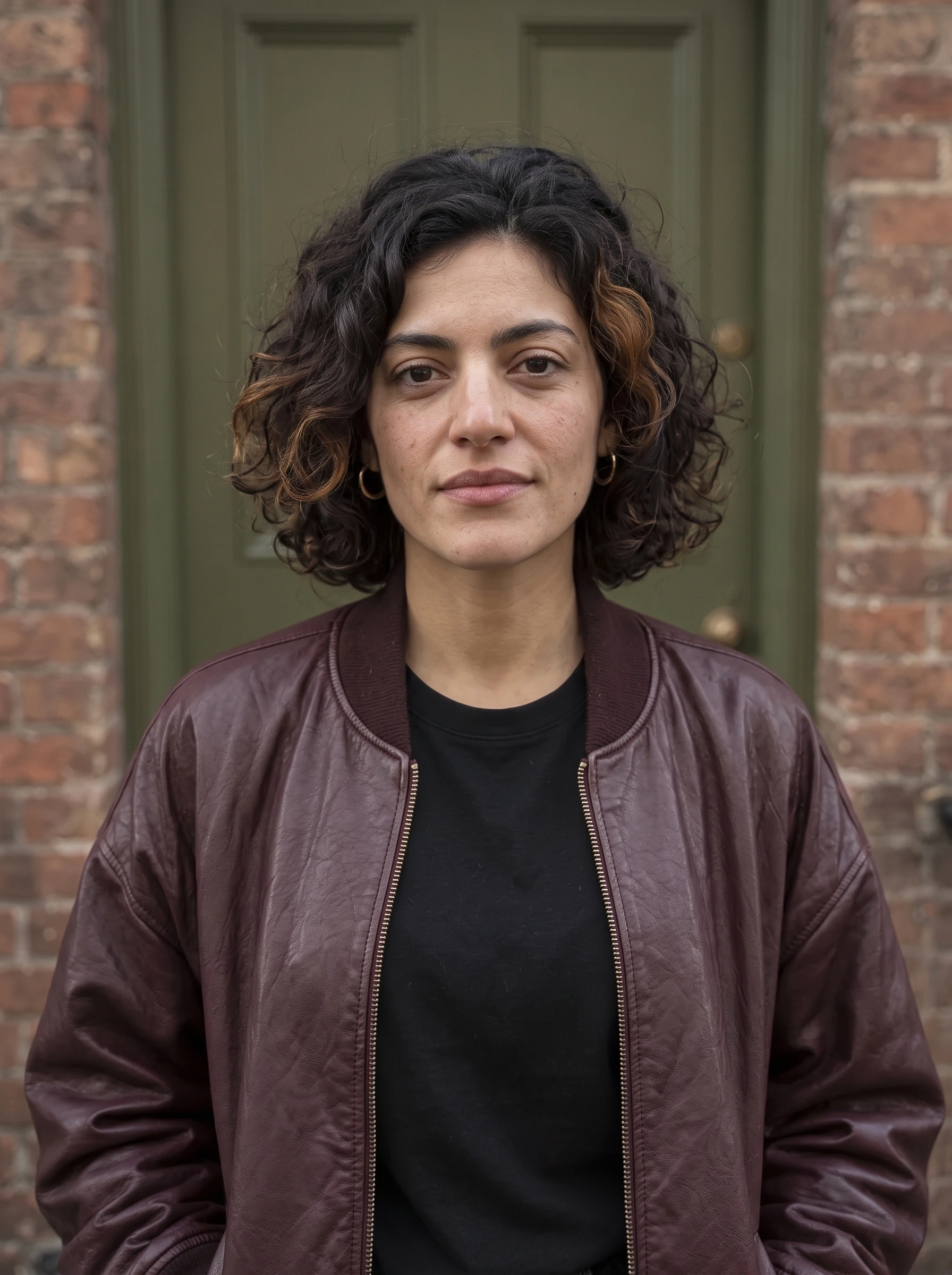
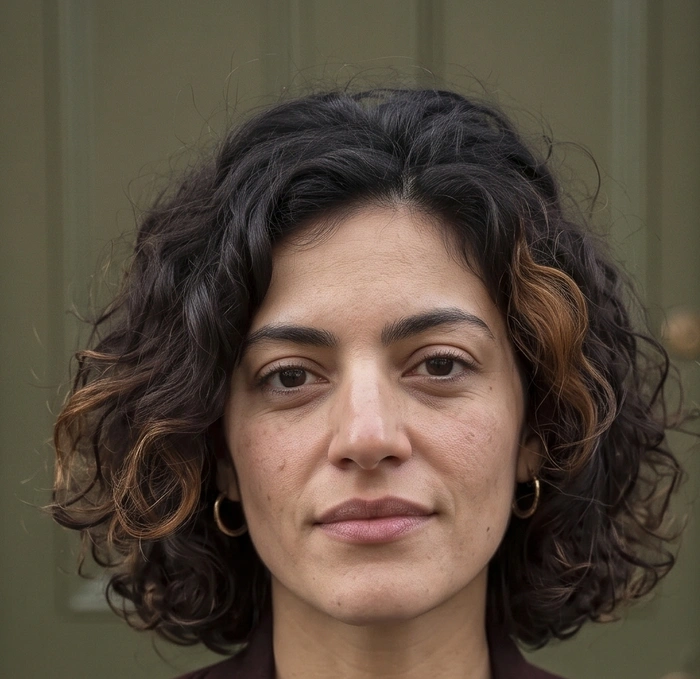
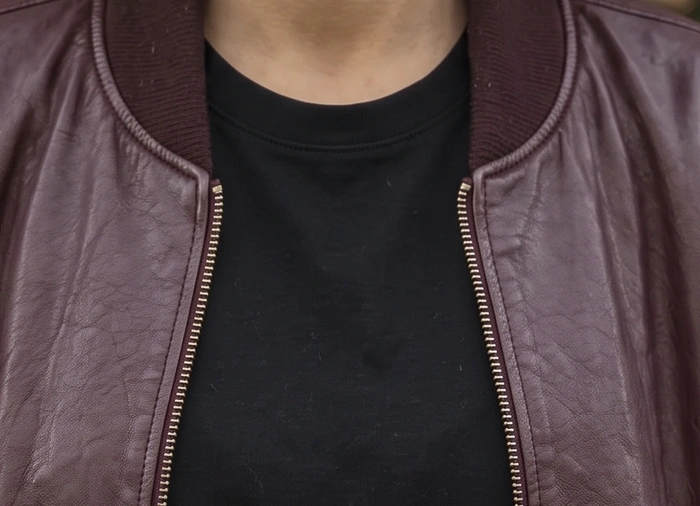
Both eyes face the lens squarely; facial proportions, warm hair streak and earrings remain recognizable. Visible pores, under-eye variation and original clothes follow the portrait brief; body score concerns visible neck and shoulders only.
Zoom into face & task details
Pixel crops only. Click for full crop; open the main image for the original-resolution view.
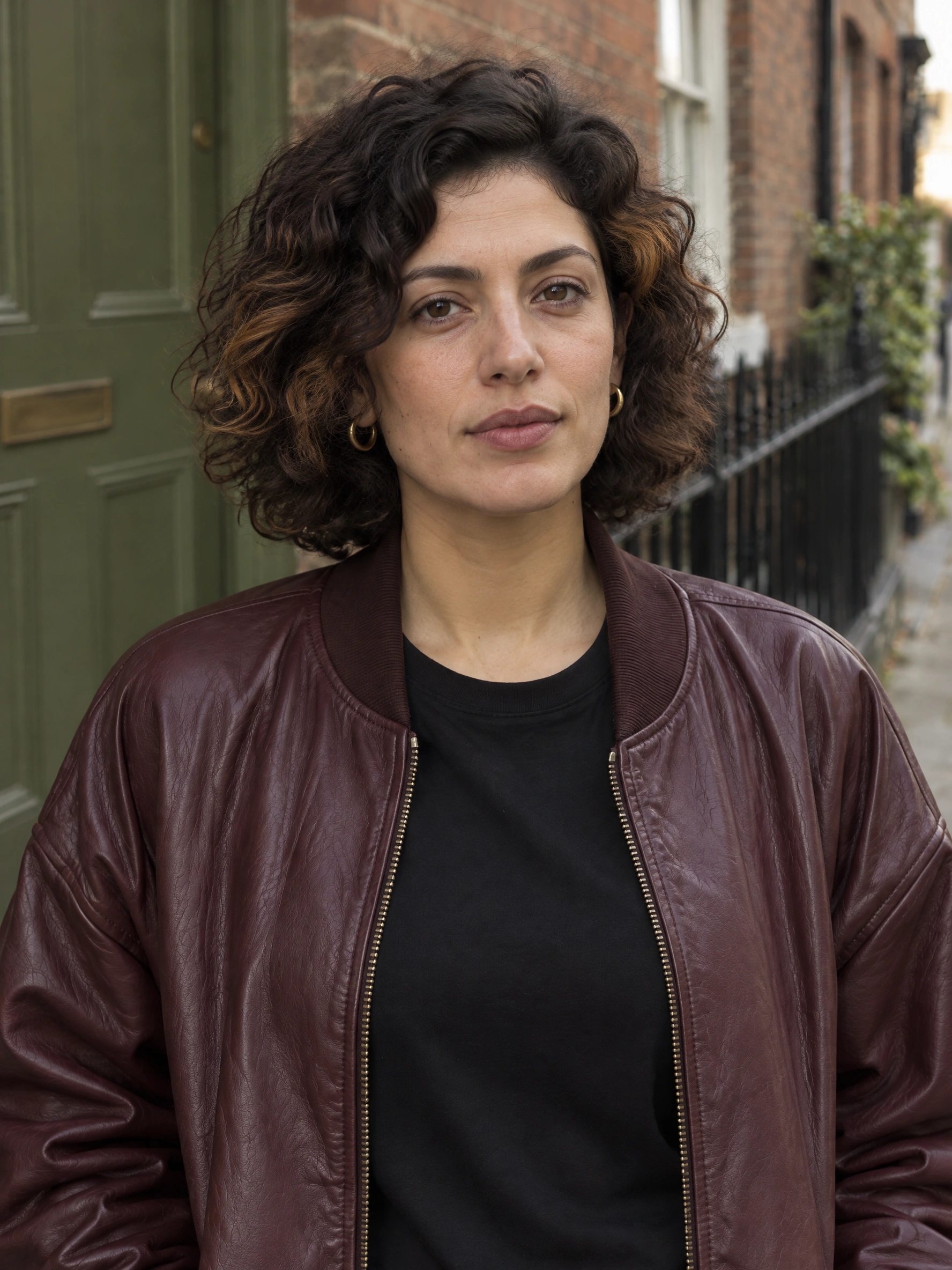
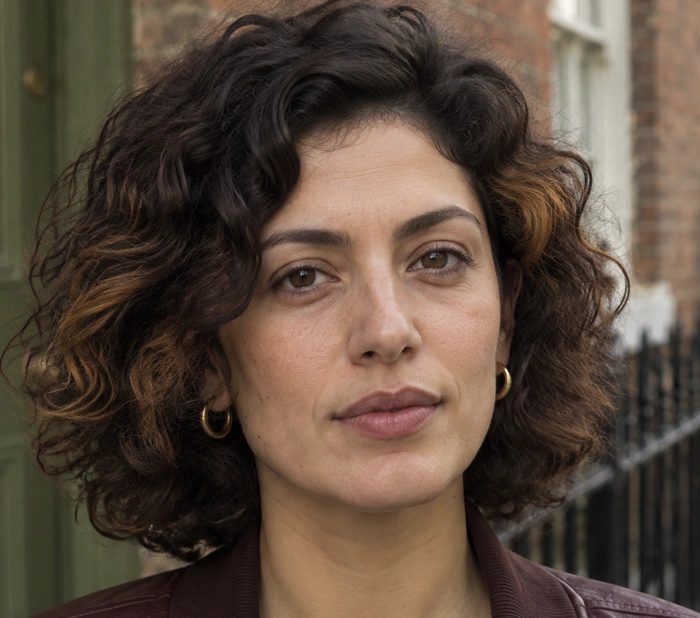
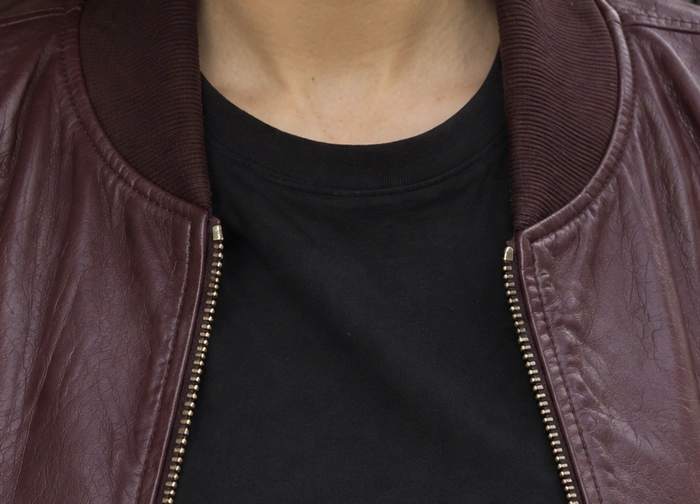
Near-frontal eyes, a mild head lean and recognizable curls, nose and gold hoops preserve the reference identity. Natural pores and under-eye detail remain visible; the original burgundy jacket and black neckline are coherent. Body assessment covers visible neck and shoulders.
Zoom into face & task details
Pixel crops only. Click for full crop; open the main image for the original-resolution view.
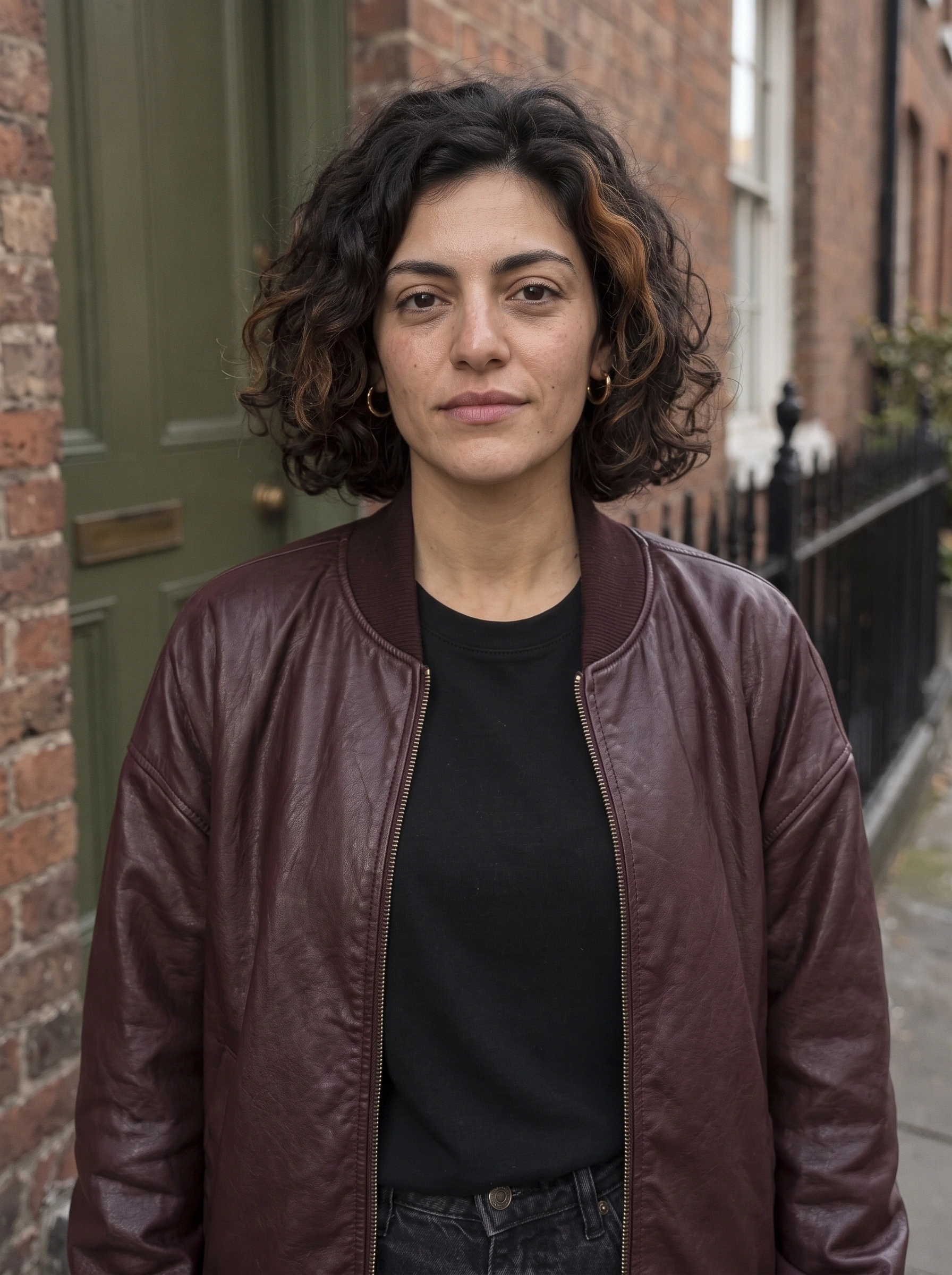
Square frontal framing preserves the recognizable face, warm hair streak, nose and gold hoops. Fine facial texture and the original jacket/tee are readable; only visible upper-body proportions are assessed.
Zoom into face & task details
Pixel crops only. Click for full crop; open the main image for the original-resolution view.
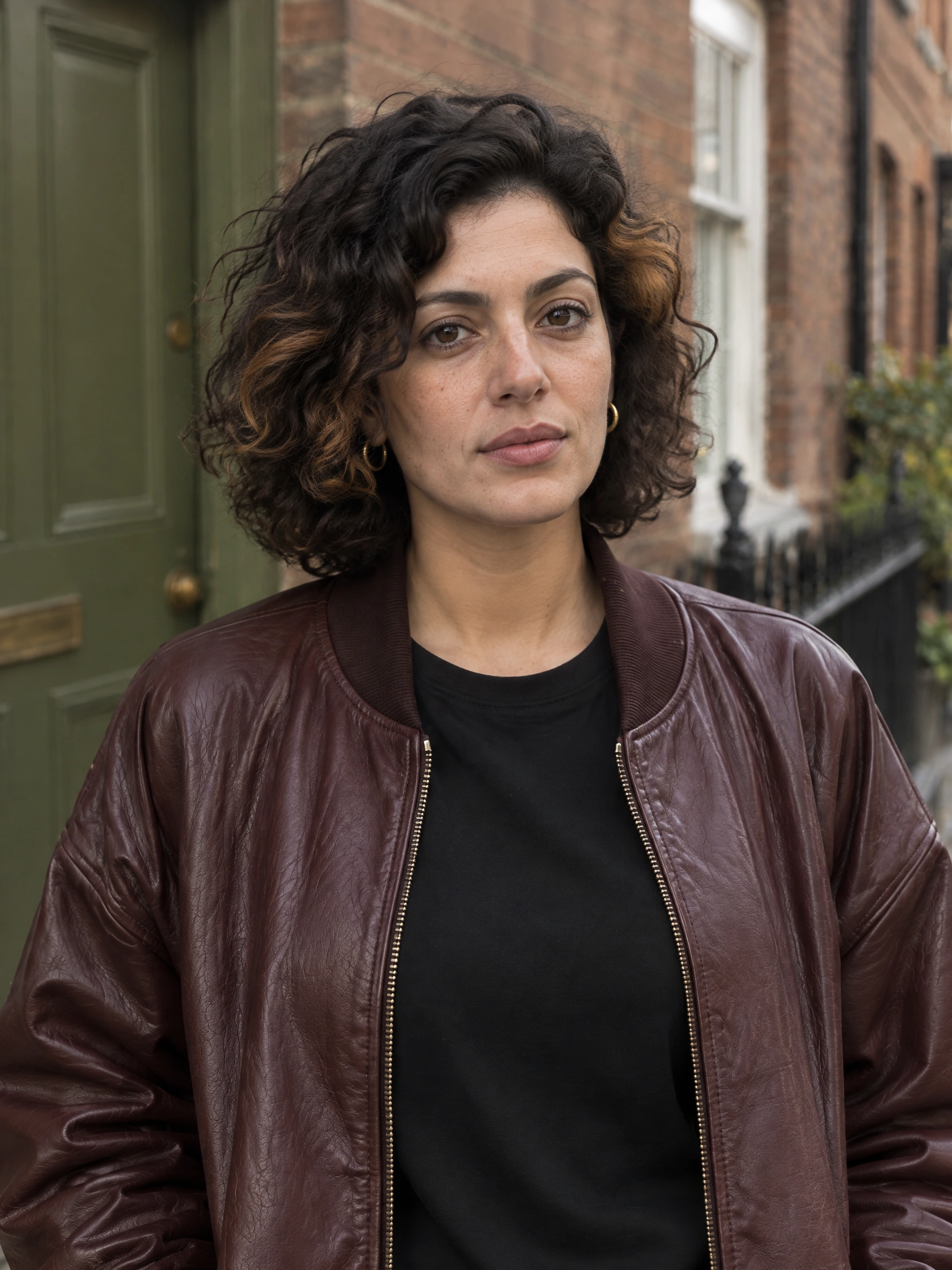
Direct gaze, near-frontal framing and recognizable curls and facial proportions follow the brief. Original clothing and visible shoulder build remain coherent; skin retains pores and ordinary texture rather than a uniform beauty-filter surface.
Zoom into face & task details
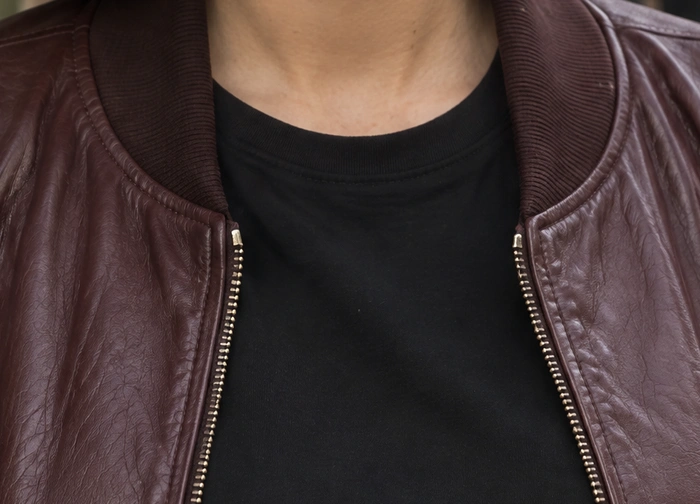
Pixel crops only. Click for full crop; open the main image for the original-resolution view.
Side-Profile Portrait: all six planned cells
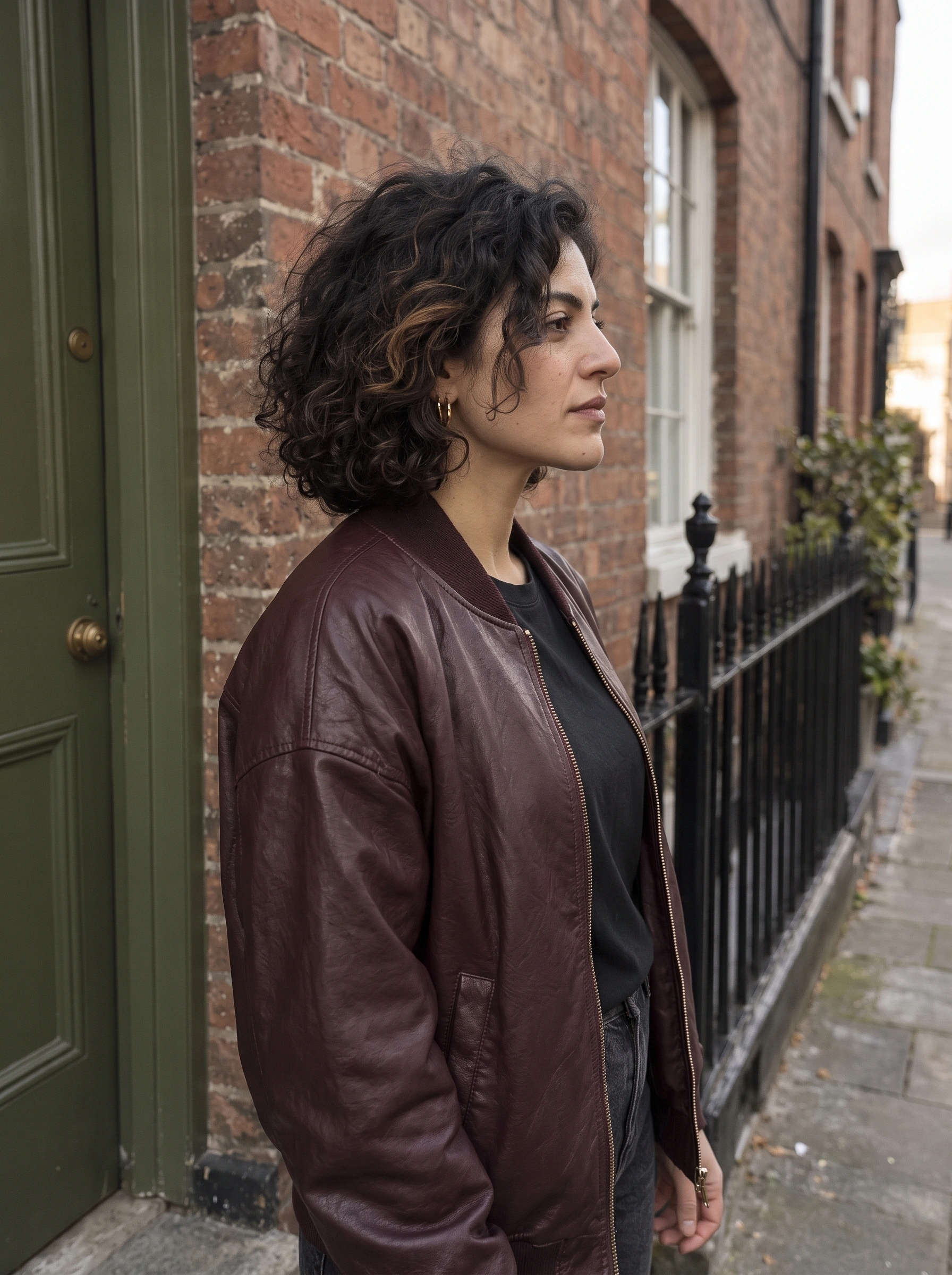
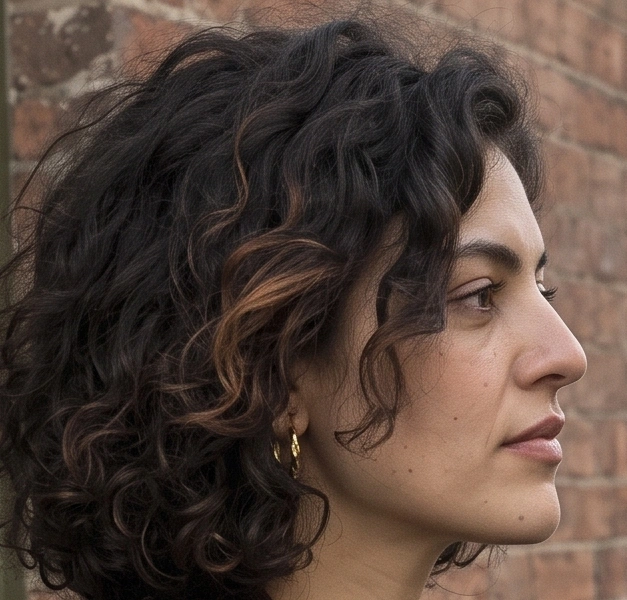
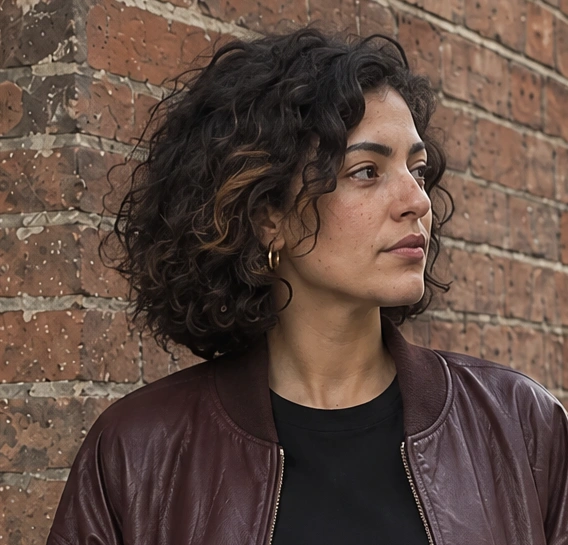
The near-profile largely hides the far eye and keeps the reference nose, jaw and curly silhouette recognizable. Original jacket, black tee and visible build remain coherent in overcast brick-street light.
Zoom into face & task details
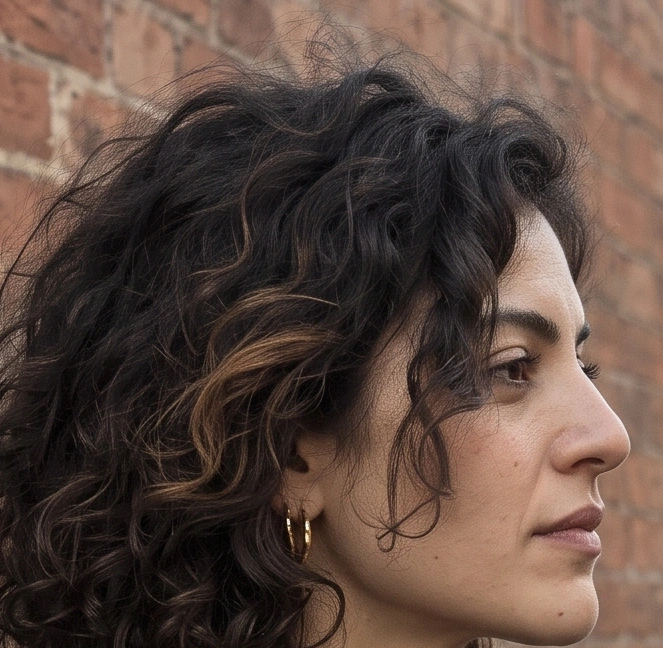
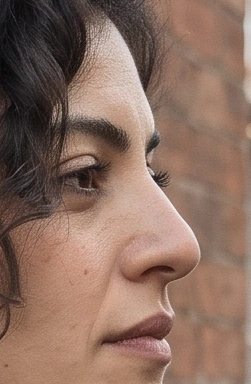
Pixel crops only. Click for full crop; open the main image for the original-resolution view.
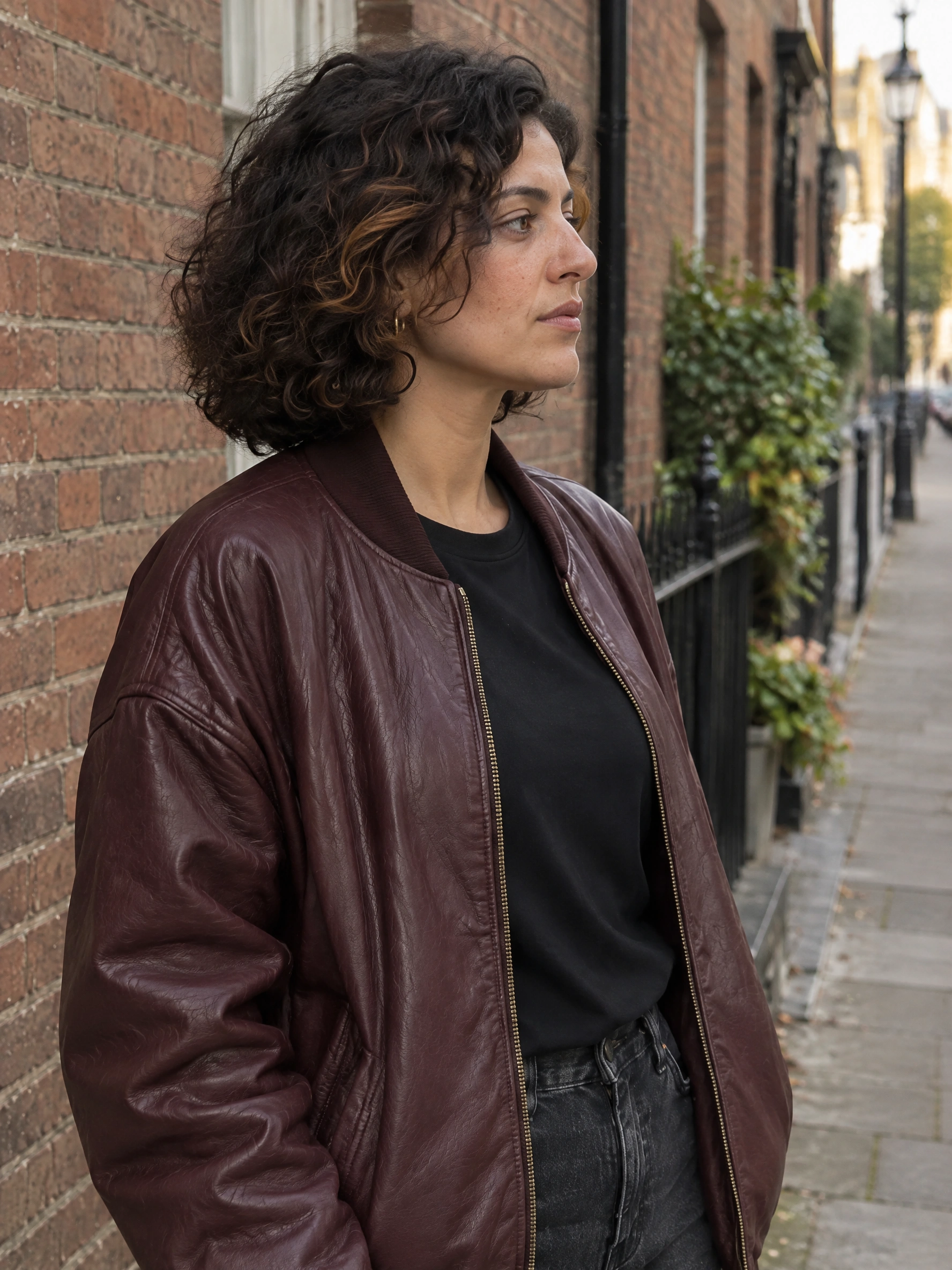
Near-profile has the far eye mostly hidden, with recognizable nose, jaw, curly bob and gold hoop. Visible neck/shoulder build, black neckline and burgundy leather remain coherent in the same softly lit brick-street setting.
Zoom into face & task details
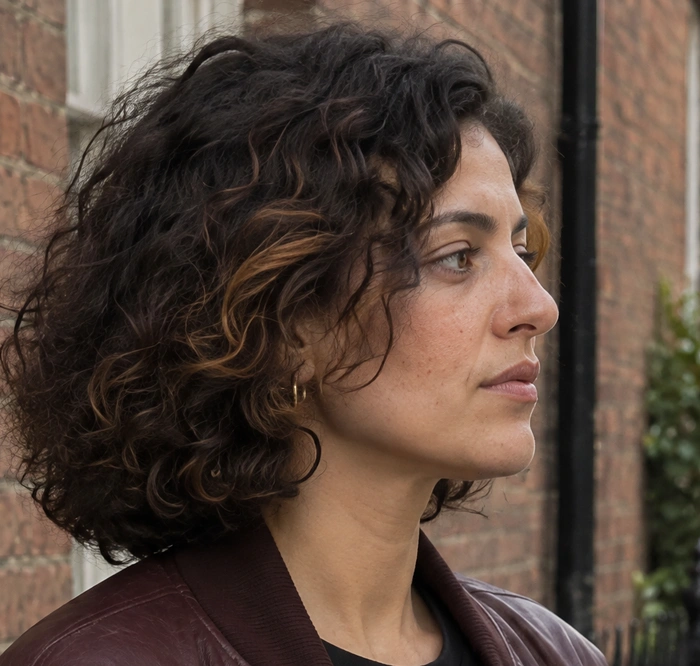
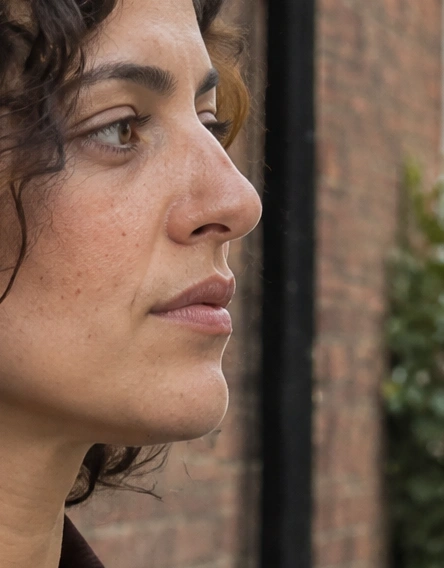
Pixel crops only. Click for full crop; open the main image for the original-resolution view.
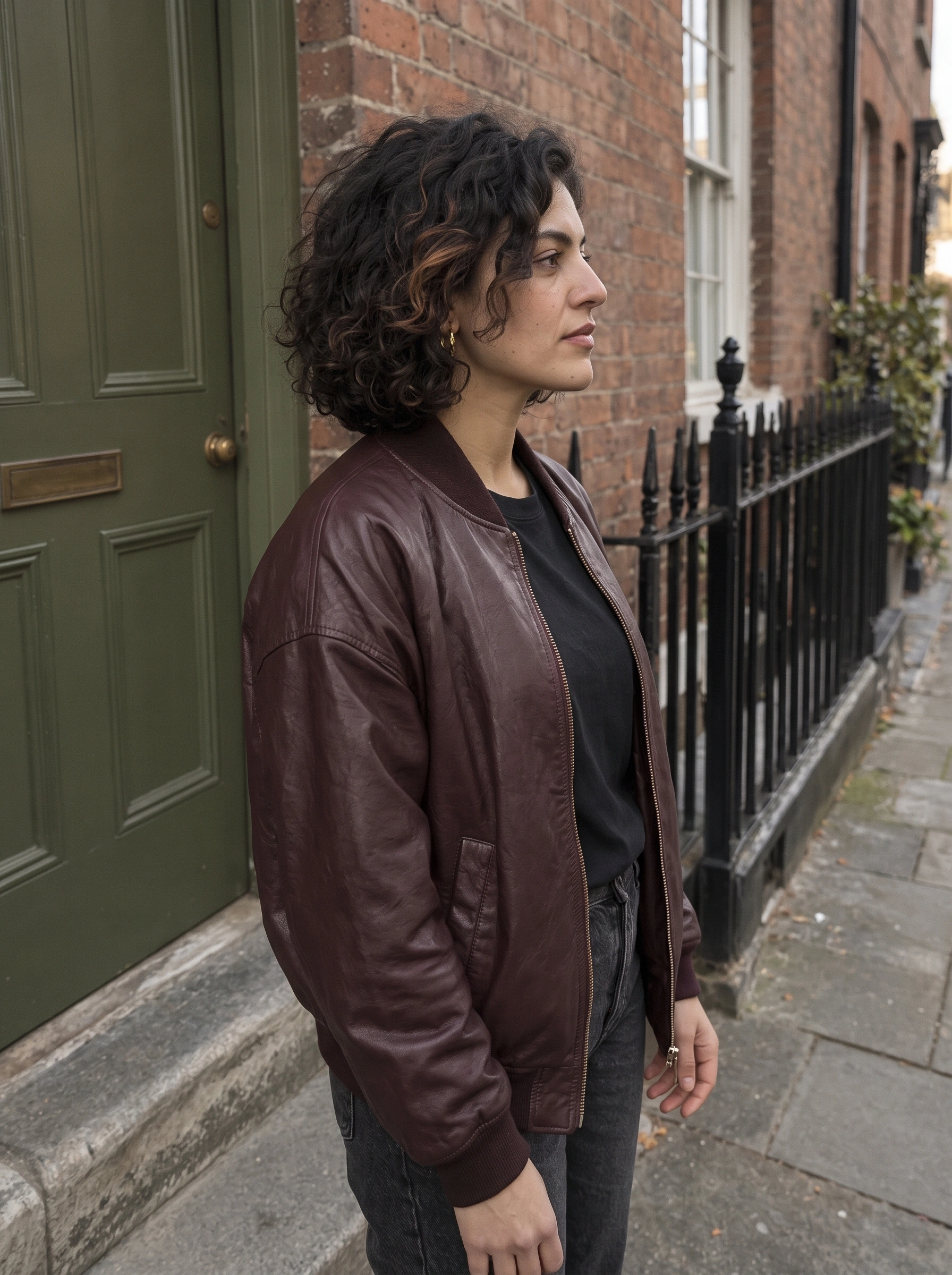
Near-profile largely hides the far eye while preserving the recognizable nose bridge, lips, jaw and curls. Visible build, leather seams and daylight remain plausible; no visible identity or pose repair is required.
Zoom into face & task details
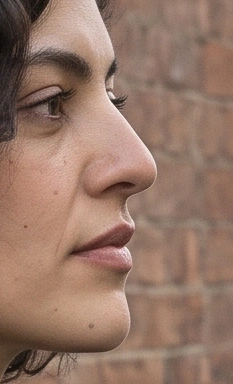
Pixel crops only. Click for full crop; open the main image for the original-resolution view.
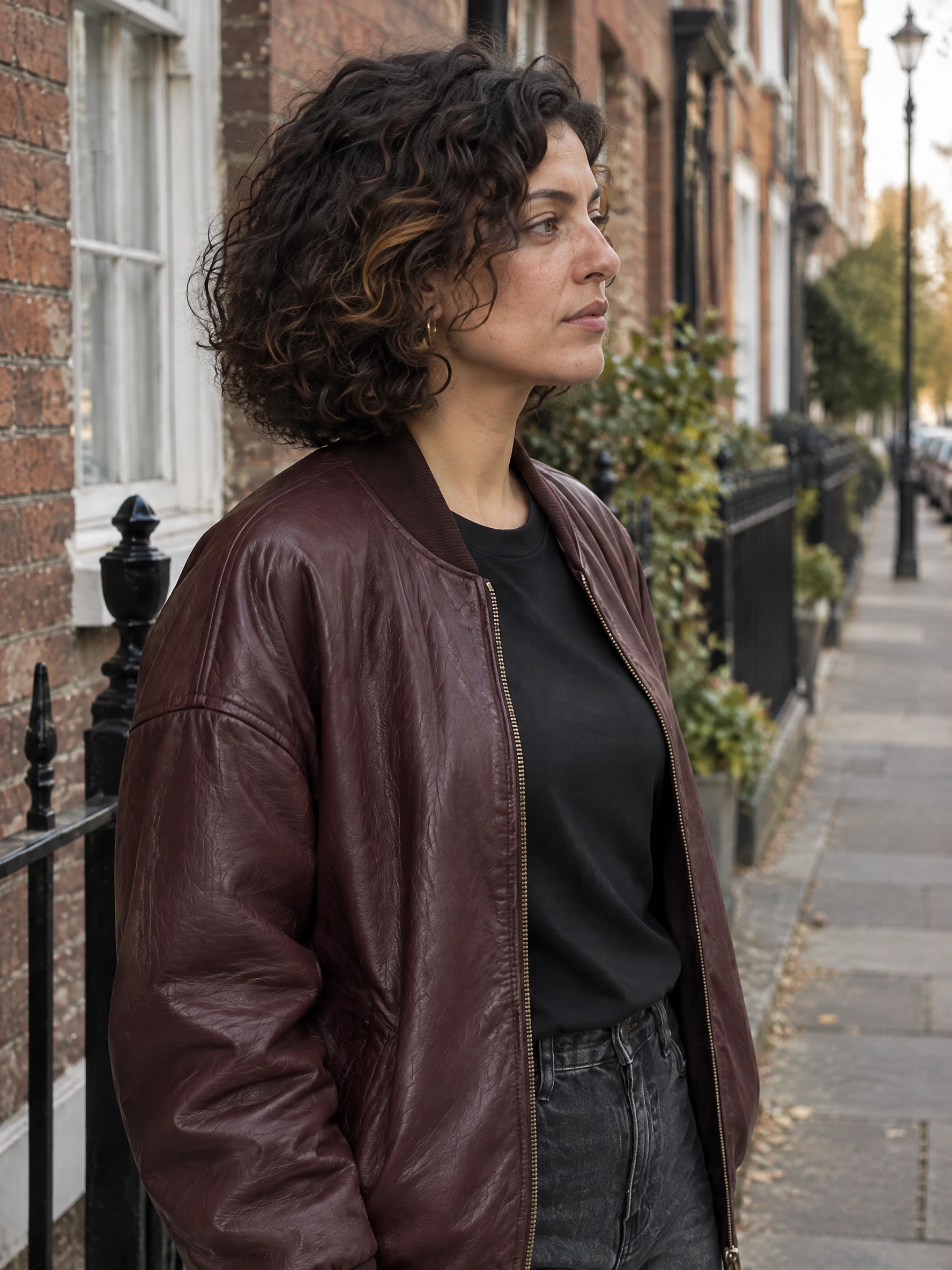
Face, curls and clothing remain recognizable with natural visible skin detail. The far eye is clearly visible: the camera remains at three-quarter rather than the assigned near-profile angle. Needs an angle correction.
Zoom into face & task details
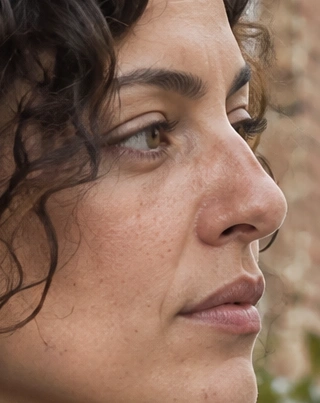
Pixel crops only. Click for full crop; open the main image for the original-resolution view.
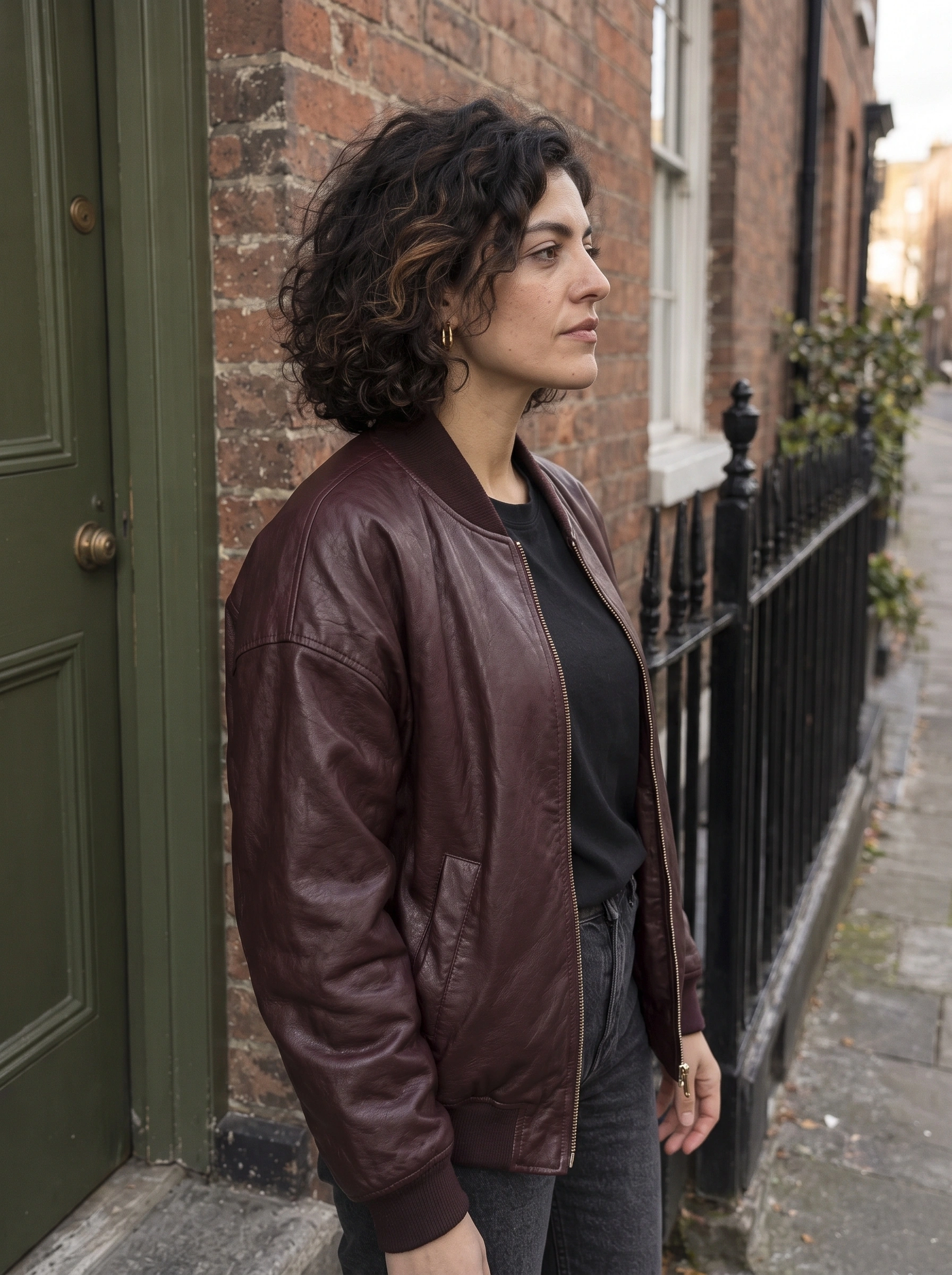
The near-profile keeps the far eye largely hidden, preserving a readable nose bridge, lips, jaw and curly silhouette. Original leather jacket and black neckline remain coherent in soft daylight; no visible pose or skin-rendering defect needs repair.
Zoom into face & task details
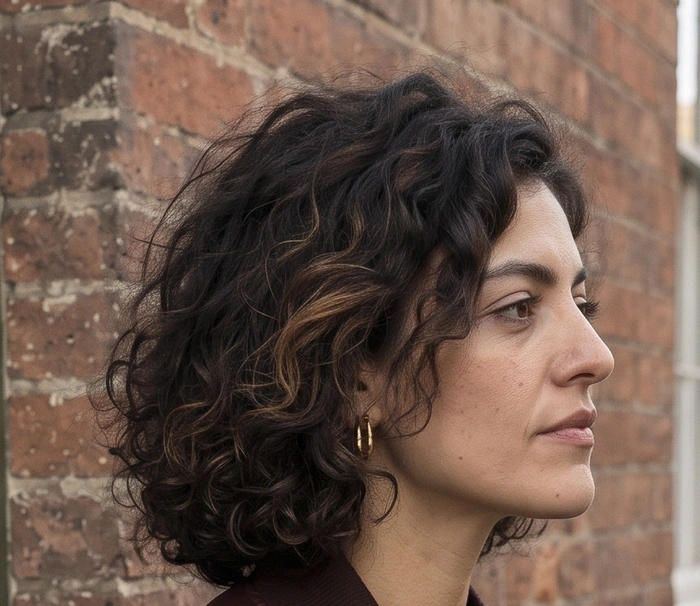
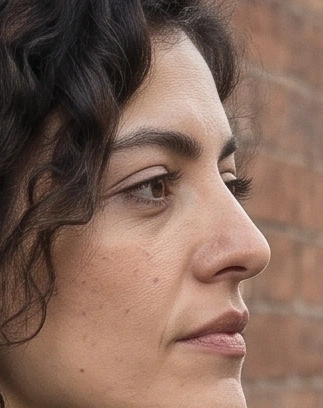
Pixel crops only. Click for full crop; open the main image for the original-resolution view.
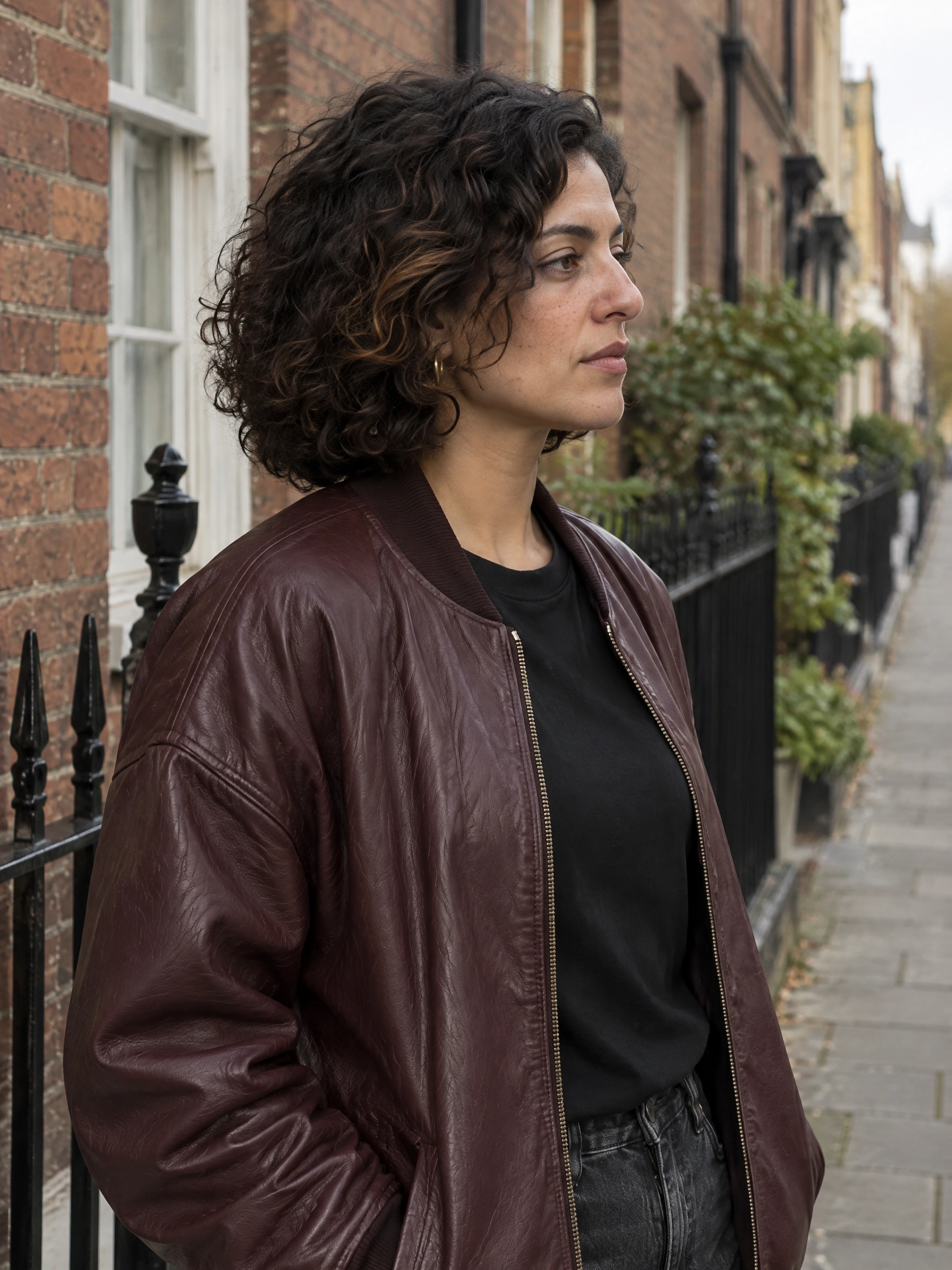
Face and hair remain recognizable, but the far eye is still clearly visible: this is a three-quarter view rather than the requested near-profile. Skin and leather look plausible; needs an angle correction before satisfying this assigned brief.
Zoom into face & task details
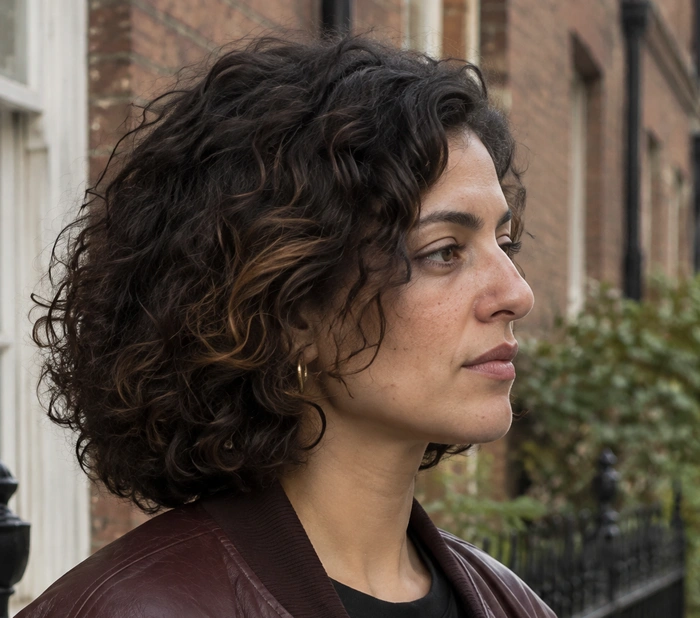
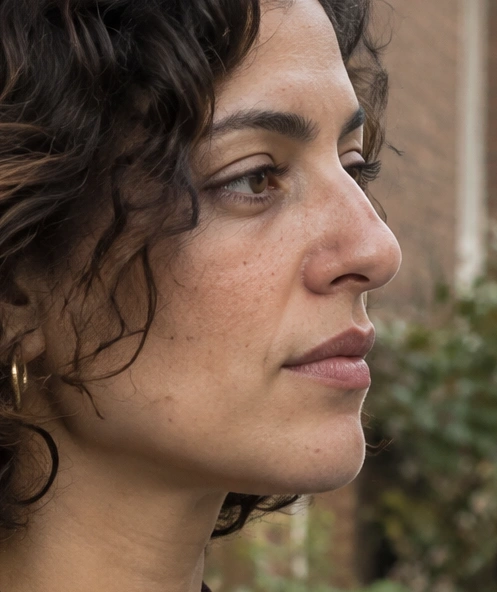
Pixel crops only. Click for full crop; open the main image for the original-resolution view.
Full-Body Photo: all six planned cells
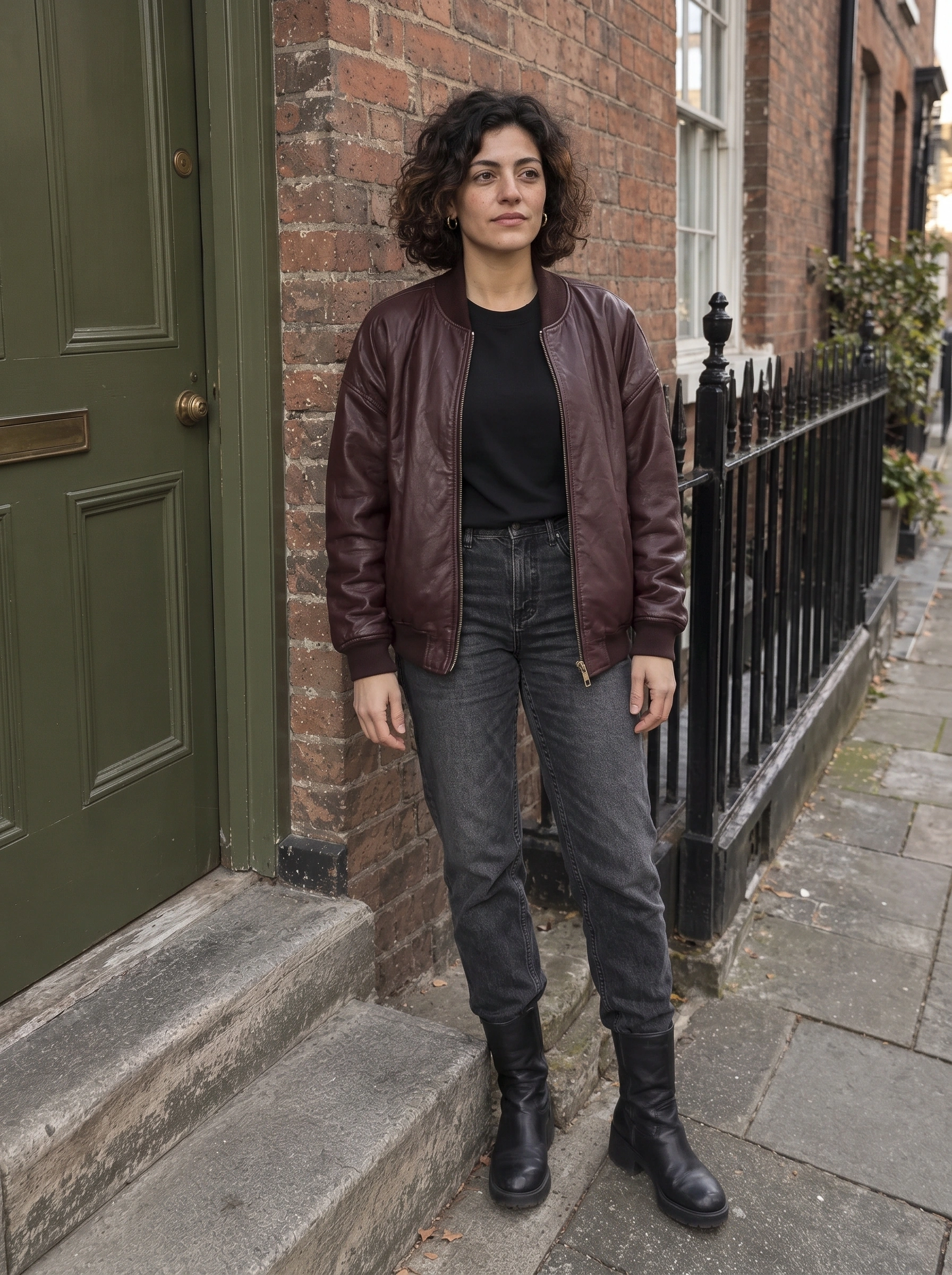
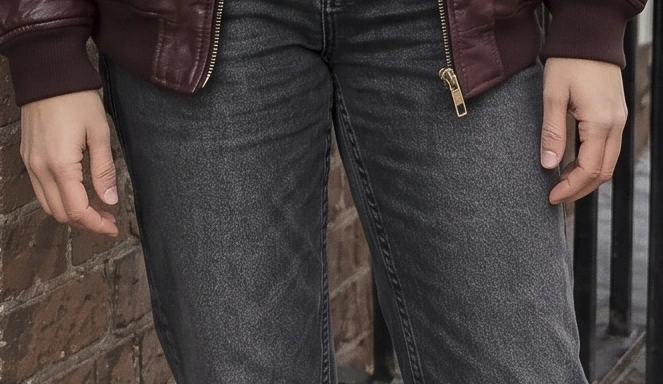
Both boots and separate relaxed hands appear in a grounded full-body stance; the same recognizable face and build are retained. Jacket, tee, jeans and brick-street setting remain coherent without a visible material anatomy defect.
Zoom into face & task details
Pixel crops only. Click for full crop; open the main image for the original-resolution view.
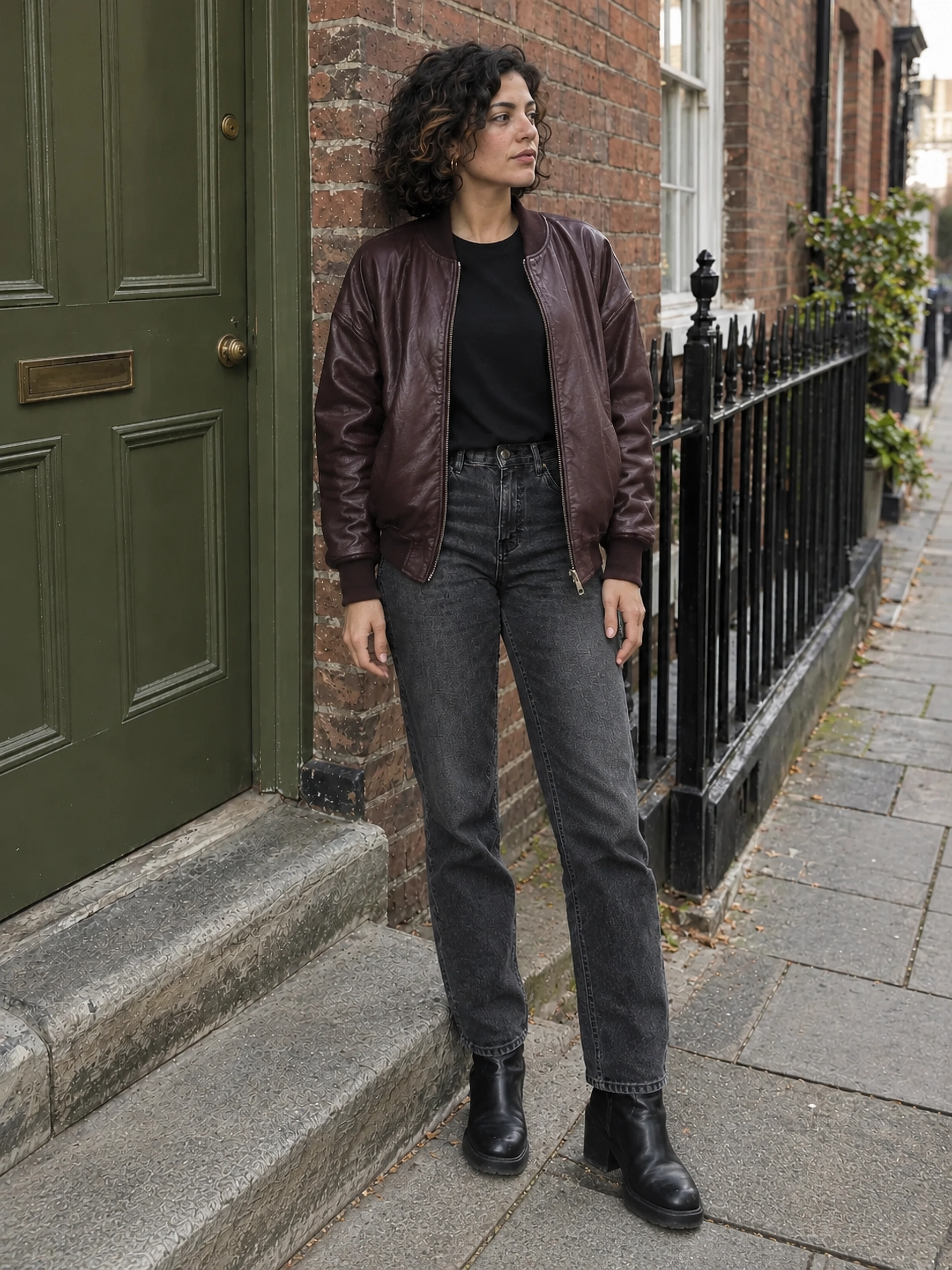
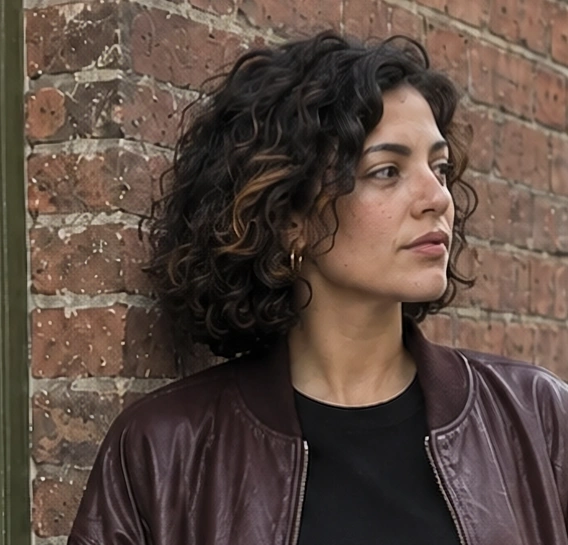
Both boots, grounded legs and two separate relaxed hands are present in a complete head-to-foot frame. The source face, curl pattern, burgundy bomber and charcoal jeans remain recognizable; no material visible body-build contradiction.
Zoom into face & task details
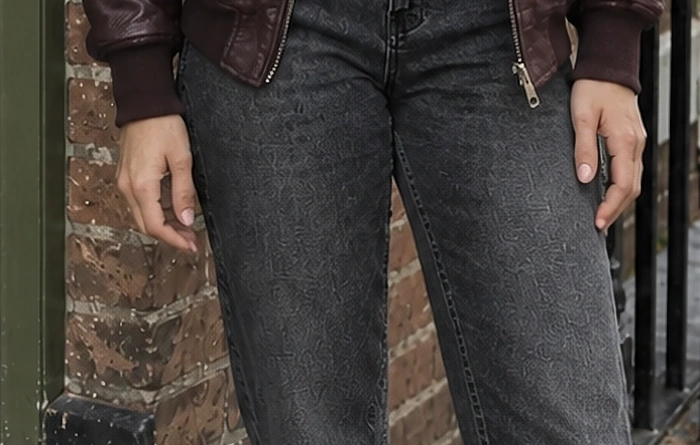
Pixel crops only. Click for full crop; open the main image for the original-resolution view.
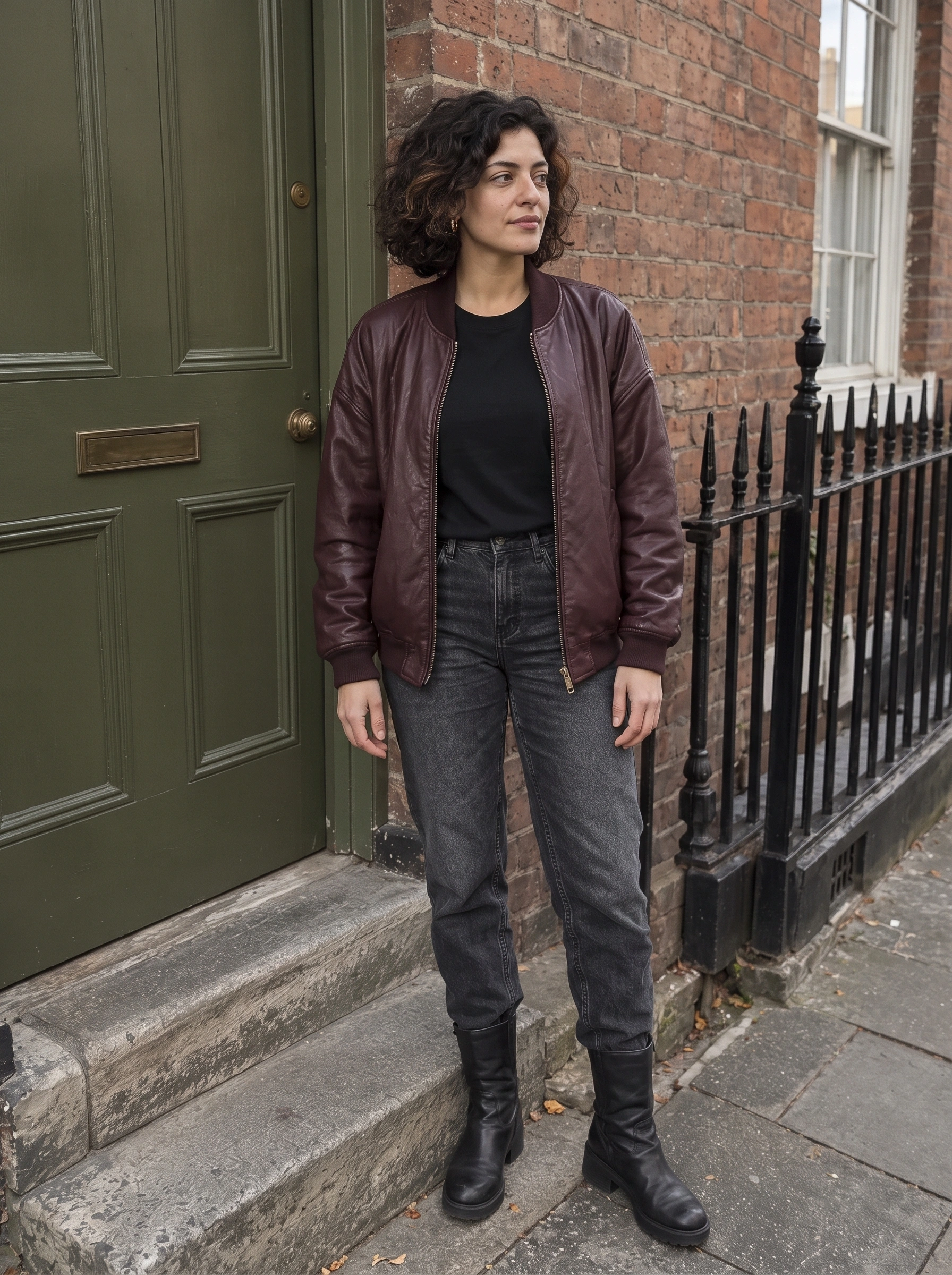
A complete body, two separate relaxed hands and two grounded boots satisfy the full-body framing. Reference build, curls, burgundy jacket and charcoal jeans remain recognizable with coherent anatomy.
Zoom into face & task details
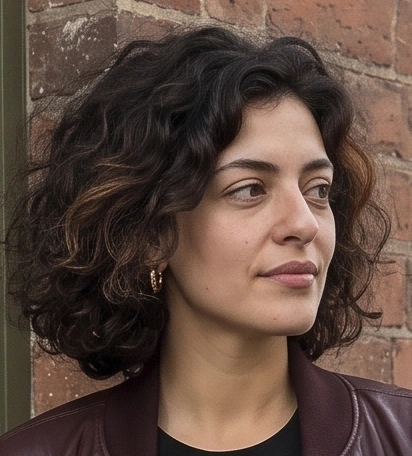
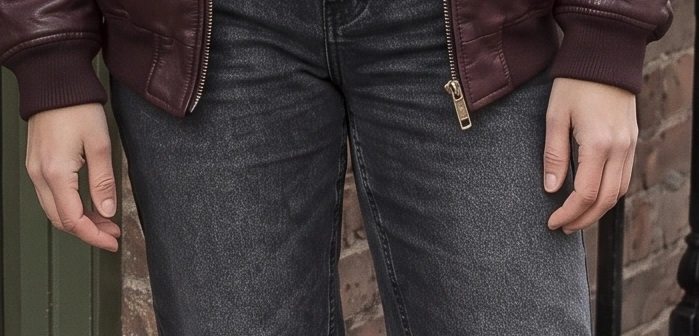
Pixel crops only. Click for full crop; open the main image for the original-resolution view.
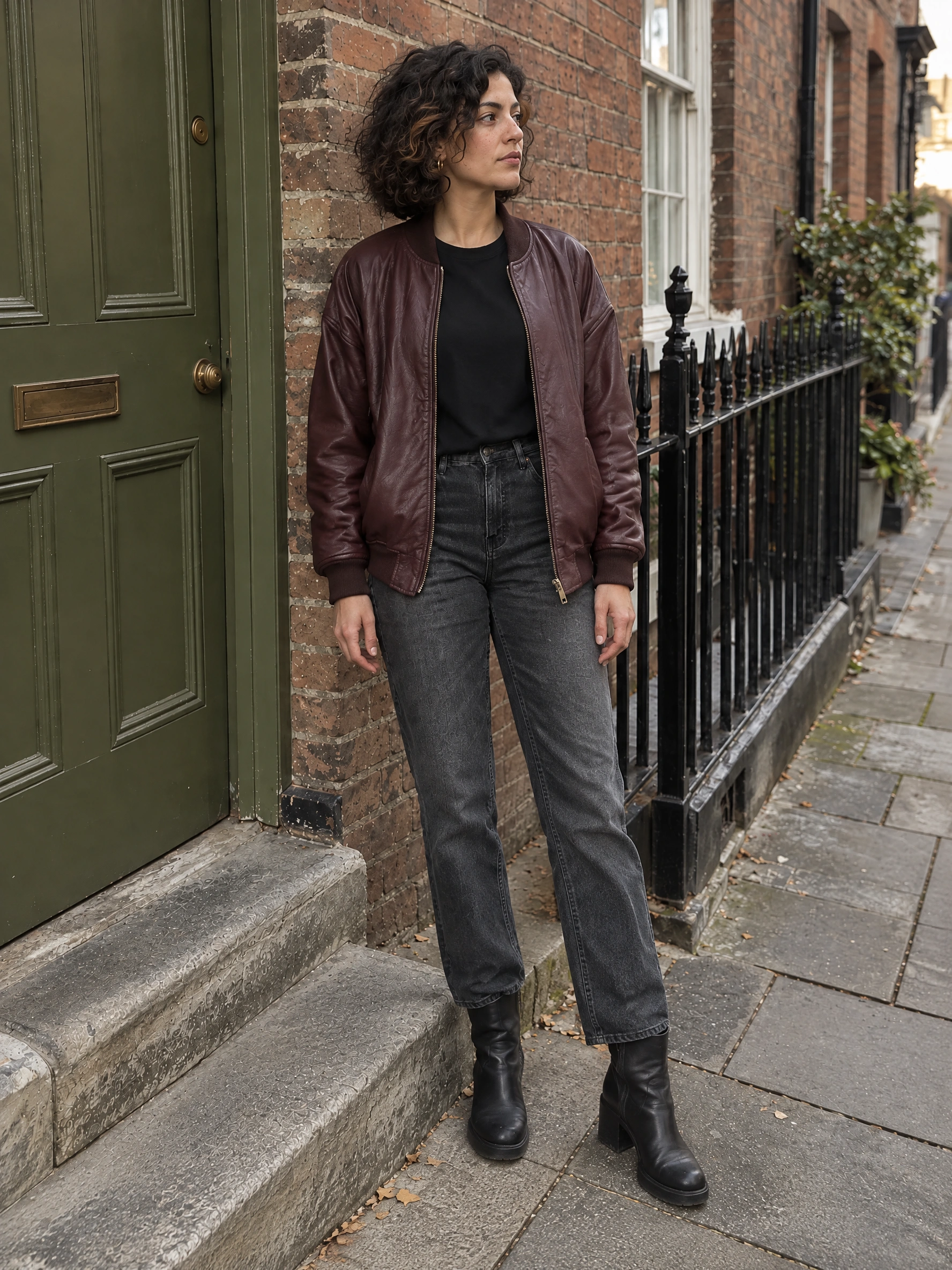
Curly bob, profile features and visible build remain recognizable; both boots and two separate relaxed hands are shown. Burgundy jacket seams, black tee and charcoal jeans remain coherent; feet sit on the pavement without a visible anatomical contradiction.
Zoom into face & task details
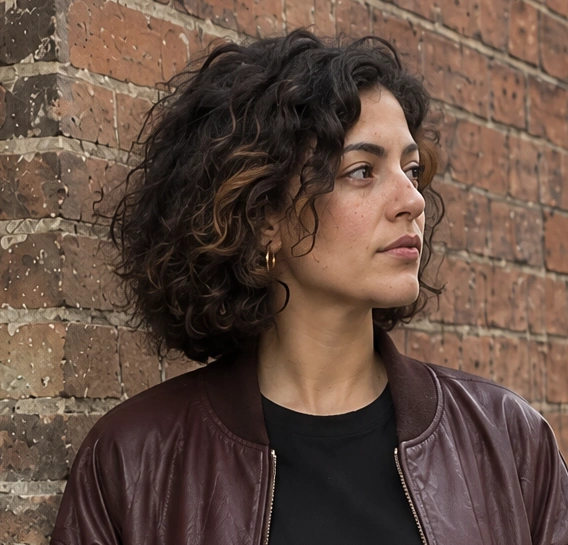
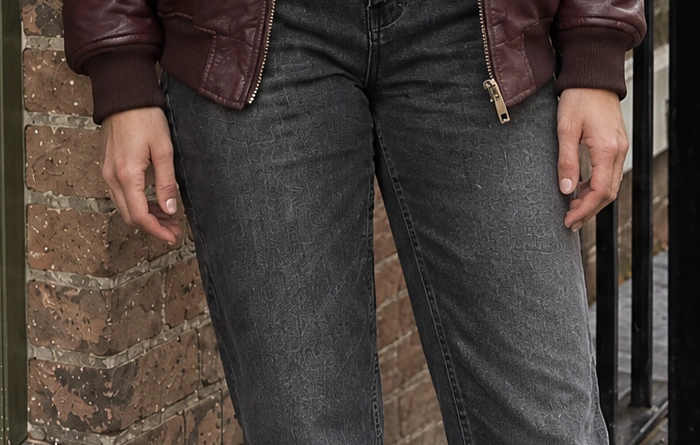
Pixel crops only. Click for full crop; open the main image for the original-resolution view.
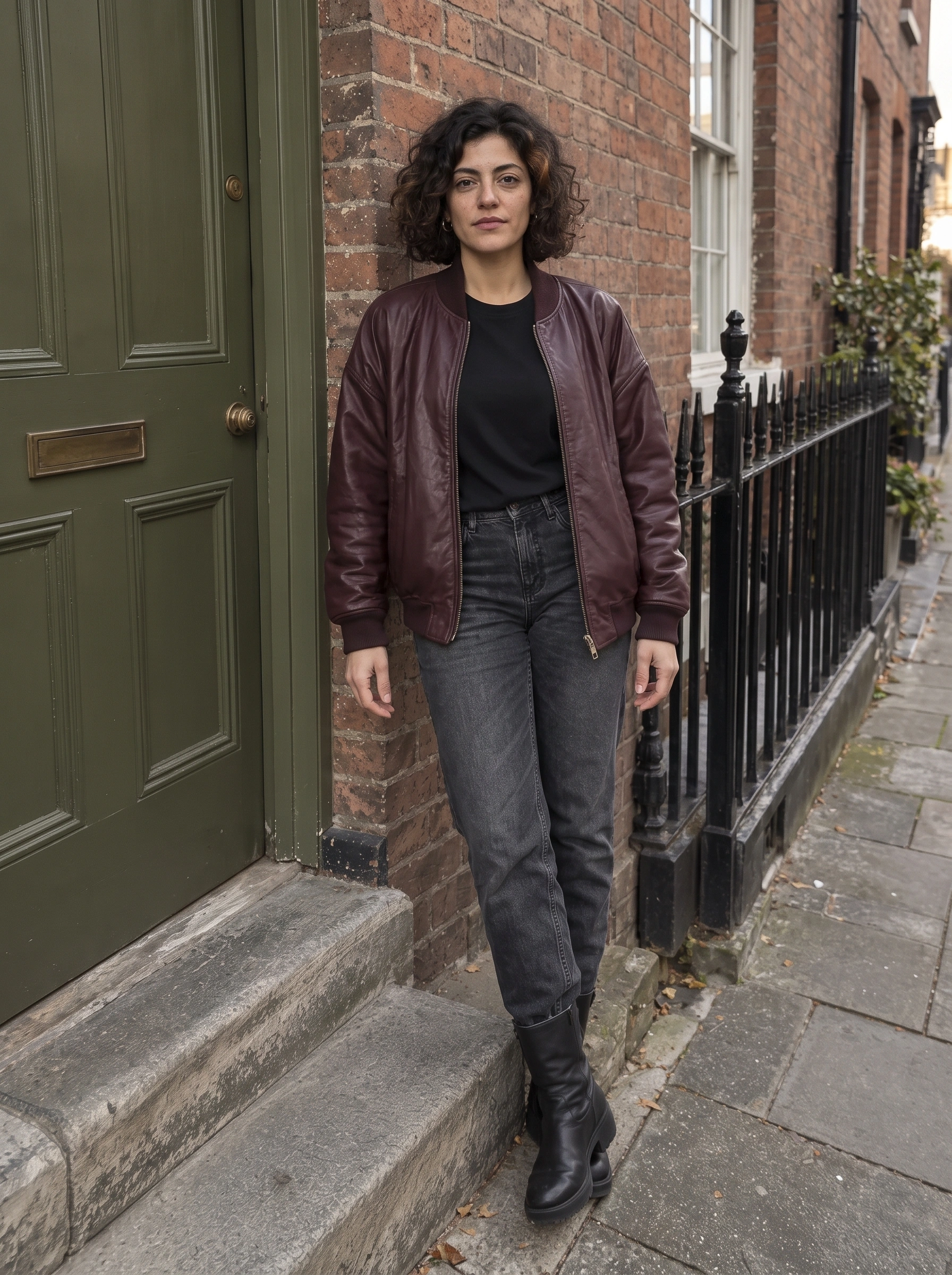
Complete head-to-foot framing shows two separate hands and grounded boots; visible build and recognizable identity remain coherent. Burgundy leather, charcoal jeans and the brick street retain the original styling without a material visible anatomy error.
Zoom into face & task details
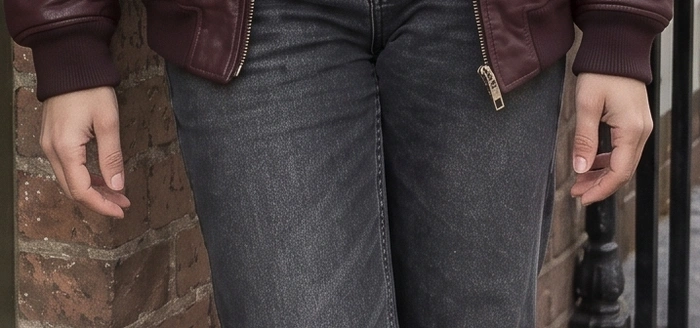
Pixel crops only. Click for full crop; open the main image for the original-resolution view.
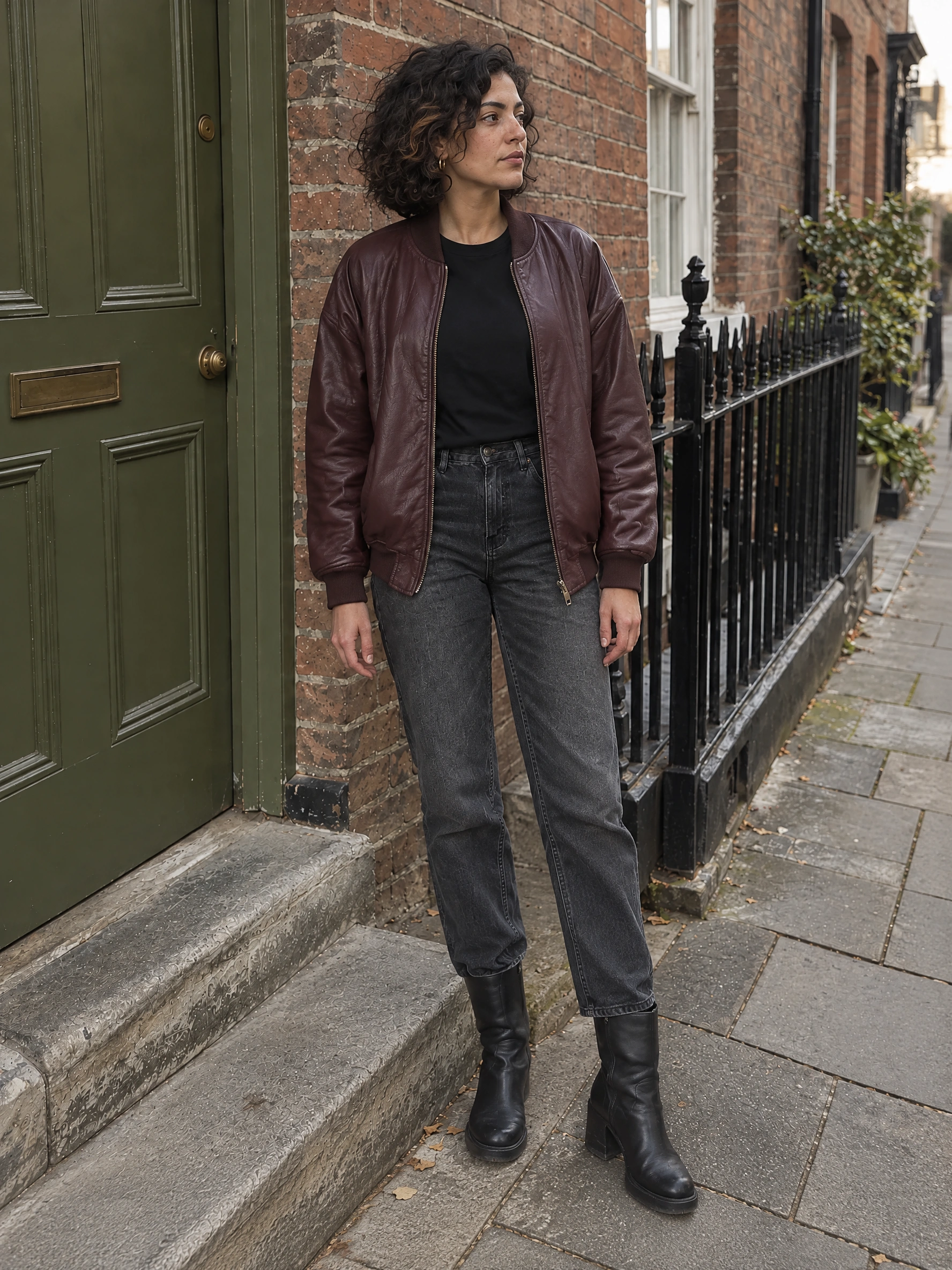
The complete body and both boots are visible, with a relaxed hand on each side and a grounded stance. Face, curly bob, jacket construction and body build remain recognizable; hidden finger surfaces are not certified.
Zoom into face & task details
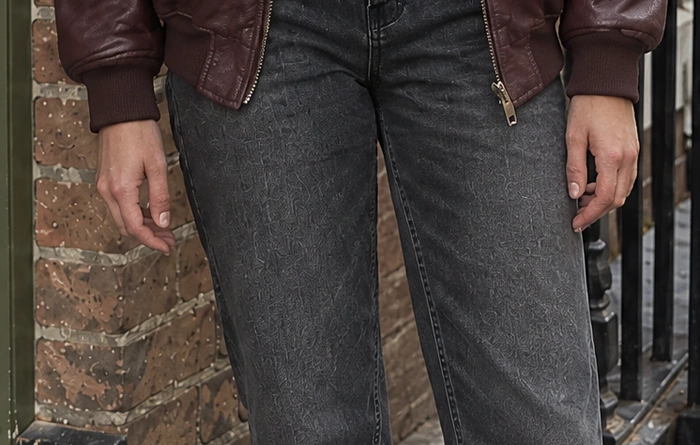
Pixel crops only. Click for full crop; open the main image for the original-resolution view.
Outfit Change & Product Details: all six planned cells
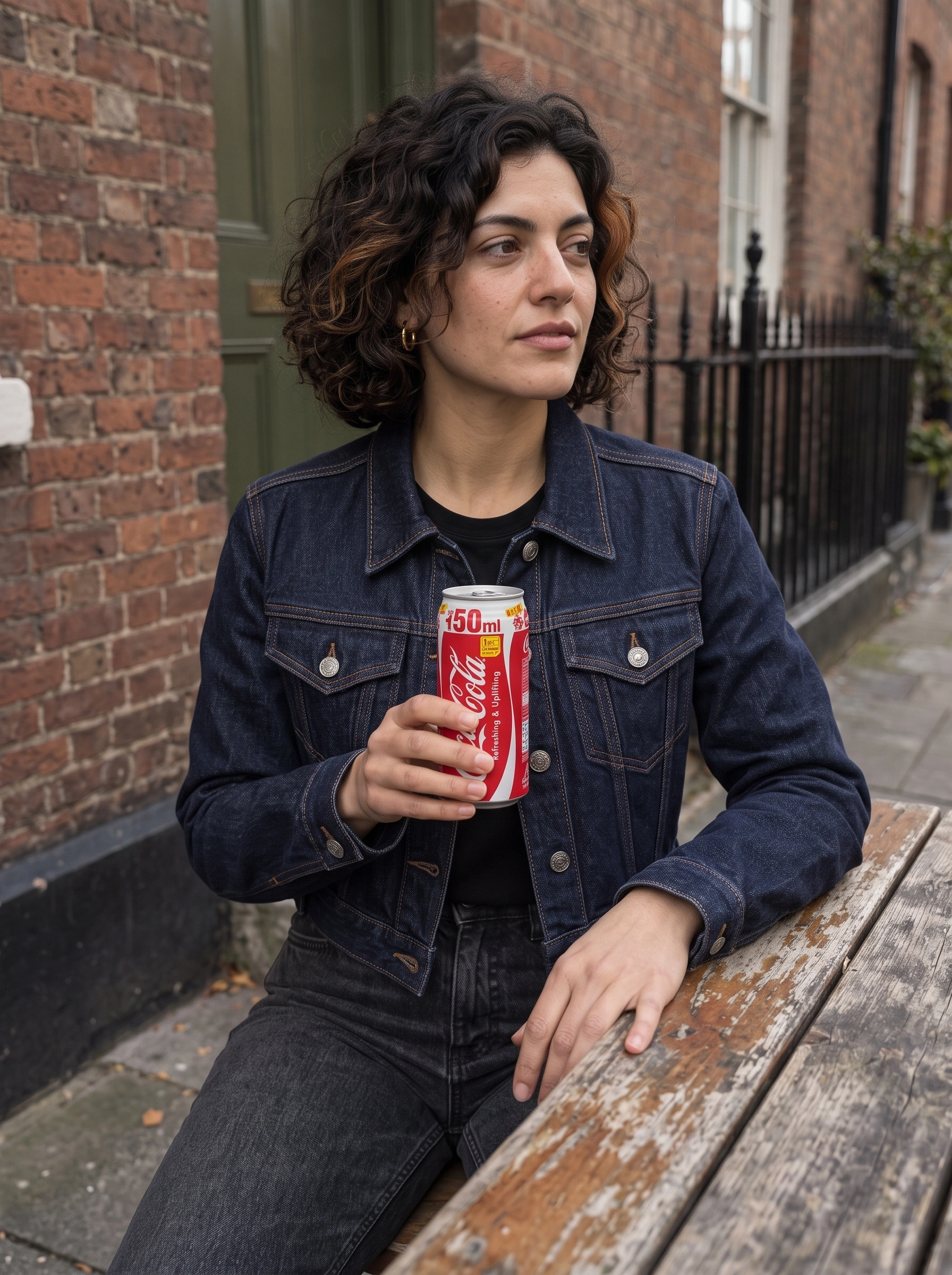
The same face, indigo denim and physically readable hand/can contact are retained, including the specified 150ml marking. Fingers cross and hide a substantial part of the central wordmark despite the clear-label brief; the small yellow-block copy is not a verified exact match. Needs packaging repair before use.
Zoom into face & task details
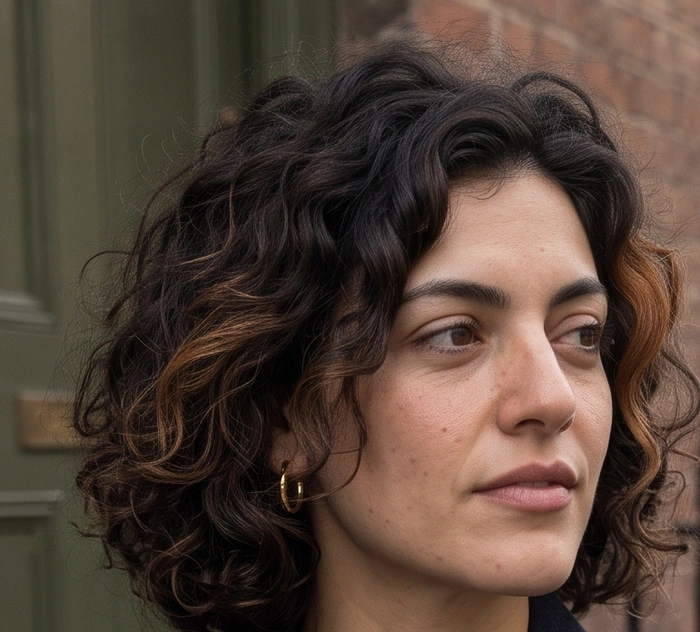
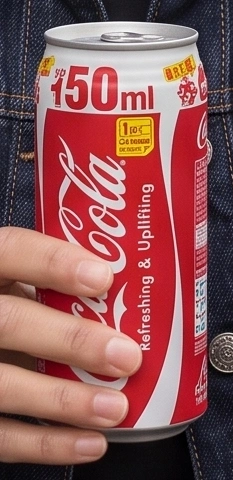
Pixel crops only. Click for full crop; open the main image for the original-resolution view.
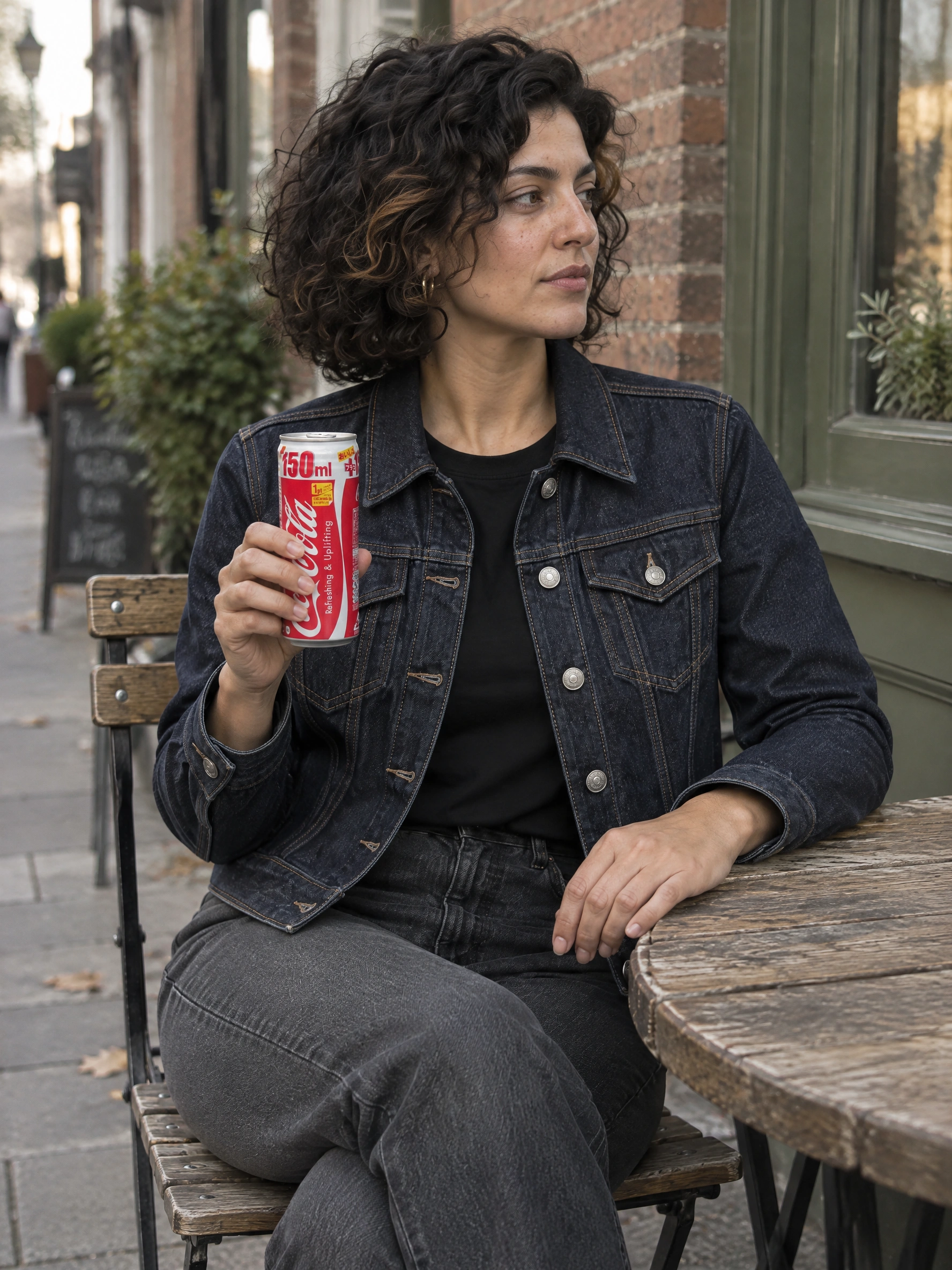
The new jacket silhouette and pocket seams are coherent and the can retains its prominent 150ml marking. Fingers cover a substantial part of the central wordmark despite the unobstructed-label brief, and the vertical small wording is not a clean exact match. Packaging needs inspection/repair before use.
Zoom into face & task details
Pixel crops only. Click for full crop; open the main image for the original-resolution view.
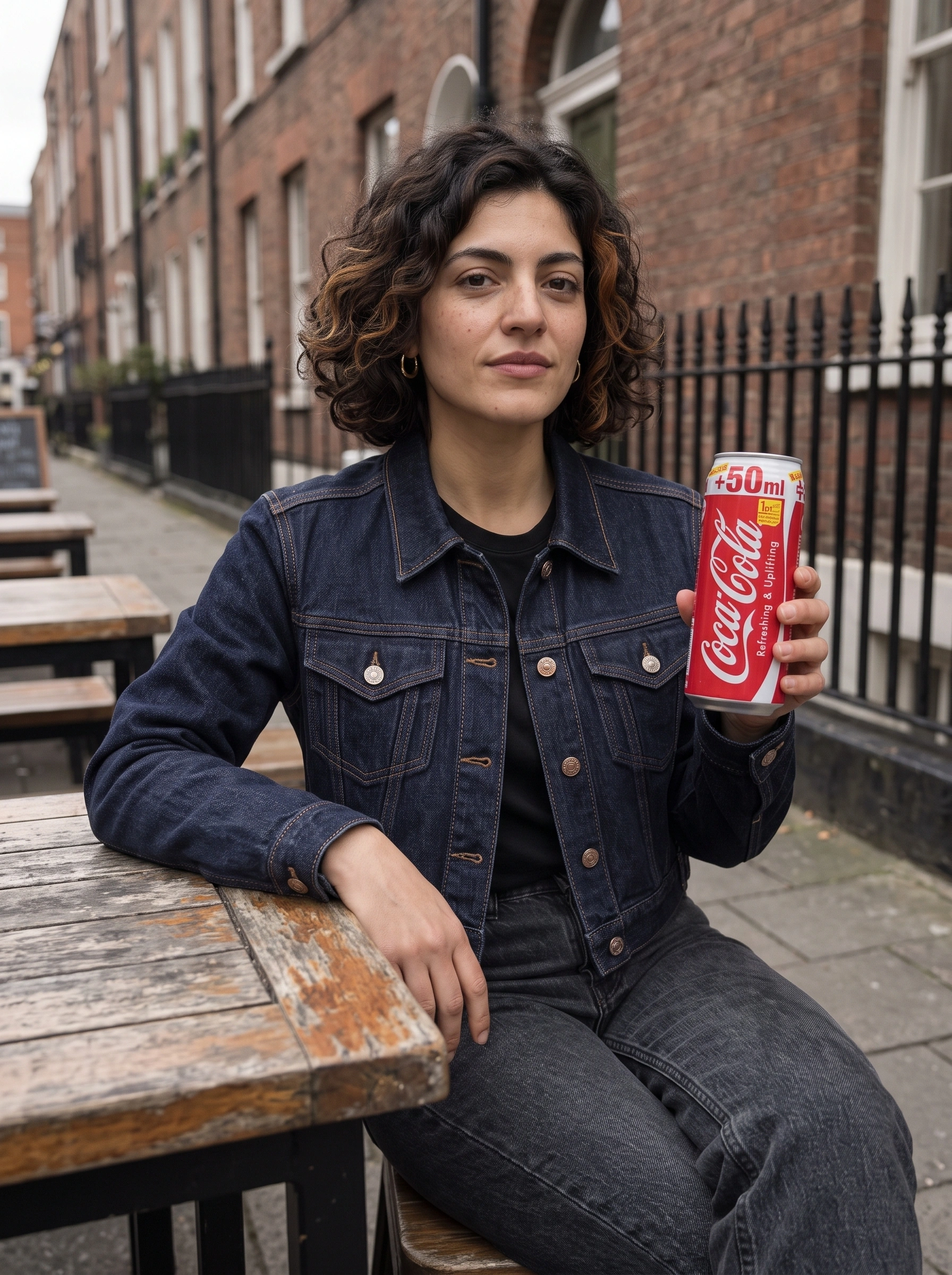
Identity, indigo denim, topstitching and chest-pocket layout are recognizable; hands and contact look physically readable. The prominent can marking becomes +50ml instead of the reference 150ml, with rewritten small label copy; the can is also held on the opposite hand side from the brief. Not usable for packaging-preservation work.
Zoom into face & task details
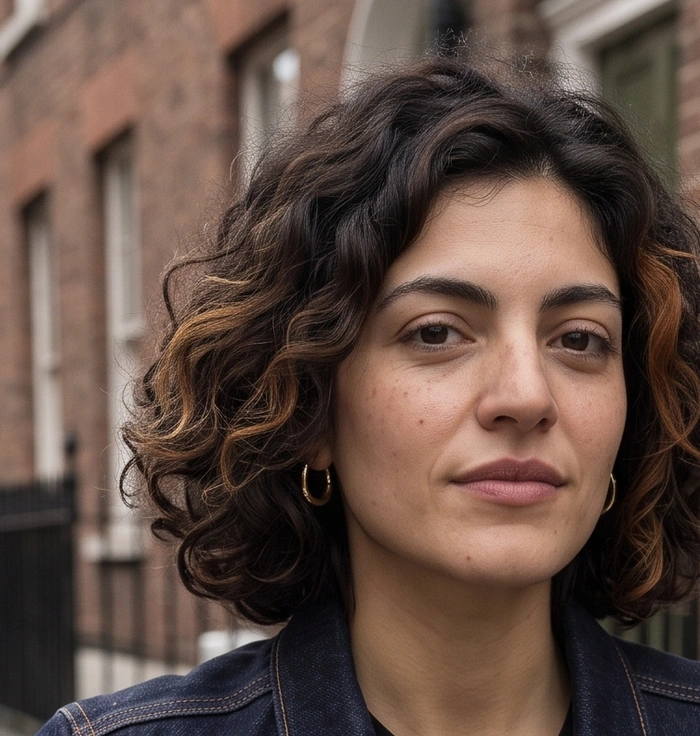
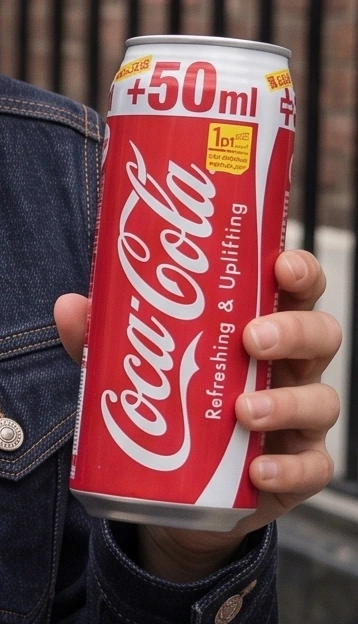
Pixel crops only. Click for full crop; open the main image for the original-resolution view.
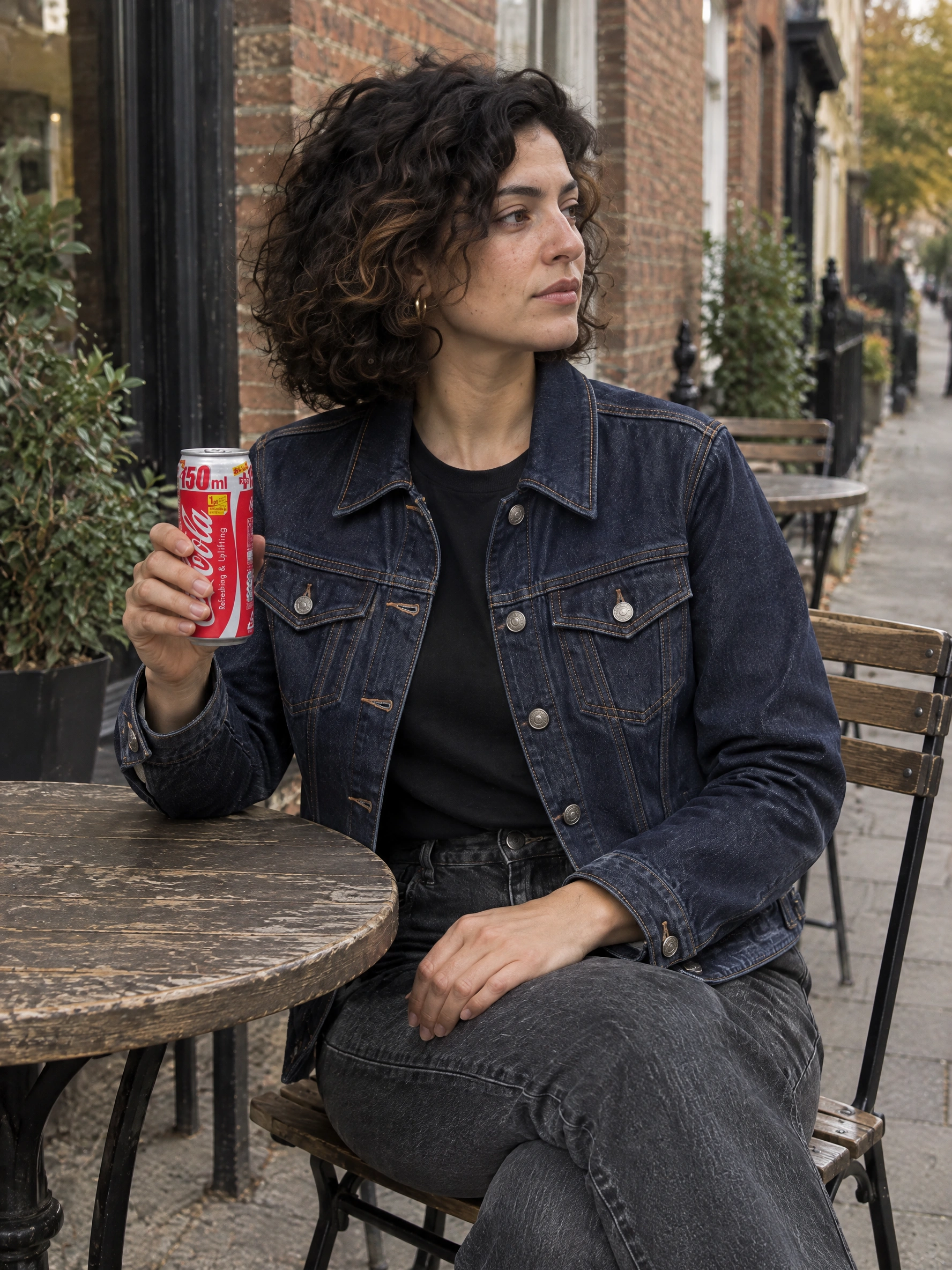
Recognizable face, natural seated posture and separate hands; the indigo jacket retains contrast seams and chest flaps. The can has recognizable branding and a plausible grip, but its small vertical wording is altered and the wordmark is partly covered. Packaging needs repair rather than an exact-copy claim.
Zoom into face & task details
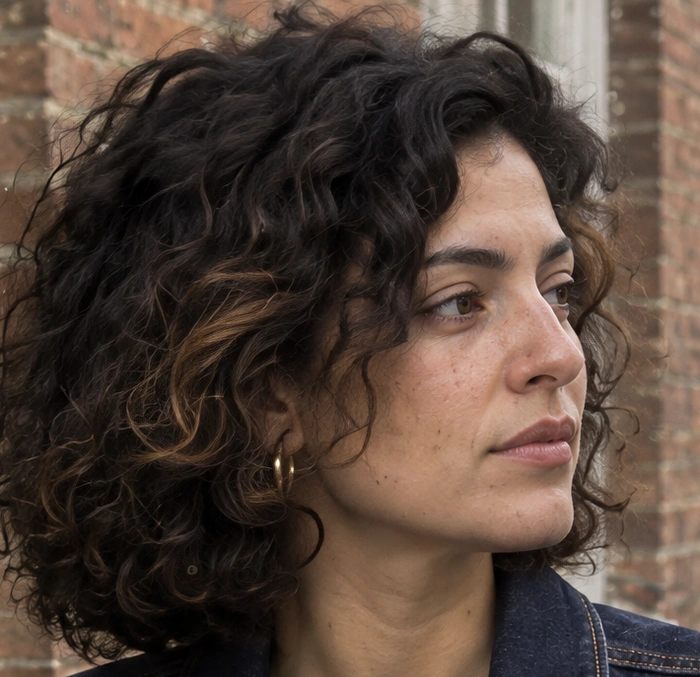
Pixel crops only. Click for full crop; open the main image for the original-resolution view.
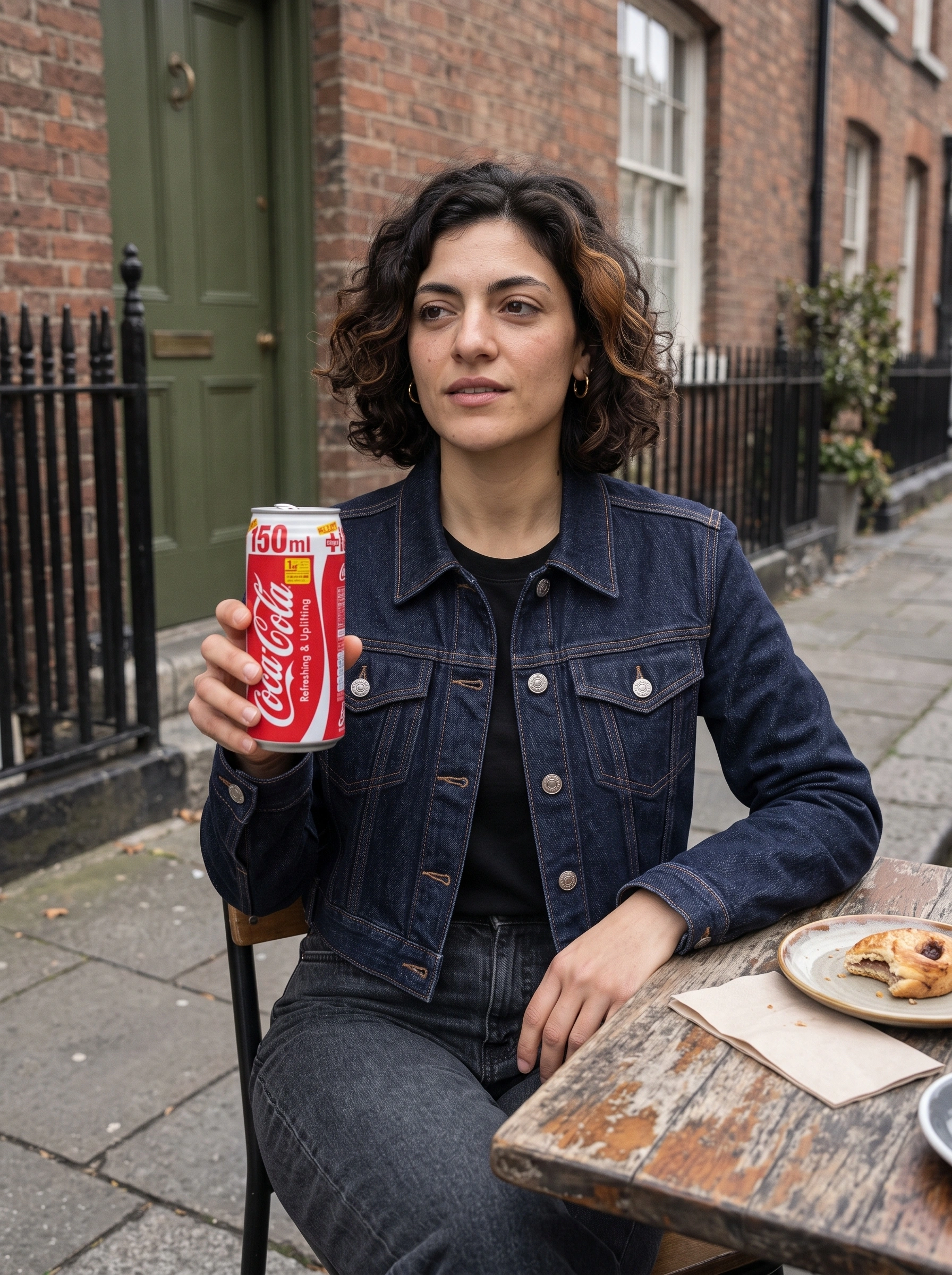
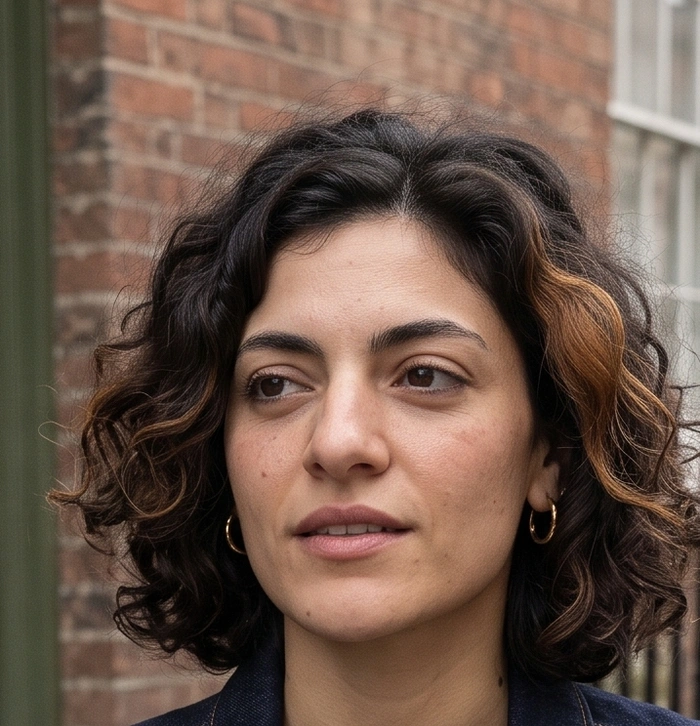
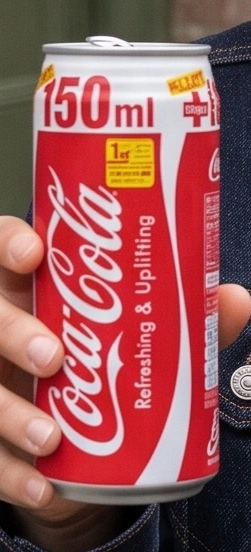
Same identity and a plausible right-hand can grip; denim color, contrast seams and chest pockets follow the replacement garment. The 150ml block survives, but the vertical slogan is rendered with altered lettering rather than a verified exact match. A good face and natural hand do not make this label ready to publish.
Zoom into face & task details
Pixel crops only. Click for full crop; open the main image for the original-resolution view.
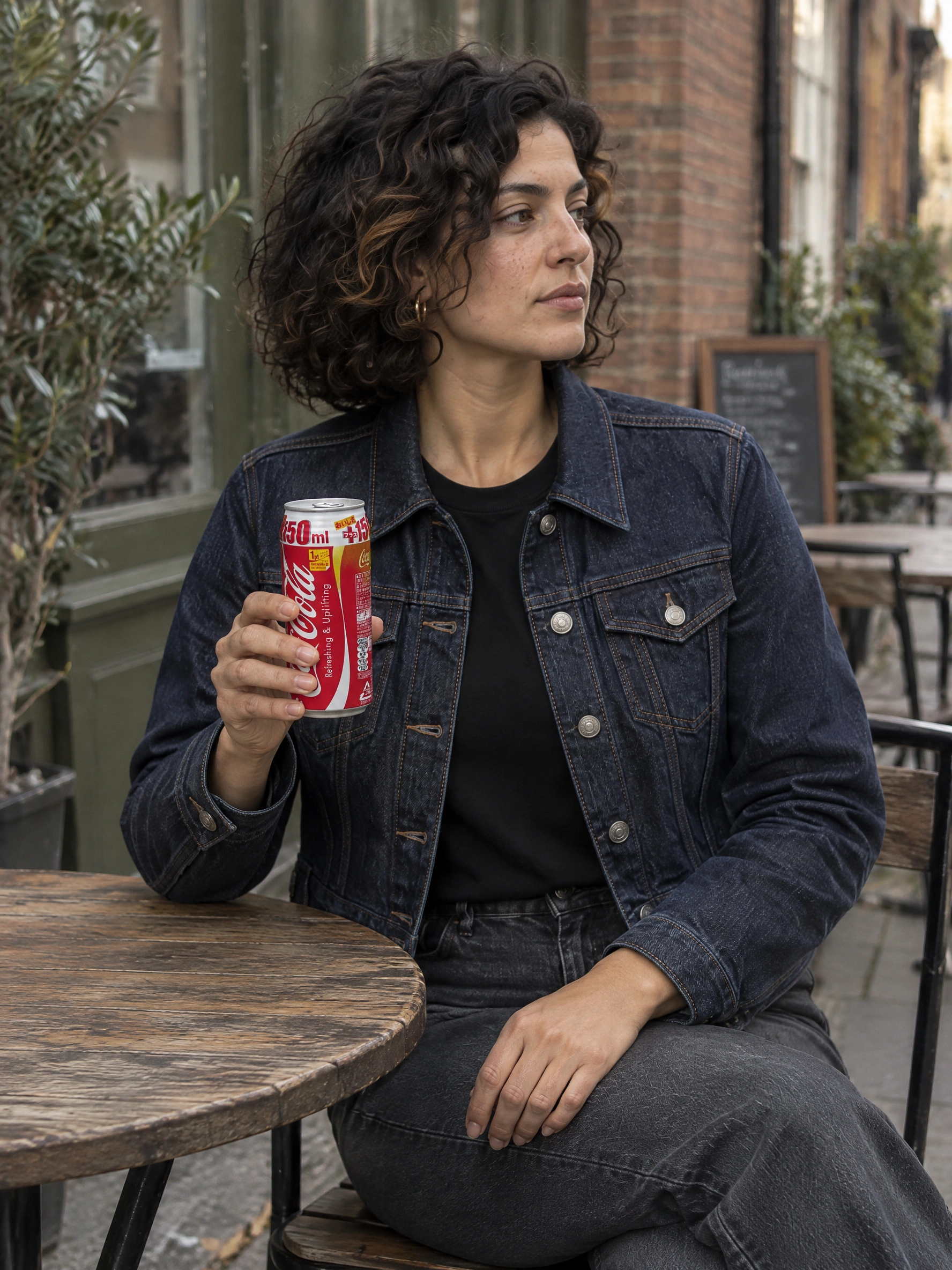
Face, curls, denim structure and seated body remain coherent with the assigned references. The grip partly covers the wordmark; small lettering does not provide a clean exact match to the source. Needs packaging review before commercial use.
Zoom into face & task details
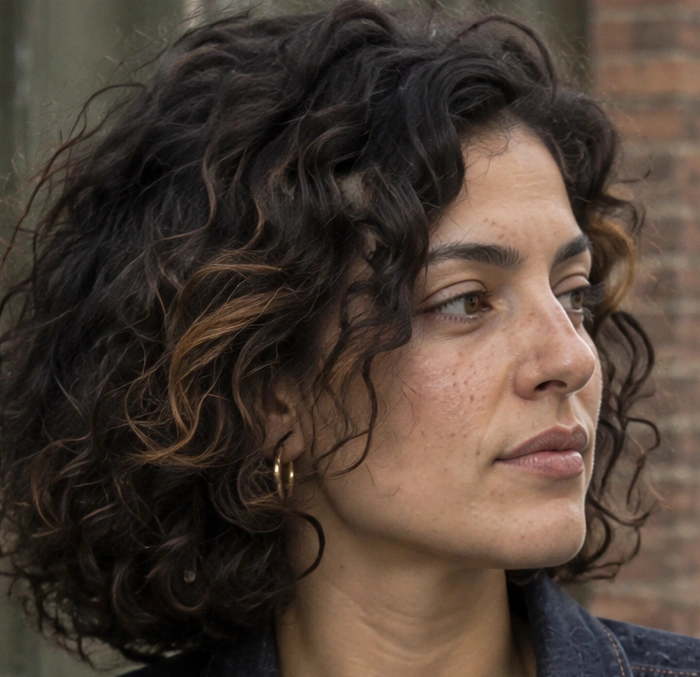
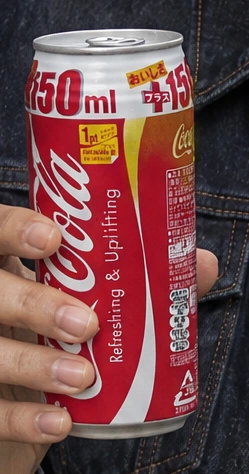
Pixel crops only. Click for full crop; open the main image for the original-resolution view.
Low-Light Selfie: all six planned cells
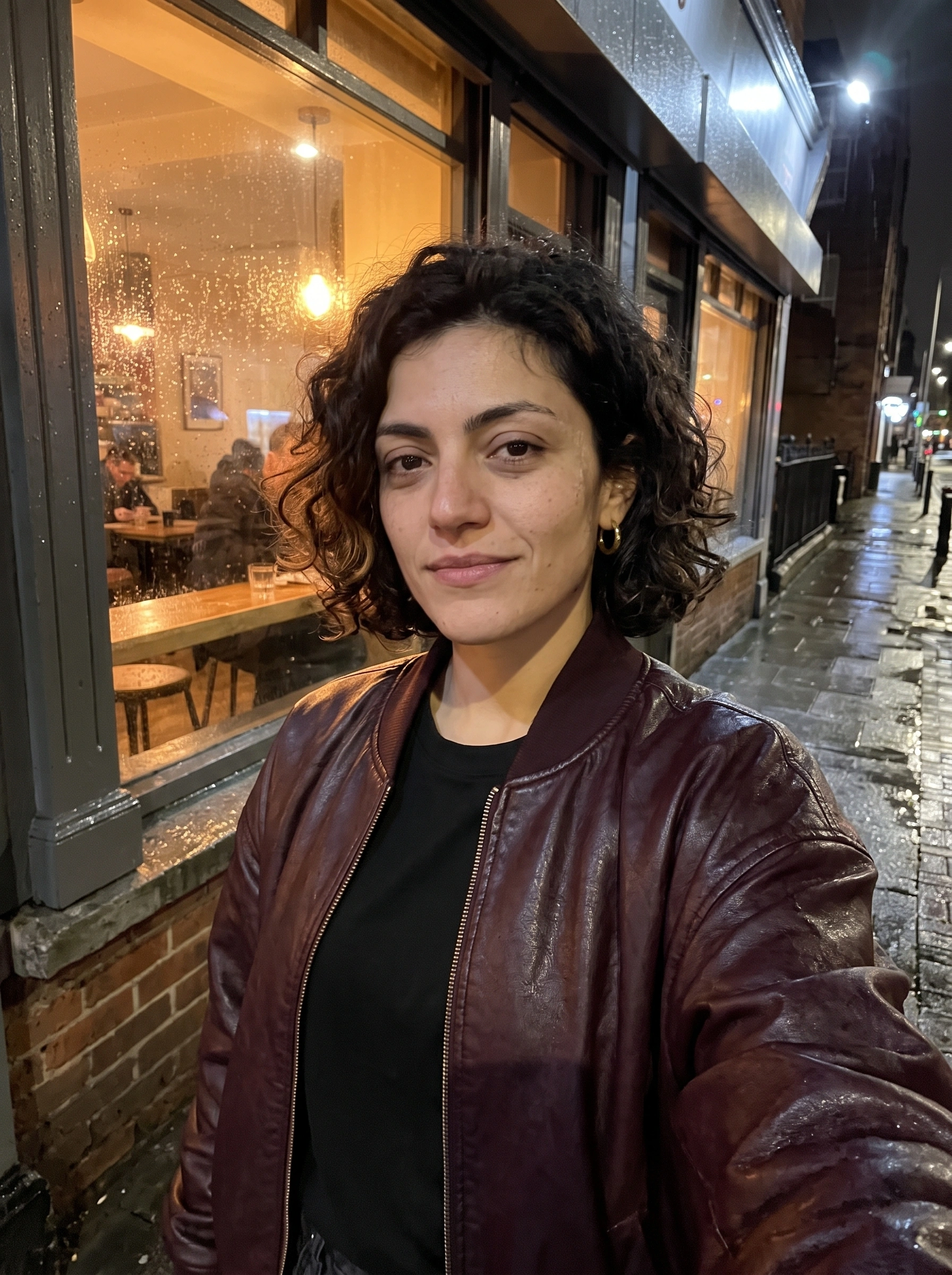
Recognizable curls, gold hoop, nose and face survive the warm-window/cool-street lighting change. Rainy pavement, fine shadow noise and an extended selfie arm look plausible, but visible café patrons behind the window contradict the shared exactly-one-adult instruction.
Zoom into face & task details
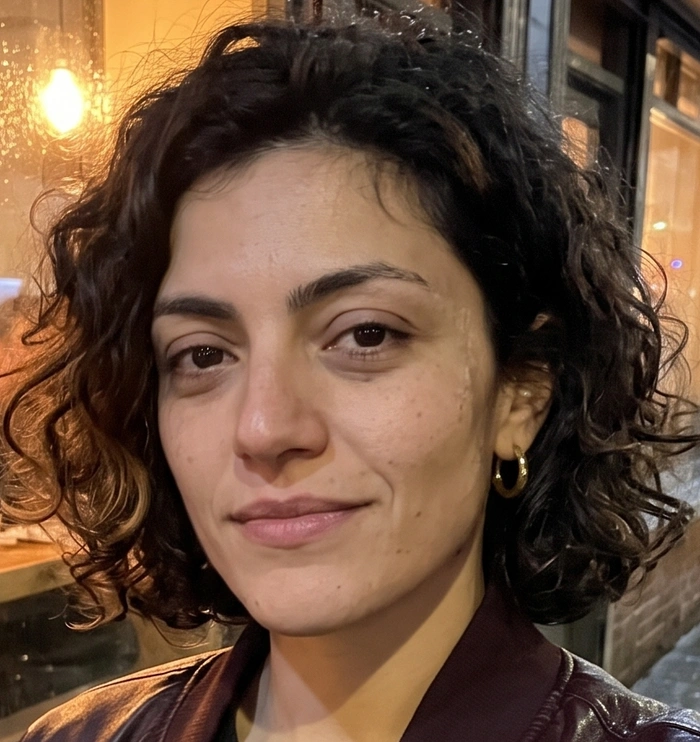
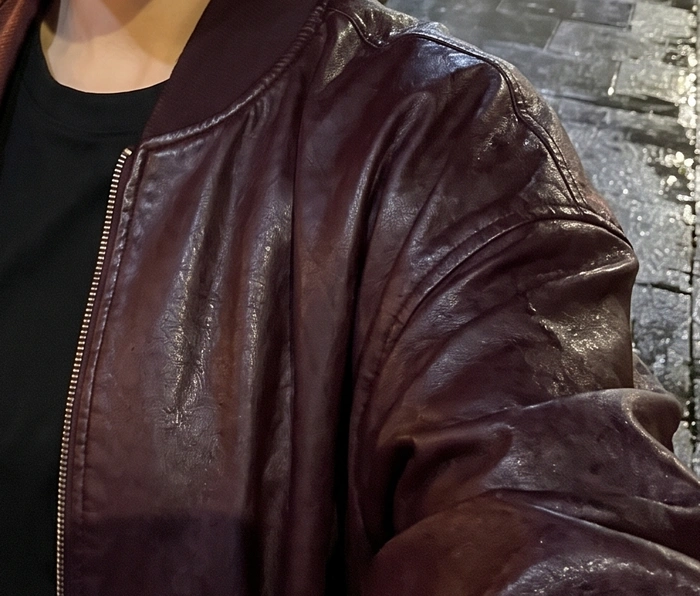
Pixel crops only. Click for full crop; open the main image for the original-resolution view.
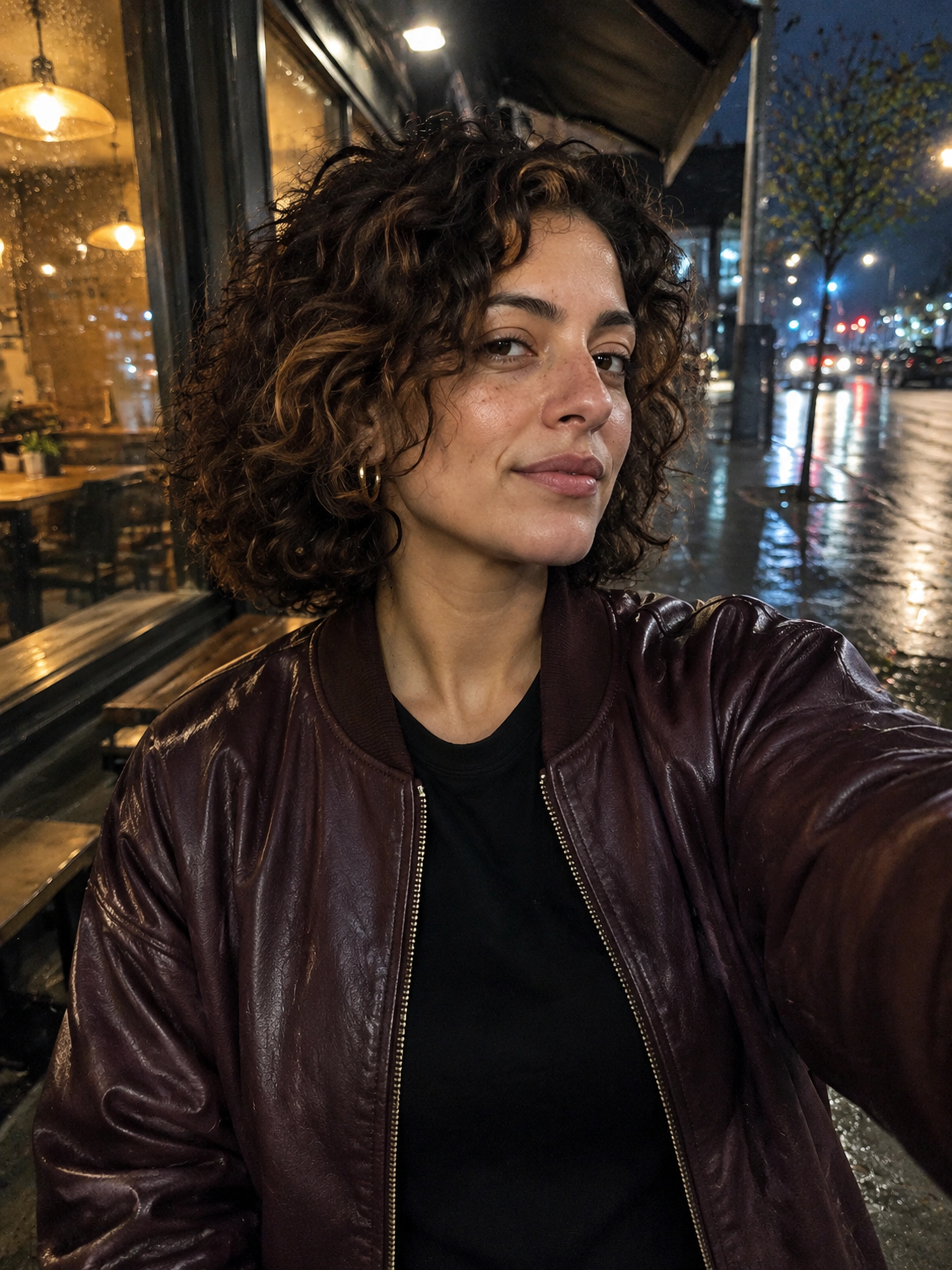
Recognizable face and jacket survive the mixed warm café and cool street light; the extended arm makes the selfie framing clear. Wet pavement, dim-light texture and an empty café support the one-adult scene without a visible anatomical contradiction.
Zoom into face & task details
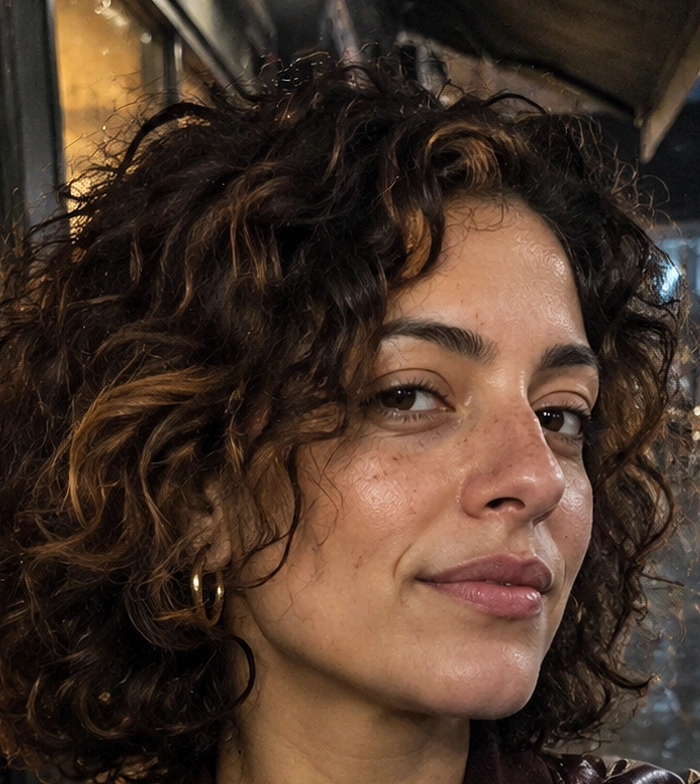
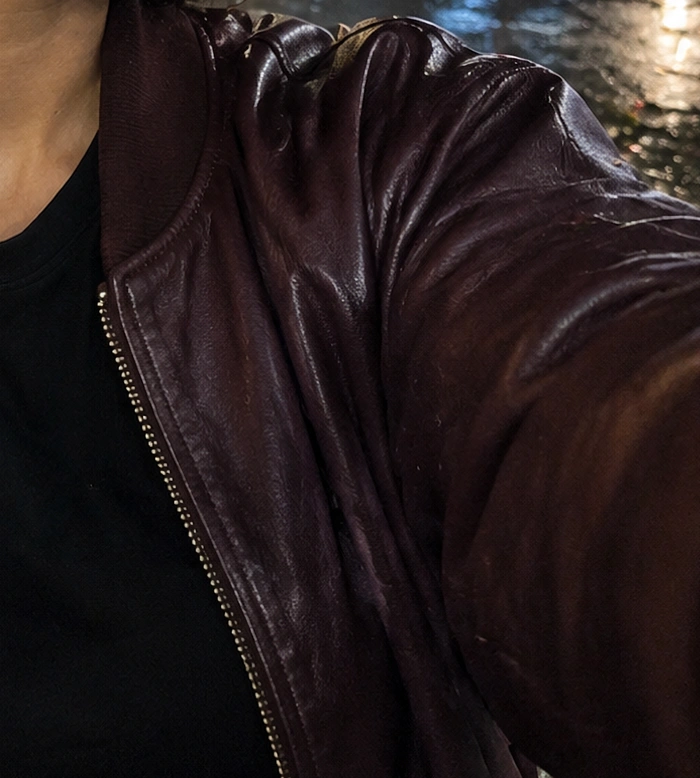
Pixel crops only. Click for full crop; open the main image for the original-resolution view.
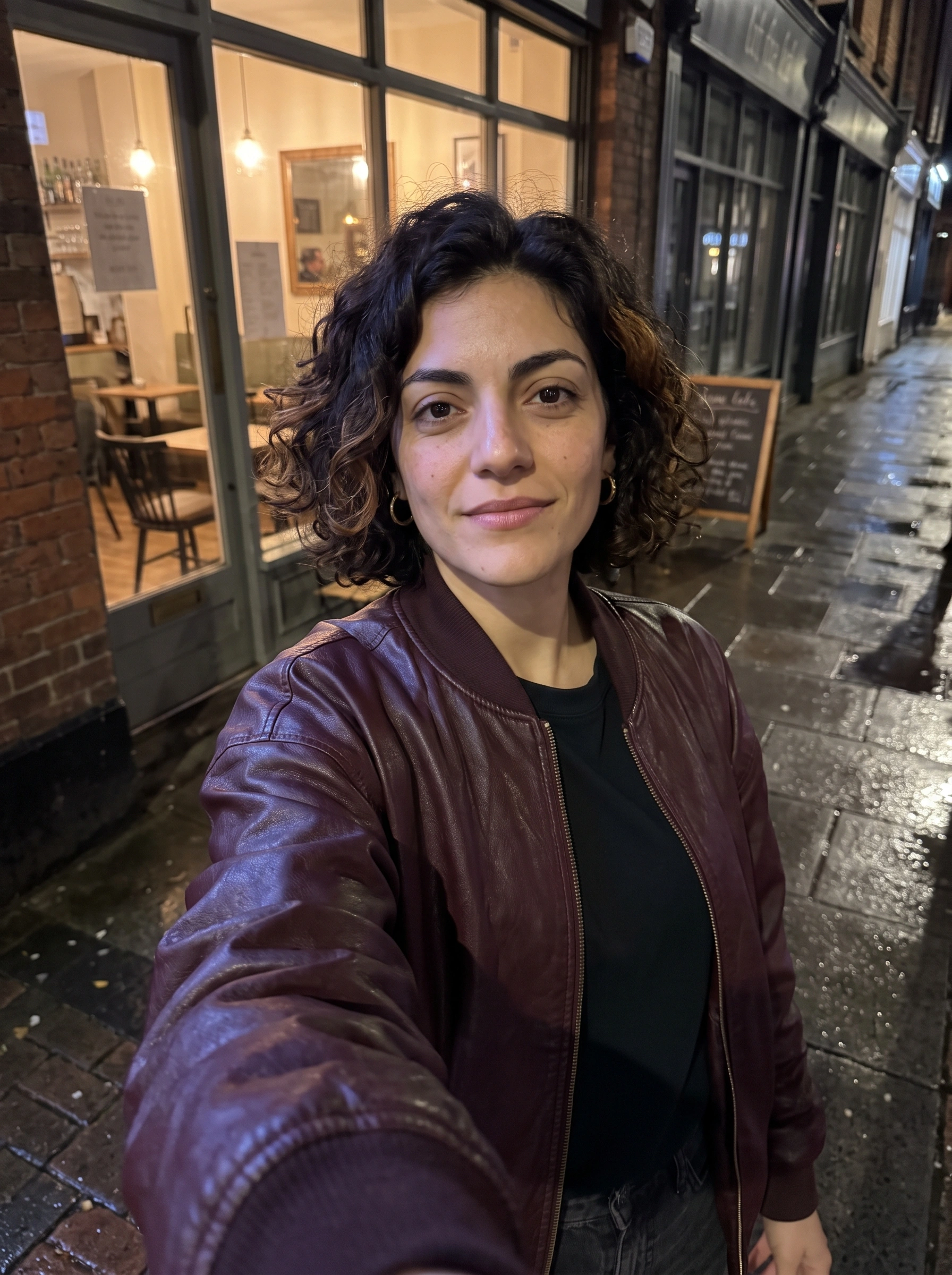
The face, bob and burgundy jacket remain recognizable in a plausible wet-street phone selfie. A visible adult behind the café window violates the shared exactly-one-adult instruction; this is a background-count failure rather than identity drift.
Zoom into face & task details
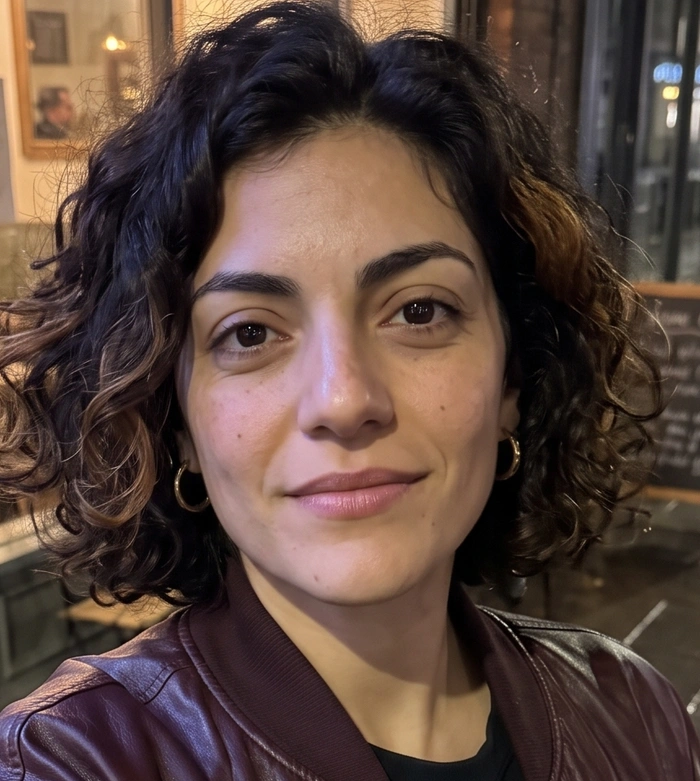
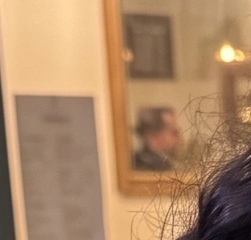
Pixel crops only. Click for full crop; open the main image for the original-resolution view.
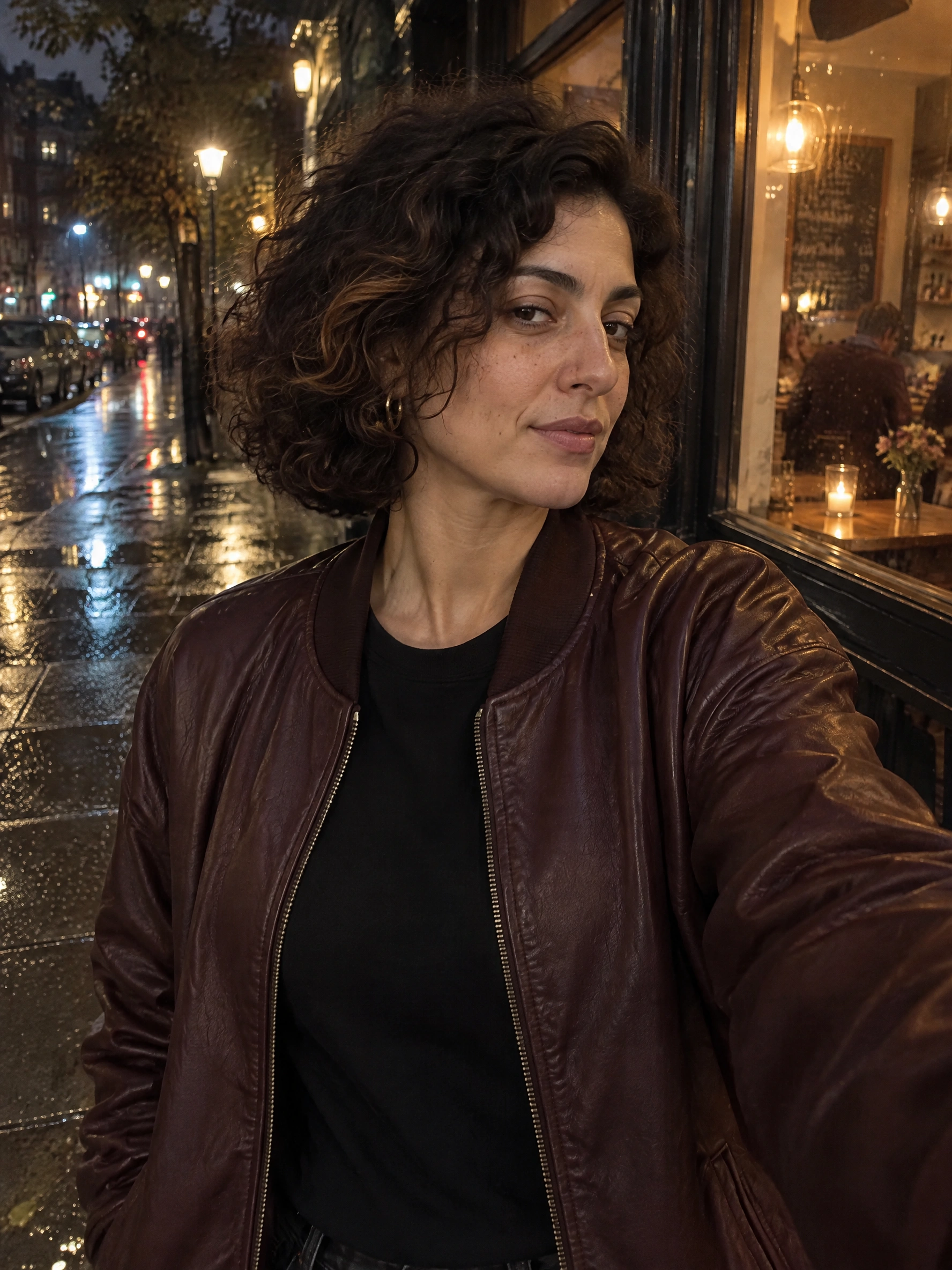
Face, curls and original jacket remain recognizable in warm/cool night light; the foreground arm gives a readable selfie perspective. Wet pavement and mild low-light texture support the phone-photo brief without a visible extra adult or anatomical contradiction.
Zoom into face & task details

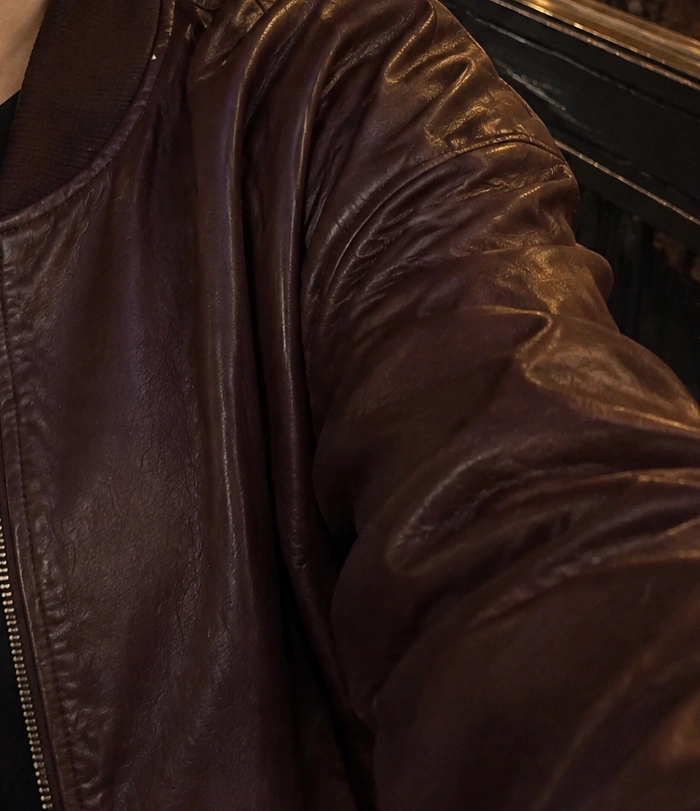
Pixel crops only. Click for full crop; open the main image for the original-resolution view.
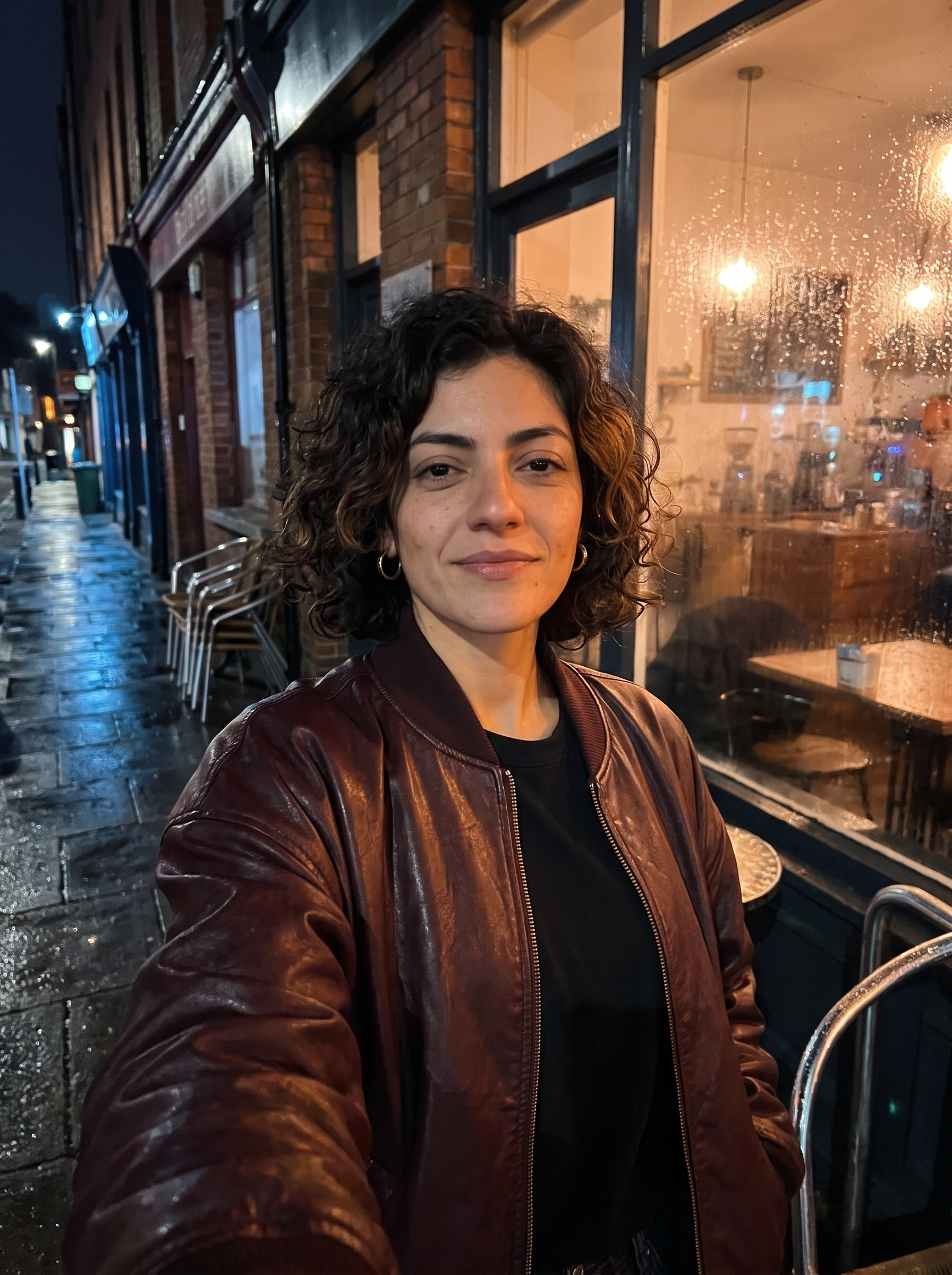
Warm/cool night lighting, wet pavement and a selfie arm produce a plausible phone photo with recognizable identity. Visible café patrons through the window add extra adults despite the one-adult instruction. Needs background repair to meet this brief.
Zoom into face & task details
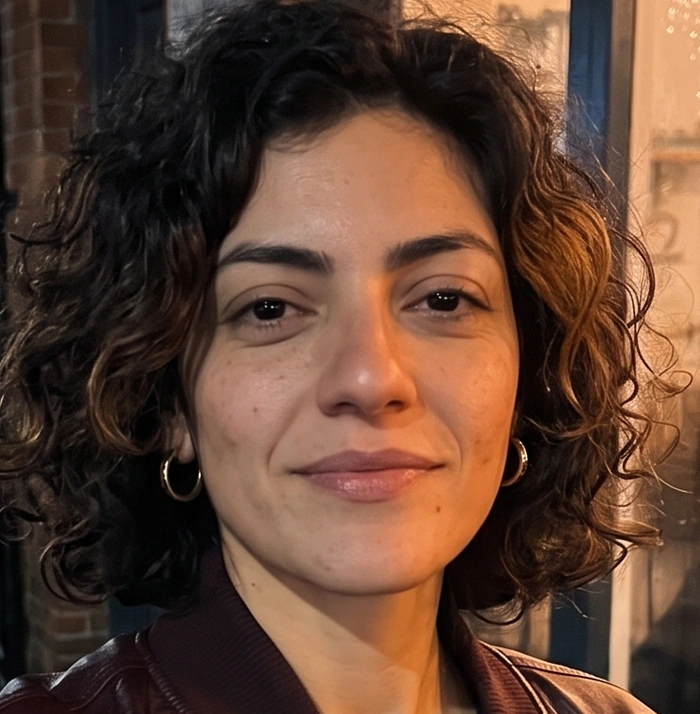
Pixel crops only. Click for full crop; open the main image for the original-resolution view.
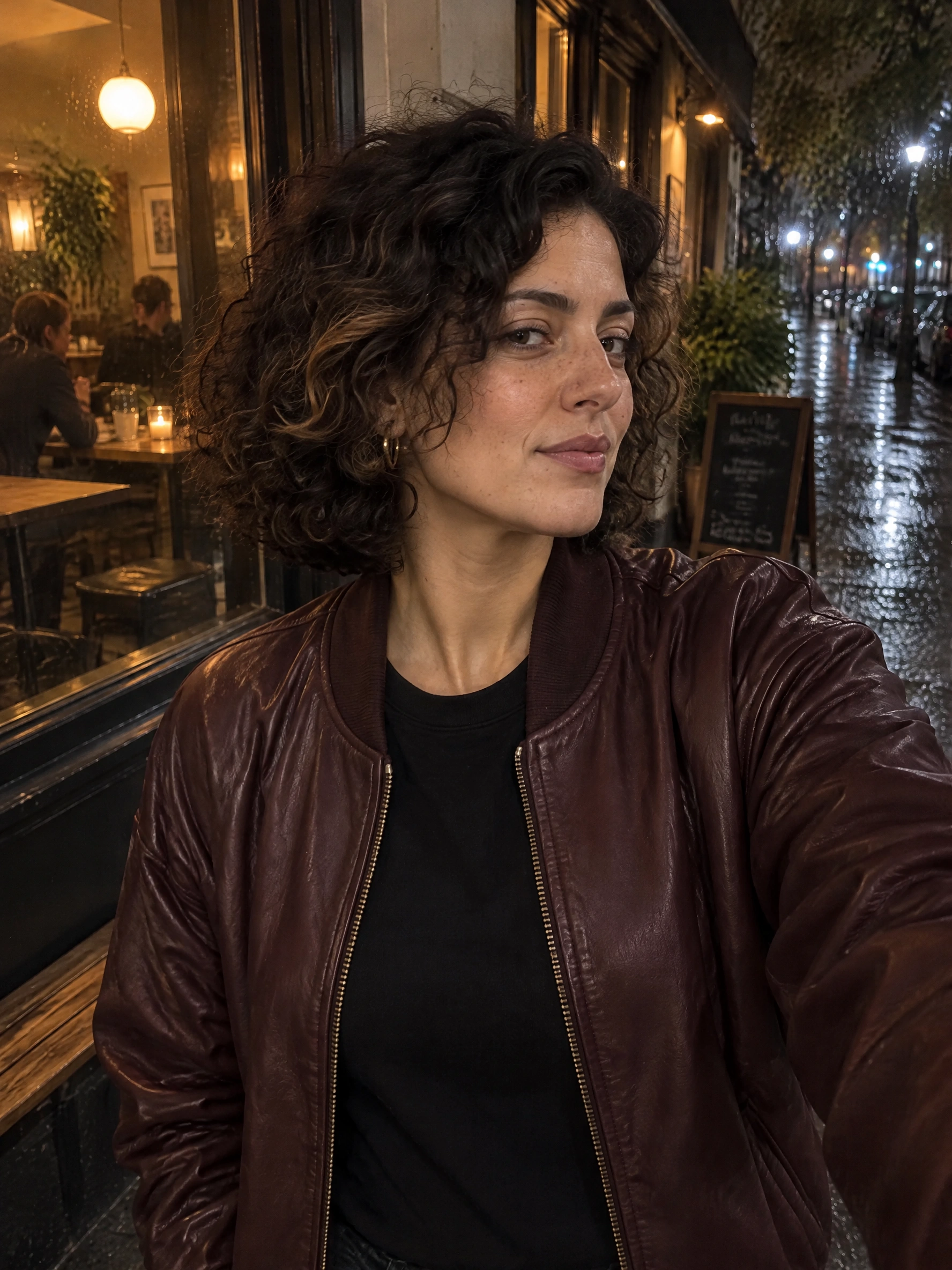
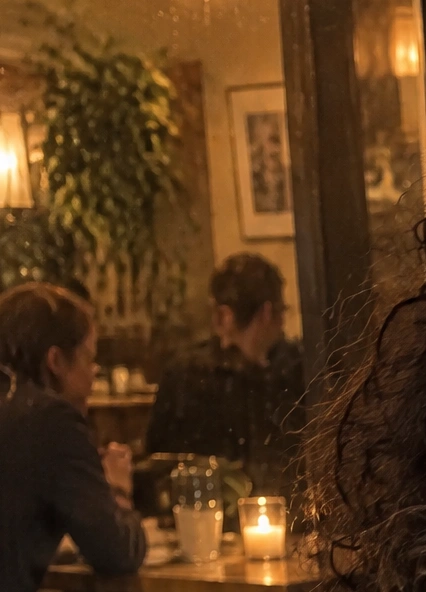
Face, curls and leather remain readable in dim warm window light, with plausible rain reflections and phone framing. Two visible café patrons add extra adults behind the foreground creator, conflicting with the shared one-adult instruction; this is an adherence issue, not face drift.
Zoom into face & task details

Pixel crops only. Click for full crop; open the main image for the original-resolution view.
Explore the tool, or open Create Photos in Studio. Sign in to generate and check the current credit quote.
Which model keeps the same AI influencer better?
The coarse identity and visible-body scores tied at 2/2 across all 30 reviewed images. That is no measured identity advantage for either model in this one-character sample, and it does not prove pixel-level identity or anatomical equivalence. We judge similarity to the original, not whether two generated outputs happen to resemble one another. The side-profile task also tests whether the model follows the angle instead of avoiding it.
Mean subjective category score over reviewed completed images; task failures with no image are not assigned invented visual scores. Visible body checks in cropped portraits do not measure full-body fidelity.
For a long-running creator, approve several references rather than relying on text alone. Read how to keep an AI influencer consistent and the Consistent Character Generator workflow. This study changes scene, angle and light, but it does not test a multiweek feed, video identity or training a custom character.
Generation speed, retries and real cost per usable image
Divide all recorded net generation charges by the number that pass the brief. A low price per request is not automatically a low price per usable image. Supplier usage and website quotes are separate accounting systems.
Cost per usable image = total reported net generation credits / publishable image count
| Measure | Nano Banana 2.1 | GPT Image 2.5 Sunburst |
|---|---|---|
| Planned cells / completed images | 15 / 15 | 15 / 15 |
| Accepted generation attempts, including delivery retries | 15 | 18 |
| Strict publishable images | 9/15 | 9/15 |
| Reported actual supplier credits, all attempts | 75.0 | 150.0 |
| Supplier credits per publishable image | 8.33 | 16.67 |
| Website quote per 2K generation | 8 website credits | 5 website credits |
| Actual website balance debited by this experiment | None: direct supplier experiment | None: direct supplier experiment |
| Actual USD spend | Not established | Not established |
| Successful request median / timed count | 61.6 seconds / 15 requests | 35.4 seconds / 15 requests |
Provider completeTime minus createTime, in seconds, including the provider-side creation-to-completion interval. Excludes result download, manual review and time between failed-input retries. Lower is faster in this run; not a latency guarantee.
Strict editorial usable rule; denominators are 15 planned cells per model. Original errors and any byte-identical input-delivery retries are retained separately; no low-scoring image was replaced.
All reported charges for initial and recovery attempts divided by strict publishable count. N/A when no image passes or a charge is unknown. Excludes reference creation, subscriptions, manual fixes and currency conversion.
What failed, and what was retried?
All three initial Sunburst outfit requests returned 1013 (file processing failed), each reporting 0 supplier credits. We retried each once after rehosting the exact original product JPEG bytes through the provider’s upload service; SHA256 matched. All three then completed. Thus 30 final images came from 33 accepted generation requests (15 Nano, 18 Sunburst), costing 75 and 150 reported supplier credits respectively. This input-delivery difference limits a clean speed comparison for the multi-reference task; successful-request medians exclude the failed-request and manual recovery intervals.
There were no quality-driven rerolls. Network GET retries only retrieve an existing task or output and are not new generations. A stored task ID is kept after an ambiguous submission; the script never resubmits it automatically. Download interruptions do not become new model failures or extra images.
Estimate your own budget
Nano Banana 2.1
5.00 supplier credits per attempt
150.0 credits for 30 attempts
18.0 expected publishable images · 8.33 credits per expected publishable image
GPT Image 2.5 Sunburst
10.00 supplier credits per attempt
300.0 credits for 30 attempts
18.0 expected publishable images · 16.67 credits per expected publishable image
Forecast, not a billing quote or measured future result. The default 60% is an editable assumption, not our test rate. Supplier estimates use this sample’s reported mean charge; website estimates use the 2K catalog quote, with no app balance debited in this experiment. Excludes subscription fees, reference creation and manual editing. A 0% rate gives N/A per usable image.
Nano Banana vs GPT Image: which should you choose?
Choose for the task you actually publish, and verify the result with your own reference. A portrait-led Instagram feed, a full-body virtual model and a packaging-sensitive UGC concept do not share the same failure tolerance.
No clear usability winner in this sample: both produced 9/15 publishable images for this selection. Compare detail failures and your own reference; a tie here does not establish model equivalence.
Recommendation uses the strict publishable counts for the selected brief. It does not infer a universal model ranking from three repeats per task.
| Your work | Use the evidence this way |
|---|---|
| Instagram portraits and everyday selfies | Inspect frontal and low-light identity, skin and camera realism. Prefer readable continuity over a single polished face. |
| Virtual fashion model | Check full-body crop, visible hands and the replacement jacket construction. Neither an attractive face nor a correct jacket fixes a hidden required hand. |
| Ecommerce UGC and paid creative | Review every visible product word and logo against the reference. Failed packaging needs a verified repair or pixel-preserving product workflow before publication. |
| Long-running character operation | Test the whole five-task spread on your own adult identity. One input character cannot predict another face, body, wardrobe or campaign. |
For packaging-led content, also read AI influencer holding product: preserve logos and packaging. For wardrobe boundaries, use the same-outfit tutorial. Those are different workflows and experiments, not extra samples in this comparison.
How to test both models yourself in Create Photos
Reuse the original reference and Direction, change only the model, then compare independent outputs. We checked the signed-in local workflow’s upload control, both model selections and 2K quotes. The benchmark itself was run through the supplier API, without charging an app balance.
- Open the AI Influencer Image Generator, then Create Photos in Studio. Sign in to generate.
- Write a specific brief in Direction. Use Upload reference image to attach your approved adult character; the saved creator/asset picker is also available. Do not combine two different identities unless that is the task.
- Open Choose generation model and select Nano Banana 2.1. In Generation settings, choose 2K, 3:4 and one image. Confirm the current quote before Generate photo.
- Keep the original input and Direction, select GPT Image 2.5 Sunburst and repeat with the same framing. A website template can add competing wardrobe or scene instructions; remove those before comparing.
- Repeat each brief three times if your budget allows. Compare against the original, record failed attempts, and download approved outputs from My Images or History. Do not substitute a lucky fourth image without adding its cost and attempt to your record.
The supplier request builder uses POST /api/v1/jobs/createTask and GET /api/v1/jobs/recordInfo, with different reference field names for these two models. Website prompt compilation can add context around Direction; the exact benchmark prompts and supplier payload parameters are downloadable below. This is not a claim that a click-for-click app run has identical latency or billing.
Start with a repeatable shot brief from the AI Photoshoot Prompt guide or our AI influencer prompts. Keep identity, lighting, crop and action explicit.
Explore the tool, or open Create Photos in Studio. Sign in to generate and check the current credit quote.
Frequently asked questions
Is Nano Banana or GPT Image better for realistic AI influencers?
Use the model that preserves your reference and passes your intended shot, rather than the one with the strongest generic realism claim. Our five-task comparison uses one fictional adult and three repeats per model per task. The measured verdict above applies to this small test, not every face or prompt.
Did you test Nano Banana 2 or Nano Banana 2.1?
Nano Banana 2.1. The website keeps the older nano-banana-2 selection key and model-page URL, but current generation requests map to nano-banana-2-1. Comparing that result with an old Nano Banana 2 screenshot would mix versions; our record lists the exact API IDs.
Is this GPT Image 2.5 Sunburst or Flare?
Sunburst only. These results use gpt-image-2-5-sunburst-image-to-image through KIE. No Flare output or conversational image-tool output is included. That keeps the model ID, request timing and reported supplier usage traceable.
Which one costs less?
Cost depends on the unit and how many images you can actually use. Our supplier-credit totals and cost per publishable image are measured below. Website 2K quotes at the time of testing were 8 credits for Nano Banana 2.1 and 5 for Sunburst. We did not debit an app account or infer a dollar price from these distinct credit systems.
Can either model keep a product logo and all packaging text unchanged?
Do not assume so from a recognizable wordmark. Compare the supplied product photo with the generated label at full size, including visible small text and layout. Our outfit/product task is scored against the new garment and can references. An attractive portrait with changed packaging does not pass that brief.
Should I use the same prompt for both models?
Use the same core brief, the same reference bytes and comparable framing for an initial test. Model-specific input field names can differ. We used one fixed identity block and five task instructions, with no per-model prompt optimization or quality-driven rerolls. A later optimized test would be a different experiment.
How do I keep the same AI person across both models?
Attach your approved original again for every independent request. Define the face, hair and visible body traits separately from the scene and any intended wardrobe change. Do not feed one model’s output into the other for this comparison. Review identity against the original, not only against the competing output.
Which model is faster?
Read the successful-request median in the speed chart for this run. It uses provider creation-to-completion timestamps and includes that provider-side interval; it excludes downloading and manual review. Network read retries and input-processing failures are reported separately. These values do not guarantee your future latency.
Full sample, scoring notes, method and sources
This is a small, transparent editorial test, not a statistically established ranking. One full-size editorial reviewer, model labels masked in the inspection filenames; not an independent or fully blinded review. Source origin and prompt are available. No face-embedding, OCR certification or measured advertising performance. We retained every planned cell, every generated result and every technical retry. There is no independent reviewer, embedding-based identity measurement, certified OCR score or measured ad performance.
Download the full sanitized JSON record · Download all scores, charges and timing as CSV. Original provider images, payloads and reference hashes remain in the editorial archive; every result has an original-resolution WebP and unretouched detail crops. Public receipts omit credentials, temporary result URLs and private account balances.
| Sample | Face identity | Visible body proportions | Outfit & product detail | Prompt adherence | Photographic realism | Commercial usability | Pass? |
|---|---|---|---|---|---|---|---|
| front-nano-1 | 2/2 | 2/2 | 2/2 | 2/2 | 2/2 | 2/2 | Yes |
| front-nano-2 | 2/2 | 2/2 | 2/2 | 2/2 | 2/2 | 2/2 | Yes |
| front-nano-3 | 2/2 | 2/2 | 2/2 | 2/2 | 2/2 | 2/2 | Yes |
| front-gpt-1 | 2/2 | 2/2 | 2/2 | 2/2 | 2/2 | 2/2 | Yes |
| front-gpt-2 | 2/2 | 2/2 | 2/2 | 2/2 | 2/2 | 2/2 | Yes |
| front-gpt-3 | 2/2 | 2/2 | 2/2 | 2/2 | 2/2 | 2/2 | Yes |
| profile-nano-1 | 2/2 | 2/2 | 2/2 | 2/2 | 2/2 | 2/2 | Yes |
| profile-nano-2 | 2/2 | 2/2 | 2/2 | 2/2 | 2/2 | 2/2 | Yes |
| profile-nano-3 | 2/2 | 2/2 | 2/2 | 2/2 | 2/2 | 2/2 | Yes |
| profile-gpt-1 | 2/2 | 2/2 | 2/2 | 2/2 | 2/2 | 2/2 | Yes |
| profile-gpt-2 | 2/2 | 2/2 | 2/2 | 1/2 | 2/2 | 1/2 | Needs repair |
| profile-gpt-3 | 2/2 | 2/2 | 2/2 | 1/2 | 2/2 | 1/2 | Needs repair |
| body-nano-1 | 2/2 | 2/2 | 2/2 | 2/2 | 2/2 | 2/2 | Yes |
| body-nano-2 | 2/2 | 2/2 | 2/2 | 2/2 | 2/2 | 2/2 | Yes |
| body-nano-3 | 2/2 | 2/2 | 2/2 | 2/2 | 2/2 | 2/2 | Yes |
| body-gpt-1 | 2/2 | 2/2 | 2/2 | 2/2 | 2/2 | 2/2 | Yes |
| body-gpt-2 | 2/2 | 2/2 | 2/2 | 2/2 | 2/2 | 2/2 | Yes |
| body-gpt-3 | 2/2 | 2/2 | 2/2 | 2/2 | 2/2 | 2/2 | Yes |
| outfit-nano-1 | 2/2 | 2/2 | 1/2 | 1/2 | 2/2 | 1/2 | Needs repair |
| outfit-nano-2 | 2/2 | 2/2 | 0/2 | 1/2 | 2/2 | 0/2 | Needs repair |
| outfit-nano-3 | 2/2 | 2/2 | 1/2 | 2/2 | 2/2 | 1/2 | Needs repair |
| outfit-gpt-1 | 2/2 | 2/2 | 1/2 | 1/2 | 2/2 | 1/2 | Needs repair |
| outfit-gpt-2 | 2/2 | 2/2 | 1/2 | 2/2 | 2/2 | 1/2 | Needs repair |
| outfit-gpt-3 | 2/2 | 2/2 | 1/2 | 2/2 | 2/2 | 1/2 | Needs repair |
| lowlight-nano-1 | 2/2 | 2/2 | 2/2 | 1/2 | 2/2 | 1/2 | Needs repair |
| lowlight-nano-2 | 2/2 | 2/2 | 2/2 | 1/2 | 2/2 | 1/2 | Needs repair |
| lowlight-nano-3 | 2/2 | 2/2 | 2/2 | 1/2 | 2/2 | 1/2 | Needs repair |
| lowlight-gpt-1 | 2/2 | 2/2 | 2/2 | 2/2 | 2/2 | 2/2 | Yes |
| lowlight-gpt-2 | 2/2 | 2/2 | 2/2 | 2/2 | 2/2 | 2/2 | Yes |
| lowlight-gpt-3 | 2/2 | 2/2 | 2/2 | 1/2 | 2/2 | 1/2 | Needs repair |
The requested 2K setting can yield different native dimensions; see each receipt. Hidden fingers, exact body measurements, off-frame scenery and future generations are unverified. Only one adult, five fixed briefs and three repeats per cell were tested. Small differences are descriptive; no significance, industry average or universal winner is claimed.
Identity and garment sources are from the site’s generated-asset archive. The product photograph is Coca-Cola Japan can Plus 150ml, by Corpse Reviver, CC BY 3.0, resized for display with attribution retained. The brand appears solely in an editorial preservation test, without sponsorship, product testimony or campaign endorsement.

Official documentation and research context
- Google: Gemini image generation
- Google: Gemini API pricing
- OpenAI: image generation guide
- OpenAI: API pricing
- KIE: Nano Banana 2.1 request contract
- KIE: GPT Image 2.5 Sunburst image-to-image contract
- KIE: task details and recorded usage
- AI Pro Photography: a retained 12-image comparison
- Fuser: same-prompt Nano Banana 2.1 vs GPT Image comparison
Official upstream documents explain supported model families, reference workflows and native pricing. Our measurements come from the named KIE endpoints; upstream token prices are not substituted for our supplier bill. Competing tests informed the retained-sample structure, not our scores or verdict. Their versions, prompts, pricing units and review standards differ.
Updated October 23, 2026. The frozen plan, pre-inspection protocol clarification, supplier receipts and qualitative review are preserved. Images received only resizing, WebP compression and declared pixel crops; no hidden face swap, retouch or label composite was used.
Test your own creator before choosing a default model
Keep the original, repeat the brief and count the rejects. Your best model is the one that reliably produces the photographs your project can use at a measured total cost.
Explore the tool, or open Create Photos in Studio. Sign in to generate and check the current credit quote.
Plan Content
Measure Engagement
Build Your Profile
Price Your Work
Write Post Copy
Brand Partnerships