
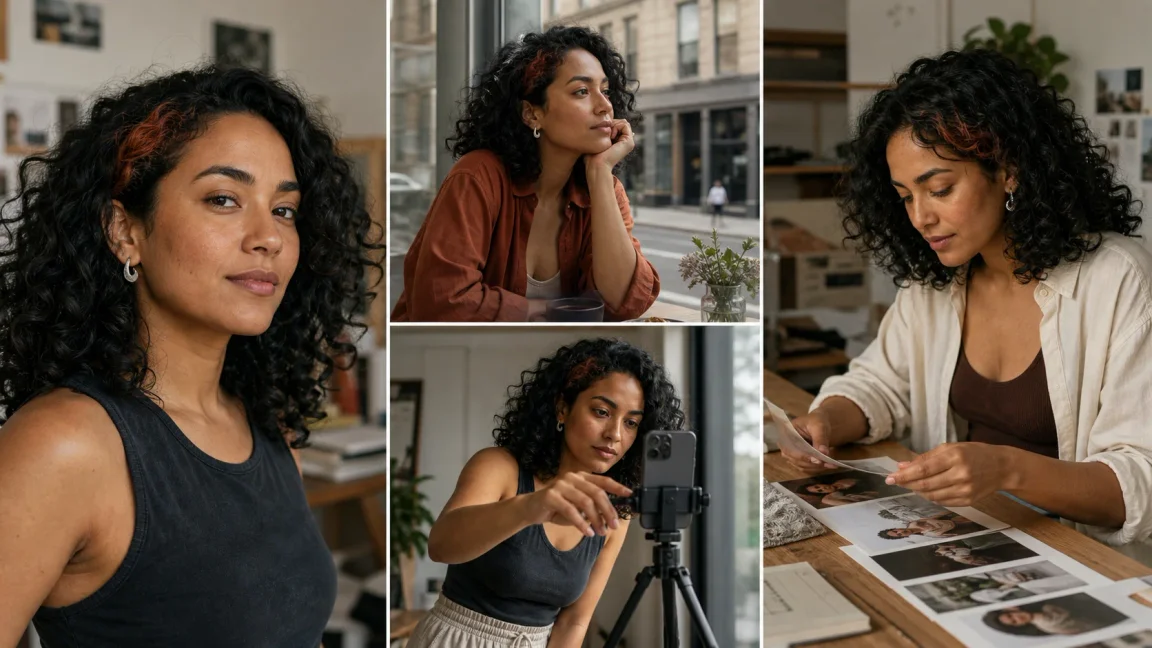
AI influencers are moving from novelty accounts into serious brand strategy. The most realistic AI influencer is no longer just a polished face; it is a repeatable identity with a consistent look, voice, backstory, content style, and disclosure approach.
For marketers, creators, and agencies, the opportunity is real, but a believable virtual persona must hold together across posts, short videos, captions, collaborations, and storylines. Realism is not only flawless skin or cinematic lighting. It is continuity, context, and trust.
That is why the phrase most realistic AI influencer can be misleading when it refers only to visual quality. A face may look photorealistic in one image and still fail as an influencer if the next asset changes the jawline, apparent age, body type, or attitude. The strongest virtual creators are built like media characters and managed like social brands.
Realism is a system, not a single perfect portrait
A practical realism test asks whether the audience can recognize the same person, understand what the character stands for, and trust the context around the content. One impressive image proves very little about the next month of production.
| Layer | What believable execution looks like |
|---|---|
| Identity | The same face, apparent adult age, proportions, hair, and signature details remain recognizable. |
| Physical reality | Hands, eye line, object contact, reflections, light, and motion make sense inside the scene. |
| Editorial continuity | The character keeps a stable niche, point of view, voice, and set of recurring formats. |
| Context | Each setting and action has a reason to exist beyond displaying a polished face. |
| Trust | Synthetic media, partnerships, claims, and operators are disclosed clearly enough for the context. |
The table is also a useful production order. Check identity before polish, physical reality before campaign styling, and trust before publication. A beautifully lit image cannot rescue a different-looking face, an impossible hand, or a misleading endorsement.
Create Your AI InfluencerPublic virtual creators show that realism has more than one form
Several established virtual personalities show how broad the category has become. Lil Miquela is associated with fashion, music, and serialized digital celebrity. Shudu is presented as a digital fashion model. Aitana López uses a more photorealistic fitness and lifestyle identity.
These examples are not a ranking, and this article does not claim that one is the most realistic. Their useful lesson is that believability can come from different art directions. A stylized character may be credible because the world and behavior are coherent; a photorealistic character has to meet a higher bar for anatomy, motion, disclosure, and the risk of being mistaken for a real person.
Start with a character bible
The most realistic AI influencers usually combine several creative layers. Image generation can create a face, but brand planning gives the character a reason to exist. Editing, writing, approval, and human direction turn that identity into content people can follow.
At the base is a character bible: apparent adult age, visual anchors, style, interests, values, location cues, speaking habits, preferred colors, camera behavior, and boundaries. Without it, teams tend to chase whatever looks impressive in the moment. The result may be attractive but inconsistent.
Lock
Recognition anchors
Face shape, complexion, apparent age, hair silhouette, proportions, signature accessory, niche, point of view, and disclosure standard.
Vary
Story ingredients
Setting, action, crop, expression, time of day, outfit within the style world, format, hook, and emotional beat.
Voice belongs in the bible even though Studio does not automatically write or approve captions. Define sentence length, vocabulary, humor, subjects the character can discuss, and claims the character must never make. Human writers and reviewers can then keep the public voice aligned with the visual identity.
Visual identity must survive new scenes
Teams need a repeatable face, plausible body proportions, wardrobe logic, and an environmental style. A fashion persona might use editorial lighting and refined styling. A fitness or gaming persona may need casual scenes, workout clips, streaming references, or higher-energy framing. In both cases, identity should remain recognizable when the story changes.
Static portraits are easier to make believable than motion. Short video exposes weak hands, eye contact, gait, speech, and object interaction. The target is not visual perfection in every frame. It is natural-enough movement that supports the story without repeatedly breaking attention.
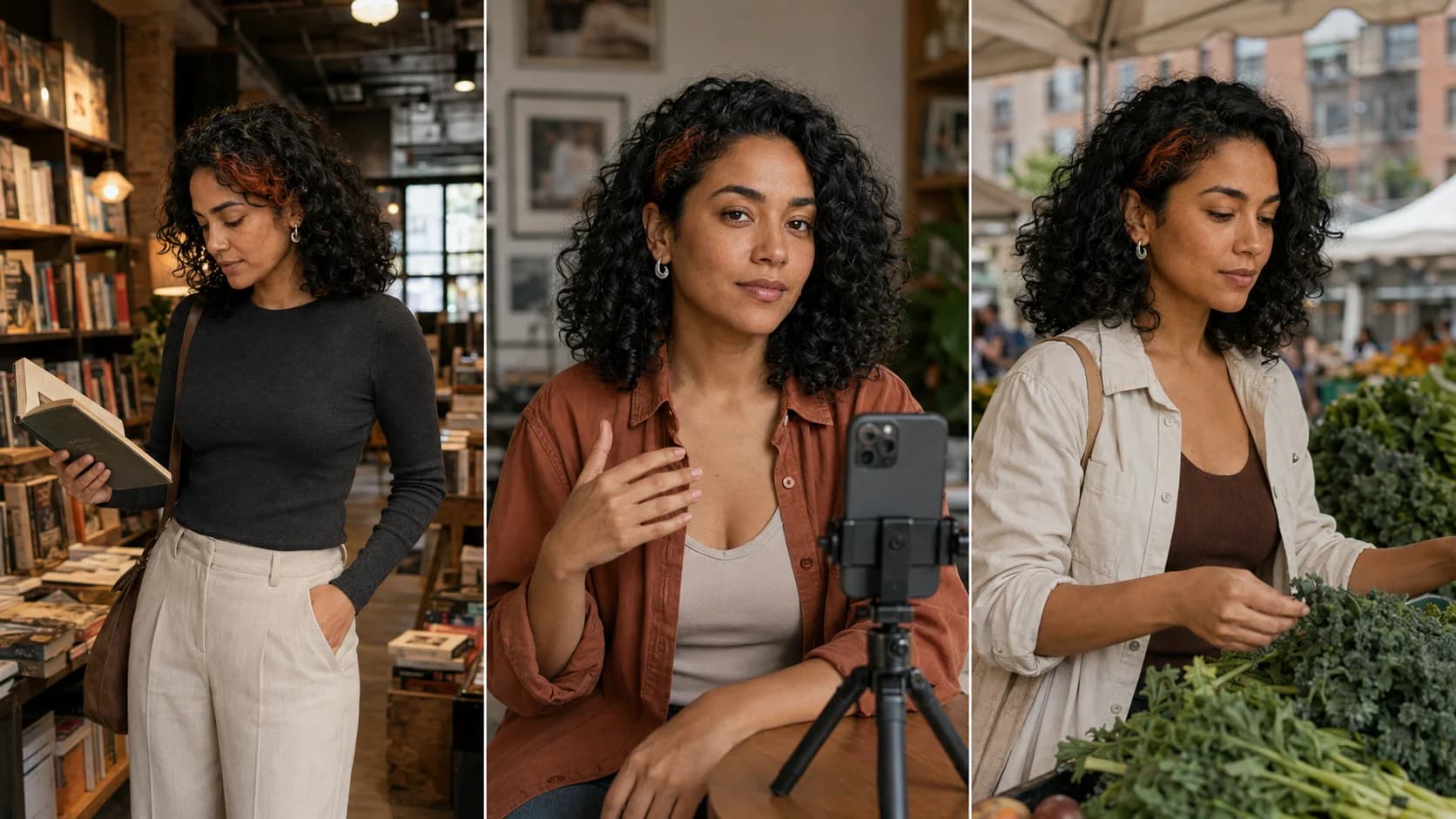
Studio can guide you through creating or saving a reusable fictional adult character, then use that identity as a starting point for consistent photos and short-video drafts. It cannot guarantee that every output will match. Reject drift, implausible anatomy, weak motion, or a scene that does not fit the character.
A content operating system makes the character feel lived-in
Real influencers are judged by what they say and do over time. AI influencers are judged the same way, even when every action is directed by a human team. A content system should define recurring formats, campaign rules, caption guidance, approval steps, and a plan for community responses.
Choose a few pillars that can produce genuinely different posts. A virtual fashion editor might alternate a styling explanation, a cultural observation, and a behind-the-scenes creative note. A fitness character might use movement education, routine design, and equipment context without inventing personal health outcomes.
- Give every recurring format a clear audience job.
- Make the character's point of view visible without inventing lived experience.
- Keep captions, publishing, comments, direct messages, and analytics under human ownership.
- Document how corrections and audience confusion will be handled.
- Review whether each post adds a story rather than another near-identical portrait.
Why brands value realistic AI influencers—and where the value stops
Brands are interested in realistic AI influencers because directed media can offer creative control, repeatable identity, and flexible environments. A fictional creator can appear across planned campaign scenes without depending on a human creator's travel schedule or personal brand changes.
Those benefits need careful wording. Production is not automatic, consistency is not unlimited, and localization is not a button inside Studio. Teams still plan concepts, create and select assets, write or approve copy, confirm rights, adapt each market, publish through external platforms, manage the audience, and analyze performance.
Control is also not connection. Audiences follow creators because of taste, humor, aspiration, vulnerability, or a shared interest. An AI persona that becomes a glossy billboard with no point of view may look expensive and still feel empty. Human creators can speak from lived experience; a fictional character must never fabricate that evidence.
How to evaluate a realistic AI influencer workflow
The best workflow is the one that helps maintain a recognizable identity across the formats the content plan actually needs. A tool that makes attractive portraits may not be enough when the strategy also depends on motion, product interaction, editorial range, and a repeatable review process.
- Identity lock: does the same person remain recognizable across outfits, expressions, light, and scenes?
- Motion readiness: can reviewers inspect hands, eye line, movement, and object contact at the target format?
- Editorial fit: can the team maintain one voice and point of view outside the generation tool?
- Commercial clarity: are rights for every input, reference, product, and final placement documented?
- Disclosure readiness: can the team add the required synthetic-media and material-connection labels before publishing?
- Human review: is one owner accountable for identity, claims, safety, and final approval?
Also consider the skill level and workflow your team can sustain. Presets may help a small team start, while experienced teams may need deeper direction, reference management, video editing, and a formal brand system. Neither path removes the need for judgment.
For practical starting points, see the consistent character generator, AI influencer image generator, and AI influencer video generator. The broader creation tutorial covers the build sequence, while the launch workflow focuses on a first content batch.
Create Your AI InfluencerChoose a niche with a credible reason to use a fictional creator
AI influencers can work across many sectors, but the strongest concepts match the synthetic nature of the character to a real editorial purpose. Specificity makes it easier to decide what the character would never post.
Fashion and beauty
Styling concepts, visual experimentation, trend explanation, and clearly framed product education without invented results.
Gaming and virtual worlds
Digital identity, game culture, avatar-led entertainment, and fictional world-building.
Travel and hospitality
Destination concepts and city-guide formats that distinguish generated scenes from real visits or reviews.
Education and technology
Explainers and future-facing subjects where sources, limitations, and operator responsibility stay visible.
Higher-risk areas need additional restraint. Health, finance, politics, children, body image, and testimonial-style product claims can carry consequences that a fictional persona cannot personally experience. Use qualified human review and legal advice where the stakes warrant it.
Maintain realism after launch
Creating a realistic AI influencer is only the beginning. Maintaining one requires version control for the identity, an approved reference set, a visual style guide, caption voice rules, disclosure language, and a publishing calendar. Keep the source, prompt direction, edits, rights, reviewer, and final destination attached to every approved asset.
Many projects launch with impressive images and then drift. Hair changes without explanation, facial features move from post to post, captions sound like different people, and every background follows a new trend. Human creative direction is what turns isolated outputs into a recognizable brand world.
The cross-platform strategy guide explains how the same persona can take on different content jobs without becoming a different character. The reusable campaign guide covers the longer-term reference and approval system.
Disclosure and brand safety are part of realism
Realism creates responsibility because viewers may mistake synthetic people, places, experiences, or endorsements for evidence. The goal is not to trick the audience into believing a fictional person is real. It is to make a transparent fictional character visually and editorially coherent.
For U.S.-facing promotions, the FTC's Disclosures 101 guidance explains that material connections should be clear and hard to miss. Meta describes its approach to AI-generated media labels . For media provenance, C2PA develops Content Credentials standards, while the NIST AI Risk Management Framework offers a broader structure for managing AI risk.
These resources serve different jobs. Platform labels do not replace commercial disclosure, and provenance metadata does not replace plain language. Rules also change, so teams should check the current destination-platform requirements before publishing.

Assign responsibility before launch. Decide who approves the persona's statements, who checks sponsored claims, who handles corrections or backlash, and who decides whether a trend fits the character. Technology changes production; it does not remove accountability.
A practical eight-step starting plan
- Define one niche, audience, and point of view.
- Write a character bible with visual, verbal, and safety rules.
- Create and approve a small identity reference set.
- Produce a limited set of photos and short-video drafts.
- Review identity, anatomy, motion, context, rights, and disclosure.
- Publish a few useful recurring formats on one primary channel.
- Measure audience questions, saves, qualified clicks, and brand fit.
- Improve the system before expanding channels or campaign volume.
This approach keeps expectations realistic and creates room to learn before attaching major spend or public promises to the character. The Instagram account guide can help when Instagram is the first channel, and the legal and disclosure guide provides a deeper review checklist.
What comes next for realistic AI influencers
The next wave of AI influencer trends will be less about a single perfect portrait and more about coherent multi-format identities. As production becomes easier, direction and trust become more valuable. Brands are likely to test fictional specialists—a digital fashion model, virtual product educator, or game-world host—rather than treating every project as a broad celebrity replacement.
There will also be more scrutiny around synthetic identity, consent, disclosure, body image, and commercial claims. That pressure is healthy when it rewards careful systems and discourages accounts that depend on confusion.
The rise of the most realistic AI influencer is ultimately the rise of controlled digital storytelling. A beautiful generated face can start the conversation. A coherent identity, useful niche, transparent disclosure, and disciplined content system are what make people keep watching.
Create Your AI InfluencerFrequently asked questions
What is the most realistic AI influencer?
There is no objective winner. The most believable AI influencers combine a recognizable fictional identity, stable point of view, plausible motion, useful recurring content, clear disclosure, and consistent human direction over time.
What makes an AI influencer look realistic?
Visual realism comes from stable facial and body features, natural skin texture, coherent lighting, believable hands and object contact, and scenes that fit the character. Long-term realism also requires a consistent voice, niche, behavior, and editorial history.
Can AI Influencer Generator guarantee perfect character consistency?
No. Studio can help you create and save a reusable fictional adult character for photos and short-video drafts, but every result still needs human review for identity drift, anatomy, motion, scene logic, rights, and disclosure.
Do realistic AI influencers need disclosure?
Use clear context whenever realistic synthetic media could mislead viewers, follow the current labeling rules of the destination platform, and disclose paid or affiliate relationships clearly. The operator remains responsible for the final publication.
How should a brand start building a believable AI influencer?
Start with one fictional adult persona, one audience, one niche, and one primary channel. Write a character bible, approve a small reference set, create a limited batch of photos and short-video drafts, review consistency, and publish only after rights, claims, and disclosure checks.
Plan Content
Measure Engagement
Build Your Profile
Price Your Work
Write Post Copy
Brand Partnerships