
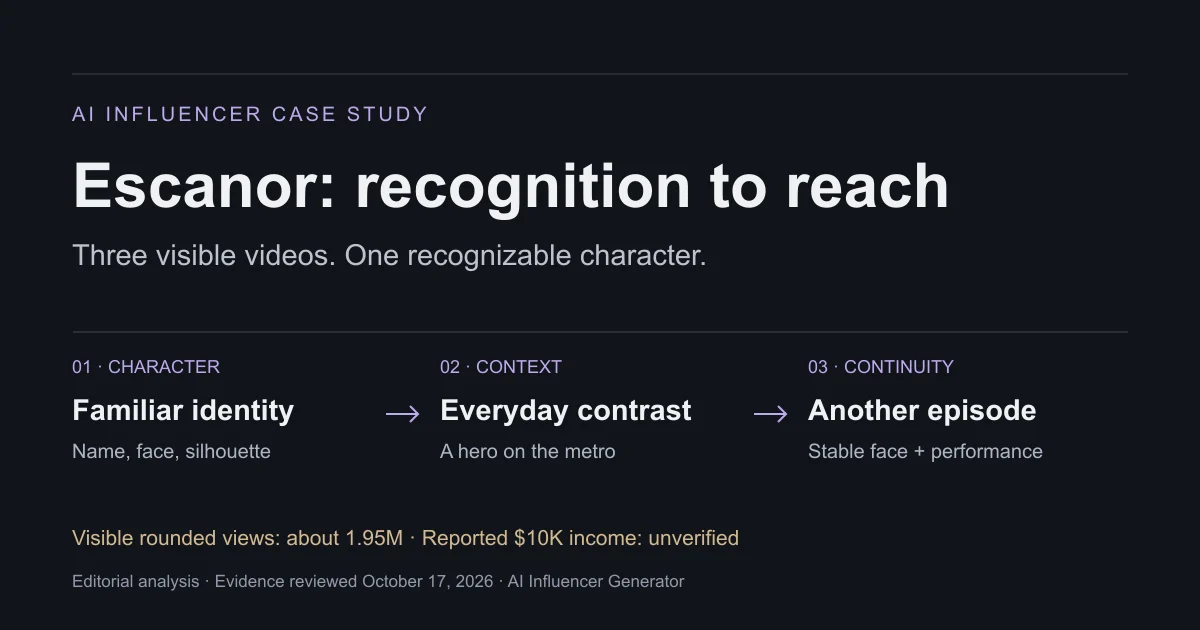
Escanor AI influencer: what the source actually shows
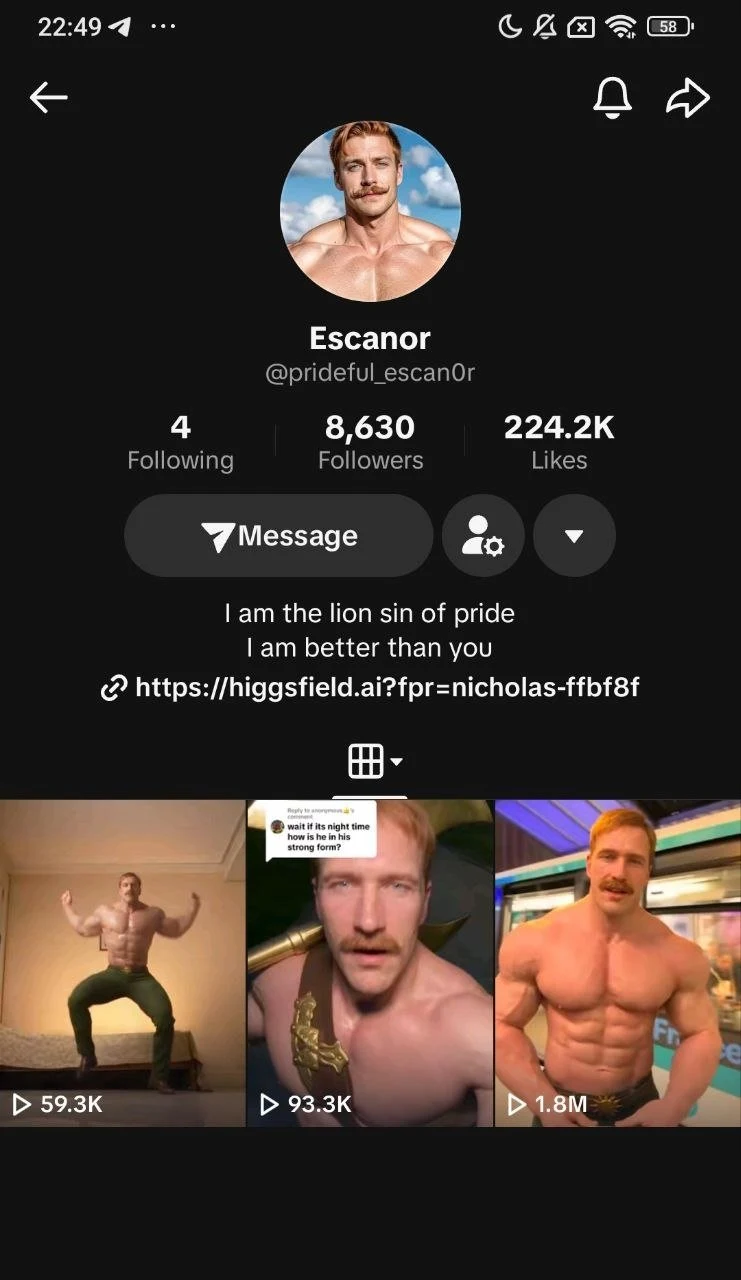
In an X post published October 15, 2026 at 20:31 UTC, BuBBliK (@k1rallik) says someone reportedly made $10K with three posts of an AI anime character. The author lists almost 2M views, 223K likes and 8.5K+ followers. We reviewed that post and its three attachments on October 17: a video, a TikTok profile screenshot and a Character Sheet.
| Claim | Evidence | Conclusion and limit |
|---|---|---|
| Three videos | Three visible profile tiles | Supports a three-video snapshot, not proof of the account’s entire posting/deletion history |
| Almost 2M views | 59.3K + 93.3K + 1.8M displayed on those tiles | About 1.95M when adding rounded labels; not exact analytics or unique people |
| 223K likes | Post reports 223K; screenshot shows 224.2K | Account-level likes, with an unresolved timing/rounding difference |
| 8.5K+ followers | Screenshot displays 8,630 | Broadly compatible with the post’s rounded wording; current count unverified |
| About $10K earned | Author’s report only | No dated payout, sales ledger, commission statement or contract supplied |
| Higgsfield referrals | Visible higgsfield.ai URL with an fpr tracking parameter | A referral invitation is visible; conversions and commissions are unknown |
The view claim has visible support; the income claim does not have equivalent proof. The largest tile, 1.8M, accounts for roughly nine-tenths of the displayed total. This is a concentrated snapshot, not evidence that every episode reliably earns hundreds of thousands of views. The profile's 224.2K likes should not be assigned to the subway clip or treated as paid customers.
Our direct TikTok check did not return a usable live profile, so we could not confirm current counters, the operator's identity or historical analytics. Nor does the supplied material establish an official relationship with the anime rights holders, Higgsfield sponsorship or use of AI Influencer Generator. “Reported $10K” remains the correct description wherever the figure appears.
Why a live-action-style anime character can attract attention
Escanor belongs to The Seven Deadly Sins. The official anime character page identifies him as the Lion Sin of Pride and describes his daytime increase in strength and muscular appearance. The account borrows an existing recognition system: the name, pride-based persona, reddish hair and mustache, powerful silhouette, and sun-associated styling.
A viewer who knows the character can recognize the premise before the video explains it. A viewer who does not can still read an imposing, unusually dressed figure in an ordinary public place. The two routes to attention overlap, but they are not identical: fandom supplies context, while visual contrast makes the scene legible more broadly.
A familiar fictional identity brings expectations about personality and behavior. A short clip can start with the situation rather than spending its opening on exposition.
A heroic body and fantasy-coded belt look out of place beside a metro train. The scene invites the question: how does this larger-than-life figure behave during an ordinary commute?
Walking toward the camera, changing expression and reacting to the environment create an event. A recognizable face alone would leave less to discover after the initial reveal.
Once the identity survives movement and new angles, a dance, errand or reply can feel like another appearance by the same persona rather than a disconnected image experiment.
These are explanations of the visible creative structure, not proven causes of this account's growth. We have no retention graphs, audience survey or experiment isolating recognition from performance, timing, sound or distribution. TikTok's recommendation explanation describes interactions and viewing behavior among its signals; it does not promise extra reach for anime AI influencers.
One screenshot tile contains an overlaid question asking why the character is in his strong form at night. We did not independently inspect the original comment thread. The visible text nevertheless illustrates a useful constraint: viewers can judge continuity against a fictional world's rules, not just whether the face looks the same.
That creates a tradeoff for an anime-based account. Familiarity can reduce the effort needed to get attention, but it also brings canon expectations and rights dependencies. An original character needs to earn recognition over time, while giving its creator more control over the name, premise, visual language and story rules. Our Baki case study examines a similar recognition-to-performance pattern.
Recognition opens the video.
Consistent identity and behavior build the series.
The Character Sheet: five body views and three face views
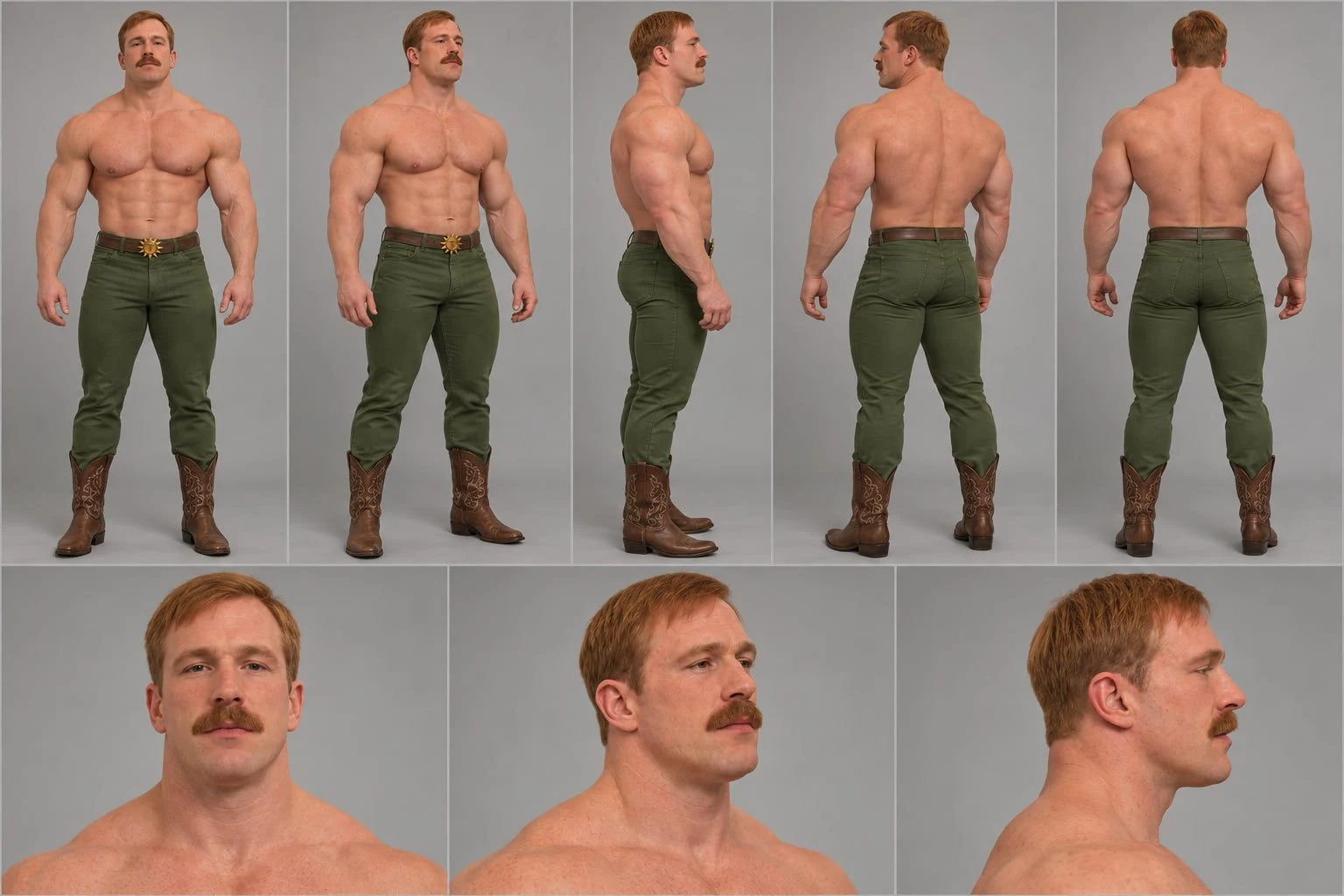
The attached sheet is the most concrete production reference in the packet. It shows five full-body angles across the top and three facial views below. It does not show an eight-expression grid, an action library, motion settings or a generation log. Its presence in the post does not prove that the account operator used that exact file for every video.
| Reference layer | Visible detail | Why it matters in video |
|---|---|---|
| Full-body coverage | Front, three-quarter front, profile, three-quarter back and rear | Reduces ambiguity when the torso turns or the camera moves around the subject |
| Face coverage | Front, three-quarter and profile close-ups | Exposes jaw, nose, hairline and mustache shape across common angles |
| Body proportions | Broad shoulders, large chest/arms, narrow waist and powerful legs | A changing shoulder-to-waist ratio can make a moving figure read as a different person |
| Wardrobe and palette | Bare torso, olive-green trousers, brown belt/boots, gold sun-shaped buckle | Distinct color blocks and details support recognition; seams and material should survive motion |
| Reference conditions | Neutral gray background and relatively even light | Separates identity review from scene complexity; it does not solve new lighting automatically |
Lock identity separately from the scene
A useful consistency brief distinguishes invariants from variables. Face shape, apparent adult age, hairline, baseline body proportions and signature features stay stable. Location, camera distance, pose and expression change. Costume can change when the series calls for it, but a new outfit should not silently alter the face or body.
The close-ups reduce the temptation to rely only on a powerful silhouette. Viewers see the face more clearly when the character approaches the camera, so a matching pair of trousers cannot hide a drifting nose, jaw or hairline. Likewise, a correct face does not excuse unstable anatomy, a growing belt buckle or boots sliding over the floor.
Use a sheet as a specification, not a guarantee
Multi-angle coverage gives a model more evidence about the intended person, depending on the workflow's reference controls. It cannot guarantee every frame. For a single portrait input, use a clean view that fits the intended shot; feeding a whole collage into a single-person image slot can be ambiguous. Keep the full sheet nearby as a human review reference and use supported character-reference controls where available.
The source sheet is mainly neutral. If a series needs laughter, speech or a strong profile turn, create and approve those expressions for your own character before scaling production. This is a recommended extension, not a hidden feature of the supplied sheet. For recurring multi-character formats, see the Harold Puddington consistency breakdown.
The subway video: what the finished file can and cannot reveal
The opening places the character beside a metro train, walking and gesturing toward a moving camera. As he gets closer, the viewer gets more facial detail; a turn introduces a stronger angle change. Later the camera pans away, and the attachment includes nighttime Paris travel views. The entire file is about 29.77 seconds.
Visual description of the source video
A muscular shirtless figure with reddish hair and a mustache walks along a metro platform in green trousers and brown boots. He faces a moving camera, gestures and changes expression, then turns as the camera passes. The camera pans across the station; later shots show a city street at night and the illuminated Eiffel Tower. This is a description of visible action, not a verbatim audio transcript.
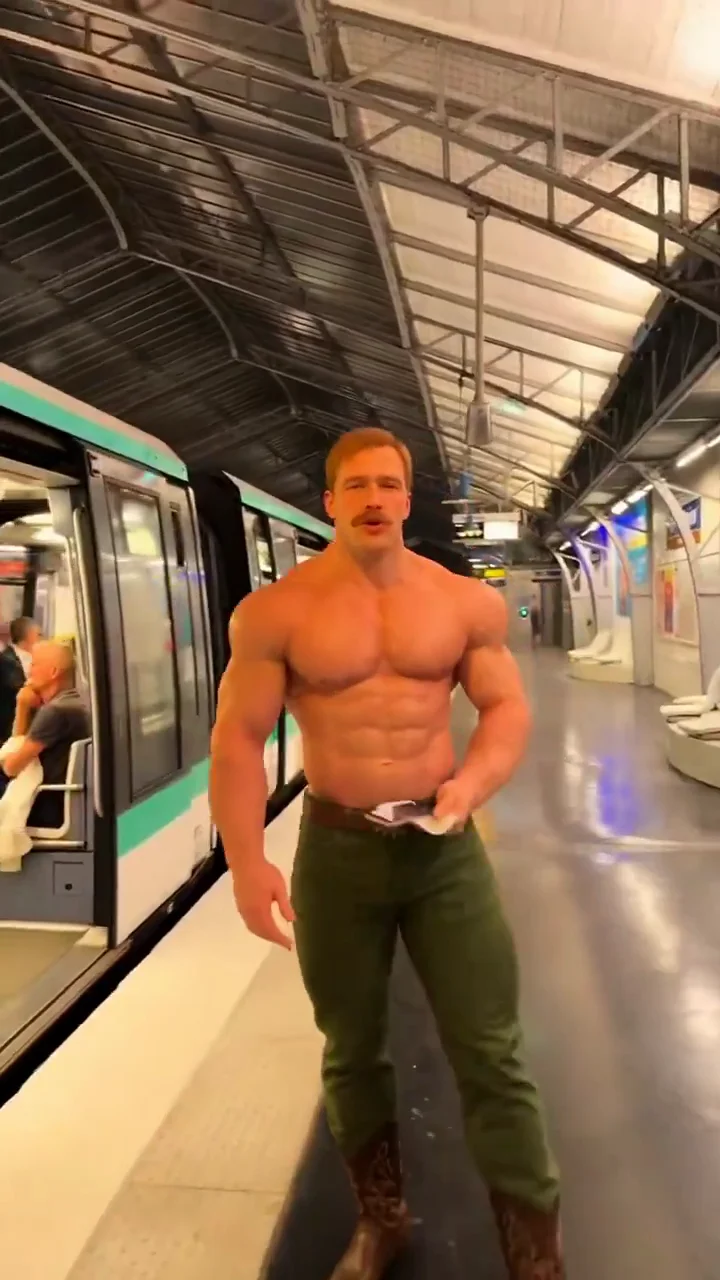
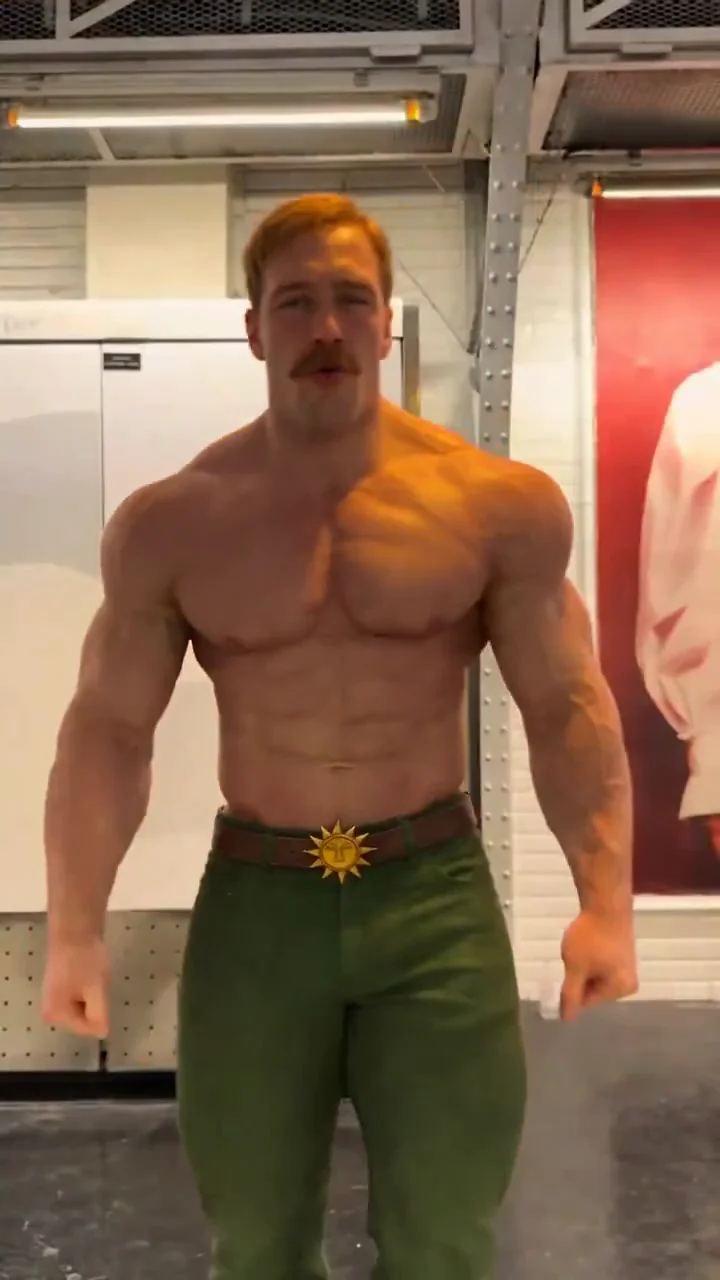

A plausible production route is an approved character reference, a scene image or source performance, motion generation or transfer, and an edit. A reference video could guide walking rhythm, gestures and camera movement, while an image guides appearance. Conventional editing or compositing could also be involved. The final MP4 and a referral link do not identify the model, exact prompts, number of attempts or how much underlying footage was filmed.
- Specify identityApprove views, proportions and wardrobe.
- Stage the sceneChoose framing, light and an everyday situation.
- Guide movementUse a short action prompt or authorized performance reference.
- Inspect and editCheck identity through motion, then assemble the episode.
The source screenshot also has a dance-like full-body tile. That supports discussing dance as a format, but we did not obtain that separate video's project files or verify how it was made. Use the Motion Control dance tutorial for a grounded product workflow rather than assuming one tool produced every post.
The Higgsfield link: a monetization path, not a $10K receipt
The screenshot includes a Higgsfield URL with an fpr referral parameter. That is observable evidence of an invitation to another product. It does not reveal clicks, qualifying purchases, an affiliate's actual rate, completed payouts or a sponsorship agreement. It also does not prove that the advertised platform generated the footage.
On October 17, Higgsfield's official affiliate page advertised up to 25% commission on qualifying subscriptions and up to 12 months of recurring commission. Its program guide explains that refunds affect commission and that actual earnings depend on qualifying transactions and terms. Those are current public program descriptions, not evidence of this operator's historical terms or earnings.
- AttentionA character clip reaches a viewer.
- Relevant intentSome viewers want to make a similar video.
- Referral visitThe profile directs them to a tool.
- Qualified saleOnly tracked eligible purchases can establish commission.
| Route | What this case shows | What would verify income |
|---|---|---|
| Affiliate marketing | A visible tool-referral URL | Dated qualifying sales, commission records, adjustments and payouts |
| Brand collaboration | The X author proposes advertising opportunities | A signed campaign scope, delivered work and paid invoice |
| Platform promotion | AI tools could value relevant creator demonstrations | A documented paid campaign; not merely a referral link |
| Platform view rewards | Video-view counters | Program eligibility, qualified-view analytics and payout statement |
The commercial fit is plausible: an impressive fictional performance may attract both fans and people curious about the method. Only the latter group necessarily has tool-buying intent. A large entertainment audience can produce fewer relevant outbound visits than a smaller tutorial audience, so follower count alone is a weak revenue forecast.
For planning, calculate qualifying attributed sales × eligible sale value × commission rate, then account for refunds, program rules and costs. A hypothetical 100 eligible $20 purchases at a 20% rate would mean $400 in gross commission. These are assumed inputs, not this account's results or a quoted Higgsfield rate. Recurring renewals require separate evidence over time.
The source does not say whether the reported $10K is lifetime revenue, a short-period payout, gross receipts or profit. Do not divide it by the visible views and call the answer an established revenue-per-view benchmark. Our AI influencer monetization guide separates business models and the records needed to evaluate them.
How to create AI influencer videos with an original character
You can adapt the mechanism—a distinctive adult figure, an everyday contrast and a repeatable performance—without copying Escanor's name, face, costume or fictional identity. An AI anime character generator workflow is a design process, not automatic permission to commercialize a franchise. The following steps use existing AI Influencer Generator routes.
1. Create an original adult identity with a repeatable premise
Open Create an AI Influencer. Define age, face, hair, body proportions, wardrobe and personality before choosing the next trend. Give the character an activity that makes sense repeatedly: a formidable cycling coach who approaches tiny everyday errands with unexpected care is a premise; “a muscular person” is only a visual category.
Our example is Marek Vale, 38: warm medium-brown skin, short dark curls with a small silver streak, a square short beard, cobalt athletic jacket and charcoal trousers. He has his own identity and gentle comic point of view. He does not use Escanor's name, mustache, sun emblem, green-trouser costume or lore. For the written character foundation, follow our persona-building guide.
Create your own original AI influencer
2. Prepare references and keep appearance consistent
Use My Influencers to manage saved identities and available Character Sheet views. The Consistent Character workflow helps you plan new scenes around a reusable identity. Approve a front portrait and suitable angle views before adding motion.
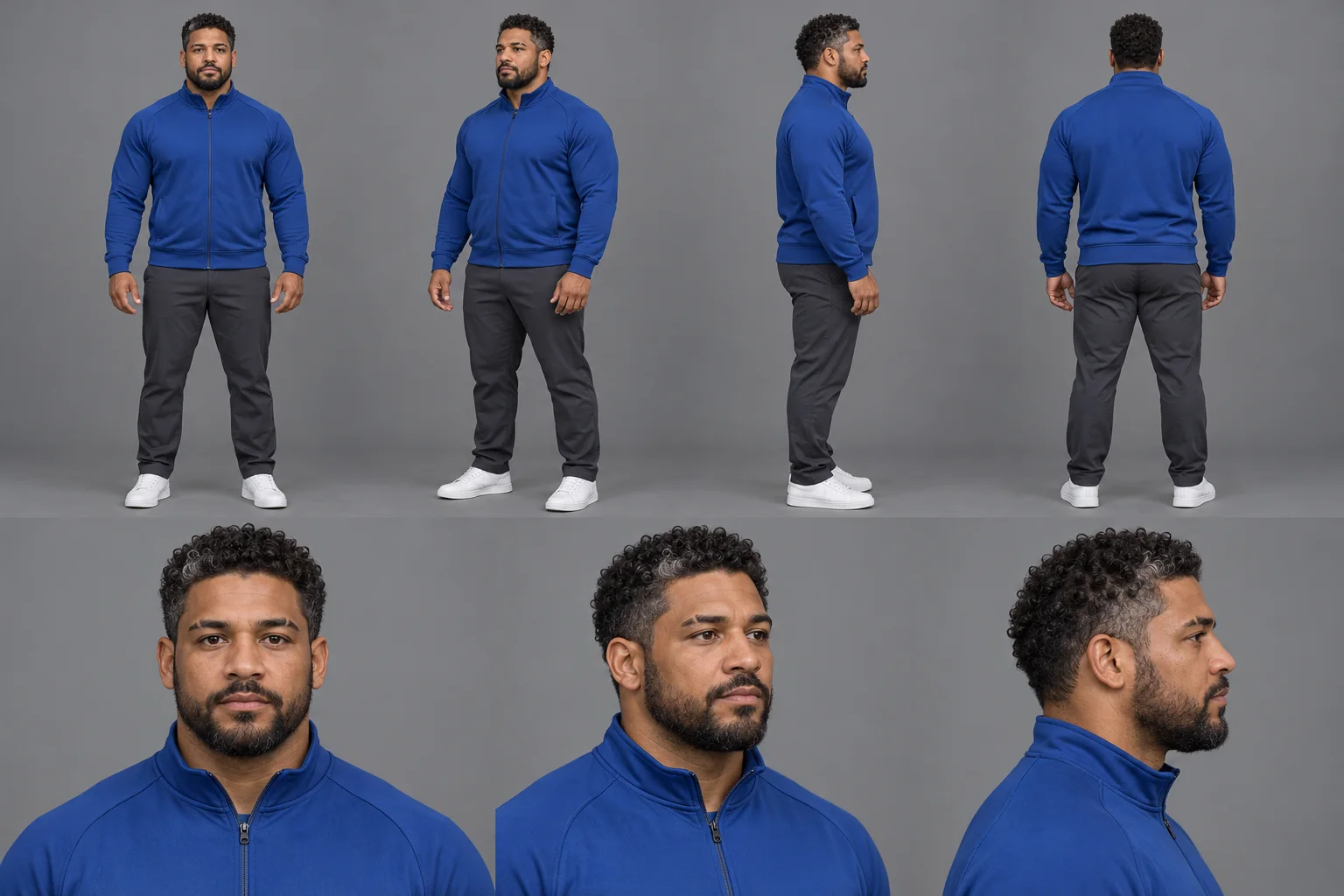
Keep the same 38-year-old adult face, broad nose, short square beard, dark curls with a silver temple streak, complexion and shoulder-to-waist proportions. Keep the cobalt jacket and charcoal trousers for this sequence. Change the camera, expression and location; do not turn him into a different man.
Use the sheet to evaluate new outputs, and a clean single-person portrait when an input expects one person rather than a collage. An identity lock is an instruction to test, not a guarantee. Review both the head and the full-body silhouette before approving a scene.
Build a consistent-character workflow
3. Make one believable everyday scene
Open Create Photos with your saved character or supported reference. Give the body and hands one clear job. For a metro scene, a static carriage shot with a natural grip on a pole is easier to inspect than a complicated exchange of objects while running.
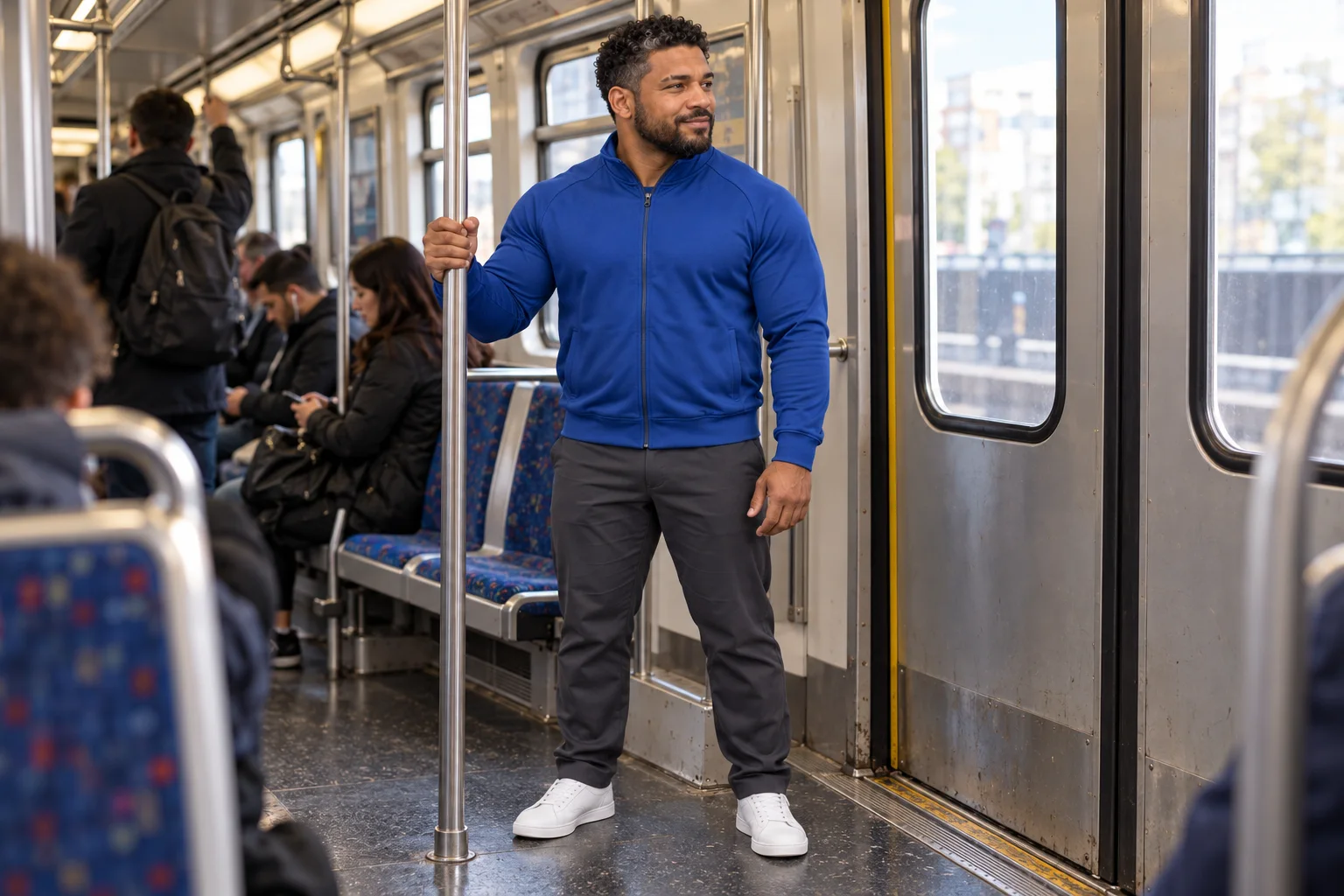
Check the grip, hand anatomy, feet, reflected light and scale against the environment. Specify camera distance and light direction as well as the subject. Keeping a character consistent does not mean pasting the same studio lighting into every location. Reject drift and physical errors at the image stage.
Create a scene for your saved character
4. Choose prompt-led video or a performance reference
For a short original beat, explore AI Image to Video and open Animate Photo. Start with a stable camera and a small action such as “Marek shifts his weight, looks toward the door and smiles.” You can also begin in Create Video. Start short enough to inspect carefully.
For walking rhythm or a dance, use AI Motion Transfer and the Motion & Dance workspace. Supply a suitable authorized performance reference and the character image the workflow asks for. Match framing and visibility: a full-body dance needs visible legs and feet; a face-dominated close-up provides little information about footwork. Keep one clear performer, limited occlusion and manageable camera motion for the first test.
| Creative job | Starting approach | Review priority |
|---|---|---|
| A glance or small reaction | Approved scene image + simple action prompt | Face, eyes, expression and hand stability |
| A walking clip | Suitable single-performer motion reference, where supported | Gait, foot contact, body proportions and camera movement |
| A dance trend | Authorized dance reference + matching full-body character image | Limb paths, feet, torso rotations and costume continuity |
| A multi-shot episode | A few approved short clips assembled in an editor | Identity and story continuity at every cut |
Inspect the beginning, middle and end, including a turned face or crossed arm. Watch for changing facial structure, swelling shoulders, slipping feet, warped sleeves and hands that fuse with the pole. Avoid scaling a series from one attractive opening frame. Our dance workflow guide provides a more detailed motion-reference walkthrough.
Try a short character-motion test
5. Publish a series, then test one relevant offer
Use the AI Influencer Strategy Generator for an editable audience, pillars, recurring formats and posting plan. Marek's first episodes could be “the crowded commute,” “the surprisingly delicate grocery bag” and “the warm-up he takes too seriously.” Each needs a short situation, a recognizable response and a payoff. Repeat the identity and behavior; change the local problem.
Use our TikTok publishing guide for the posting workflow and follow the platform's AI-generated-content rules. Measure completion, meaningful comments, follows, profile visits and outbound clicks separately. Then use real qualifying-sale and payout records for monetization. A video can be entertaining without creating tool-buying intent.
For collaborations, prepare an accurate portfolio with AI Influencer Media Kit Generator and explore Monetize. A new character can show original sample work without claiming invented reach, sponsors or customer results. Affiliate participation, campaign approval and paid deals depend on the relevant programs and counterparties; our creation tools do not guarantee them.
Plan your original character series
Anime recognition comes with IP and trust constraints
Changing an anime drawing into a photorealistic person does not automatically erase the original character's identity or the rights around it. Names, distinctive designs, costumes, symbols, music and clips can raise different copyright, trademark, licensing or platform questions. A public fan account or referral link is not proof of commercial permission. The materials reviewed here do not establish authorization or a legal finding about this account.
For a commercial original, change the creative foundation: name, face, silhouette details, wardrobe, symbols, backstory and behavior. Keep only broad ideas such as “an imposing person in an everyday situation.” Avoid marketing a character as an official adaptation or franchise partner without authorization. Also avoid using an actor's likeness or voice as a shortcut.
Originality and copyright protection are separate questions. The U.S. Copyright Office's AI report explains the role of human authorship; purely generated material and a human-written script or edit need not be treated identically. Keep records of sources, permissions and human creative work. Disclose AI and commercial relationships as appropriate, and do not give a fictional persona fabricated real-life product experiences.
What creators can learn from the Escanor AI case
The visible evidence supports roughly 1.95M rounded views across three tiles, a recognizable character system and a referral invitation. It does not verify $10K in income or identify a complete production stack. The biggest clip dominates the total, so the sample should be treated as a promising format to analyze, not a repeatable earnings benchmark.
The durable lesson is how recognition becomes a series: a stable identity moves through a familiar world, performs something worth watching and gives the next episode a coherent starting point. Original characters can apply that structure while building their own visual language and reducing dependence on a franchise they do not control.
Start building your original AI character
Frequently asked questions
Who is the Escanor AI influencer on TikTok?
The supplied profile image shows @prideful_escan0r, with a zero in escan0r, using a live-action-style interpretation of Escanor from The Seven Deadly Sins. It is evidence of an anime-inspired AI character account, not proof of an official franchise partnership or a real actor’s involvement.
Did three Escanor AI videos get 2 million views?
The source screenshot has three visible video tiles labeled 59.3K, 93.3K and 1.8M views. Their rounded displayed values add to approximately 1.95 million, supporting ‘almost 2M’ for those visible tiles. They are not unique viewers or a verified complete posting history.
Did the Escanor account earn $10K?
The October 15, 2026 X author reports that someone made $10K, but provides no payment statement, affiliate dashboard, contract or matched accounting period. The revenue claim remains unverified. A Higgsfield referral link shows a monetization route, not completed commissions.
What do the supplied Character Sheet views show?
The sheet contains five full-body angles and three facial views. They cover the face, muscular silhouette, green trousers, brown boots and sun-shaped belt buckle. The attachment does not include an expression grid, animation settings or evidence that the account operator used that exact file.
How do I create anime-inspired AI influencer videos without copying Escanor?
Create an original adult character with its own name, facial design, clothes, symbols, backstory and recurring premise. Preserve a broad storytelling mechanism such as an imposing figure in ordinary situations, rather than copying a protected character’s identity. Make references, generate a scene and test short motion before publishing a series.
Is a Character Sheet enough for consistent AI videos?
No. It reduces ambiguity about identity, body and wardrobe, but each scene and moving shot still needs review. Check face turns, proportions, hands, foot contact and clothing across the beginning, middle and end. A consistent first frame does not guarantee a consistent video.
Should I use AI Video or Motion Transfer?
Use image-to-video for a short prompt-led scene from an approved character image. Use Motion Transfer when a suitable authorized performance reference should guide a walk or dance. Match framing, visibility and action complexity to the reference, then inspect the output; the exact Escanor production stack is unknown.
Can original AI characters earn through affiliate marketing?
They can direct a relevant audience to an approved affiliate offer, but earnings require tracked qualifying purchases and valid program terms. Brand contracts and platform campaigns are separate revenue routes. Disclose commercial relationships and use real audience and payment data instead of treating views as sales.
Sources and research method
Reviewed October 17, 2026. We read the primary X post in Chrome, inspected its profile image, multi-angle sheet and video frames, retained the full video, and checked Higgsfield's public affiliate descriptions. Direct TikTok access did not yield a usable live profile. Screenshot capture time is unknown; no private analytics, transaction records, operator interview or production project was available.
- BuBBliK (@k1rallik), October 15, 2026 at 20:31 UTC: original post and three attachments
- TikTok handle displayed in the attached image: @prideful_escan0r
- Official The Seven Deadly Sins anime character page: Escanor
- Higgsfield: public affiliate program, checked October 17 and 2026 program explanation
- TikTok Support: recommendation signals and AI-content rules
- U.S. Copyright Office, January 29, 2025: AI outputs and human authorship
Creative mechanisms and production hypotheses are labeled analysis. Revenue arithmetic is hypothetical. Marek Vale is an original fictional-adult editorial concept generated for this article, not a Studio output or customer result. Source anime-related media is used for focused commentary; respective ownership is retained and reuse permissions were not independently verified. No paid product generation, affiliate registration, purchase or message to the case account was submitted.
Plan Content
Measure Engagement
Build Your Profile
Price Your Work
Write Post Copy
Brand Partnerships