
To create an AI influencer persona, choose a niche and audience, define a name and personality, lock recognizable visual traits, and document a reusable character profile. Then build the character from an approved reference, set content pillars and a brand voice, and test the identity across photos, video and captions before publishing. Keep the face and point of view stable while changing scenes and formats. Disclose the fictional AI identity, check rights, and use audience feedback to refine the content.
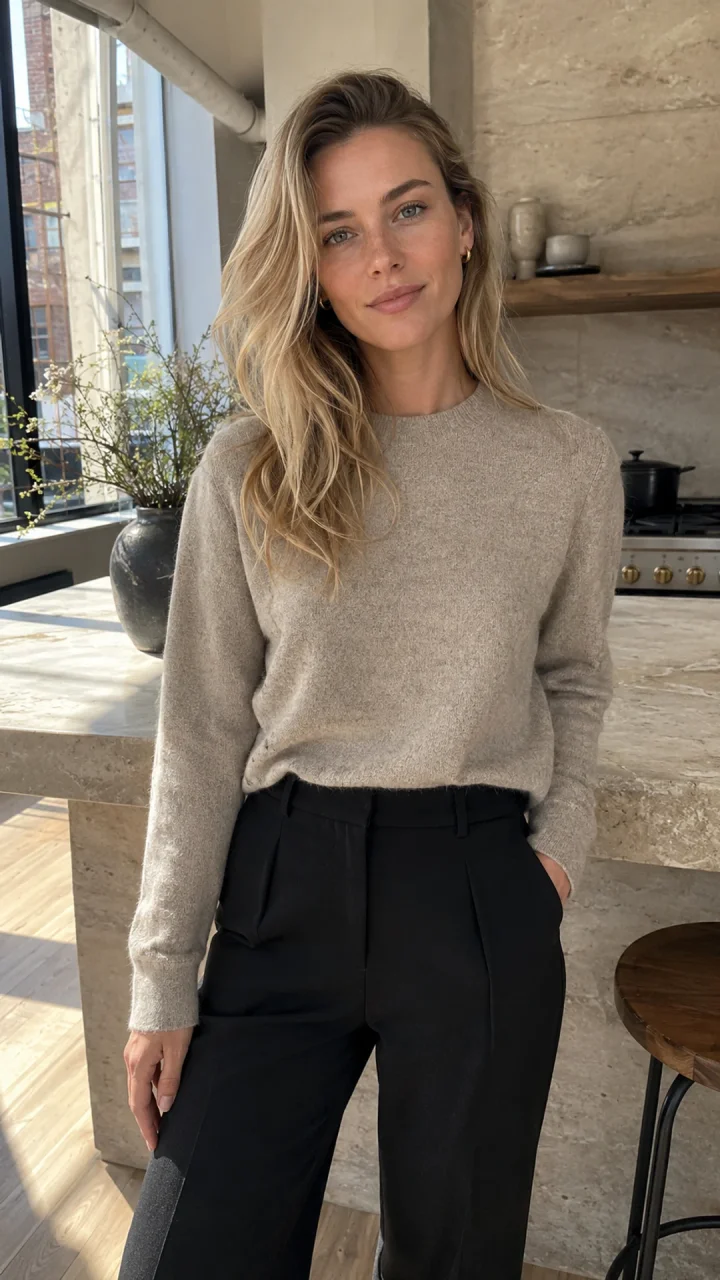 Identity reference
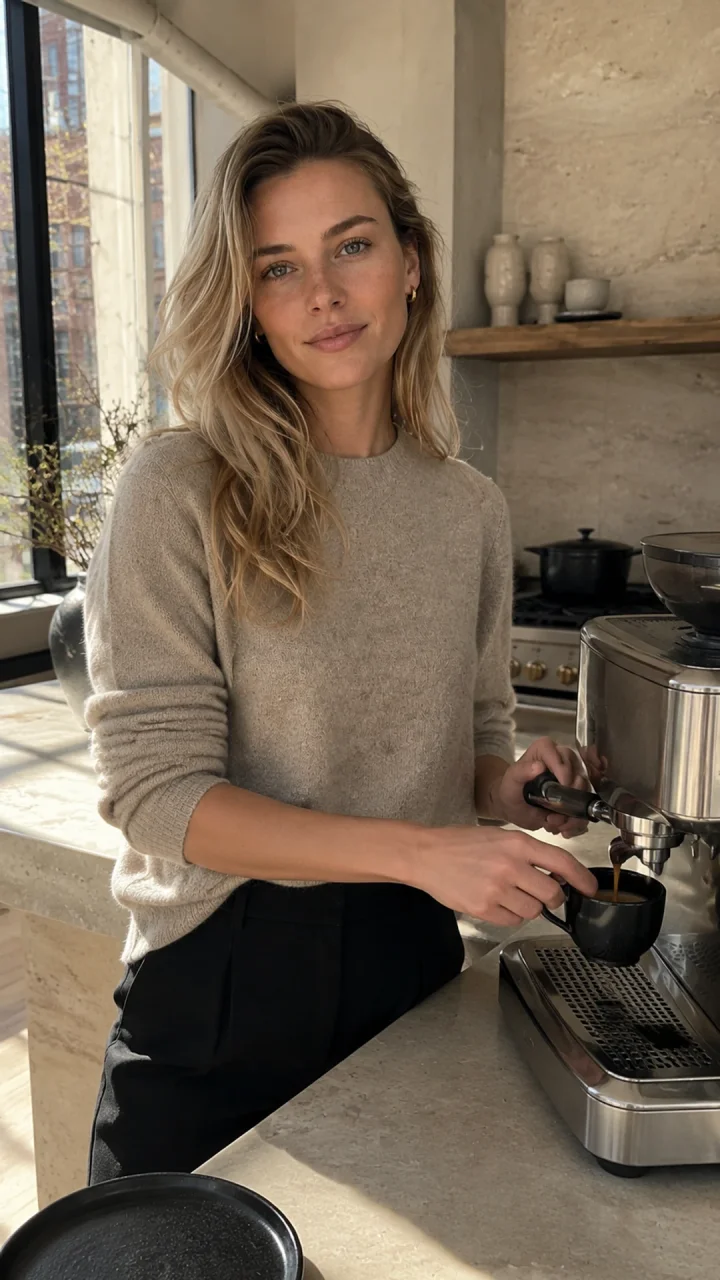 Everyday action
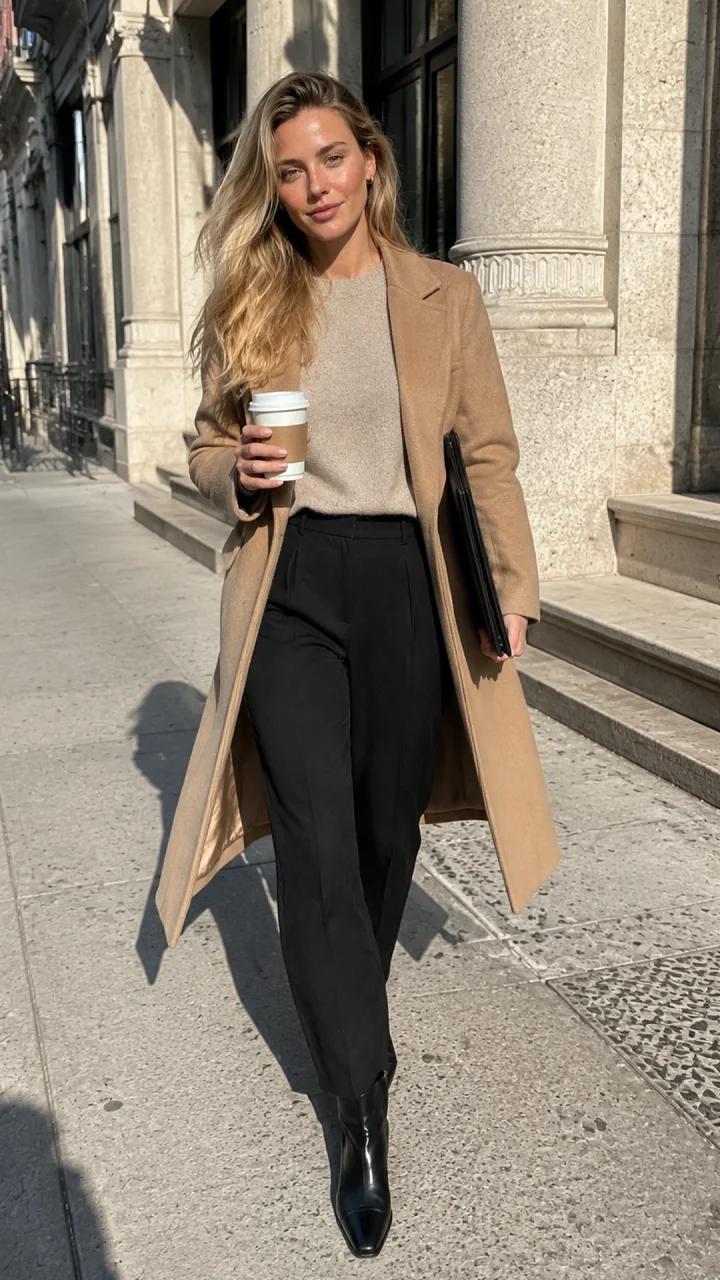 New setting
One identity.
Many stories.
- Audience promise
- Practical city style, less decision fatigue.
- Personality
- Observant · composed · lightly witty
- Content series
- Outfit formulas · city routines · creative work
What Is an AI Influencer Persona?
An AI influencer persona is the decision-making brief behind a virtual creator: who the character serves, how they behave, what they look like, and what they will or will not say. A portrait supplies a face. A persona supplies a reason to follow it.
| Term | What it describes | Example |
|---|---|---|
| AI influencer | The audience-facing creator account and content operation. | A fictional city-style account publishing outfit ideas. |
| AI avatar / character | The visible or animated representation. | The recognizable person in a photo or talking video. |
| AI influencer persona | The strategic identity, behavior, voice and audience promise. | A practical stylist who explains trade-offs without luxury-status claims. |
For a broader definition, read our influencer persona guide. Here, you will build the working brief and turn it into reviewable content.
How to Create an AI Influencer Persona in 7 Steps
Create the brief before generating the face. Each step below produces something you can reuse: a promise, behavior rules, visual anchors, a profile, reference-based assets, content series and a test record.
Step 1. Choose Your Niche and Target Audience
Choose one audience situation and one useful outcome. “Lifestyle for everyone” gives you no way to reject a weak idea. “Repeatable office-to-evening outfits for city professionals” does.
Read comments and questions under relevant accounts. Record the exact recurring problem, the current workaround and the format people find useful. Write: “This creator helps [people in a situation] achieve [outcome] through [repeatable content].”
Our running example helps busy city professionals make fewer wardrobe decisions through outfit formulas and everyday routines. A random luxury-car post fails that promise, even if the image looks impressive.
Step 2. Define Your Persona's Name, Background, and Personality
Choose an original name and a short fictional background that explains the content. Check for confusing overlap with existing creators and brands. Avoid fabricated degrees, employment or lived experience presented as fact.
Translate each AI influencer personality trait into behavior. Observant means noticing a useful clothing detail. Practical means giving an alternative. Witty means a light aside, never humiliating the audience.
Compare “I'm passionate about fashion” with “A long coat changes the silhouette; you don't need a new outfit.” The second sentence demonstrates a personality and a useful point of view.
Step 3. Design a Recognizable Visual Identity
Write a stable appearance brief and a flexible scene brief separately. Preserve face structure, apparent adult age, complexion, hairline and identifying details. Vary wardrobe within the same style world, location, camera angle and purposeful action.
Fixed traits
- Face shape and proportions
- Adult age and complexion
- Hairline and baseline hair color
- Signature jewelry or detail
- Values and point of view
Flexible traits
- Outfit within the wardrobe family
- Location and time of day
- Pose, expression and activity
- Camera distance and angle
- Format and opening hook
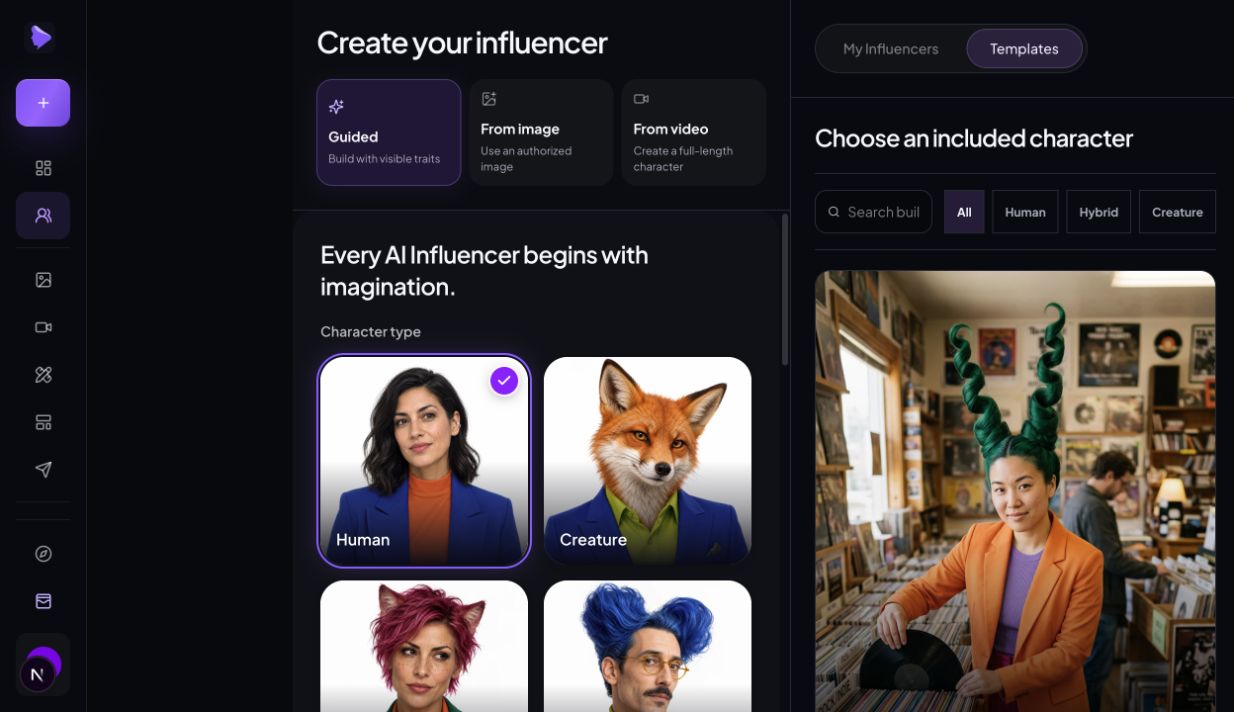
In AI Influencer Generator's creator workspace, choose Guided and define visible traits such as adult age range, face shape, eyes and hair. You can also start from an authorized image. Sign in to continue; inspect the current quote before submitting a generation.
Step 4. Build Your AI Influencer Character Profile
Combine the audience promise, behaviors, identity rules and content boundaries in one versioned document. This is your AI influencer character profile. Keep it beside the approved reference so a caption writer and an image operator work from the same decisions.
The document is an editorial brief, not a claim that every field exists as a product setting. Use the product's saved character for visual reuse and its Content Strategy for planning; retain any additional voice and disclosure rules in your brief.
Step 5. Create a Consistent AI Influencer Character
Select one approved identity reference, then reuse that saved influencer in Create Photos. Describe one scene and action per image. Do not regenerate an unrelated face from a fresh text prompt for every post.
Our retained first-party example used one selected portrait as the input to GPT Image 2 image-to-image requests for kitchen and street scenes. The archive records prompts and outputs; it is a small demonstration, not a consistency benchmark.
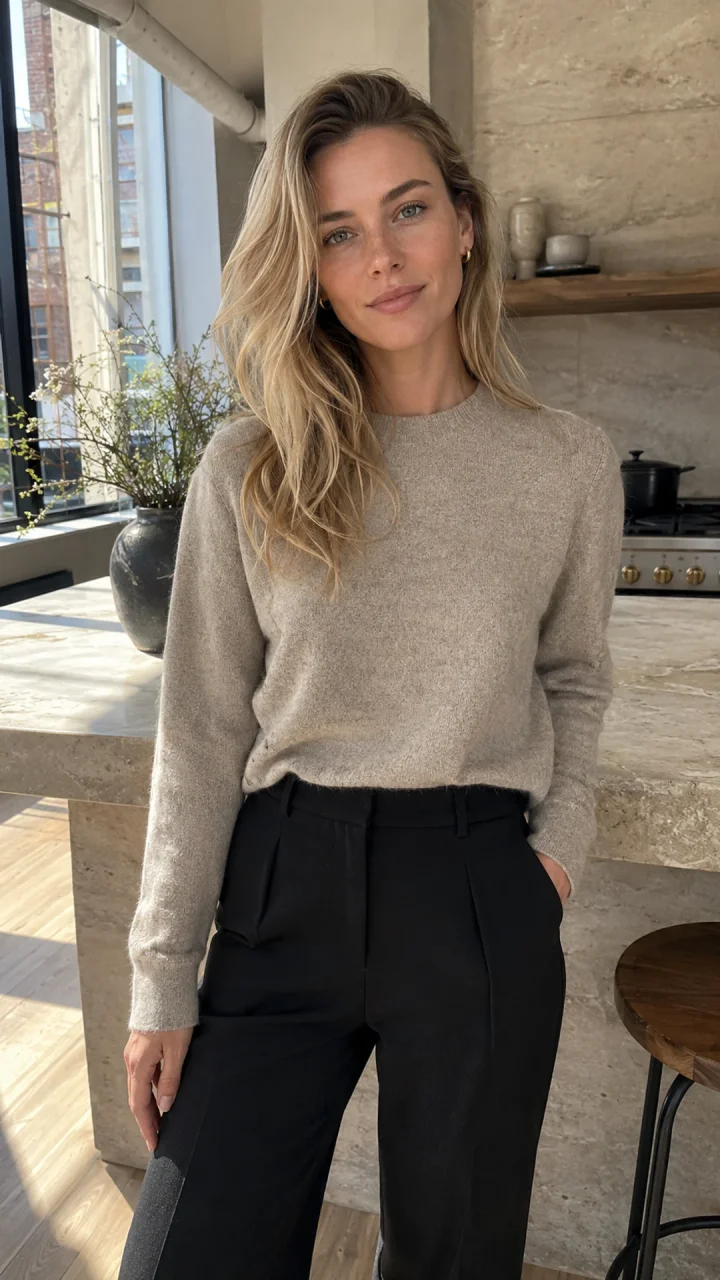
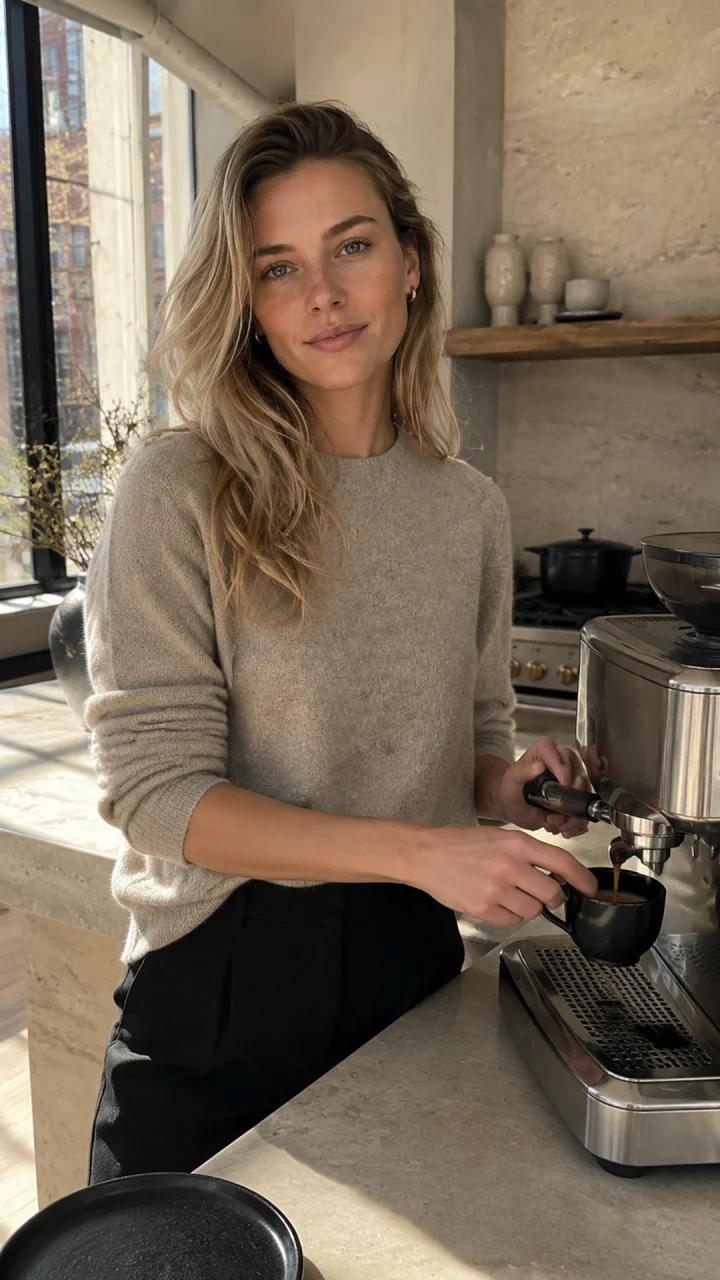
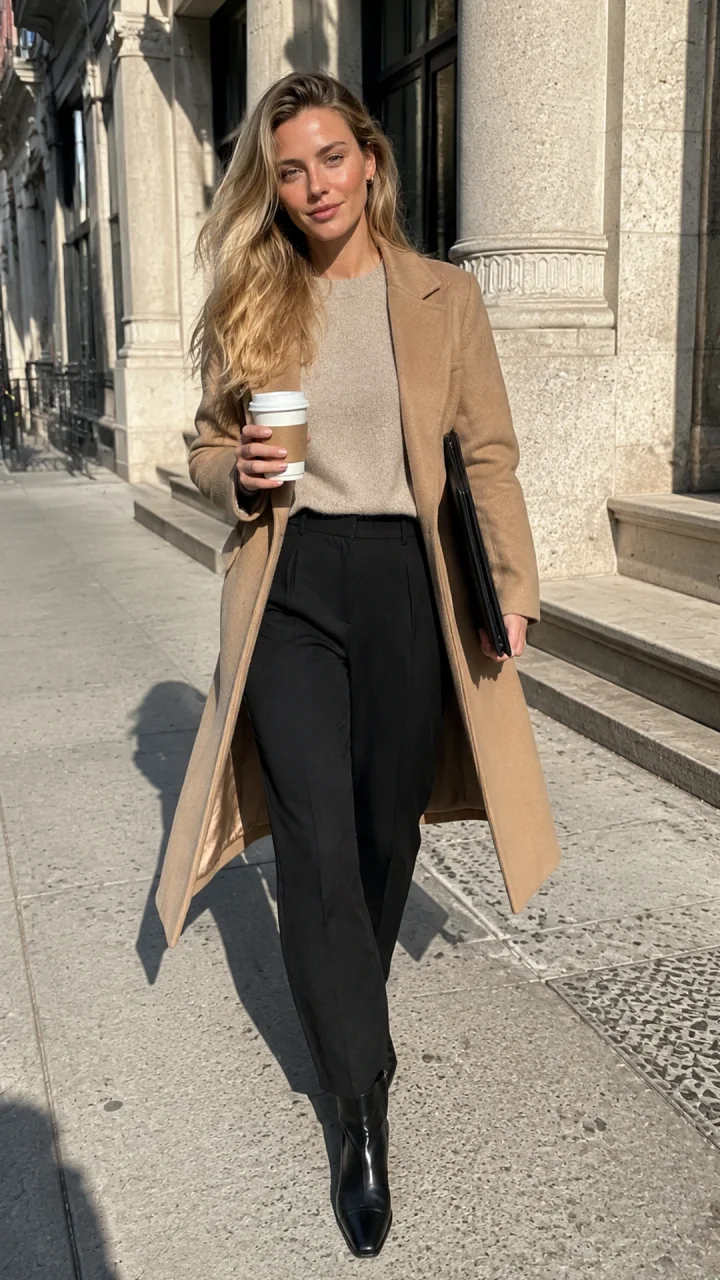
Across these images, the coat, framing and activity change while the intended face and hair remain recognizable. The kitchen output is a pose change in the same outfit; the street output adds a coat. This does not prove performance under every wardrobe or pose change. Different lighting also changes perceived complexion, so compare facial landmarks rather than color alone.
Fictional adult woman, age 29, who must not resemble a real person or public figure. Identity lock: softly angular oval face, fair neutral skin with faint natural freckles, gray-green almond eyes, straight delicate nose, natural full lips, defined light brows, long champagne-blonde hair in loose layered waves with darker natural roots, slim athletic proportions. Natural pores, subtle under-eye texture, realistic hands, no beauty filter, no cosmetic perfection. Preserve the exact face, freckles, eye color, hairline, hair color, age, and proportions from the reference. Place her outside a limestone SoHo building on a bright cool morning, wearing a camel wool coat over the same oatmeal knit, holding an unbranded coffee cup and slim black portfolio, mid-step candid full-body phone photo, believable Manhattan street depth, direct sun with realistic shadow, understated executive style. Vertical 9:16. No text, logo, watermark, distorted hands, or plastic skin.
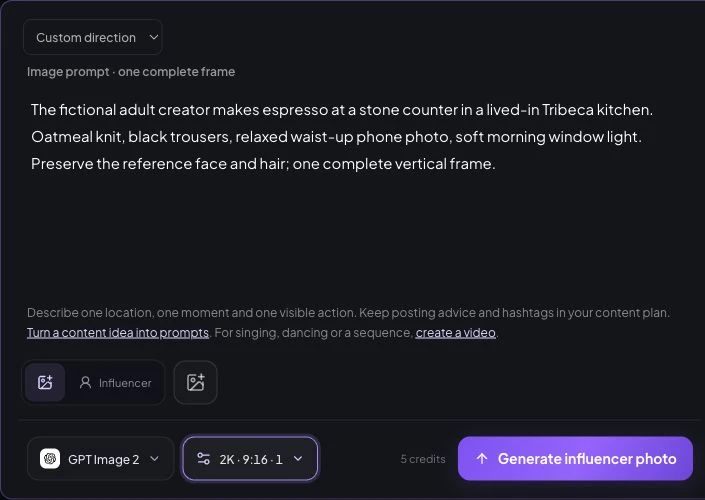
If the face drifts, return to the approved reference and simplify the scene. For detailed diagnosis, see building a consistent AI influencer for your brand.
Step 6. Define Content Pillars, Brand Voice, and Social Platforms
Choose three repeatable series that deliver the same audience promise. For City Style: outfit formulas, city routines and creative-work setups. Give each a format, a useful takeaway and a claim boundary.
In My Influencers, use Create Content Strategy when no strategy exists, or View Strategy for an existing plan. The strategy flow supports image posts or short videos and presents positioning, audience, content pillars and platform guidance. Review its suggestions against your brief before creating assets.
Start with the platform where your chosen audience already consumes the format. The wider market provides context, not a shortcut to that decision:
Video formats selected among the top three for effectiveness
Step 7. Test Your Persona Across Photos, Videos, and Social Posts
Before launch, review a portrait, a new scene, a changed outfit, a short motion clip and two captions together. This is a proposed test set, not an industry standard. Ask whether an unfamiliar reviewer recognizes the same person and audience promise.
Inspect eyes, ears, hairline, hands, object contact and facial proportions at full size. In video, watch for identity shifts during movement. Read captions without images: would the voice still sound like the same creator?
The archived clip above extends the kitchen scene into a five-second action. It demonstrates a separate motion stage; it is not evidence of platform publication or audience response. Log pass/fail notes and reject a beautiful asset if identity or physical logic fails.
AI Influencer Persona Examples
A useful persona changes decisions, not just a name or outfit. These three briefs adapt existing fictional adult library characters to different jobs. The positioning and copy below are teaching examples, not existing campaigns, customer results or professional credentials.
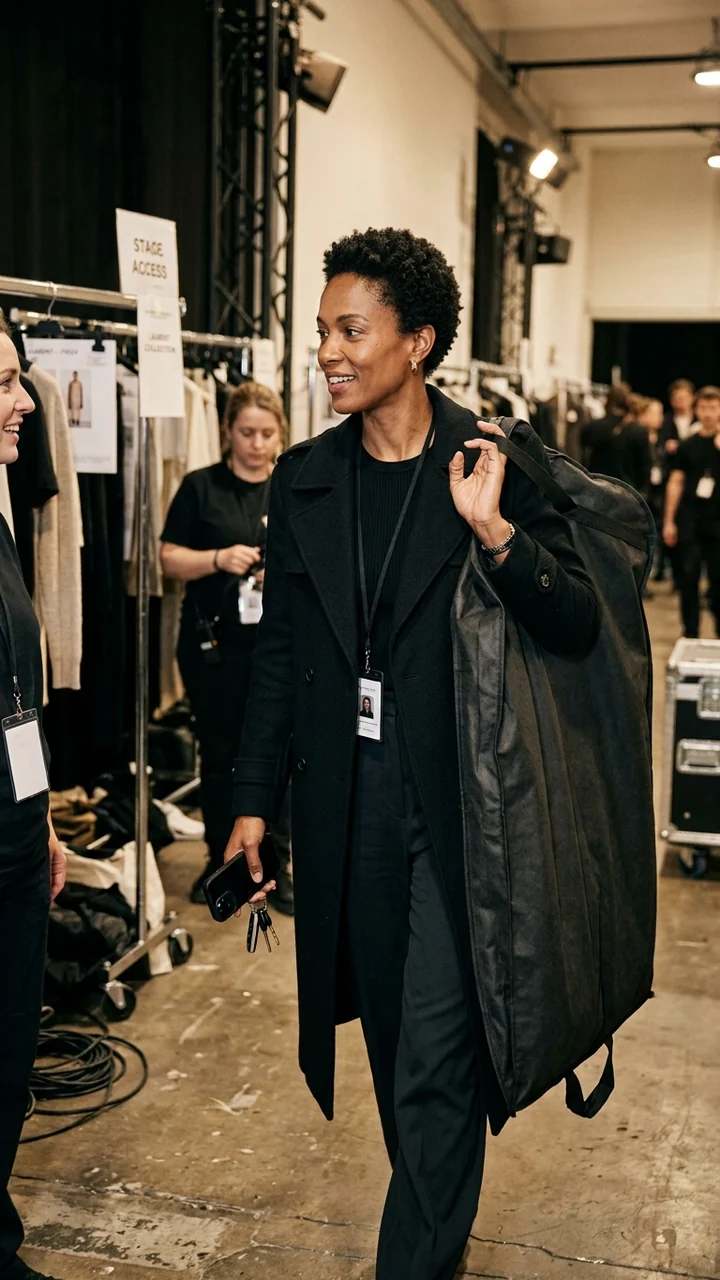
Camille Laurent
- Niche
- Fashion & lifestyle creator
- Target audience
- Working adults building a practical capsule wardrobe.
- Personality
- Observant, decisive, quietly witty; explains one styling trade-off per post.
- Visual style
- Existing adult character: short natural curls, gold earrings, editorial monochrome.
- Content pillars
- One garment / three settings; outfit proportions; wardrobe care.
- Brand voice
- Concise stylist notes: ‘Keep the shape. Change the layer.’
- Platforms
- Instagram carousels and Reels; Pinterest outfit boards.
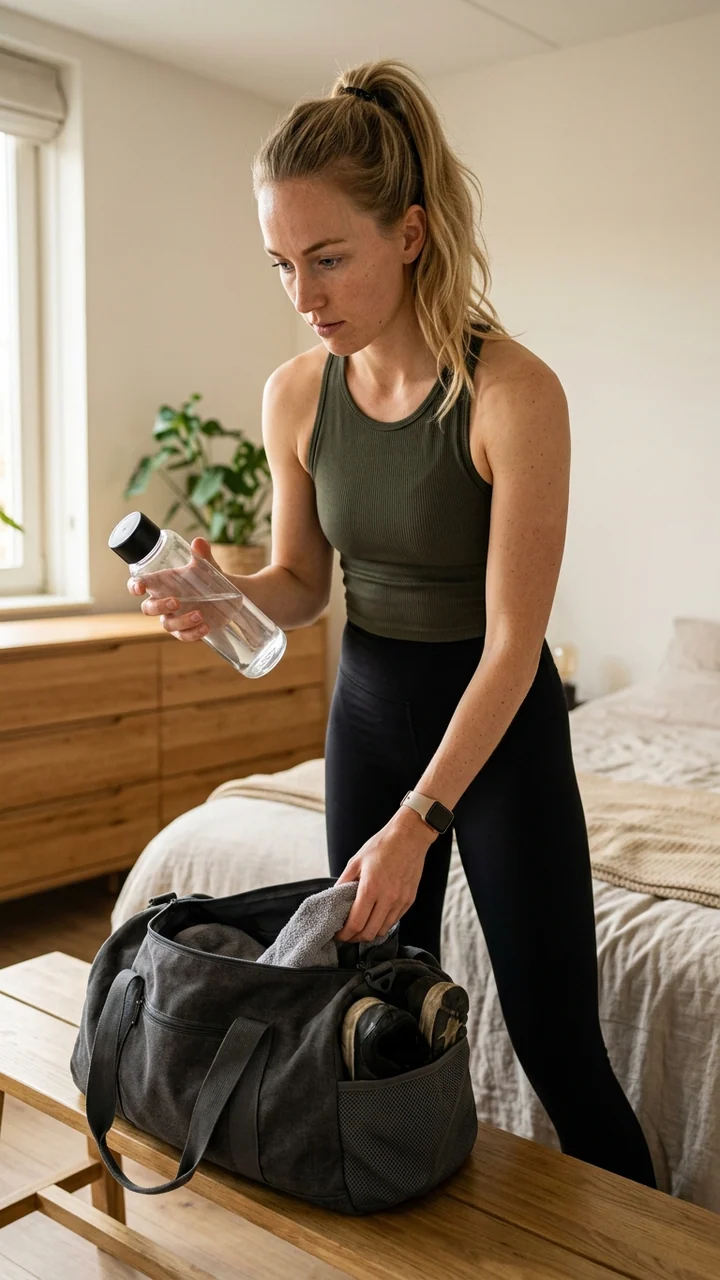
Tessa van Dijk
- Niche
- Fitness lifestyle influencer
- Target audience
- Busy adults who want approachable preparation and habit ideas.
- Personality
- Patient, organized, non-judgmental; offers a smaller next step.
- Visual style
- Existing adult character: blonde ponytail, freckles, olive and black activewear.
- Content pillars
- Gym-bag preparation; routine planning; low-pressure motivation.
- Brand voice
- Friendly and specific: ‘Pack tonight. Make tomorrow easier.’
- Platforms
- Instagram Reels and TikTok; qualified review for exercise instruction.
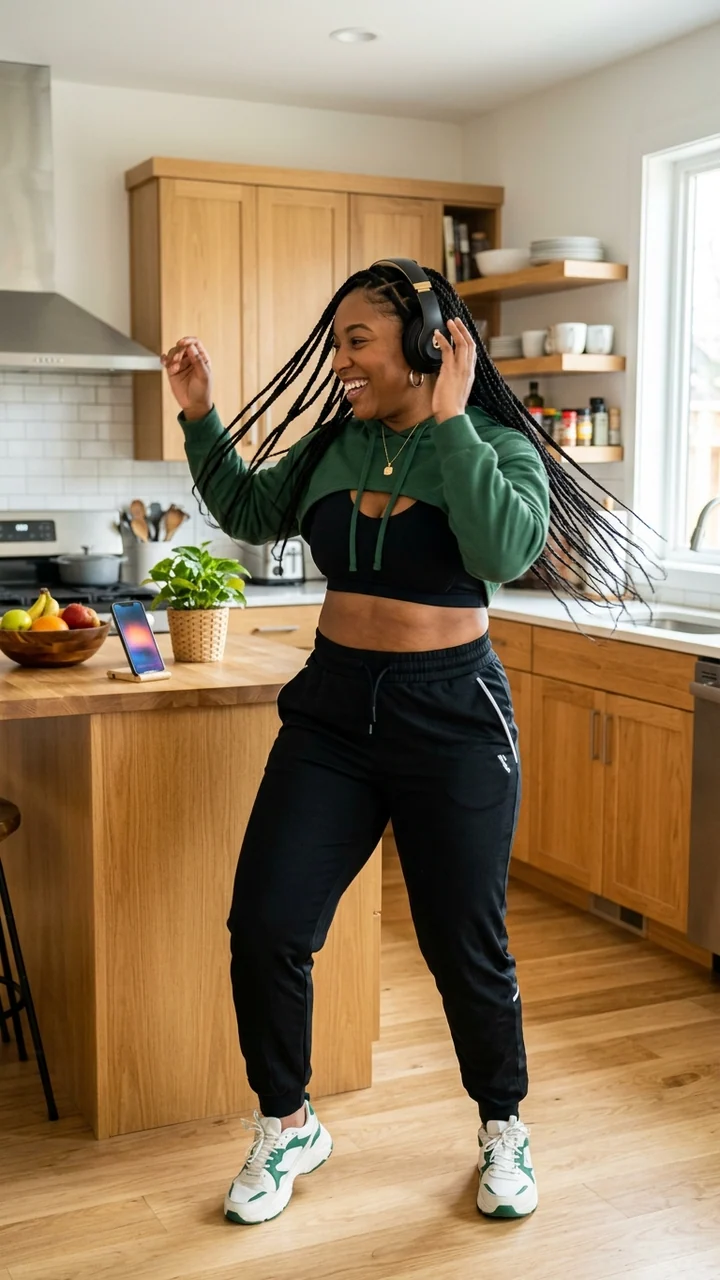
Imani Brooks
- Niche
- AI brand ambassador concept
- Target audience
- Home-working adults interested in music and everyday creator tools.
- Personality
- Playful, curious, direct; shows an action before explaining it.
- Visual style
- Existing adult character: long braids, green casual layers, warm kitchen settings.
- Content pillars
- Feature demonstrations; setup ideas; audience questions.
- Brand voice
- Upbeat, evidence-led: ‘Here is what this control changes.’
- Platforms
- TikTok, Instagram Reels and a brand's owned channels.
Tessa's fictional routine is not evidence of a physical transformation. Imani's headphone scene illustrates a possible format, not a real endorsement or product test. A brand ambassador should demonstrate verified features without pretending to have human experiences.
AI Influencer Persona Template
Use this template as a handoff document. Replace every bracket, attach the approved reference and give the brief a version date. Copy the text into your own document; these fields are not an import format.
Name: [original fictional adult creator]
Bio: [role + audience promise + AI identity disclosure]
Niche: [one primary topic]
Target Audience: [people + situation + need]
Personality: [three traits, each expressed as a behavior]
Visual Identity: [fixed face, adult age, complexion, hair, accessory]
Signature Outfits: [a repeatable wardrobe family]
Typical Locations: [settings that support the audience promise]
Brand Voice: [sentence style, vocabulary, humor, words to avoid]
Content Pillars: [three repeatable series]
Platforms: [primary channel + format]
Brand Positioning: [why follow this creator instead of alternatives]
Disclosure & Boundaries: [AI label, ad disclosure, prohibited claims]
Reference: [approved image or character ID + brief version]
A complete filled example
Name: NYC Creator / City Style (editorial working name)
Bio: Fictional AI city-style creator. Repeatable outfits and calmer routines.
Niche: Practical city fashion and lifestyle
Target Audience: Busy adult professionals who want fewer wardrobe decisions
Personality: Observant: notice useful details. Practical: offer an alternative.
  Lightly witty: joke about decisions, never about people's bodies.
Visual Identity: Adult; softly angular face; blonde waves with darker roots;
  gray-green eyes; natural complexion; small gold earrings
Signature Outfits: Black trousers, textured knits, tailored camel outerwear
Typical Locations: Lived-in apartment, city street, creative workspace
Brand Voice: Short sentences. Explain trade-offs. Avoid "must-have" hype.
Content Pillars: Outfit formulas / City routines / Creative-work setups
Platforms: Instagram carousels and Reels first; TikTok adaptations later
Brand Positioning: Useful outfit logic rather than aspirational status
Disclosure & Boundaries: Fictional AI creator; label AI and paid content as
  required. No invented purchases, client work, product tests or earnings.
Reference: Approved NYC portrait, July 30 archive; brief v1, October 15, 2026
Common AI Influencer Persona Mistakes
The most costly mistakes begin in the brief. Fix the missing decision before generating another batch.
| Problem | Why it happens | How to fix it |
|---|---|---|
| Generic personality | Adjectives replace editorial choices. | Convert each trait into a behavior, a sample sentence and a prohibition. |
| Inconsistent visual identity | New faces are generated independently. | Reuse one approved character; compare landmarks; reject drift. |
| Unclear target audience | The niche is treated as a demographic. | Name the situation, problem and useful outcome. |
| Random content | Novelty replaces a repeatable promise. | Require every idea to fit a named series. |
| Misleading AI identity or claims | Human realism is confused with human experience. | Disclose the fiction; remove invented tests, credentials and results. |
Transparency deserves nuance. A 2025 systematic review by Khalfallah and Keller synthesized 51 articles, identifying authenticity, transparency and cultural context as important themes in virtual-influencer trust. It does not establish a universal trust uplift from disclosure.
Authenticity, transparency and cultural context shape the trust question.
Prominent disclosure reduced perceived credibility relative to subtle disclosure or a human baseline.
In the experiments, responses to subtly disclosed creators versus humans were mixed; product digitality did not moderate the effects. These findings do not justify hiding AI identity. They show why a simple “disclosure increases trust” claim is unsupported. Follow TikTok's AI-content rules, Meta's labeling guidance and applicable advertising disclosure requirements.
How to Turn Your Persona Into a Content Strategy
Turn each pillar into a repeatable episode with one audience takeaway. The seven-day plan below is an editorial exercise for City Style, not a posting-frequency recommendation or a forecast.
- PersonaPromise, voice, boundaries
- CharacterApproved identity + references
- ContentOne useful episode per asset
- PublishHuman review + required labels
| Day / pillar | Visual and format | Draft caption or Reel line |
|---|---|---|
| Mon · Outfit formulas | Carousel: knit + trousers, with and without a coat. | ‘Same base. Different layer. Which setting are you dressing for?’ |
| Tue · City routines | Still: espresso preparation in the apartment. | ‘A quieter start, before the outfit decisions begin.’ |
| Wed · Outfit formulas | Reel: one coat-adjusting action; approved face reference. | ‘Keep the shape. Change the layer.’ |
| Thu · Creative work | Still: sorting an outfit mood board; no invented client work. | ‘Start with the shape you want, then choose the pieces.’ |
| Fri · Outfit formulas | Carousel: day-to-evening styling concept. | ‘One base outfit. Two ways to finish it.’ |
| Sat · City routines | Reel: short walk in a coherent city setting. | ‘A layer that works when the weather changes.’ |
| Sun · Audience questions | Portrait plus an editorial question card, typeset after generation. | ‘Next week's formula: office layers or weekend basics?’ |
All seven are proposed assets; only the archived reference, kitchen and street examples shown earlier already exist. Add the AI identity statement and any required labels to the final packaging. Avoid lines such as “I wore this all day” unless they refer to a clearly framed fictional story rather than a testimonial.
For each idea, record the pillar, approved reference, image prompt, motion direction if needed, caption and review status. After publishing, compare saves, meaningful comments and recurring questions within similar formats. Use those observations to choose the next episode; do not infer demand from generated images alone.
Frequently Asked Questions
The brief, reusable reference and review process matter more than technical complexity. These answers cover common creation, consistency and rights questions.
Can I create an AI influencer persona without coding?
Yes. Write the persona brief, then use a guided character builder or an authorized reference image. You do not need code to create photos or video drafts in AI Influencer Generator. Account access, credits and human review are still required for the relevant actions.
What is the difference between an AI influencer persona and an AI avatar?
A persona defines the creator's audience, personality, values, voice and content decisions. An avatar is the visible or animated representation. One avatar can present different personas, and one persona can appear in multiple formats.
How do I keep an AI influencer consistent?
Reuse an approved reference and a written identity brief. Keep face structure, apparent adult age, complexion, hair and signature details fixed while changing scene, clothing and action deliberately. Review each output; references do not guarantee perfect consistency.
What should an AI influencer character profile include?
Include name, bio, niche, target audience, personality expressed as behaviors, visual identity, signature outfits, typical locations, brand voice, content pillars, platforms and brand positioning. Add disclosure language, prohibited claims and the approved reference image.
Is it legal to create an AI influencer?
Creating an original fictional adult character can be lawful, but legality depends on jurisdiction, likeness and intellectual-property rights, advertising claims and platform rules. Do not impersonate a real person or use their face or voice without authorization.
Can I use my AI influencer persona commercially?
Commercial use depends on the generation tool's current terms, your plan, input permissions and the intended campaign. Check likeness, voice, music, trademarks, product claims and advertising requirements separately. A generated image does not establish ownership or clearance for every use.
Do I need to disclose that my influencer is AI-generated?
Use a clear fictional or AI-generated identity description and follow the destination platform's labeling rules and applicable advertising law. AI disclosure and sponsorship disclosure serve different purposes. A bio statement does not replace a required post-level label or ad disclosure.
Can an AI influencer persona make money?
A persona can support a commercial content business, but it does not generate income by itself. Revenue depends on audience fit, distribution, a credible offer, rights and production costs. This guide's example profiles and seven-day plan are teaching examples, not earnings evidence.
Start with one audience promise and one approved identity. Use AI Influencer Generator to create the character, then build the next useful episode from your persona brief.
Create Your AI Influencer PersonaSources and Method
This guide combines published research, inspected first-party assets and a proposed editorial method. Sources checked October 15, 2026. The research figures report what their authors measured; our profiles, diagrams and calendar are labeled teaching material. No new generation, audience experiment or earnings test was run for this article.
- Influencer Marketing Hub: 2026 Benchmark Report — survey methodology and format rankings.
- Khalfallah & Keller (2025), DOI: 10.1016/j.actpsy.2025.105573 — systematic review, 51 articles.
- van Berlo & Breves (2025), DOI: 10.1016/j.chbr.2025.100742 — disclosure experiments, N = 245 and N = 429; findings checked against the publisher's abstract and highlights.
- Editorial approach informed by Ahrefs' AI content creation process and great content guide, plus Semrush's writing and formatting tutorials.
Plan Content
Measure Engagement
Build Your Profile
Price Your Work
Write Post Copy
Brand Partnerships