
AI-generated video is changing how creators, brands, and agencies build woman-led visual content. Instead of starting every shoot from zero, a team can create one original adult AI woman, save the identity, and develop new scenes for education, entertainment, ecommerce, personal branding, and ads. The useful goal is not simply an attractive face. It is a recognizable character system that can support many AI women videos without pretending the character is a real person.
AIInfluencerGenerator.ai brings character creation, consistent photos, influencer video, image animation, motion-reference workflows, templates, and History into one workspace. That makes it easier to move from an approved identity to a repeatable content plan. It does not guarantee perfect consistency, instant production, audience growth, or automatic publishing.
What are AI women videos?
AI women videos are synthetic video assets featuring a digitally created adult woman character. Teams use them for social posts, brand stories, product context, tutorials, explainers, virtual-influencer formats, and advertising concepts. The character may change outfit, location, mood, framing, and content format while retaining a recognizable face, hair silhouette, proportions, styling language, and editorial role.
The strongest results treat the character as a managed brand asset. She needs a defined audience, point of view, visual range, rights record, and content purpose. A saved identity is a stronger starting point than generating unrelated presenters for every post, but it is not a technical promise of pixel-perfect sameness. Faces, hands, motion, clothing, and product interaction still need a human review.
Six practical benefits of a reusable AI woman
Consistent character identity
Benefit 01
A saved adult character gives each new scene a stable reference so a feed can feel like a series instead of unrelated generated clips.
Lower repeat-production overhead
Benefit 02
Teams can test scenes without repeatedly coordinating casting, travel, studio bookings, wardrobe, or a physical shoot. Direction, editing, review, and distribution still have costs.
Faster creative iteration
Benefit 03
Once the identity and review rules are defined, teams can explore hooks, settings, and seasonal versions without rebuilding the creative brief each time.
Flexible outfits and scenes
Benefit 04
The same character can move between a gym, office, street, bathroom, studio, or product-context scene when the wardrobe and action remain physically believable.
A reusable campaign model
Benefit 05
Approved identity anchors, prompts, source images, and review notes become a reusable production kit instead of disappearing after one post.
Easier content scaling
Benefit 06
One identity can support platform-specific concepts and ad variations while the team keeps the role, disclosure standard, and visual world coherent.
These benefits apply to production, not automatically to performance. AI video does not arrive with a human creator's audience, lived experience, endorsement, or community trust. Paid media, organic distribution, content strategy, and account management remain separate work. The AI versus traditional influencer cost guide explains that distinction in detail.
One character, three useful video directions
A single fictional adult can support different categories without becoming a different person. Keep the face shape, complexion, hair, apparent age, proportions, signature accessory, and voice boundaries stable. Change the activity, wardrobe, camera, environment, pacing, and message to fit the content job.
The separate July 30 NYC archive below shows one original adult identity reused in an espresso and a street scene. It is not the illustrative Maya campaign described next.
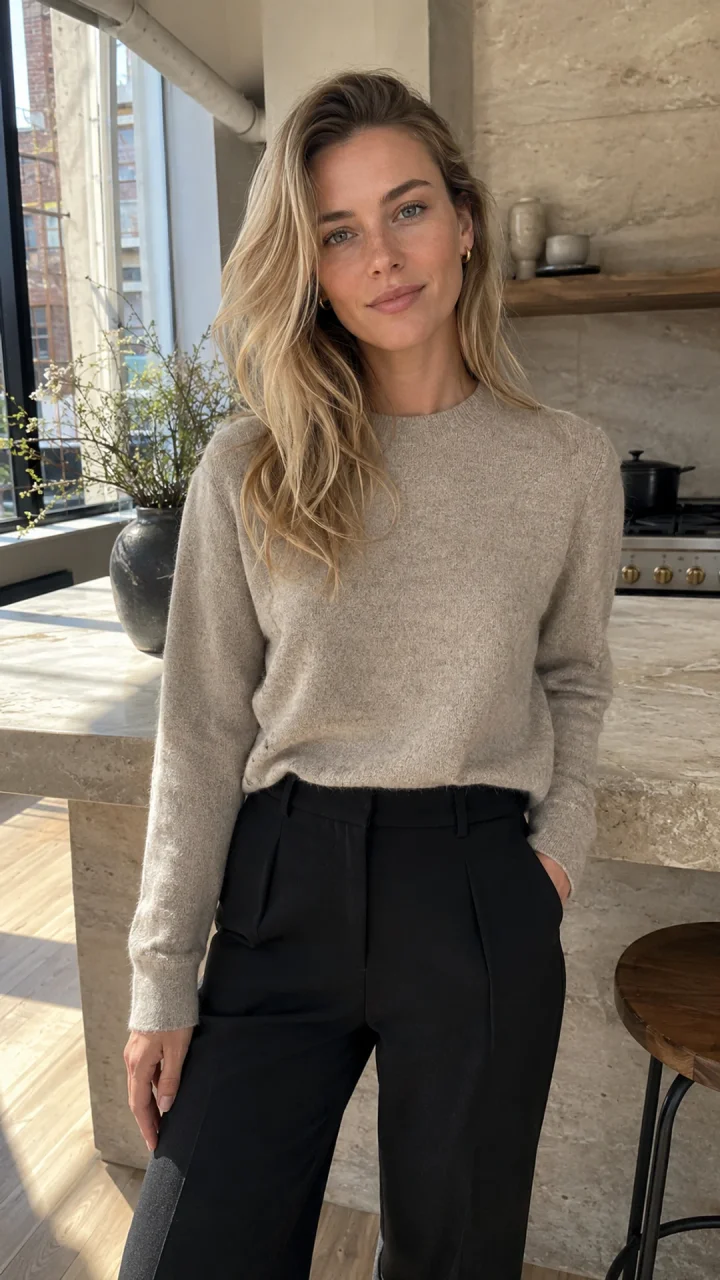

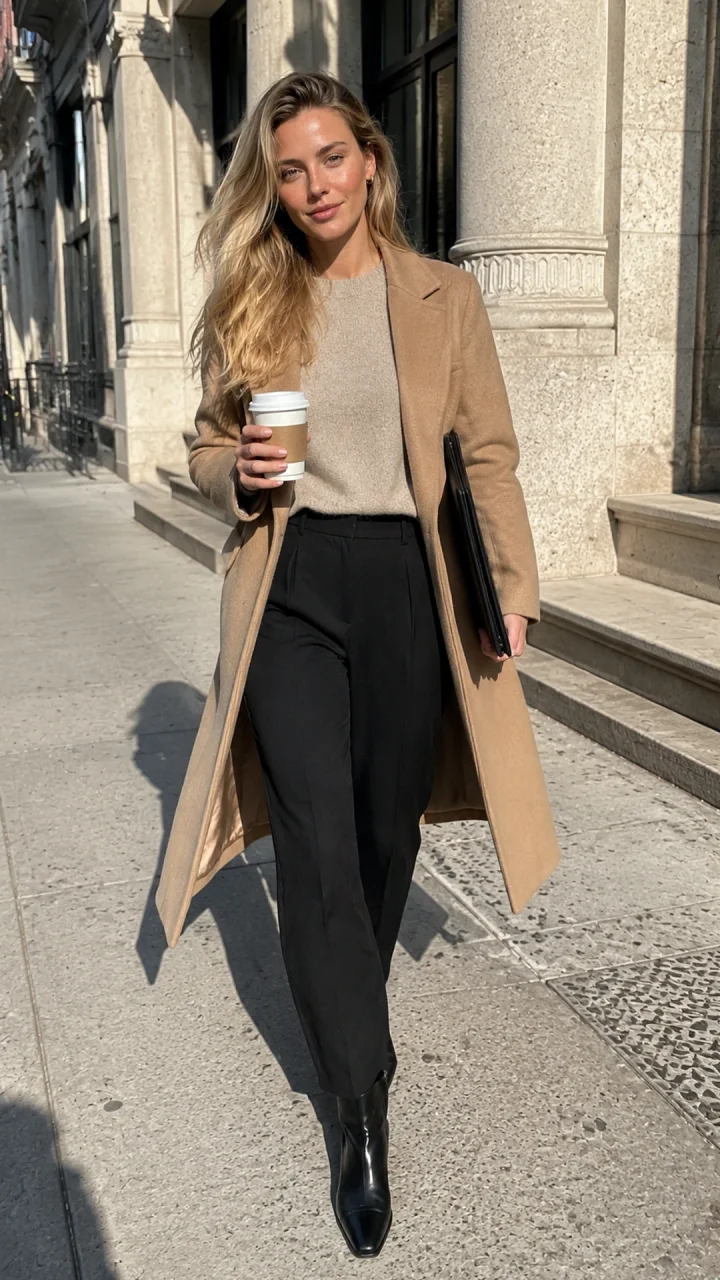
Keep fixed
Adult status, facial structure, complexion, hair silhouette, body proportions, signature accessory, role, voice boundaries, disclosure standard, and approved brand claims.
Change deliberately
Outfit, scene, time of day, action, expression, camera distance, motion, hook, caption, offer, platform edit, and seasonal campaign context.
Worked example: Maya across a year of skincare content
Imagine a skincare brand creates Maya, a fictional adult character with a calm teaching style, shoulder-length dark hair, a small geometric ear cuff, and a practical wellness-focused wardrobe. This is an illustrative planning example—not a customer, real campaign, endorsement, product test, or evidence of results.
Hydration education
Spring
A bathroom routine showing the order of unbranded products without claiming that Maya personally experienced a result.
Travel-friendly routine
Summer
A packing scene with a smaller kit, a vertical hook for TikTok, and a more polished first frame for Reels.
Ingredient explainer
Autumn
A desk-based short that translates one approved ingredient claim into three visual beats for YouTube Shorts.
Gift campaign concept
Holiday
A warm tabletop scene and paid-ad variation with clear commercial context and no invented testimonial language.
The face and role stay recognizable while the content job changes. This is what reuse means: preserve identity and editorial purpose, not the same pose, room, or export. A campaign library should grow in range without turning into a collection of unrelated faces.
Create the reusable identity in the current Studio workflow
Start in Character Builder. Guided creation supports a new fictional adult identity; image or video starting paths require material you own or are authorized to use. Review the visible identity, save the character, and use it in supported photo workflows before asking for complex motion.
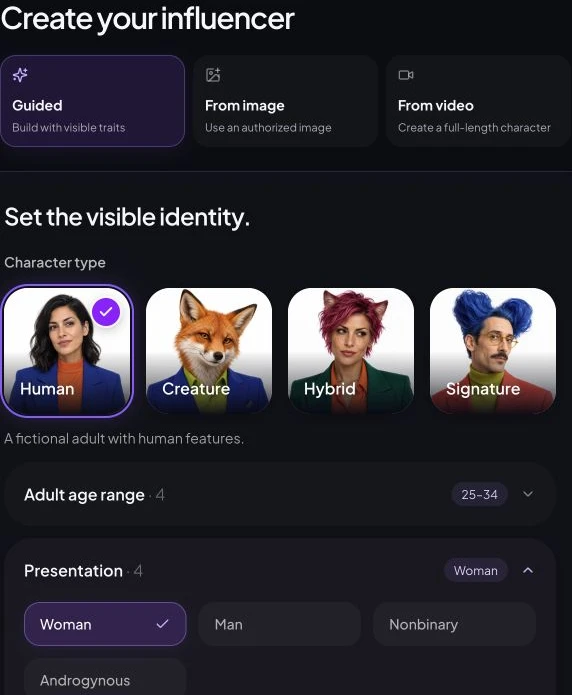
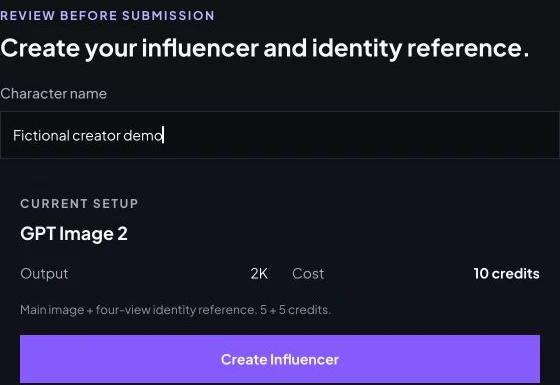
A small approved image set is useful because it separates identity decisions from video decisions. Test a neutral portrait, a three-quarter lifestyle frame, and one full-body scene. Reject any image that changes apparent age, facial structure, proportions, hands, or signature details. Then take the strongest still into AI Influencer Video, Animate Photo, or another workflow that matches the input you actually have.
Create an original adult character in StudioA six-step workflow for consistent AI women videos
- 01
Define one original adult character
Write a compact identity brief covering the character's role, adult age range, face and hair anchors, styling world, audience, and disclosure boundaries.
- 02
Create and save the identity
Use Character Builder with guided choices or an authorized reference, review the result, and save the reusable character before producing campaign scenes.
- 03
Build an approved image set
Create a small set of consistent photos that preserve identity while testing useful outfits, camera angles, expressions, and environments.
- 04
Turn one clear scene into video
Choose an approved image or saved character, describe one purposeful action and camera movement, then review the current credit quote before generating.
- 05
Adapt the edit to each channel
Adjust the hook, duration, crop, captions, pacing, audio, safe area, and call to action for TikTok, Reels, Shorts, or paid placements.
- 06
Review, record, and reuse
Reject identity or motion drift, save approved outputs in History, record what stayed fixed, and reuse the same character system for the next campaign.
Keep the first motion brief simple: one subject, one purposeful action, one camera behavior, and one short scene. A talking-style explanation, a natural product-context gesture, or a short walk is easier to inspect than a clip that asks the character to change clothes, handle several objects, turn around, and cross locations at once.
Studio shows the current task settings and credit quote before submission. Available models, durations, aspect ratios, and prices can change, so the live quote is more reliable than a static article. Review completed work in History and download only after checking identity, motion, anatomy, product shape, clothing continuity, and background geometry.
Current settings and a separate recorded clip
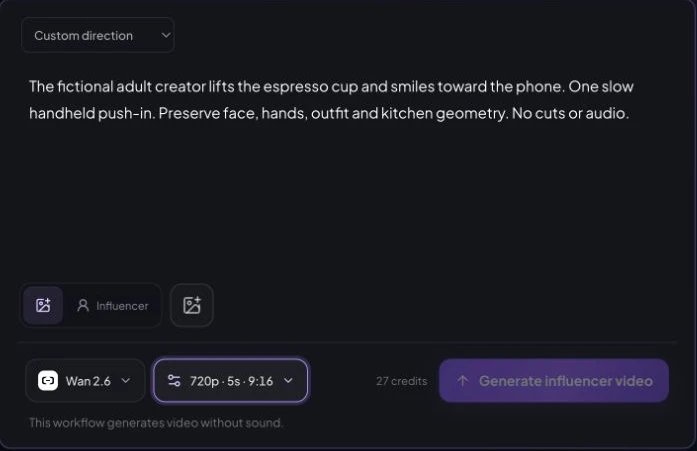
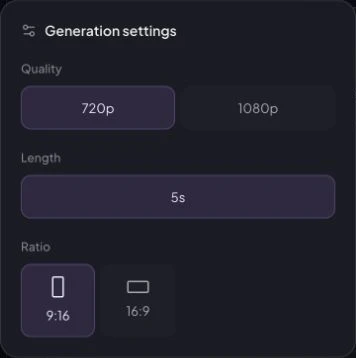
The October 9 unsubmitted demonstration uses Wan 2.6, 720p, five seconds and 9:16, with a 27-site-credit quote. The archived NYC clip used its kitchen image as the first frame in Seedance 2: 720p, 9:16, five seconds, generated audio off. It is a motion example, not a skincare demonstration. Its generation record lists 104 seconds and 100 provider credits; site charges and retries are unknown.
Original archived motion prompt
The same fictional blonde adult woman completes one natural action: she lifts the espresso cup from the counter and gives a small confident smile toward the phone. One slow handheld push-in only. Preserve her exact face, freckles, hair, natural skin texture, hands, outfit, apartment geometry, and morning light. No cuts, no extra people, no morphing, no text, no logo, no watermark, no audio.
Adapt one identity to TikTok, Reels, Shorts, and ads
Reusing the character does not mean posting the same file everywhere. Each channel has different viewer behavior, editing rhythm, caption needs, and commercial context. Keep the identity stable while making the edit native to its destination.
| Channel | Creative job | Adaptation | Review note |
|---|---|---|---|
| TikTok | Immediate visual hook and one clear action | Fast pacing, readable captions, vertical safe area | Trend participation still needs an original character angle |
| Instagram Reels | Recognizable visual series and polished first frame | Vertical crop, concise caption, brand-consistent grade | Reuse the identity without duplicating every scene |
| YouTube Shorts | A complete micro-story or useful explanation | Clear spoken or visual beats and a resolved ending | Do not stretch one weak clip to fill time |
| Paid social ads | One message, one audience, one next action | Claim review, usage rights, disclosure, platform variants | Production does not include media distribution |
For stronger scripts and shot direction, use the AI video idea generator workflow and AI influencer prompt guide. For production details, follow the step-by-step AI influencer video guide.
Use separate identities across separate brand accounts
An agency can apply the same operating system across clients, but it should not silently reuse one character as if she independently endorses unrelated brands. Give each client a distinct authorized character, purpose, visual world, disclosure plan, and asset library. Keep source rights and approval records separated by account.
A character can support several campaigns for one brand when the role remains coherent. A skincare educator moving from hydration to travel packing is understandable. Turning the same persona into a medical expert, financial adviser, and luxury spokesperson without evidence or context is not flexibility; it weakens trust and can create risk.
Lower production overhead does not remove human work
AI women videos can reduce repeat casting, location, travel, and reshoot coordination. The remaining budget can include character direction, prompts, source images, video attempts, editing, captions, music, claims review, platform versions, approvals, and distribution. Complex object interaction or motion may require more attempts than a simple scene.
Track cost per approved asset rather than cost per generated attempt. Record how many images and videos were reviewed, how much editing time was needed, which formats drifted, and whether the final content served its intended job. Current plan structure is listed on Pricing; task-level usage is explained in the credit guide.
Disclosure, rights, and respectful character design
Use original fictional adults or real-person references you are authorized to use. Do not imitate celebrities, private people, or anyone who appears underage. Avoid building characters from stereotypes about age, ethnicity, profession, body type, or personality. Give the character a specific editorial role rather than reducing her to appearance.
Commercial disclosure is separate from synthetic-media disclosure. The FTC influencer disclosure guide explains that a material connection should be obvious and placed with an endorsement. TikTok publishes synthetic-media rules in its Integrity and Authenticity guidelines; YouTube provides altered-content disclosure guidance; Meta explains its approach to AI content labels. Check current rules at publication time.
Review the site's commercial-use conditions and AI disclosure guidance. A fictional woman can explain approved product information, but she should not claim personal use, a medical outcome, customer satisfaction, or a real relationship that never existed.
Turn an approved identity into a short videoFrequently asked questions
What are AI women videos?
AI women videos are synthetic video assets featuring an original or authorized adult woman character. They can support education, entertainment, product context, brand stories, and short-form campaigns when identity, rights, disclosure, and claims are reviewed carefully.
Can I reuse the same AI woman in several videos?
Yes. Save one approved character, reuse that identity in supported photo and video workflows, and keep defining traits stable while changing the scene. Consistency can improve, but every output still needs review because generative media cannot guarantee a perfect match.
Can AIInfluencerGenerator.ai publish directly to social platforms?
No. The product helps create and review characters, images, and videos. Publishing, scheduling, captions, account management, and platform compliance remain separate steps.
Which video formats can one AI woman support?
A reusable adult character can anchor lifestyle clips, tutorials, product-context scenes, fashion concepts, talking-style videos, image animations, or motion-reference workflows. The available inputs, durations, formats, and credit quote shown in Studio are the source of truth for each task.
Do AI women videos need disclosure?
Use clear synthetic-media and commercial disclosure when it could affect how viewers interpret the content. Review the current rules for each platform and market, and never present a fictional character as a real customer or undisclosed endorser.
Plan Content
Measure Engagement
Build Your Profile
Price Your Work
Write Post Copy
Brand Partnerships