
Who is Abu Shalab, the AI dancing influencer?
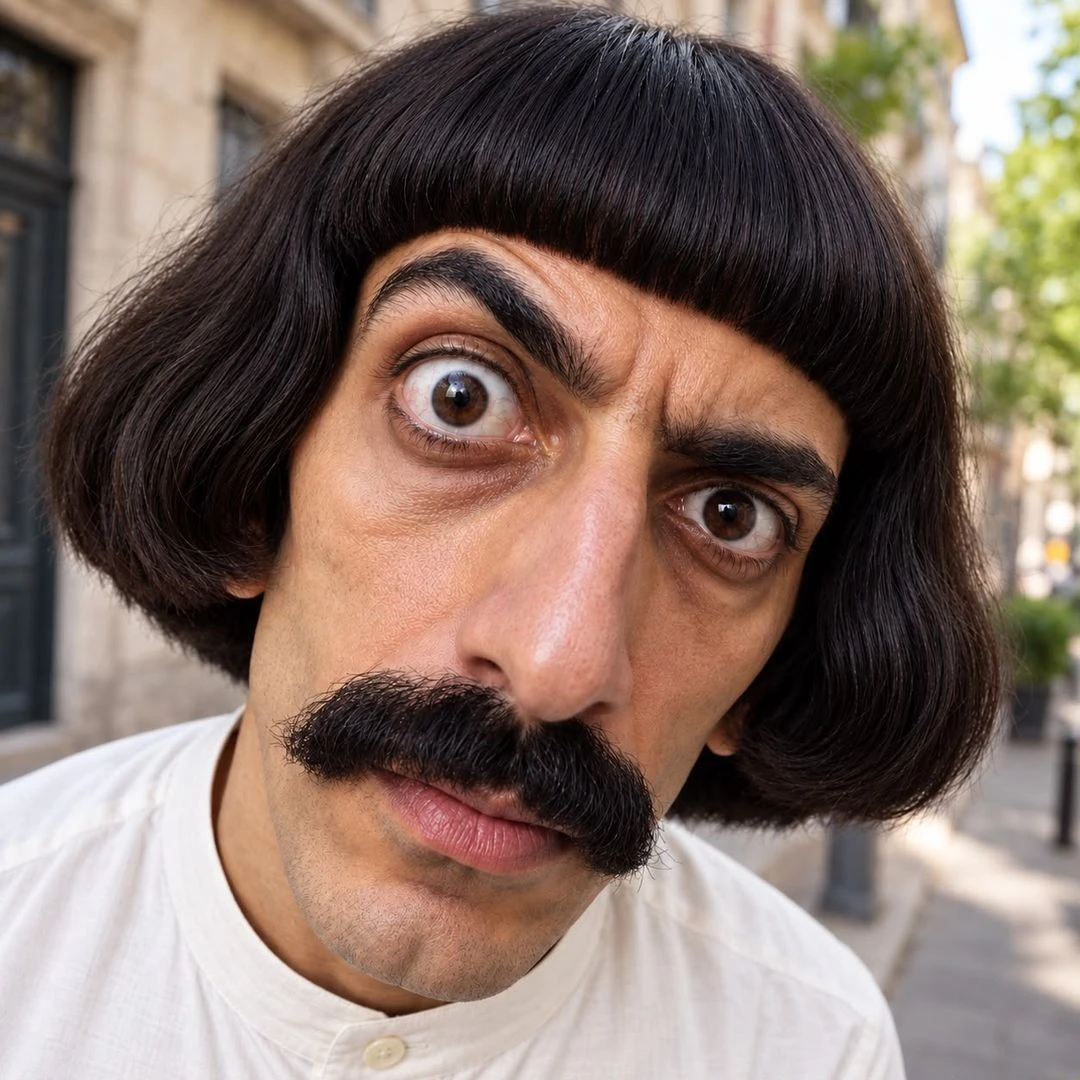
Abu Shalab is a recurring AI persona on @abu.shalab, built around a distinctive face and a dance-led format. The most visible anchors are a dark bowl haircut, thick eyebrows, a large moustache and a long white robe. The facial hair is a moustache rather than a full beard—a small distinction that matters when explaining what makes this particular character identifiable.
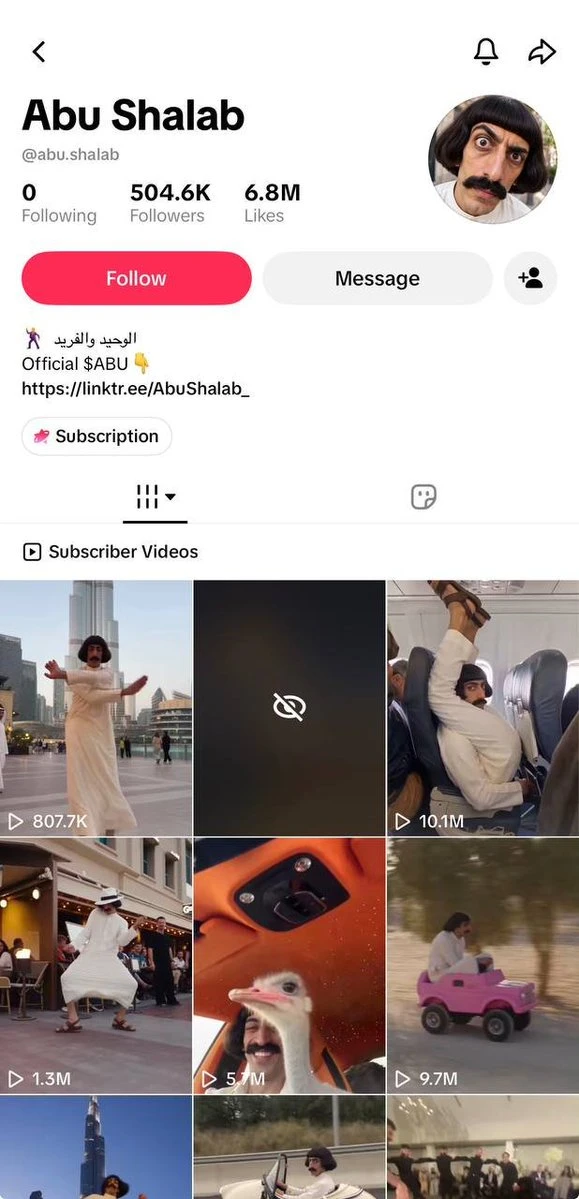
The October 11 post by winkle. / @w1nklerr describes dancing in Dubai streets, on planes and in a child-sized pink car. Its attached profile grid makes the changing contexts visible. The character is the continuity; the setting provides the next visual joke. No detailed backstory is needed to understand that contrast.
This is an independent AI Influencer Trends case, not a customer testimonial. We did not create Abu, interview the operator or obtain the production logs. The public imagery cannot establish an exact model, cost per clip or complete account-growth history.
What do 500K followers, 27.8M views and $38K actually mean?
They refer to different metrics and evidence levels, not a single verified business result. The X author rounds the audience to 504K; the attached profile screenshot reads 504.6K. Our later account check is dated separately.
| Claim | Source and date | What can be concluded |
|---|---|---|
| 504.6K TikTok followers / 6.8M likes | Profile image attached to the October 11 post; original capture time unknown | A historical, rounded profile snapshot; likes are not paying customers |
| 598.9K followers / 8.5M likes | Official TikTok profile inspected October 20 | A later rounded public observation; not a measured daily growth series |
| 27.8M on one clip | Stated in the October 11 X text | Reported; we did not independently match this historical counter to an original video |
| October 3 token launch | X text and October 3, 2026 date beside the Abu Shalab coin | Reported launch date, not independently verified on-chain |
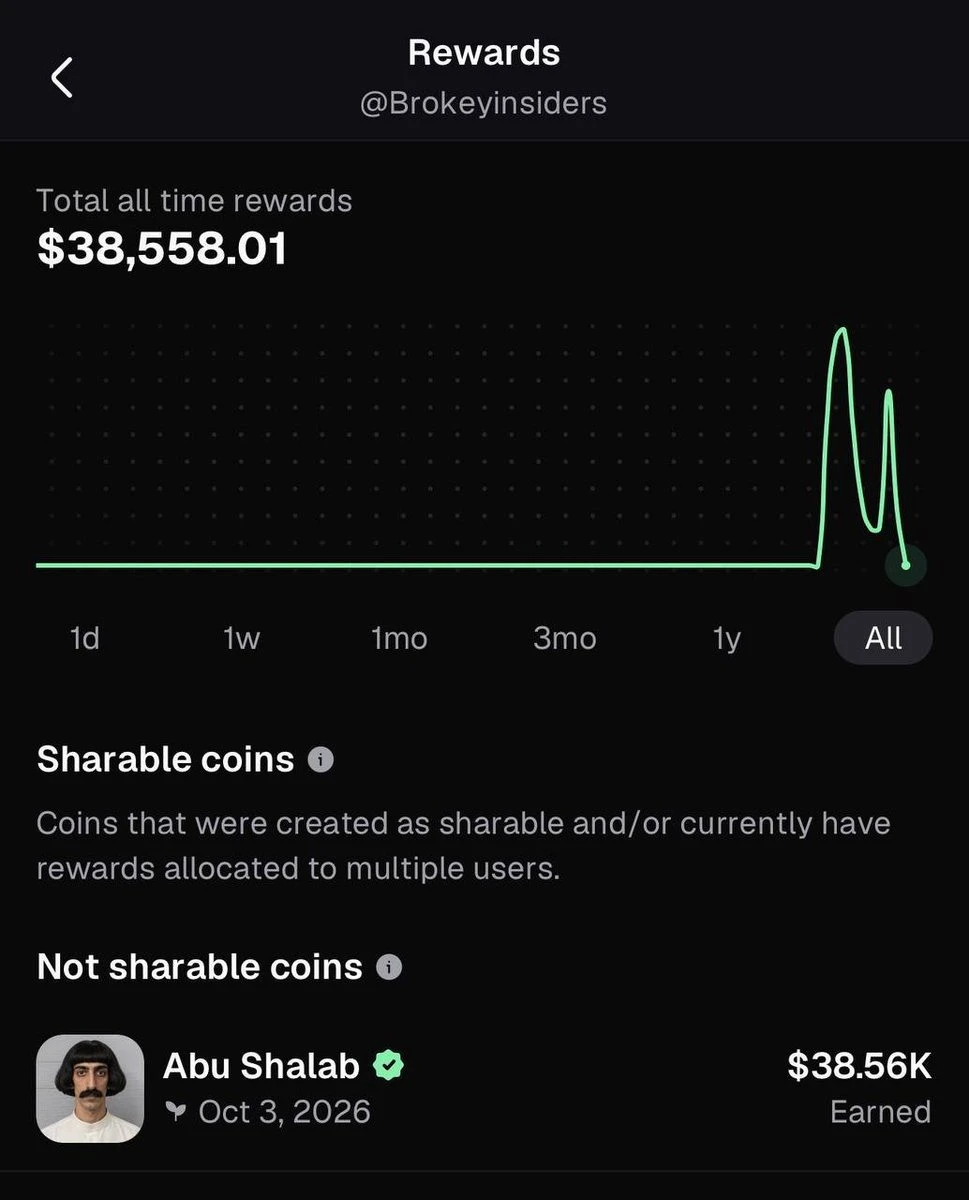
| $38,558 in eight days | X description; attached image reads $38,558.01 Total all time rewards | The image is not an eight-day statement, withdrawal receipt or profit calculation |
| TikTok subscriptions | Subscription button and Subscriber Videos in the historical profile image | A monetization entry point; subscriber count and payments unknown |
The eight-day story is plausible chronology, not verified accounting
The original post was published October 11, 2026 at 12:19 UTC. October 3 to October 11 is eight calendar days, matching the author's narrative. However, the dashboard has All selected and says Total all time rewards. It does not display a verified October 3–11 reporting window.
Its Abu Shalab coin row reads approximately $38.56K earned, while the page total is $38,558.01. That supports describing what the screenshot shows. It does not independently authenticate the image, identify the wallet beneficiary, establish ownership linking @Brokeyinsiders to the TikTok operator, or prove funds were withdrawn. We obtained no wallet-level reconciliation, transaction receipts or expense records.
Likewise, the profile snapshots do not establish when each follower arrived. We do not calculate a daily growth rate, sum unaligned public counters or multiply the reported video views by an assumed payout rate.
Why does one dancing character work across so many scenes?
The useful hypothesis is recognition plus repetition plus contextual surprise. The sources illustrate the pattern; they do not prove which factor caused a particular reach figure.

Recognizable anchors reduce the setup
A silhouette, haircut and costume are readable before the viewer studies the face. Once those cues identify the lead, a later clip can begin with the situation instead of another introduction. The lesson is to choose a few distinctive features that belong together. Adding arbitrary accessories to every generation creates noise rather than a character.
A recurring movement creates an audience expectation
The X author describes the character as doing one thing: dancing. That is a useful shorthand, not a literal audit of every post. The current feed also includes merchandise photos and other comic setups. Original works such as “Happy Saturday”, “Abu what are you doing???” and “Good food, good mood” are inspectable examples of the account's continuing persona.
A new location changes the question
A familiar dance in an ordinary street asks a different visual question from a cramped airplane scene. The movement need not become more complicated every time; the surroundings can create the contrast. For your own series, vary one major element at a time so you can tell whether a location, opening or performance helped.
AI can reduce production logistics; the actual costs are unknown
Reference-based scene generation can reduce the need to arrange every location, costume and shoot. That is a workflow advantage, not proof that Abu's clips cost a particular amount. Rejected generations, editing, licensed music, authorized performance footage and review still consume money or time. A fast draft is not an accepted commercial deliverable.
- Fixed character
- Familiar performance
- Changed situation
- Review the result
How does the business model work—and what is fragile?
Token-related fees depend on trading activity; subscriptions and brand work depend on customer demand and agreements. None becomes dependable simply because the character attracts views.
| Route | Evidence in this case | Main dependency |
|---|---|---|
| Token-trading creator fees | X author’s explanation and coin-related Rewards image; amount not independently reconciled | Trading volume, applicable fee rules, recipient rights and asset valuation |
| TikTok subscriptions | Subscription entry point visible | Actual paying subscribers, retention, benefits and platform fees |
| Brand collaborations | Potential fit for a recognizable entertainment character; no verified contract obtained | Brand demand, audience fit, rights, approvals and delivery |
| Merchandise / licensing | Current feed contains posts offering merchandise; sales not verified | Real orders, fulfillment, ownership, margins and repeat demand |
Pump.fun's official fee documentation, last updated October 17 and reviewed October 20, describes creator fees as a portion of trading fees, with value affected by the asset in which fees are collected. It supports the general mechanism. It does not verify this account's balance or reconstruct the exact fee schedule that applied October 3–11.
A simple distinction helps: a fee entitlement attached to trading is different from being paid to make a video. Attention may coincide with trading activity, but we have no evidence establishing the causal path or showing how long it lasted. Speculative activity can fall abruptly; an all-time total should not be projected into a monthly salary.
Subscriptions can recur if people keep paying; brand relationships can repeat if campaigns deliver value. Those are business models worth testing, not verified sustainable Abu revenue. Merchandise is a public offer, not proof of sales. Our AI TikTok monetization guide compares the platform and service routes; the brand outreach guide covers pitching and usage rights. This tutorial does not require creating or buying a token.
How to make an original AI dancing influencer with our tools
Design an original adult, approve scene images, then let an authorized performance reference guide the movement. This describes the actual site workflow; it does not identify the Abu operator's stack.
1. Create a distinctive person, not an Abu replica
Open character creation. Give the person a name, adult age, signature visual anchors and a recurring point of view. The original brief below uses short curls, glasses and workwear rather than the source character's bowl-cut, moustache and robe combination. Milo is a proposed character, not a completed generation.
Create a completely original fictional adult street performer named Milo Reed, age 38. Angular face, warm brown skin with natural texture, short salt-and-pepper curls, clean-shaven, round amber glasses. A worn cobalt work jacket over a rust T-shirt, loose dark trousers and mustard canvas shoes. Full-body candid phone photograph outside an independent record shop at opening time. Both empty hands relaxed at his sides, both shoes on the pavement, space around his arms. He hears a favorite song and looks quietly amused. Overcast daylight, scuffed doorway and record crates, coherent shadows and anatomy. One adult, no text overlay, logos or product endorsement. Do not imitate Abu Shalab or another existing character.
Create Your Own AI Influencer ↗
2. Save an approved identity and separate it from the scene
Review the face, hair, age, body proportions and distinctive accessories before saving. Use Character Consistency for reference-led scenes, or AI Influencer Image Generator. Request a location change explicitly while preserving identity. A saved reference supports consistency; it does not guarantee every angle will work.
Use my approved fictional adult Milo Reed reference. Preserve his face shape, adult age, short salt-and-pepper curls, amber glasses and body proportions. Keep the cobalt jacket, rust shirt, dark trousers and mustard shoes. Place him in an empty covered market passage before the stalls open. Full-body vertical composition, both shoes planted on the same floor, empty hands, clear space for a small side-step. Rolled shutters, a delivery trolley safely outside his movement area, soft morning light. One continuous candid scene. Change the location, not the person. Do not add a crowd, text, brand marks or a new face.
| Keep recognizable | May change | Check before animation |
|---|---|---|
| Face, age and proportions | Camera distance and pose | Does this still look like the approved adult? |
| Short curls and amber glasses | Lighting and location | Are the hair shape and eyewear coherent? |
| Baseline workwear style | One deliberate outfit variation | Did clothing change intentionally rather than drift? |
3. Choose a performance you can use
Open Motion Transfer and keep Motion Transfer selected rather than Video Remake. Add your character image and an owned or authorized MP4 reference, or select an appropriate library dance. The current workflow accepts a 3–30-second reference, with its documented upload limits; inspect the current quote before generating.
Start with one adult performer, a fixed camera, visible feet and room around the arms. A clean reference gives you something inspectable to transfer. A long robe or a tight camera crop can conceal footwork; props or crossed limbs introduce additional failure points. The prompt can constrain appearance, but the reference supplies the movement.
Follow the authorized reference performer's side-steps, pauses, arm gestures and timing. Preserve the character image's adult identity, short curls, amber glasses, cobalt jacket and body proportions. One performer, fixed full-body camera, both shoes visible. Keep the scene and floor contact coherent throughout; do not add cuts, extra dancers or new props. The reference video supplies the choreography; this text does not replace it.
Make Your First AI Dance Video ↗
4. Inspect a real input and output before planning volume
The separate first-party example below uses our existing original adult Remy Swirl: lavender sculpted hair, amber glasses, coral jacket and mint trousers. It is an actual five-second Kling 3.0 Motion Control result using a shadowboxing reference, not an Abu video or a new dance generation for this article.

The character styling remains recognizable, but the input book does not persist as a held prop during the performance. That is a useful limitation: a motion result is not automatically a faithful product or object demonstration. Choose a prop-free starting image when the reference needs empty hands, then inspect fingers, glasses, face and floor contact through the entire clip.
5. Change the scene deliberately, then repeat the review
Prepare three scene briefs together—record-shop doorway, covered market and rehearsal room, for example. Reuse the approved identity reference and a suitable cleared performance. Keep clothing stable for the first comparison; later test one intentional outfit change. Generate and approve individual outputs through the existing workflow. We are not claiming an automatic bulk-production feature or an account-specific cost saving.
Write one question per test: can viewers recognize the character immediately, understand the setting, and see the intended movement? Keep a record of attempts and accepted exports. Compare actual watch behavior, shares and follows before expanding the series. Our consistency guide covers drift; the dance-video tutorial covers model settings and troubleshooting.
6. Edit, disclose and measure the finished post
Add captions and audio you may use, inspect the vertical crop and follow the platform's AI-content disclosure requirements. A paid brand relationship needs its own commercial disclosure; the FTC guidance describes U.S. endorsement obligations. Do not make a virtual character claim a real product experience it never had. Record production costs alongside results instead of treating views as profit.
What should a creator borrow from this case?
Borrow the production discipline: recognition, a recurring performance, controlled variation and review. Keep your own identity, rights and commercial evidence. The resemblance between successful formats does not prove that copying a face or posting more clips will produce the same audience.
Compare the Jean Phil performance case and Derek Mercer emo-bodybuilder analysis. Each gives a familiar lead a different creative promise. Follow Abu's source-linked Trends profile for this dated observation, or browse AI Influencer Trends to compare formats without turning one account into an industry-wide growth claim.
Create Your Own AI Influencer ↗
Frequently asked questions
Who is Abu Shalab?
Abu Shalab is an AI dancing persona associated with @abu.shalab on TikTok. A bowl haircut, oversized moustache, white robe and recurring dance performances make the character recognizable across different scenes.
How many followers does Abu Shalab have?
The public TikTok profile displayed about 598.9K followers and 8.5M likes in our October 20, 2026 check. The screenshot shared in the October 11 X post showed 504.6K followers and 6.8M likes. These are separate rounded observations, not live counters.
Did Abu Shalab make $38,558 in eight days?
That is the X author's claim, not independently verified cash income. The attached image shows $38,558.01 in Total all time rewards under @Brokeyinsiders, with an Abu Shalab coin dated October 3, 2026. The image alone does not verify the eight-day window, wallet ownership, withdrawals or net profit.
Are these TikTok Creator Rewards?
The screenshot is coin-related and does not establish TikTok Creator Rewards. Token-trading fees, TikTok subscriptions, platform video rewards and brand payments are separate income categories.
Which model does Abu Shalab use?
We did not obtain the operator's project files or generation logs, so we cannot verify a model. The tutorial demonstrates the reference-image and Motion Transfer method available on our site, without attributing that stack to Abu's creator.
Can I make an AI dancing influencer without filming myself?
Yes, if you have another authorized performance reference, such as an appropriate built-in template. You still need rights to the character, source footage and audio, and must inspect the generated movement. A public TikTok download is not automatic commercial permission.
Can I reuse the same character in different locations?
Yes. Use the same approved identity reference for each scene, then check face, hair, proportions and clothing before animating. Changes in pose, lighting or model can still cause drift. Approve every image rather than assuming a saved character guarantees consistency.
Do I need a token to monetize an AI influencer?
No. Content services, subscriptions, sponsorships and licensing can be explored independently. Each needs real demand and its own terms. Speculative token trading is not a prerequisite for a character business or a reliable income plan.
Research method and sources
Reviewed October 20, 2026. We read the October 11 X post in Chrome, inspected its two source screenshots and the official TikTok profile and original-work links. We excluded extension-generated dates and analytics overlays. The 27.8M historical video claim was not independently matched. No private analytics, paid subscriber counts, contracts, wallet reconciliation, cash receipts or complete production logs were obtained.
- winkle. / @w1nklerr: original October 11 breakdown and attached images
- @abu.shalab: official account, public counters and linked works
- Pump.fun: official fee mechanism, updated October 17; contextual confirmation, not historical account accounting
- TikTok: AI-generated-content guidance · FTC: endorsement guidance
Source media appear for attributed editorial analysis, not as templates or licensed performance footage. The Remy example was already documented on this website and is separate from Abu. Milo prompts are original, ungenerated briefs. No paid generation, new audience experiment or financial transaction was performed for this case.
Plan Content
Measure Engagement
Build Your Profile
Price Your Work
Write Post Copy
Brand Partnerships