

Table of contents · jump to a category
Choose your first idea
| Need | Start here | Format | Creative job |
|---|---|---|---|
| A recognizable routine | 1. Coffee ritual | Instagram Reel | Introduce a repeatable world |
| Useful fashion content | 11. Statement coat | Carousel | Show three practical styling decisions |
| A speaking host | 61. One idea at the microphone | YouTube Short | Answer a narrow question |
| An unusual virtual character | 71. Robot rooftop side-step | TikTok video | Make motion part of the personality |
| A commercial concept | 94. Watch-strap setup | Demonstration Reel | Show a useful detail honestly |
Need a custom idea-development method? Use our AI Video Idea Generator guide. For account positioning, Insights and testing, read how to grow an AI influencer on Instagram. Here, the focus is choosing the next post.
Create a character for your first content series
What Makes Great AI Influencer Content?
Great AI influencer content gives a particular audience a reason to watch, save or respond. A consistent character helps people recognize the series; a specific action, useful answer or story payoff gives them a reason to care about this episode.
HubSpot’s 2026 Social Media Marketing Report, based on over 1,100 global social media professionals, reports that 94% use AI in their workflows, 77% say authenticity trumps production value for their brand on social and 60% plan to increase influencer investment. These are marketers’ reported practices, opinions and plans. They do not establish that synthetic creators outperform human creators.
Use AI for a repeatable workflow, then edit with judgment
Brainstorming and caption drafting are common AI uses in the survey. The practical lesson is to connect ideation, images, scripts and review—not to publish every generated result. Keep a character brief with visual anchors, voice, values and boundaries, and reject scenes that contradict it.
How marketers use AI in social workflows
Share of surveyed marketers (%) · scale: 0–100%
- Ideation & brainstorming42.9%
- Captions & short-form text41.5%
- Image generation38.35%
- Image editing34.78%
Test short video without abandoning other formats
Short video suits demonstrations, a quick lesson or a character reveal. A carousel can explain a sequence more clearly, and a still image can make one visual idea memorable. Choose the format that carries the message; variety should change the audience experience while preserving the creator’s point of view.
Formats marketers report as delivering the biggest ROI
Share of surveyed marketers (%) · scale: 0–100%
- Short-form video48.6%
- Long-form video28.6%
- Live-streaming video25.1%
- User-generated content24%
- Blog posts22.3%
Make the world believable and the fiction clear
“Authentic” does not mean pretending a virtual character is a real customer. It means a coherent point of view, honest production disclosures and scenes whose objects, light and actions make sense. A robot repairing a camera can feel more distinctive than another flawless portrait. A generated skincare face cannot prove a treatment worked.
100 AI Influencer Content Ideas
Use these AI influencer post ideas as briefs, not scripts to publish unchanged. Choose a niche and an audience question first. Mara, Ivo and Pip are original fictional characters used across the examples; references illustrate composition and continuity. Video examples show a source-frame concept, with a separate prompt for animating it.
1. Daily Lifestyle & Routines
Give the character a recognizable daily world. Small decisions make a routine more interesting than a sequence of unrelated portraits.
The five-minute coffee ritual
Show the same kitchen, a moka pot and one small morning decision: coffee before messages. Build a three-shot sequence with a visible beginning and payoff.
Platform & format: Instagram / TikTok · Reel
Hook / caption: “My morning has one rule: coffee before notifications.”
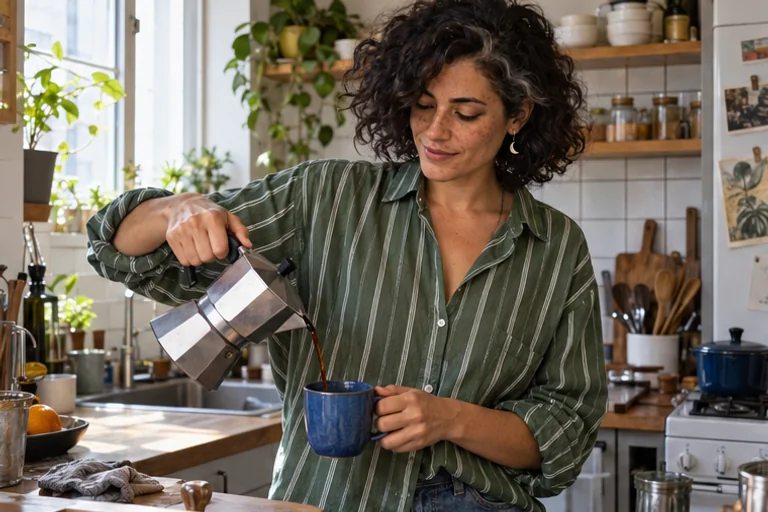
Idea 1 · Image concept — Original AI-generated editorial illustration. Fictional character and scene; not a real creator's experience. Open the complete generation prompt
Create a candid landscape photograph of Mara, an original adult woman aged 32 with warm brown freckled skin, an angular face, a dark curly bob with one silver streak at the right temple and small silver crescent earrings. Use the approved character reference and preserve her face shape, freckles, hair streak and earrings. She pours coffee from a steel moka pot into a blue ceramic mug at a busy tiled apartment counter, wearing a loose green striped shirt. One hand grips the pot handle; the other rests beside the mug. Window light from the left, realistic skin texture, slightly imperfect lived-in kitchen, waist-up 35mm framing. Keep the pouring stream, pot spout and mug physically aligned. No text, logos or product packaging.
A commute with one unexpected detail
Follow an eccentric adult librarian riding a tram with a bright yellow umbrella on a cloudless day. Reveal why it belongs to the character's story.
Platform & format: TikTok / YouTube Shorts · Short video
Hook / caption: “Everyone asked about the umbrella. Here is the reason.”
Sunday reset, one drawer only
Turn a cluttered stationery drawer into a usable space. Show sorting, one difficult keep-or-donate decision and the finished drawer.
Platform & format: Instagram · Carousel
Hook / caption: “A reset for people who do not have an entire Sunday.”
What is actually in the tote?
Give a fictional museum guide five meaningful objects, including one repair kit, and explain what each says about their work.
Platform & format: Instagram · Carousel
Hook / caption: “Four useful things and one object I refuse to leave behind.”
Rain changed the plan
Tell a mini-story in which an outdoor sketching session becomes a window-seat drawing session. Keep weather, wet clothes and lighting continuous.
Platform & format: TikTok · Short video
Hook / caption: “Plan A got soaked. Plan B was better.”
Desk at 9 a.m. versus 6 p.m.
Show a sound designer's workspace before and after a fictional project. Change only objects that the day's work would realistically move.
Platform & format: Instagram · Photo pair
Hook / caption: “You can read my whole day from this desk.”
One ordinary errand, three observations
Send a virtual neighborhood chronicler to a laundromat and notice the tiles, a forgotten sock and changing evening light.
Platform & format: YouTube Shorts · Narrated Short
Hook / caption: “The laundromat is the most underrated place to people-watch.”
The outfit that became a uniform
Explain why a fictional ceramicist repeats practical workwear. Show the apron, sleeves and shoes in actual workshop actions.
Platform & format: Instagram · Carousel
Hook / caption: “Repeating clothes is part of the job description.”
An evening without a screen
Stage a calm reading, tea and record-listening sequence. Present it as a fictional scene, not evidence that a digital character has lived experience.
Platform & format: Instagram / TikTok · Reel
Hook / caption: “Tonight's agenda: one chapter, one record, no multitasking.”
A day told through sounds
Build a story from a kettle click, footsteps and closing a book. Add licensed or recorded sound during editing instead of assuming generated video has accurate audio.
Platform & format: TikTok / YouTube Shorts · Sound-led video
Hook / caption: “You can hear this day before you see it.”
2. Fashion & Outfit Ideas
Make styling a decision the viewer can follow. Fit, occasion and movement give fashion posts a useful point of view.
One statement coat, three settings
Keep a brick-red trench as the anchor and style it for a wet commute, a bookshop visit and an evening walk. Check the coat's seams across frames.
Platform & format: Instagram · Carousel
Hook / caption: “One red coat. Three very different plans.”
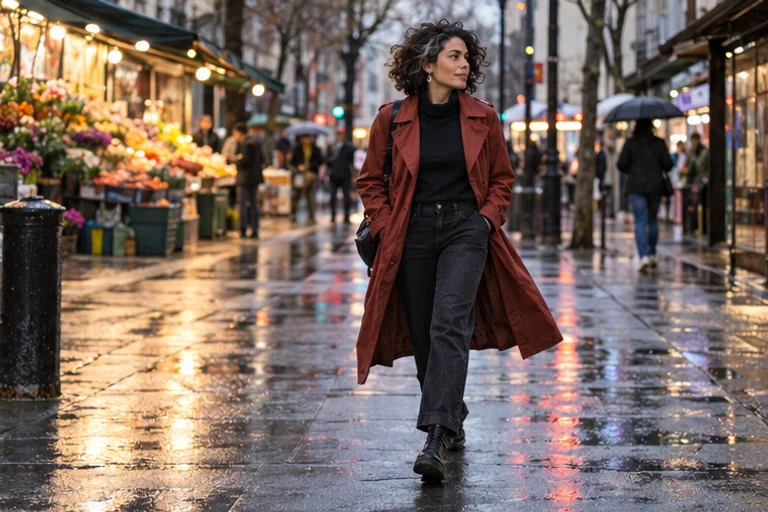
Idea 11 · Image concept — Original AI-generated editorial illustration. Fictional character and scene; not a real creator's experience. Open the complete generation prompt
Create a full-body candid street photograph of Mara, an original adult woman aged 32 with warm brown freckled skin, an angular face, a dark curly bob with one silver streak at the right temple and small silver crescent earrings, matching the approved identity reference. She walks mid-stride on wet pavement beside a busy evening market, wearing a brick-red trench coat, dark trousers and black boots. She looks toward a shop window, arms naturally swinging. Frame her complete silhouette with breathing room around her boots. Soft market light, coherent pavement reflections, handheld phone-camera character, visible fabric seams and skin texture. No fashion-brand marks, invented storefront text or beauty-filter finish.
The thrift-store color challenge
Dress a silver-haired male creator using only rust, navy and cream. Explain one silhouette choice per slide without inventing purchase prices.
Platform & format: Instagram / TikTok · Carousel or Reel
Hook / caption: “Three colors, zero need for a new wardrobe.”
Tiny accessory, different mood
Compare the same outfit with a scarf, a brooch and round glasses. Lock the camera angle so the styling change is legible.
Platform & format: Instagram · Carousel
Hook / caption: “The outfit stayed. The mood did not.”
A futuristic character tries workwear
Put an original chrome-skinned adult virtual host in durable denim and boots at a repair shop. Use the contrast to explain function over decoration.
Platform & format: TikTok · Short video
Hook / caption: “Dressed for the year 2126. Working on a 1986 bicycle.”
Style the weather forecast
Create three looks for a windy morning, warm afternoon and rainy evening. Treat the forecast as a fictional scenario unless local weather is checked.
Platform & format: YouTube Shorts · Explainer Short
Hook / caption: “Three seasons in one day? Dress in decisions, not outfits.”
An outfit in motion
Show the same long skirt while walking, sitting and climbing one step. Review fabric physics and continuity before making claims about fit.
Platform & format: Instagram · Reel
Hook / caption: “A good outfit has to survive sitting down.”
The wrong-shoe thought experiment
Compare two shoe silhouettes with the same trousers. Make it a styling opinion, not a claim that one body type needs correction.
Platform & format: Instagram · Carousel
Hook / caption: “Same trousers. Two completely different proportions.”
Followers choose the next layer
Present two outerwear options for an adult creator's established outfit. Use a real poll after publication and credit the audience choice in the follow-up.
Platform & format: Instagram · Story poll
Hook / caption: “Raincoat or denim jacket? You direct the next scene.”
Repair it, then wear it
Show an embroidered patch as part of a visible-mending story. Use a real repair reference for stitch instructions; generated imagery alone does not validate a technique.
Platform & format: TikTok / YouTube Shorts · Tutorial video
Hook / caption: “The tear became the best part of the jacket.”
A capsule for a fictional festival
Design five coordinated pieces for a night-market music weekend. Show a packing flat lay and three combinations, with no invented festival affiliation.
Platform & format: Instagram · Carousel
Hook / caption: “Five pieces. One weekend. Room left for the record haul.”
3. Beauty & Skincare
Keep beauty content educational and honest. Synthetic skin is not evidence that a treatment works, and a virtual character cannot provide a real wear test.
Skincare before camera day
Use a male vintage-style creator to illustrate a simple moisturizer application. Focus on the routine; do not show generated skin improvements or medical claims.
Platform & format: Instagram / TikTok · Reel
Hook / caption: “A simple camera-day routine, without a ten-step shelf.”

Idea 21 · Image concept — Original AI-generated editorial illustration. Fictional character and scene; not a real creator's experience. Open the complete generation prompt
Photograph Ivo, an original adult man aged 42 with dark olive skin, a long narrow face, salt-and-pepper curls in a small bun, a natural mustache, round amber glasses and one small gold hoop earring using the approved identity reference. In a tiled bathroom, he gently dabs moisturizer onto one cheek with two fingertips, wearing a dark cotton shirt. Compose a medium side profile beside an old mirror; the reflected face and hand must match his position. Show ordinary skin texture and natural age lines, soft side daylight, a practical sink and towel. Keep the container outside the frame. This is a fictional routine illustration, with no before-and-after transformation, product label, medical claim or text.
The lighting-versus-makeup comparison
Show how window direction changes the appearance of the same makeup look. Label synthetic frames as illustrations, not a controlled product test.
Platform & format: Instagram · Carousel
Hook / caption: “Before you buy another highlighter, move toward the window.”
Color theory with an unusual complexion
Use an explicitly fantastical lavender adult character to explore contrasting eyeshadow colors. Explain that the palette is imaginative styling rather than real skin advice.
Platform & format: TikTok · Short video
Hook / caption: “What happens when your undertone is literally lavender?”
Three ways to tie a headscarf
Create a step-by-step sequence on the same adult character, checking the fabric path against a real reference so the visual instructions are physically possible.
Platform & format: Instagram · Carousel
Hook / caption: “One scarf, three ways to frame the same face.”
A travel beauty pouch audit
Sort a fictional creator's travel pouch by use: cleanse, moisturize and sun protection. Verify any ingredient or sunscreen statement from reliable sources.
Platform & format: YouTube Shorts · Checklist Short
Hook / caption: “Pack by purpose, not by bottle count.”
The five-minute grooming reset
Give a bearded creator a tidy-hair, clean-collar and beard-combing sequence. Show usable tools and believable contact instead of a floating comb.
Platform & format: TikTok · Short video
Hook / caption: “Five minutes between the workshop and dinner.”
An editorial look from one artwork
Build a graphic liner palette inspired by an original abstract painting. Show the palette and finished look; do not reproduce a living artist's signature design.
Platform & format: Instagram · Carousel
Hook / caption: “Today's color brief came from the canvas, not the algorithm.”
Read the label, not the promise
Make an educational checklist for reading a real, authorized product label. Show the actual label or typeset verified facts separately rather than generating fake packaging text.
Platform & format: YouTube Shorts · Explainer Short
Hook / caption: “Three label details I would check before the headline claim.”
Hair continuity check
Compare a curly-haired character in humid, windy and indoor scenes. Make the post about maintaining a coherent virtual identity, not proving a hair product's performance.
Platform & format: Instagram · Carousel
Hook / caption: “Same curls, three weather stories.”
Day look to theatrical night look
Transform a plainly disclosed virtual drag artist's styling across three stages. Keep facial identity stable while changing makeup, costume and stage light.
Platform & format: TikTok / Instagram · Transition Reel
Hook / caption: “The character stays. The stage arrives.”
4. Travel & Adventure
Travel scenes work best with a destination question or story constraint. Clearly separate imagined journeys from on-location reporting.
The night-train window story
Show your recurring creator on an imagined overnight journey, with a book, reflections and passing light. Add a caption that identifies it as an AI travel scene.
Platform & format: Instagram / TikTok · Reel
Hook / caption: “An imagined night train, a real case for slowing down.”
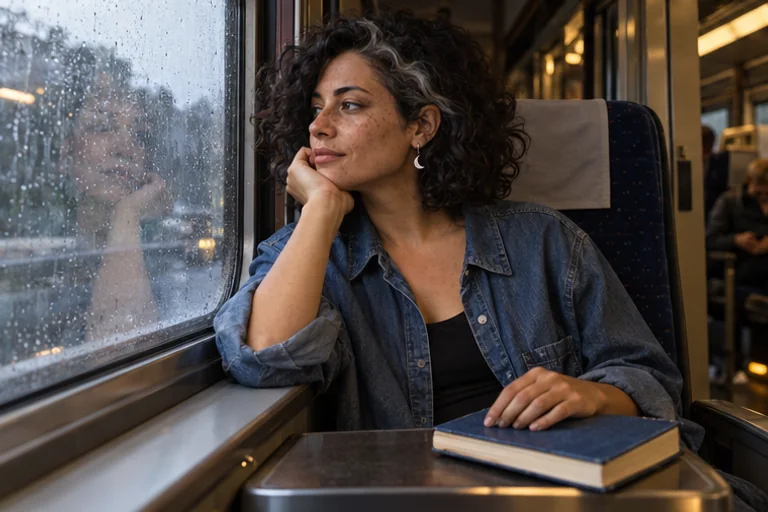
Idea 31 · Video source-frame concept — Original AI-generated editorial illustration. Fictional character and scene; not a real creator's experience. Open the complete generation prompt
Use the approved scene image and preserve Mara, an original adult woman aged 32 with warm brown freckled skin, an angular face, a dark curly bob with one silver streak at the right temple and small silver crescent earrings's identity, denim overshirt and crescent earrings. Create a five-second landscape night-train shot: Mara sits beside rain-streaked glass, looking quietly outside, one hand resting on a closed book. Keep the camera nearly still; passing exterior light moves gently across the glass and her face. Allow one small natural head turn. Preserve seat geometry, the book and a physically coherent window reflection. No dialogue, cuts, added passengers, text or invented signs. Add licensed train ambience separately in editing.
A city through three textures
Build a mood sequence around worn tiles, rain-dark pavement and painted shutters. Verify location details if you name a real city.
Platform & format: Instagram · Carousel
Hook / caption: “Forget the skyline. Look at what the city is made of.”
Pack for one unexpected overnight
Show a practical flat lay, the packed bag and the character carrying it. Keep object counts consistent across the sequence.
Platform & format: YouTube Shorts · Checklist Short
Hook / caption: “One bag for the trip you did not plan.”
An alien learns train etiquette
Have an original adult alien host illustrate letting passengers exit before boarding. Check the transit operator's real rules when naming a specific network.
Platform & format: TikTok · Comedy Short
Hook / caption: “First lesson on Earth: the doorway is not a waiting room.”
The accessible route research post
Use an AI presenter beside verified maps or official access information. Do not invent ramps, lift availability or a first-person accessibility review from generated scenes.
Platform & format: Instagram · Research carousel
Hook / caption: “The beautiful route is only useful if you can actually take it.”
One view, two times of day
Compare a fictional lookout at dawn and dusk. Preserve terrain and architecture; frame it as a visual storytelling exercise rather than a geolocated recommendation.
Platform & format: Instagram · Photo pair
Hook / caption: “Same place. Different reason to pause.”
The souvenir with a story
Give a virtual traveler a handmade postcard and explain its original illustration. Avoid fabricated artisan endorsements or claims of a real purchase.
Platform & format: TikTok · Narrated video
Hook / caption: “The smallest thing in the bag had the longest story.”
A wrong-turn micro-adventure
Tell a three-beat fictional story: wrong street, unexpected courtyard, new plan. Keep signs abstract or add accurate labels in editing.
Platform & format: YouTube Shorts · Story Short
Hook / caption: “The itinerary ended at the wrong corner. The story started there.”
A practical train-seat setup
Illustrate where a bag, water bottle and jacket go during a journey. Make each object spatially coherent and do not imply a real carrier partnership.
Platform & format: Instagram · Carousel
Hook / caption: “A tiny seat deserves a better setup.”
Postcard from a world that does not exist
Let a mature steampunk cartographer report from an explicitly invented floating port. Include a small original map and one recurring local custom.
Platform & format: TikTok / YouTube Shorts · World-building Short
Hook / caption: “Postcard 01: the harbor where the boats arrive from above.”
5. Fitness & Wellness
Use movement to tell a story without presenting generated bodies as transformation evidence. Have a qualified person review any exercise instruction.
The post-run harbor pause
Show the recurring character cooling down after an imagined run with a stable railing nearby and one simple standing stretch. No speed, calorie or fitness-result claims.
Platform & format: Instagram · Reel
Hook / caption: “The finish line is sometimes just a quiet railing.”
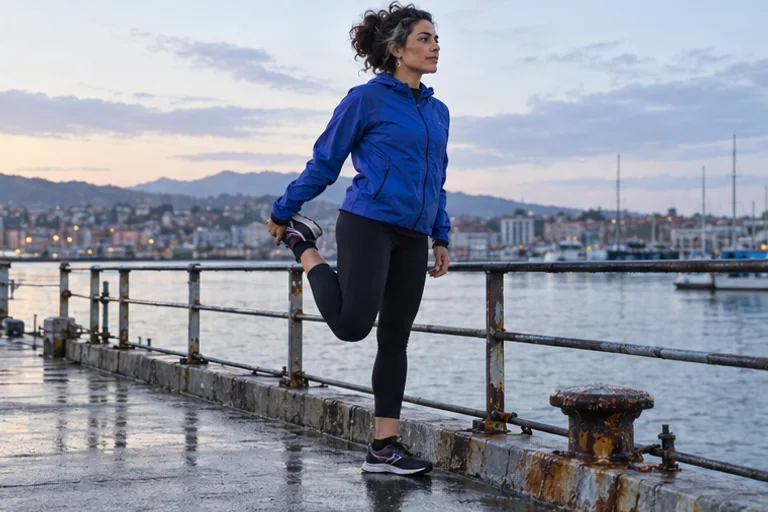
Idea 41 · Video source-frame concept — Original AI-generated editorial illustration. Fictional character and scene; not a real creator's experience. Open the complete generation prompt
Use the approved reference for Mara, an original adult woman aged 32 with warm brown freckled skin, an angular face, a dark curly bob with one silver streak at the right temple and small silver crescent earrings. Show a five-second wide landscape scene after an imagined morning run: she wears a cobalt running jacket and dark running trousers beside a harbor railing in cool dawn light. She holds one ankle behind her in a gentle standing quadriceps stretch; the supporting foot stays flat on level ground. Keep the pose stable, with only subtle breathing and jacket movement. The camera is locked off. Preserve limb proportions, hand-to-shoe contact and railing geometry. No intense exercise, body transformation, performance numbers, text or dialogue. A qualified human reviews movement before publication.
Pack the beginner gym bag
Make a checklist around shoes, water, towel and a small notebook. Explain the use of each item rather than prescribing supplements.
Platform & format: Instagram · Carousel
Hook / caption: “You need fewer things for day one than you think.”
A movement break between tasks
Use a seated creator standing up and walking to a window. Keep it a gentle activity reminder, not treatment advice for pain or anxiety.
Platform & format: TikTok / YouTube Shorts · Short video
Hook / caption: “Before the next tab, take one lap of the room.”
The same walk in three moods
Change weather, soundtrack and pace across an identical safe route. Use mood as storytelling, without claiming clinical mental-health benefits.
Platform & format: Instagram · Reel
Hook / caption: “One route. Three ways to experience it.”
Meet the non-stereotypical fitness host
Introduce a stocky adult virtual coach whose promise is approachable movement. Keep expertise fictional unless a qualified human actually supplies the advice.
Platform & format: TikTok · Introduction video
Hook / caption: “This movement series starts with showing up, not looking a certain way.”
A rest-day field note
Show the creator reading outside with training shoes by the door. Explain how a rest-day story varies a feed without inventing a personal recovery experience.
Platform & format: Instagram · Photo essay
Hook / caption: “A training story can have a quiet chapter.”
Build a weather backup plan
Compare an outdoor walk idea with an indoor mobility plan checked by an instructor. Let followers choose the next setting.
Platform & format: Instagram · Story poll
Hook / caption: “Rain in the script. What is your backup plan?”
Form-review checklist for generated movement
Teach creators to inspect foot contact, joint direction and repeated frames before publishing a fitness clip. Use a clearly labeled synthetic example.
Platform & format: YouTube Shorts · Tutorial Short
Hook / caption: “Watch the feet before you approve the fitness video.”
A realistic morning hydration reminder
Show pouring water into a glass as one routine beat. Avoid universal intake targets, detox claims and invented results.
Platform & format: TikTok · Routine video
Hook / caption: “The least complicated part of the morning.”
Progress as a creative practice
Show three improvements in filming a movement sequence: framing, stable lighting and clearer instructions. Measure production choices, not a synthetic body's physical progress.
Platform & format: Instagram · Carousel
Hook / caption: “The improvement is in the filming, not a fake transformation.”
6. Food & Home Lifestyle
Food and home content needs tactile detail: utensils that work, objects that stay put and actions that could actually happen.
The imperfect first loaf
Have a mustached home cook shape a small loaf on a flour-dusted board. Use the scene as an illustration; test a real recipe before providing cooking instructions.
Platform & format: Instagram / TikTok · Reel
Hook / caption: “A good bread story starts before it looks like bread.”

Idea 51 · Image concept — Original AI-generated editorial illustration. Fictional character and scene; not a real creator's experience. Open the complete generation prompt
Create a candid landscape kitchen photograph of Ivo, an original adult man aged 42 with dark olive skin, a long narrow face, salt-and-pepper curls in a small bun, a natural mustache, round amber glasses and one small gold hoop earring, matching the approved reference. Wearing a terracotta cotton shirt with sleeves rolled, he shapes one small loaf on a flour-dusted wooden board. His palms apply gentle plausible pressure to the dough, fingers distinct and relaxed. Include a linen towel, a practical scraper and a little spilled flour, with soft morning window light. Three-quarter camera angle shows his face, both hands and work surface. No packaging, recipe text, extra fingers or showroom-clean styling.
One ingredient, three dinner directions
Use a sweet potato as the planning anchor for soup, a tray bake and a stuffed dinner. Base instructions and food-safety details on tested recipes.
Platform & format: Instagram · Carousel
Hook / caption: “Start with the ingredient you already have.”
A shelf styled around one memory
Arrange a fictional photographer's shelf around an original postcard, camera and ceramic bowl. Let one object explain the room's personality.
Platform & format: Instagram · Photo essay
Hook / caption: “This shelf has a plot, not just a palette.”
The tiny balcony breakfast
Stage a table that realistically fits two cups, a plate and a plant. Use a wide frame to make the small-space solution understandable.
Platform & format: Instagram · Carousel
Hook / caption: “A breakfast corner measured in centimeters, not square meters.”
A robot learns to set the table
Make a three-beat comedy with the same place setting: misinterpretation, correction and a warm final scene. Keep the plates and cutlery continuous.
Platform & format: TikTok · Comedy video
Hook / caption: “The robot understood table settings a little too literally.”
The pantry color inventory
Create an overhead arrangement of real-looking grains, beans and spices in usable jars. Add ingredient names as edited text rather than generating unreadable labels.
Platform & format: Instagram · Carousel
Hook / caption: “A dinner idea hidden in the pantry colors.”
Turn a corner into a reading nook
Change a lamp position, chair angle and book storage in one believable room. Do not invent a customer renovation or shopping testimonial.
Platform & format: YouTube Shorts · Room-story Short
Hook / caption: “Three moves. Same room. A place to finish the chapter.”
The sound of making lunch
Build a short scene around chopping, stirring and plating with safe hand positions. Source the sound separately and verify any recipe shown.
Platform & format: TikTok · Sound-led video
Hook / caption: “Today's lunch has a soundtrack.”
Host a fictional potluck
Give each adult virtual character one distinct dish and a reason for choosing it. Label the gathering as a fictional scene and avoid copied cultural stereotypes.
Platform & format: Instagram · Carousel
Hook / caption: “Every dish introduces someone at the table.”
A repair before a replacement
Show a loose cabinet handle tightened with a correctly positioned screwdriver. Have a real reference validate the repair and avoid unsafe electrical demonstrations.
Platform & format: YouTube Shorts · How-to Short
Hook / caption: “The smallest repair changed the most annoying part of the kitchen.”
7. Educational & How-to Content
Give the audience one useful answer per post. The presenter is a guide; accurate evidence and clear steps do the teaching.
Explain one idea at the microphone
Let a vintage-style male host answer one question, such as how to choose three content pillars. Add real diagrams and original narration in the edit.
Platform & format: YouTube Shorts / TikTok · Explainer video
Hook / caption: “If your feed feels random, start with these three decisions.”

Idea 61 · Video source-frame concept — Original AI-generated editorial illustration. Fictional character and scene; not a real creator's experience. Open the complete generation prompt
Using the approved image of Ivo, an original adult man aged 42 with dark olive skin, a long narrow face, salt-and-pepper curls in a small bun, a natural mustache, round amber glasses and one small gold hoop earring, create a five-second landscape presenter insert in a lived-in home recording corner. He wears a navy knit vest over a cream T-shirt and sits beside a compact desk microphone with a visible cable. He leans forward slightly and makes one relaxed open-hand gesture, as if introducing a practical lesson. Soft window side light, books in the background, stable medium framing. Preserve face, glasses, mustache and microphone position. No generated interface, on-screen text or claim of synchronized speech. Record narration and captions separately.
A camera-angle lesson
Compare eye-level, overhead and low-angle views of one scene. Explain the storytelling effect without claiming one angle always performs best.
Platform & format: Instagram · Carousel
Hook / caption: “Move the camera before you rewrite the whole idea.”
Prompt teardown: from vague to specific
Show a generic request beside a scene brief with character, action, setting and camera. Annotate exactly which details make the output easier to direct.
Platform & format: Instagram · Tutorial carousel
Hook / caption: “Replace 'make it cinematic' with a decision the camera can show.”
Fact-check a popular niche myth
Have an AI host introduce the question, then show primary sources and a limited conclusion. Avoid making the character's authority a substitute for evidence.
Platform & format: YouTube Shorts · Research Short
Hook / caption: “The claim is everywhere. The original source says something narrower.”
Teach the first step, not the whole course
A fictional sewing host explains how to thread a needle using a real close-up insert. Keep AI presenter footage separate from the precise instructional evidence.
Platform & format: TikTok · Tutorial video
Hook / caption: “Before the first stitch, solve this one tiny problem.”
An illustrated glossary
Explain three niche terms with an original visual example for each. Define them in plain language and link to a longer verified resource.
Platform & format: Instagram · Carousel
Hook / caption: “Three words that make the rest of this hobby less confusing.”
A decision tree for beginners
Use the creator to introduce a small 'if this, try that' chart, such as choosing photo, carousel or video for a message.
Platform & format: Instagram · Carousel
Hook / caption: “Your next format depends on the job, not today's trend.”
Show an editing mistake and its fix
Demonstrate unreadable captions, then correct contrast and placement using a real editor export. Do not generate a fake software screenshot.
Platform & format: YouTube Shorts · Screen-recorded tutorial
Hook / caption: “Your captions are there. Can anyone actually read them?”
A niche skill in three levels
Explain a beginner, intermediate and advanced version of one real technique with qualified sources. Use the virtual host for continuity between levels.
Platform & format: TikTok / YouTube Shorts · Explainer video
Hook / caption: “Same skill, three places to start.”
A source-checking field guide
Walk through date, author, original evidence and scope using an actual public report. Show why a survey percentage is not an individual success rate.
Platform & format: Instagram · Research carousel
Hook / caption: “Before you repeat the number, check what it measures.”
8. Viral Reels, Trends & Dance
Treat trends as creative formats to adapt, not guaranteed distribution. Use licensed audio and owned or authorized movement references.
The robot's rooftop side-step
Build a short dance around one readable side-step by a teal retro robot. Use a motion reference you own; review feet, joints and full-body framing.
Platform & format: TikTok / Instagram · Dance Reel
Hook / caption: “One tiny step for a robot. A whole rooftop mood.”

Idea 71 · Video source-frame concept — Original AI-generated editorial illustration. Fictional character and scene; not a real creator's experience. Open the complete generation prompt
Use the approved reference for Pip, an original adult-coded retro robot with a weathered teal metal shell, cream oval face panel, two amber optical lenses, an orange canvas scarf, brass shoulder plates and slim jointed mechanical fingers. In a wide landscape rooftop scene at blue hour, show the complete robot taking one small side-step and returning to its starting stance over five seconds. Keep arms low, feet planted on contact and the orange scarf moving only slightly. Weathered metal and realistic city light ground the stylized character. Static camera, no cuts or zooms. Preserve all joints, face panel, lenses and brass plates. Use an owned motion reference when applying Motion Transfer. No franchise likeness, captions or logos.
Expectation versus the ordinary reality
Contrast a grand sci-fi creator entrance with the same adult character sorting laundry. Make the second scene a character-specific punchline.
Platform & format: TikTok · Comedy video
Hook / caption: “Intergalactic schedule. Extremely local laundry problem.”
A transition with a physical match cut
Match a book closing to a door opening in the next scene. Generate clean source shots and build the transition in editing.
Platform & format: Instagram / TikTok · Transition Reel
Hook / caption: “One chapter closes. The city opens.”
The freeze-frame introduction
Pause a fictional detective mid-stride and introduce three useful traits with edited labels. Keep text readable and the joke understandable without audio.
Platform & format: YouTube Shorts · Character Short
Hook / caption: “Meet the detective who notices everything except the weather.”
An object-passing relay
Pass a red scarf across cuts between original adult characters. Plan hand position and entry direction so the edit reads as one continuous movement.
Platform & format: Instagram · Collaboration-style Reel
Hook / caption: “One scarf. Four completely different worlds.”
Remake a format in your niche
Adapt a publicly recognizable 'things I wish I knew' structure to your own verified knowledge. Use an original script and visuals instead of copying a creator's lines.
Platform & format: TikTok · Talking video
Hook / caption: “Things I wish I had planned before creating a virtual host.”
A beat-synced hobby montage
Cut pottery, cycling or sketching actions to a track licensed for the intended use. Check commercial music permissions separately for brand work.
Platform & format: Instagram / TikTok · Montage Reel
Hook / caption: “A week of making things, in eight satisfying cuts.”
The costume reveal with a story reason
A fictional adult stage magician changes from rehearsal clothes into a distinct original costume. Reveal the performance problem the costume solves.
Platform & format: YouTube Shorts · Reveal Short
Hook / caption: “Every pocket in this coat has a job.”
A trend explained by the character
Have the virtual host explain why a visual trend is recognizable, using your own examples. Check what is current before calling anything a trend.
Platform & format: TikTok · Commentary video
Hook / caption: “The trick is not the transition. It is the expectation before it.”
The perfect loop that reveals one change
End a workshop clip where it began, but add one completed object. Build continuity in editing so the loop has a payoff rather than empty repetition.
Platform & format: Instagram / TikTok · Loop Reel
Hook / caption: “Watch the workbench, not just the hands.”
9. Storytelling & Community Engagement
Create room for real audience participation. Label fictional events clearly and never manufacture comments, poll results or fan demand.
The robot's first repair diary
Introduce the teal robot through a small camera-strap repair and a reason for keeping the old camera. Continue the story in later episodes.
Platform & format: Instagram / YouTube Shorts · Story video
Hook / caption: “The camera is older than the robot. That is why it matters.”

Idea 81 · Image concept — Original AI-generated editorial illustration. Fictional character and scene; not a real creator's experience. Open the complete generation prompt
Create a landscape editorial scene of Pip, an original adult-coded retro robot with a weathered teal metal shell, cream oval face panel, two amber optical lenses, an orange canvas scarf, brass shoulder plates and slim jointed mechanical fingers, preserving the approved design. The robot sits at a worn green repair bench, carefully guiding a vintage camera's fabric strap through its metal loop. Use clearly jointed fingers with believable contact and one continuous strap. Include a screwdriver, a small cloth and morning window light; the camera rests securely on the bench. Medium three-quarter framing shows the robot's face and repair action. Original stylized 3D character in a realistic workshop, no UI, labels, logos or fake customer evidence.
Let followers name a recurring place
Show an original fictional bookshop and ask for name suggestions. Use actual responses with permission, or leave the decision open if none arrive.
Platform & format: Instagram · Story question
Hook / caption: “This little bookshop needs a name. What would you call it?”
Two truths and one fictional-world clue
Offer three clearly in-universe details about your virtual character. Reveal the answer in a follow-up without implying they are facts about a real person.
Platform & format: TikTok · Interactive video
Hook / caption: “Two details belong in the character bible. One does not.”
The origin of a signature accessory
Tell why a fictional train enthusiast always wears an orange scarf. Make the accessory mean something across the rest of the feed.
Platform & format: Instagram · Narrative carousel
Hook / caption: “The scarf was never just a color choice.”
A reply to a real viewer question
Quote an actual question with permission and answer it using the AI host. If there is no question yet, frame it as your own FAQ rather than inventing a follower.
Platform & format: TikTok / YouTube Shorts · Reply video
Hook / caption: “A useful question: how do you keep the same face in every scene?”
A small cliffhanger with a fair payoff
End a fictional delivery story with an unopened letter. Resolve it next episode with a meaningful character choice, not an endless tease.
Platform & format: YouTube Shorts · Episodic Short
Hook / caption: “The address was right. The year on the envelope was not.”
Choose the next destination
Offer two invented or researched locations for the character's next scene. Publish the genuine vote outcome and explain any practical constraints.
Platform & format: Instagram · Story poll
Hook / caption: “Next chapter: the coastal workshop or the mountain observatory?”
A disagreement between two virtual hosts
Give a tidy archivist and an improvising inventor different solutions to the same storage problem. Let viewers discuss the tradeoff without personal attacks.
Platform & format: TikTok · Dialogue video
Hook / caption: “One labels every drawer. One calls the floor a filing system.”
A character-bible behind-the-scenes post
Share the character's visual anchors, tone and boundaries. Explain the human creative choices and disclose AI production clearly.
Platform & format: Instagram · Carousel
Hook / caption: “The face is generated. The point of view is planned.”
A community idea becomes an episode
Turn a real consenting participant's suggestion into a scene, credit the idea and show what you changed. Do not imply a community submission if it was your own brief.
Platform & format: YouTube Shorts / TikTok · Making-of video
Hook / caption: “Your scene suggestion became this week's creative brief.”
10. UGC, Product Reviews & Brand Collaborations
Use virtual creators for demonstrations, explainers and disclosed fictional campaigns. Product accuracy, rights and honest claims matter more than a polished face.
The reusable-bag demonstration
Let the recurring robot pack one orange into a woven bag. For real client work, use the authorized product image and verify scale, handle construction and contact.
Platform & format: Instagram / TikTok · UGC-style Reel
Hook / caption: “A small errand is enough to show what the bag does.”
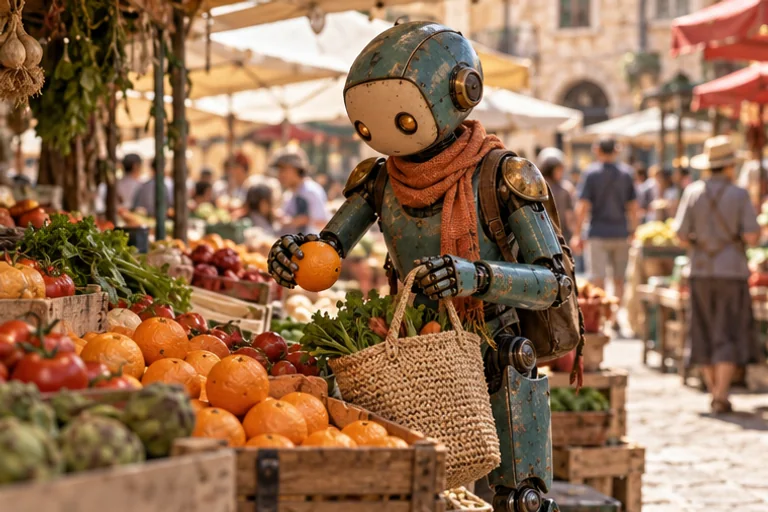
Idea 91 · Image concept — Original AI-generated editorial illustration. Fictional commercial concept; no brand endorsement or real customer experience. Open the complete generation prompt
Create a candid landscape editorial scene of Pip, an original adult-coded retro robot with a weathered teal metal shell, cream oval face panel, two amber optical lenses, an orange canvas scarf, brass shoulder plates and slim jointed mechanical fingers, matching the approved reference. At a busy outdoor produce market, the robot gently places one orange into an open woven shopping bag resting on a wooden counter. One hand guides the orange; the other steadies the bag handle. Keep finger joints, orange scale, bag weave and contact physically coherent. Warm afternoon side light, vegetables and real-looking market clutter behind, wide scene with a clear action. No product packaging, branding, readable signs or sponsorship implication.
An unboxing shot plan
Build a three-frame storyboard for a real authorized product: sealed package, opening and contents. Use actual packaging references instead of fabricated labels.
Platform & format: Instagram · Storyboard carousel
Hook / caption: “Before the unboxing, plan the three frames that matter.”
A product FAQ with a virtual presenter
Answer one verified product question using an AI host beside real product footage. Separate factual specifications from opinions the character cannot truthfully hold.
Platform & format: YouTube Shorts · Product explainer
Hook / caption: “Will it fit your setup? Start with these measurements.”
Watch-strap setup at the workbench
Show the male craft creator threading a functional leather watch strap. Label it a fictional concept; real brand versions need accurate reference images and claim approval.
Platform & format: Instagram / TikTok · Demonstration Reel
Hook / caption: “A close look at the detail you use every morning.”
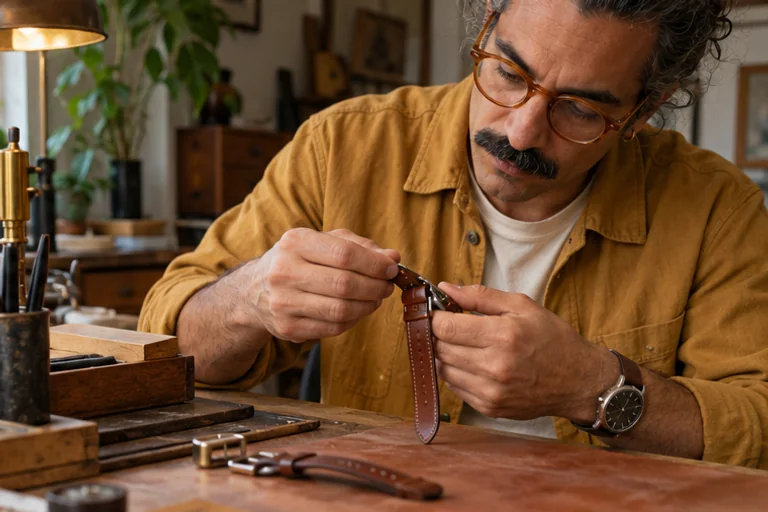
Idea 94 · Image concept — Original AI-generated editorial illustration. Fictional commercial concept; no brand endorsement or real customer experience. Open the complete generation prompt
Photograph Ivo, an original adult man aged 42 with dark olive skin, a long narrow face, salt-and-pepper curls in a small bun, a natural mustache, round amber glasses and one small gold hoop earring, maintaining the approved identity. Wearing a mustard overshirt at a worn workbench, he threads a brown leather watch strap through its metal buckle. Three-quarter close framing includes his recognizable face, the wrist and clearly separated fingers. Show a functional analog watch with coherent case, dial and strap, naturally turned away from any branding. Soft side daylight, practical craft tools, textured leather. No packaging, invented label, product endorsement or floating parts. This is a fictional commercial-concept illustration.
One product, two user scenarios
Illustrate a commuter and a weekend maker using an authorized backpack. Preserve pockets, straps and size, and avoid suggesting either character is a real customer.
Platform & format: Instagram · Carousel
Hook / caption: “Same bag. Two reasons to leave the house.”
A feature-to-benefit explainer
Show a verified lamp's adjustable arm in a real reference clip while a virtual presenter explains the practical use. Do not invent brightness or energy claims.
Platform & format: YouTube Shorts · Explainer Short
Hook / caption: “The hinge is the feature. Moving the light is the useful part.”
A transparent affiliate pick
Use a virtual host to explain human-researched selection criteria for a product. Add a clear affiliate disclosure and never say the synthetic character personally tested it.
Platform & format: Instagram · Research carousel
Hook / caption: “How we chose this option—and how the affiliate link works.”
A fictional brand-brief pitch
Present a three-scene concept for an invented client in a portfolio. Label it speculative work, with an objective, deliverables and review checklist instead of fabricated results.
Platform & format: Instagram · Portfolio carousel
Hook / caption: “A concept campaign: one problem, three useful scenes.”
The product-in-context still life
Place a vintage speaker beside the recurring robot in its radio workshop. Treat the image as mood and context; use real product references for a commissioned version.
Platform & format: Instagram · Photo
Hook / caption: “A speaker belongs in a listening moment, not a floating product shot.”

Idea 99 · Image concept — Original AI-generated editorial illustration. Fictional commercial concept; no brand endorsement or real customer experience. Open the complete generation prompt
Create a medium landscape editorial scene of Pip, an original adult-coded retro robot with a weathered teal metal shell, cream oval face panel, two amber optical lenses, an orange canvas scarf, brass shoulder plates and slim jointed mechanical fingers, consistent with the approved reference. At a cluttered radio workshop desk, Pip listens with its head slightly tilted beside a real-looking vintage speaker in a wooden cabinet. Keep the speaker resting firmly on the desk, with a coherent grille and controls. Warm desk-lamp light mixes naturally with cool window light; show small tools and a coiled cable. The robot's hands rest on the desk rather than displaying the speaker. No logos, readable labels, fake specifications, UI or testimonial claims.
A collaboration production breakdown
Explain how a real authorized campaign asset moves from brief to references, review and final export. Publish actual process evidence and approved credits, never invented client feedback.
Platform & format: YouTube Shorts / Instagram · Making-of video
Hook / caption: “The most useful part of this ad happened before generation.”
Best Content Ideas by Platform
The best AI influencer Instagram content ideas are often easy to save or recognize; AI influencer TikTok ideas need an opening that makes sense immediately; YouTube Shorts ideas benefit from a self-contained answer or story. These are editorial starting points, not ranking rules or growth promises.
| Platform | Themes & examples | Formats | Content goal | Production method |
|---|---|---|---|---|
| Style decisions (#11), routines (#1), character lore (#84), product details (#94) | Carousels, Reels, Stories and stills | Recognition, saves, useful replies | Generate consistent scene images; arrange ordered slides or animate one action; write a caption with context. | |
| TikTok | Readable movement (#71), niche comedy (#72), prompt teardown (#63), demonstrations (#91) | Vertical short video, replies and episodic clips | Make one hook and payoff easy to follow | Start with a short script; generate one or two clear actions; edit pacing, readable captions and permitted audio. |
| YouTube Shorts | One-question lessons (#61), source checks (#64), product FAQs (#93), short stories (#81) | Self-contained vertical Shorts | Answer a question and invite a related next watch | Record original narration; combine a virtual presenter with real evidence or diagrams; finish with the answer. |
For a vertical post, compose or generate a dedicated 9:16 frame with room for platform overlays. The landscape illustrations above are composition references; do not crop off hands, feet or the product to force them into a Reel. Repurpose the idea, then review each destination’s edit and music rights.
How to Turn an Idea into an AI Influencer Post
Move from a specific audience question to a saved character, reviewed media, caption and publishing plan. AI Influencer Generator has separate workspaces for these steps; you remain responsible for the final story, factual claims, rights and disclosures.
1. Content Strategy: choose a repeatable promise
Open Content Strategy. Define the audience, niche and three series before choosing a scene. For Mara, use “practical city style, small routines and imagined train journeys.” Pick idea #11 for a styling post, with the viewer goal “save three ways to wear one coat.”
Audience: adults building a practical city wardrobe. Character: Mara, a curious urban observer. Series: one garment, three situations. Post: brick-red coat for a wet commute, a bookshop visit and an evening walk. Deliverable: three image briefs and one caption, with no shopping or performance claims.
2. Consistent Character: save the identity first
Use Character Creation and the Consistent Character Generator to establish an original adult character. Save approved references, then reuse the selected influencer in subsequent generation. Keep face shape, freckles, hair streak and earrings stable; change the outfit only when the story calls for it. For a fuller identity brief, follow our AI influencer persona guide.
3. AI Image/Video Generation: make the smallest useful scene
Open AI Image Generator / Create Photos, select the saved influencer as the identity source and describe the action, wardrobe, setting and camera. Use the complete #11 prompt as a starting point. Review the displayed quote and settings before submitting; inspect face, hands, fabric and reflections after generation.
For a Reel, take an approved scene into AI Video Generator and request one small movement. For dance or gesture-led ideas, Motion Transfer uses a movement reference; supply one you own or have permission to use. Check the finished clip for identity drift and foot contact, then edit narration, licensed audio and captions as needed.
Preserve Mara’s approved identity and brick-red coat. Five-second shot: she takes two natural steps beside the wet market, glances toward the shop window and slows. Keep the camera steady and the complete coat visible. Maintain hand anatomy, pavement contact and coherent reflections. No cuts, dialogue or text.
4. Caption: give the visual a reason to exist
Open Instagram Caption Generator in Content. Supply the actual scene, audience and tone. Ask for one concrete opening, a useful detail and a relevant question. Remove claims the image cannot support.
Write an Instagram caption for a clearly disclosed AI-created style character wearing one brick-red coat in three imagined city scenes. Open with “One red coat. Three very different plans.” Explain one practical styling choice per scene, ask which combination the reader would wear, and avoid prices, real travel claims or product endorsements.
5. Publishing: review the export and destination
Use Content Calendar for planning, then inspect the final crop, caption and disclosure. In Publish, connect an available supported account, select the finished media and choose the supported publish or schedule action. Check the result for the selected destination. If your destination is unavailable, export and upload in the platform’s own interface.
For the concrete account-connection and scheduling path, follow our TikTok publishing tutorial. YouTube channel production has its own AI influencer for YouTube guide. Before release, review TikTok’s AI label rules, YouTube’s altered/synthetic content rules and applicable Instagram disclosure controls. For brand work, add a separate clear commercial disclosure under FTC guidance where applicable.
30-Day AI Influencer Content Calendar
This example month balances creation, audience questions and review days. Day 1 means your own start date; it is not a dated campaign or a recommendation that every account publish daily. It uses 24 publishing slots and six planning days. For a lighter workload, keep three weekly posts and move the remaining ideas into next month.
Choose one main character and adapt the illustrated scenes to that identity. Pip’s repair or product scene can become Mara’s own workshop story; you do not need three new characters to use this calendar. Use genuine questions and poll results when available, or label your own editorial question honestly.
Download the 30-day calendar (CSV) ↓
| Day | Content theme | Platform | Format | Goal |
|---|---|---|---|---|
| 1 | #89: A character-bible behind-the-scenes post | Carousel | Introduce the character and AI disclosure | |
| 2 | #1: The five-minute coffee ritual | Reel | Establish a recurring routine | |
| 3 | #63: Prompt teardown: from vague to specific | TikTok | Tutorial video | Explain one creative decision |
| 4 | #11: One statement coat, three settings | Carousel | Make styling useful | |
| 5 | #61: Explain one idea at the microphone | YouTube Shorts | Explainer Short | Answer one beginner question |
| 6 | #18: Followers choose the next layer | Story poll | Invite a genuine preference | |
| 7 | Production & review | Planning | Review / no new post | Review comments and production time |
| 8 | #51: The imperfect first loaf | TikTok | Reel | Develop the character's home world |
| 9 | #62: A camera-angle lesson | Carousel | Teach camera framing | |
| 10 | #31: The night-train window story | Reel | Tell a quiet travel story | |
| 11 | #95: One product, two user scenarios | Carousel | Explore two product-use contexts | |
| 12 | #85: A reply to a real viewer question | YouTube Shorts | Reply Short | Answer a real question or label an FAQ |
| 13 | #84: The origin of a signature accessory | Carousel | Deepen a signature accessory story | |
| 14 | Production & review | Planning | Batch / no new post | Prepare references and next week's scripts |
| 15 | #71: The robot's rooftop side-step | TikTok | Dance video | Test one readable movement |
| 16 | #21: Skincare before camera day | Reel | Add a grounded grooming scene | |
| 17 | #67: A decision tree for beginners | Carousel | Help viewers choose a format | |
| 18 | #91: The reusable-bag demonstration | TikTok | UGC-style video | Demonstrate believable object contact |
| 19 | #41: The post-run harbor pause | Reel | Vary action and environment | |
| 20 | Production & review | Planning | Batch / no new post | Prepare the next story setting and scene references |
| 21 | Production & review | Planning | Review / no new post | Compare like formats in native analytics |
| 22 | #81: The robot's first repair diary | YouTube Shorts | Story Short | Start a small recurring narrative |
| 23 | #94: Watch-strap setup at the workbench | Reel | Show a product detail honestly | |
| 24 | #70: A source-checking field guide | Carousel | Teach source-checking | |
| 25 | #73: A transition with a physical match cut | TikTok | Transition video | Try a planned match cut |
| 26 | #99: The product-in-context still life | Photo | Establish a commercial scene mood | |
| 27 | #93: A product FAQ with a virtual presenter | YouTube Shorts | Product explainer | Answer a verified specification question |
| 28 | Production & review | Planning | Review / no new post | Keep the sustainable series; drop weak repeats |
| 29 | #90: A community idea becomes an episode | TikTok | Making-of video | Credit a real idea, or label your own brief |
| 30 | Production & review | Planning | Calendar / no new post | Choose the next three briefs from evidence |
After each week, compare similar posts using the native platform’s available analytics: retention for video, saves for useful references, meaningful comments for questions and attributable actions for a commercial goal. Record production effort too. One unusually popular post is a lead to investigate, not proof that a format will always win.
Frequently Asked Questions
What should an AI influencer post every day?
Rotate a recognizable routine, one useful tip, a character story and a genuine audience question. Daily publishing is optional. Keep the same identity references and choose a cadence you can sustain while checking every image, claim and disclosure.
What content performs best for AI influencers?
There is no verified universal winner for AI influencers. Short video is a sensible format to test because broader marketing research reports strong perceived ROI, but your niche, story and execution matter. Compare retention, saves, useful comments and qualified actions across your own similar posts.
How often should an AI influencer post?
Start with a workload you can review properly, such as three finished posts per week plus optional Stories. Treat that as a trial, not an algorithm rule. Increase frequency only when quality, production capacity and your account's evidence support it.
What should a new AI influencer post first?
Publish a clearly disclosed introduction, one useful niche post and one repeatable character-led scene. These establish who the character is, what viewers will get and what can return as a series. Avoid beginning with unrelated portraits or an unsupported product testimonial.
Can AI influencers make UGC videos?
They can appear in UGC-style product demonstrations, explainers and fictional campaign concepts. A synthetic character is not a real customer and cannot truthfully claim to have tested a product. Use authorized product references, verify claims, review object contact and disclose both AI production and any commercial relationship as required.
How do you create consistent AI influencer content?
Save one approved character and reuse its identity references. Lock facial features, apparent adult age, hair and signature details while varying clothing, action and location. Compare each result against the reference, then check continuity again after animation and cropping. Keep voice, tone and story rules in a separate character brief.
Can one idea work on Instagram, TikTok and YouTube Shorts?
Yes, if each version is self-contained and adapted. A styling idea can become a saveable Instagram carousel, a quick TikTok reveal and an explained YouTube Short. Change the opening, pacing, captions and audio permissions for each destination instead of uploading an identical edit everywhere.
Do AI influencers need to disclose AI-generated content?
Follow each platform's current synthetic-media rules and applicable advertising law. TikTok requires labels for realistic AI-generated content; YouTube requires disclosure of realistic, meaningfully altered or synthetic content. A profile bio does not replace every post-level requirement. Disclose sponsorships and affiliate relationships separately and review the linked official guidance before publishing.
Start With One Character and One Useful Series
You do not need to produce all 100 ideas. Choose three that serve the same audience, keep one character recognizable, and make each post deliver a distinct moment or answer. The strongest virtual influencer content ideas are specific enough to direct and flexible enough to repeat without becoming copies.
Save the next month’s briefs, review every generated result and let real audience response guide what you make again.
Plan Content
Measure Engagement
Build Your Profile
Price Your Work
Write Post Copy
Brand Partnerships