
Quick answer
How can you create an AI influencer for product promotion?
Create a reusable fictional adult character, lock its identity, upload an accurate product reference, generate a believable product scene, turn an approved frame into a short UGC video, add a fact-checked script or voice, disclose AI and commercial relationships where required, and test controlled variations before scaling the campaign.
Create character → Add product → Generate product scene → Create UGC video → Add script/voice → Publish → Test variations
What do you need to create an AI influencer for product promotion?
You need an approved fictional adult identity, an authorized product reference, verified product facts, one channel and audience, a product action, and a human review checklist. A polished portrait alone is not a campaign: the character must remain recognizable and the product must remain accurate when both enter a new scene.
What is the step-by-step workflow?
- 01
Create a character
Define a fictional adult creator whose audience, niche, visual identity, and platform fit the product.
- 02
Add the product reference
Upload a clear authorized product image and record only verified shape, color, packaging, label, and selling-point facts.
- 03
Generate the product scene
Place the saved creator and product into one believable action, then inspect identity, hands, contact, packaging, and labels.
- 04
Create a UGC video
Animate an approved product frame with one simple action and review the complete clip rather than relying on its poster.
- 05
Add a script or voice
Write short spoken copy from verified product facts without inventing personal experience, results, or proof.
- 06
Publish with disclosure
Adapt the approved asset for its channel and add AI, sponsorship, affiliate, or material-connection disclosures where applicable.
- 07
Test controlled variations
Change one major variable at a time and compare identity, product accuracy, hook, action, and retention without overstating results.
Start by choosing a creator who fits the customer rather than a generic attractive face. For example: skincare product → fictional 25-year-old beauty creator → clean skincare aesthetic → TikTok and Reels. Build the identity in the consistent character generator, then create the product scene in the AI product photo workflow.
First-party production evidence
What did the three-stage product workflow actually produce?
This archived August 13, 2026 production chain used one approved unbranded skincare reference, one selected creator product frame, and a 5.04-second vertical video generated from that frame. All three tasks completed. This is one traceable workflow example—not a success rate, controlled multi-output experiment, customer result, or performance guarantee.
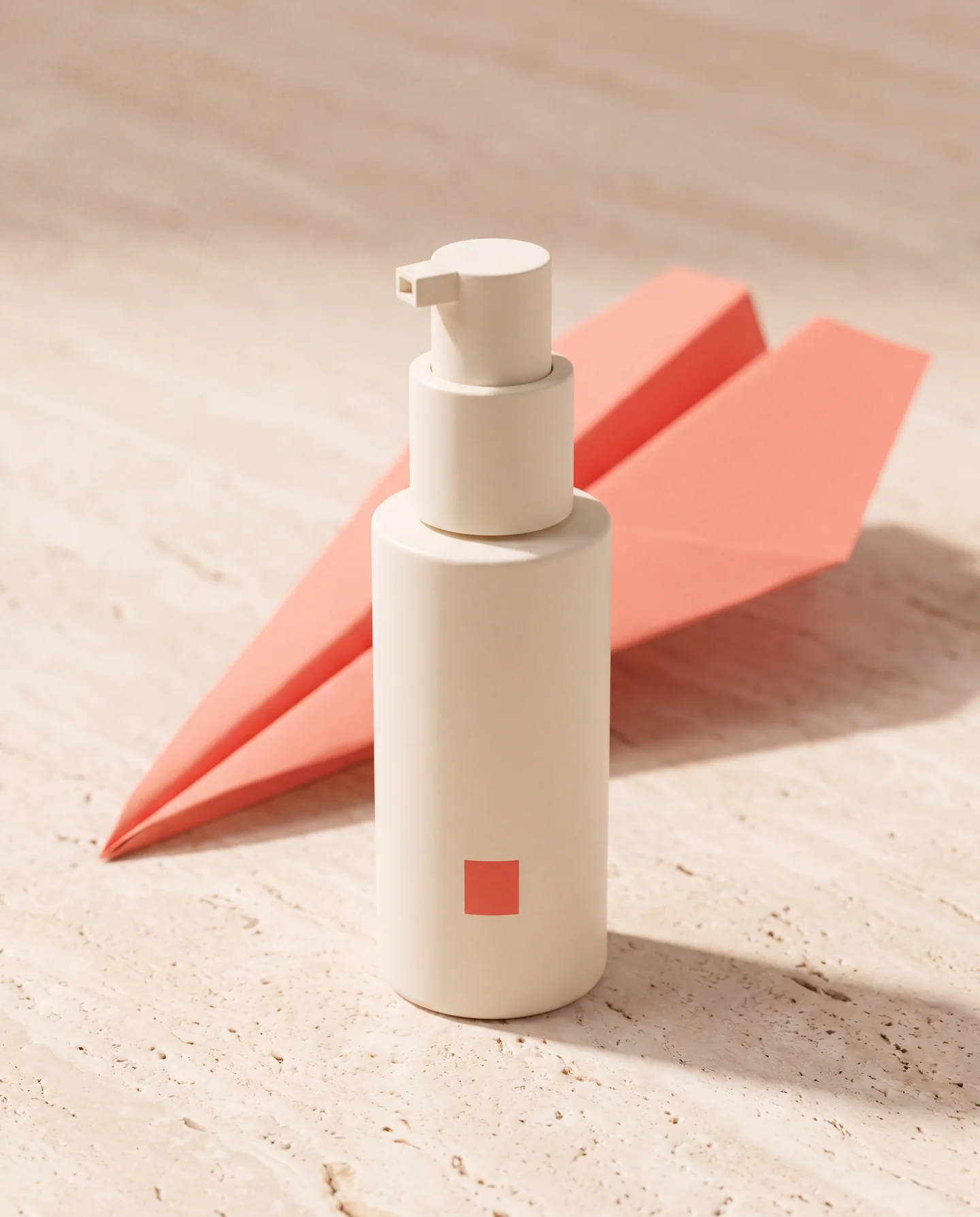
Product reference
The source defines the bottle silhouette, ivory color, pump, and coral square. It contains no readable product claim.
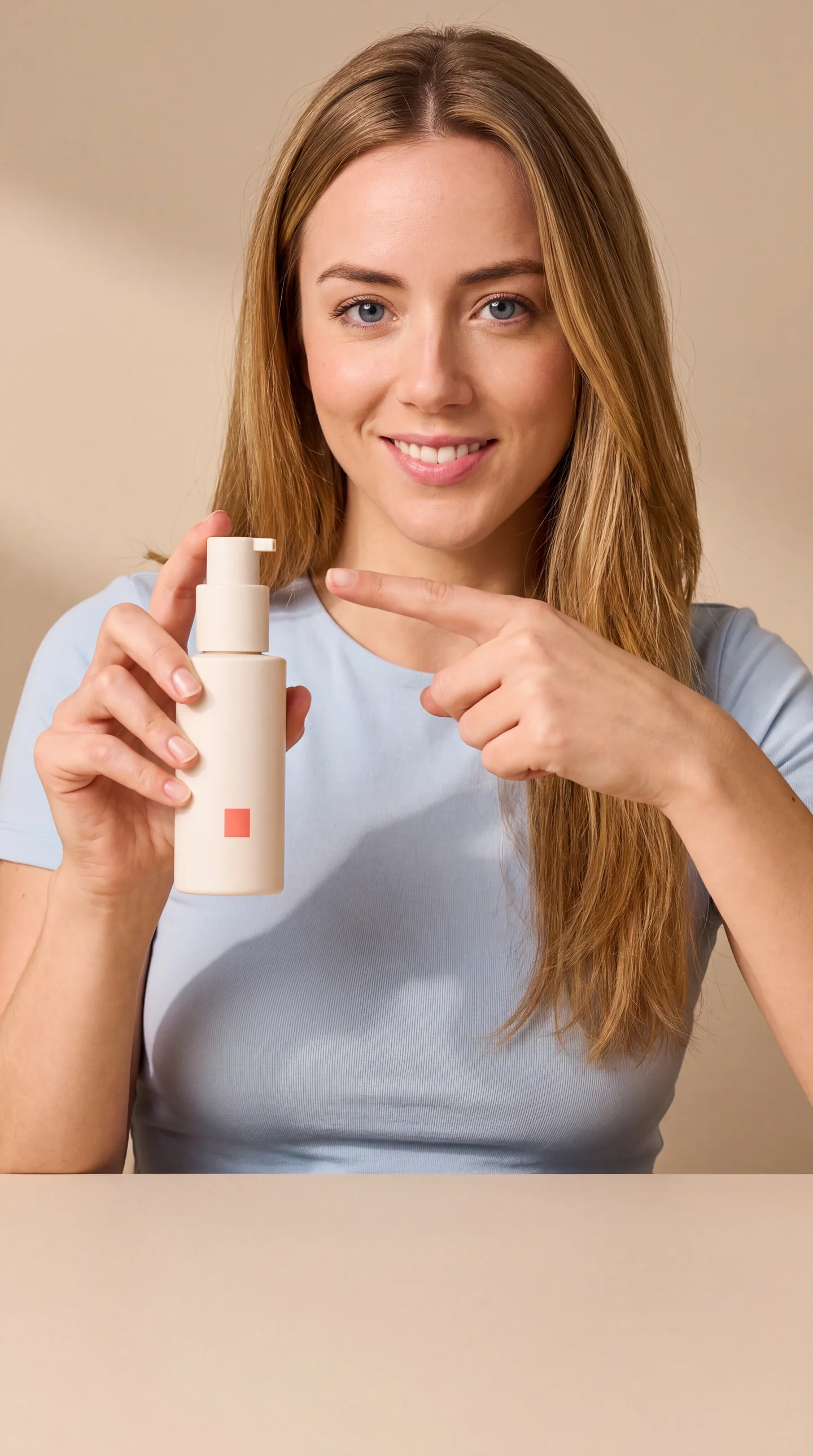
Creator product frame
The selected frame keeps the main bottle shape, pump, ivory color, and coral mark. Hands and product contact remain reviewable.
Sanitized production notes
- Product direction: preserve the supplied bottle, pump, ivory color, coral mark, and lack of readable wording.
- Video direction: one continuous product demonstration with a small believable pump action.
- Review boundary: the still and video use the same selected creator frame; this sample does not prove consistency across a larger campaign.
- Private task identifiers, storage locations, vendor fields, and user information are intentionally excluded.
Which product promotion formats should you create?
Use product photos for controlled composition, UGC drafts for a natural product action, Reels or TikToks for a hook and demonstration, spokesperson videos for direct explanation, and paid-ad variants for controlled creative testing. Choose the workflow by the communication job—not by forcing one generation to serve every channel.
Continue with the AI UGC video generator, AI video spokesperson, UGC prompt creator, or AI influencer video generator.
What prompts can you use for AI influencer product promotion?
A useful prompt names the approved creator, authorized product, one physical action, details that must remain accurate, the channel format, and claims that must not be invented.
Skincare routine
Use the saved fictional adult beauty creator and the supplied authorized skincare reference. Show one natural bathroom-counter action with the product held at a believable scale. Preserve the exact bottle shape, ivory color, pump, and visible brand marks. Soft morning window light; no invented text, testimonial, before-and-after result, or medical claim.
Fashion product
Use the saved fictional adult fashion creator and the supplied authorized garment reference. Create a candid mirror-style outfit check that preserves the garment's cut, color, texture, closures, and logo placement. Natural phone-camera framing and purposeful hands; no invented discount, material claim, or customer result.
Tech demonstration
Use the saved fictional adult tech creator and the supplied authorized device reference. Show one clear desk demonstration with the device at accurate scale and all ports, buttons, screen details, and logos preserved. Neutral daylight; no unsupported performance number, certification, benchmark, or review claim.
Fitness product
Use the saved fictional adult fitness creator and the supplied authorized product reference. Show a realistic pre-workout packing moment with one natural grip and accurate packaging. Preserve color, cap, label position, and proportions. Do not claim weight loss, recovery, health effects, or personal use without substantiation.
Ecommerce product reveal
Use the saved fictional adult ecommerce creator and the supplied authorized product reference. Create a vertical product reveal with one clean unboxing action, accurate packaging, and space for separately added copy. No generated price, rating, review, marketplace badge, limited-stock claim, or fake interface.
How should you review product scenes before publishing?
Inspect the full-size image and the complete video. Check face and age consistency, hair, hands and fingers, grip, object contact, package silhouette, cap or pump, color, logo and label position, readable text, scale, reflections, shadows, background geometry, and any claim implied by the scene. Reject the asset when a product detail or identity changes materially.
What should an AI influencer never claim in a product promotion?
A fictional AI influencer should not claim personal use, a health outcome, a customer result, a certification, scientific proof, or a brand relationship that did not occur. The FTC’s social media influencer guidance, reviewed September 13, 2026, says endorsers cannot discuss experience with products they have not tried or invent claims that require proof the advertiser does not have.
Do not publish
“I used this serum for three months and it cured my acne.”
Use verified facts
“This serum contains [verified ingredient] and is designed for [verified use].”
How should AI and sponsored content be disclosed?
Treat synthetic-media context and advertising relationships as separate disclosures. The FTC says a material connection to a brand should be obvious. Meta’s AI labeling explanation, reviewed September 13, 2026, describes “AI info” labels based on detected industry signals or user disclosure. TikTok’s relevant support pages could not be reliably retrieved during this implementation check, so this article does not restate an unverified TikTok rule.
Review the site’s practical AI disclosure guidance and commercial-use boundaries before publishing. This tutorial is operational guidance, not legal advice.
Frequently asked questions
How can I create an AI influencer for product promotion?
Create a reusable fictional adult character, upload an authorized product reference, generate a believable product interaction, turn an approved frame into a short UGC video, add a fact-checked script, disclose AI or commercial relationships where required, and test controlled variations.
Can an AI influencer hold my real product?
Yes, a reference-led workflow can place a product into a creator scene, but the output still needs human review. Check package shape, color, pump or cap, label, scale, grip, contact, reflections, and any text before publishing.
How do I keep the same AI influencer across product campaigns?
Save one approved character reference, keep identity-defining traits stable, reuse that reference for each campaign, change only a few scene variables at once, and reject outputs with facial, age, hair, or body-proportion drift.
Do AI influencer product posts need disclosure?
Disclosure depends on the content, platform, commercial relationship, and applicable law. For U.S.-facing endorsements, the FTC says material connections should be obvious. Platform AI labels and advertising disclosures address different issues, so both may apply.
Can an AI influencer give a product testimonial?
Do not present a fictional character as having a real personal product experience. Use verified product facts and clearly framed promotional copy instead of invented use, health outcomes, certifications, customer results, or scientific proof.
Create a reviewable product campaign
Start with one authorized product reference and one approved fictional adult creator. Keep the physical action simple, then review the result before adding motion or claims.
Create a product campaign image