
For character creation and a worked generation budget before considering revenue, read how to create an AI influencer from scratch.
Creating an AI influencer is no longer just a novelty project. It can become a real content business when the virtual persona is treated like a brand: a clear niche, consistent identity, repeatable content system, ethical disclosure, and a monetization plan from day one. This practical case study shows how to create an AI influencer and make money without pretending that followers, customers, or income appear automatically.
Audience
Busy skincare beginners who want simple, evidence-aware routines.
Promise
One practical routine decision in every post—without miracle claims.
First offer
A small unbranded UGC sample package, tested before sponsorship outreach.
What an AI influencer business actually is
An AI influencer is a fictional digital persona created with artificial intelligence tools and managed like a social media creator. The character may appear in images, short videos, voiceovers, product demonstrations, captions, comments, and branded campaign concepts, but the strategy and accountability still come from a human operator or team.
The best virtual creators are not simply attractive avatars. They have a defined point of view, recognizable visual anchors, a content theme, and a reason for people to return. AI can reduce the cost of testing scenes, formats, and creative directions. It does not remove the work of positioning, fact-checking, community management, rights review, or selling a useful offer. For a production-first budget, compare the cost of AI and traditional influencer video campaigns.
The opportunity is straightforward: one creator can develop a believable digital personality without appearing on camera or repeatedly booking models and locations. The challenge is equally real. Weak positioning, changing faces, undisclosed synthetic content, and random posting can make an account forgettable or risky.
Step 1: Choose one audience and promise
Start with strategy before opening a generator. Many beginners make several portraits and then try to invent a purpose for them. Reverse the order. Decide who the influencer serves, what the audience repeatedly receives, and which ethical revenue paths could fit that relationship.
- Pick one audience. Choose people with a clear interest or recurring problem: skincare beginners, streetwear fans, productivity-focused students, budget travelers, home-gym users, or indie-game players.
- Choose one promise. Define what a follower gains: outfit formulas, product discovery, concise tutorials, practical entertainment, or careful explanations.
- Define the persona. Give the creator a fictional name, adult age range, visual style, values, voice, and clear personality boundaries. Never copy a real person or celebrity.
- Create a visual bible. Document face shape, hair, wardrobe palette, camera behavior, lighting, recurring locations, and a few meaningful props.
- Build three to five content pillars. Specific pillars make weekly planning easier and connect the audience promise to a possible offer.
For this illustrative case, Mara is a fictional skincare explainer for busy beginners. Her pillars are routine order, ingredient-language translation, small bathroom setups, myth checks, and clearly disclosed unbranded UGC concepts. “Beautiful AI woman” would not be a niche; this combination gives the account a recognizable job.
Step 2: Create and save the character
AIInfluencerGenerator.ai is the production hub for the character—not an automatic business. Start with a specific adult fictional creator brief, generate the identity, inspect the result, and save only the character you want to reuse. The saved identity can then anchor future photos and short videos across new scenes and formats.
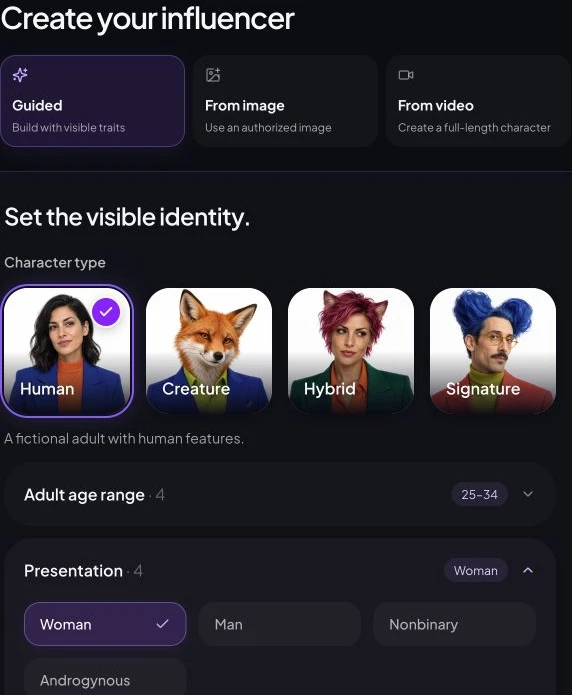
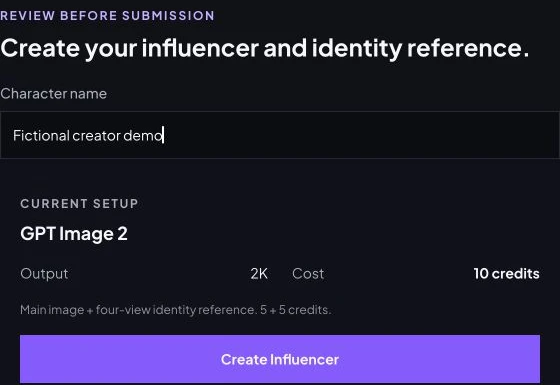
The review matters more than the first impressive image. Check the face, apparent age, skin texture, hairline, ears, jewelry, hands, body proportions, and whether the expression feels like a real person in a real moment. Reject a visually polished result when it looks airbrushed, changes identity, or creates impossible contact with an object.
The following July 30 NYC archive is a separate fictional production example. It is not Mara, a skincare trial, or a monetized account.
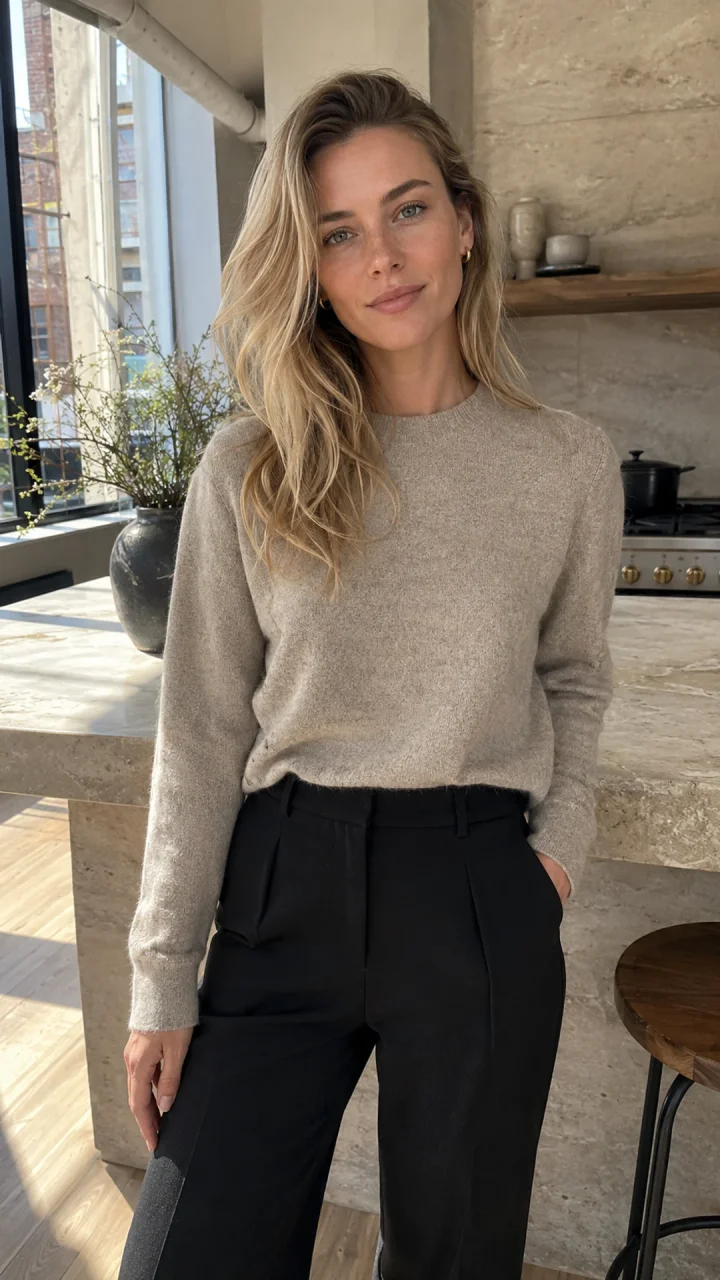


Consistency does not mean repeating the same portrait. Lock stable anchors—face shape, complexion, hair, apparent adult age, signature accessory, and baseline style—then vary location, time of day, camera position, outfit, activity, and expression. A useful test is whether the person is still recognizable before the account name appears.
Keep stable
Identity anchors, niche, voice boundaries, disclosure standard, and rights records.
Vary deliberately
Story, setting, crop, wardrobe within the style world, activity, expression, and platform format.
A current production planning example is 10 site credits for a complete Guided character, 5 for one GPT Image 2 photo at 2K, and 27 for one silent Wan 2.6 video at 720p for five seconds. That is 42 credits before retries. Subscription fees are separate; this is not Mara’s actual spending. No revenue, customer charge ledger, conversion rate or profit has been measured.
Step 3: Build a repeatable content system
Consistency is the difference between a one-off AI portrait and a creator people can recognize. The system needs both visual rules and editorial rules. Write a short persona document before publishing: core identity, appearance rules, voice, values, prohibited claims, recurring formats, disclosure language, and an approval checklist.
A useful weekly mix combines recognizable formats rather than disconnected images:
- Signature posts: a recurring format such as one-minute routine order or a weekly desk reset.
- Educational posts: quick tips, careful product explanations, tutorials, or myth checks.
- Entertainment posts: trends, reactions, short stories, or point-of-view clips adapted to the character.
- Community posts: polls, comment replies, and audience choices that do not pretend the fictional character has lived experiences.
- Commercial tests: clearly labeled affiliate mentions, unbranded UGC samples, or brand-style concepts with no invented relationship.
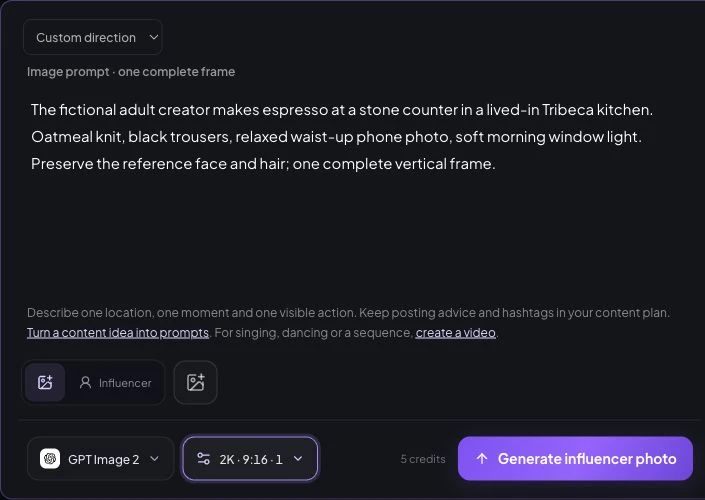
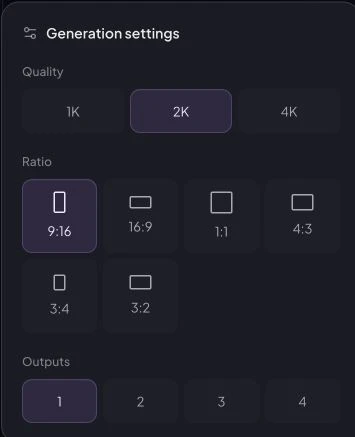
Batch the decisions, not just the images. Plan one week of topics, hooks, visual actions, captions, and review notes in a single session. Generate multiple scenes only when they serve distinct stories. A feed filled with the same centered portrait in different clothes may be visually consistent but editorially empty.
Use platform-native formats. A vertical talking clip needs a direct first beat; an Instagram carousel needs a clear sequence; a Pinterest image needs a legible visual promise; a longer caption can carry sources and nuance. Reusing the idea is efficient. Posting an identical asset everywhere is not a strategy.
Step 4: Run a 30-day publishing test
| Days | Work | Decision signal |
|---|---|---|
| 1–3 | Lock niche, audience promise, disclosure rules, and commercial boundaries. | The concept can be explained in one sentence. |
| 4–7 | Create the character, review identity, and select the first visual set. | The same adult creator is recognizable across useful scenes. |
| 8–14 | Publish consistently and test three content pillars. | Saves, replies, shares, or qualified follows identify useful formats. |
| 15–21 | Repeat the two strongest formats and answer real audience questions. | The audience response confirms or rejects the content promise. |
| 22–30 | Prepare one small offer, media sample, or affiliate test. | A real click, inquiry, or buyer conversation—not a vanity impression. |
The goal is fast learning, not a guaranteed payout. Track the smallest set of signals that matches the content job: saves for reference posts, replies for community formats, outbound clicks for affiliate tests, and qualified inquiries for UGC or creative services. Views without a meaningful next action can still teach you about distribution, but they do not prove commercial demand.
Step 5: Test one truthful monetization path
An AI influencer can potentially support sponsored content, UGC packages, affiliate marketing, digital products, merchandise, subscriptions, licensing, or account-management services. These are business models, not promises, and this case study does not guarantee income. Each requires a real audience or buyer need, honest claims, rights clearance, disclosure, and work outside the generation tool.
UGC packages
Sell a defined content asset to a brand or agency. The value is the deliverable, not invented audience reach.
Affiliate content
Recommend niche-relevant products through tracked links only when the recommendation and relationship can be disclosed clearly.
Digital products
Sell an original guide, prompt framework, template, or educational resource that solves a real audience task.
Licensing and services
License an approved fictional character or offer human-led creative operations with explicit usage rights and review boundaries.
For a beginner, UGC production can be testable earlier than sponsorship because the buyer evaluates the asset rather than a large audience. Mara’s fictional test is one concise, unbranded skincare demonstration and two still concepts. It does not show a real product claim, customer result, or paid relationship.
Package the first test narrowly: deliverable count, aspect ratios, revision limit, usage term, and the facts a buyer must provide. Do not claim the persona used a product, experienced a result, or represents a real customer. If the product interaction cannot be produced truthfully, use a creator-only scene or decline the concept.
Disclosure and rights are part of the content system
Transparency is not an optional footer. TikTok publishes rules for AI-generated content in its Integrity and Authenticity guidelines . YouTube requires disclosure when creators meaningfully alter or generate realistic content, including a realistic scene that did not occur, in its GenAI disclosure guidance . Meta explains how it labels AI-generated or manipulated media in its AI labeling policy . Policies change, so check the current rule at publication time.
Commercial disclosure is a separate obligation. For U.S.-facing content, the FTC’s influencer disclosure guide explains that a material connection to a brand should be obvious and placed with the endorsement. Do not hide paid, gifted, affiliate, employment, family, or ownership relationships behind vague language.
- Use fictional adults and authorized source material; never imitate a celebrity or private person.
- Keep records for prompts, reference rights, generation source, edits, approvals, and publication destination.
- Separate synthetic-media disclosure from sponsorship or affiliate disclosure when both apply.
- Review every result for anatomy, hands, labels, reflections, background geometry, and unsupported claims.
- Check local advertising, privacy, likeness, and intellectual-property requirements before commercial use.
For a deeper policy workflow, read the legal rules for AI influencer content. This article provides a practical operating framework, not legal or financial advice.
Connect this case study to the rest of the workflow
A final launch checklist
- One audience and one useful promise
- A fictional adult identity with no real-person likeness
- A saved character and reviewed reference set
- Three to five repeatable content pillars
- Platform and commercial disclosure rules
- A 30-day test with meaningful signals
- One narrow monetization experiment
- No fabricated metrics, reviews, results, or partnerships
Frequently asked questions
Can an AI influencer make money without a large following?
A small account can test UGC production, a niche digital product, affiliate content, or creative services before it has large reach. None of these paths guarantees income; the useful signal is whether a relevant audience or buyer takes a meaningful action.
How does AIInfluencerGenerator.ai fit into the workflow?
The site can create and save a fictional adult character, generate new photos and short videos from that identity, offer templates for repeatable formats, and keep completed work in History. Strategy, publishing, disclosure, outreach, and commercial agreements still require human decisions.
Do AI influencer posts need disclosure?
Rules vary by platform, market, and content type. Realistic synthetic media may require a platform label, and paid, gifted, or affiliate relationships need clear disclosure. Check the current official rules for each platform and jurisdiction before publishing.
What is the safest first monetization experiment?
Choose one small offer that matches the creator niche and can be represented honestly. A sample UGC package or a simple digital resource is easier to review than a broad sponsorship pitch built on unproven reach.
Plan Content
Measure Engagement
Build Your Profile
Price Your Work
Write Post Copy
Brand Partnerships