
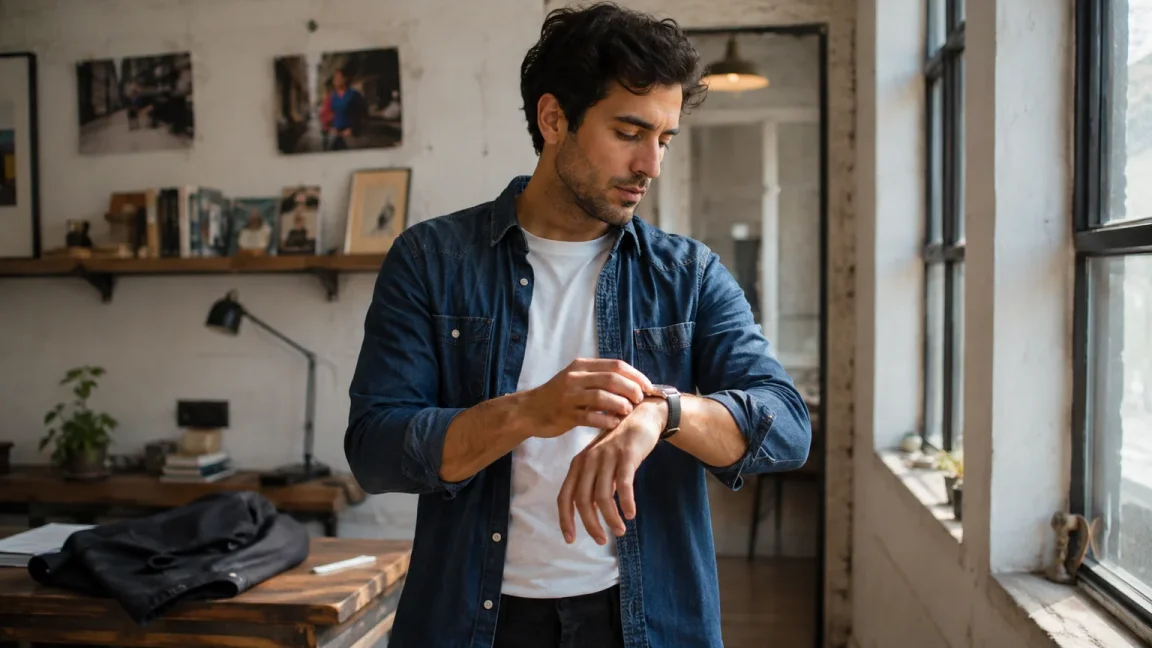
Why create an AI influencer man?
Male virtual personalities can serve as practical content assets for creators, startups, agencies, and brands. An AI influencer man can appear in fitness reels, fashion lookbooks, lifestyle posts, gaming clips, travel stories, and brand campaigns with fewer human-model scheduling dependencies, while still requiring generation, editing, and review. The strongest male AI influencers work because they are not just attractive images; they have a repeatable face, body, style, voice, backstory, and content strategy.
An AI influencer man gives teams a controllable character they can build once and develop over time. Instead of booking a model, scouting locations, reshooting content, or waiting for availability, creators can generate new visuals around a consistent male persona and adapt him to multiple platforms. That flexibility is especially useful in visual niches where trends move quickly, such as gym culture, streetwear, travel aesthetics, gaming edits, and product promotion.
Male virtual influencer examples
The format also fits how audiences already consume digital entertainment. People follow fictional game characters, animated mascots, VTubers, and cinematic brand worlds, so a believable male virtual influencer feels less strange when he has a clear identity and consistent content. Real examples often discussed in the virtual influencer space include Blawko, a male-presenting digital character associated with streetwear and social media storytelling, Liam Nikuro, a virtual human created by Tokyo-based 1sec, and Plusticboy, a Japanese male virtual human connected with fashion and music culture.
These are examples from the broader virtual-influencer field, including CGI characters, not evidence that they use AI Influencer Generator. Read the Blawko profile, Liam Nikuro profile, and Plusticboy profile. They are historical creative references, not a ranking of currently active accounts.
1. Fitness: build a recognizable routine
Fitness is one of the most natural niches for an AI influencer man because it is visual, routine-based, and easy to organize into repeatable content series. A male virtual fitness creator can share workout poses, gym outfit inspiration, fitness outfit concepts, rest-day themes, activewear lifestyle shots, and motivational captions. The appeal comes from consistency: the character can represent discipline, progress, and a recognizable training identity without needing to claim real athletic achievements.
The key is to avoid fake personal records, medical claims, or invented coaching credentials. A believable male AI fitness influencer can still be useful by showing exercise concepts, gym aesthetics, meal-prep inspiration, and habit-building themes. For example, he might post a “push day look,” a “5 a.m. gym mindset” reel, or a “what’s in my gym bag” carousel featuring branded apparel, headphones, or a shaker bottle.
Useful content ideas include:
- Gym mirror photos with consistent physique, lighting, and clothing style
- Short motivational videos built around discipline, sleep, and routine
- Fitness fashion posts featuring tanks, joggers, sneakers, and accessories
- Brand-safe supplement or activewear visuals without unsupported health promises
- Weekly workout-themed captions that focus on effort rather than fabricated results
2. Fashion: define a wardrobe world
Fashion is where many male AI influencer accounts can develop their strongest identity. Clothing creates immediate visual signals: minimalist luxury, cyberpunk streetwear, coastal casual, athletic basics, tailored menswear, or festival style. When the same AI influencer man repeatedly appears in a defined wardrobe world, audiences can recognize him even before reading the caption.
This niche works because virtual production makes styling flexible. One character can appear in seasonal outfit edits, sneaker drops, accessory close-ups, editorial portraits, and product-focused posts. Blawko is commonly associated with streetwear-inspired styling, while Plusticboy has been covered as a male virtual figure linked to fashion-forward Japanese digital culture.
For brands, the advantage is creative control. A male AI fashion influencer can be dressed to match campaign colors, launch themes, or a specific aesthetic without changing his underlying identity. The best results come from a style guide that defines his signature pieces, preferred colors, grooming, poses, and recurring visual details.
3. Lifestyle: give the character a rhythm
A male AI influencer becomes more believable when he does ordinary things in a consistent way. Lifestyle content gives him a rhythm: morning coffee, city walks, desk setups, weekend plans, playlists, skincare routines, restaurants, apartment details, or reflective captions. These small moments make the character feel less like a mannequin and more like a recognizable persona.
The goal is not to trick people into believing he is human. The goal is to make the character emotionally legible. Followers should understand what he likes, how he speaks, what kind of humor he uses, and what values shape his posts. A polished AI influencer man might be calm, stylish, and aspirational; another might be sarcastic, chaotic, and gamer-coded.
A simple lifestyle framework can include:
- Daily rituals, such as coffee, workouts, commute shots, or evening walks
- Taste markers, such as music, books, interior design, vehicles, or food
- Personality cues, such as dry humor, ambition, curiosity, or confidence
- Visual anchors, such as the same apartment corner, city backdrop, or color palette
- Recurring captions that sound like the same person wrote them each time
4. Travel: change scenery, keep identity
Present these as imagined destination concepts, not proof of a visit, hotel stay, or partnership. Verify landmarks and practical travel information separately.
Travel content is powerful because it gives a male virtual influencer a sense of movement. He can appear on beaches, in city streets, beside mountain cabins, inside boutique hotels, or near landmarks. The content feels aspirational, and the character’s wardrobe, mood, and caption style can shift slightly with each destination while still staying recognizable.
Consistency matters even more in travel posts because locations change dramatically. If his face, body proportions, hairstyle, or personality shift too much from one destination to another, the illusion breaks. A believable AI influencer man should look like the same person whether he is wearing linen in Santorini-style scenery, a winter coat in a snowy street, or techwear in Tokyo-inspired neon.
Strong travel post ideas include:
- “48 hours in the city” visual stories
- Hotel balcony lifestyle shots
- Airport outfit and packing content
- Destination-based fashion edits
- Travel gear brand integrations
- Short cinematic reels with consistent voiceover tone
5. Gaming: make his taste specific
Studio produces media drafts; it does not run livestreams or play games. Plan voice direction and editing separately, using only the controls available in the selected workflow.
Gaming is a strong niche for male AI influencers because audiences are already comfortable with avatars, digital identities, and fictional characters. A male virtual influencer can appear in prerecorded, stream-inspired commentary, react to game releases, model gaming accessories, appear in desk setup content, or create short-form skits around online culture. He does not need to pretend to be a professional esports player; he can simply be a gaming personality with a defined taste and attitude.
This niche also supports hybrid content. The same character can appear as a realistic man in lifestyle posts and as a stylized avatar in thumbnails, edits, or game-themed visuals. That makes an AI influencer man especially flexible for brands selling peripherals, chairs, monitors, energy drinks, apparel, or digital products.
To make gaming content feel authentic, give him preferences. Maybe he loves competitive shooters, retro consoles, open-world RPGs, racing games, or cozy late-night streams. Specific taste makes the persona feel curated, while generic “I love gaming” content feels flat.
6. Brand promotion: design for a clear brief
A major advantage of creating a male virtual influencer is predictability. Brands can shape the visual tone, messaging, wardrobe, setting, and release schedule with fewer production variables. If a campaign needs three outfit variations, a product-in-hand image, a short video, and platform-specific captions, a consistent AI influencer man can be built into that workflow.
The commercial value is not only cost or speed. It is also brand fit. A men’s skincare label might create a clean, minimal male AI influencer with polished grooming and calm captions. A streetwear brand might create a bolder character with tattoos, layered outfits, and urban photography. A travel startup might create a relaxed male virtual host who introduces destinations through reels and carousel posts.
Good brand promotion content can include:
- Product-in-use lifestyle photos
- Short unboxing-style videos
- Outfit or gear recommendations
- Seasonal campaign images
- Clearly fictional narrative posts from the character’s point of view
- Paid social creatives with consistent face, pose, and tone
Build a male influencer character bible
A realistic male AI influencer needs more than a handsome face. He needs a character bible: a simple document that defines who he is and how he shows up online. This should include his age range, background, interests, niche, personality traits, visual style, speech patterns, values, and content boundaries.
Use our influencer persona guide to document personality and editorial rules. Studio saves character traits and references; your team maintains the broader character bible.
Believability comes from constraints. Real people do not change their jawline, height, fashion taste, accent, and worldview every week. Your AI influencer man should have a stable identity, with enough flexibility to grow but not so much that he becomes unrecognizable.
Include these details in the character bible:
- Face: eye shape, skin tone, facial hair, jawline, eyebrows, hairstyle, and any signature marks
- Body: build, height impression, posture, proportions, and fitness level
- Style: core wardrobe, color palette, accessories, grooming, and brand aesthetic
- Personality: confident, funny, quiet, rebellious, refined, athletic, or nerdy
- Voice: caption length, slang level, humor style, emoji use, and point of view
- Boundaries: topics he avoids, claims he should not make, and disclosures to include
Keep the same face, body, style, and personality
The fastest way to weaken a male AI influencer is inconsistency. If one post shows a lean runner, the next shows a bulky bodybuilder, and the third has a different face shape, audiences will notice. Consistency across face, body, style, and personality is what turns isolated AI images into an actual character.
Start by saving reference images and prompts that define the character’s core look. Use the same facial descriptors, body descriptors, hairstyle, grooming details, and wardrobe anchors across generations. Then create a visual review checklist before posting.
A practical consistency checklist:
- Does the face match previous posts?
- Are the eyes, nose, jaw, hair, and facial hair stable?
- Does the body type stay within the same range?
- Does the clothing fit the character’s usual style?
- Does the background support the niche instead of distracting from it?
- Does the caption sound like the same person?
- Does the post fit the content pillar: fitness, fashion, lifestyle, travel, gaming, or brand promotion?
Video adds another layer. The voice, gestures, facial expressions, pacing, and editing style should also repeat. A calm luxury menswear character should not suddenly speak like a high-energy prank creator unless that shift is part of a planned storyline.
A practical weekly content plan
A successful AI influencer man needs a posting system, not random images. Plan content around pillars so the account has variety without losing focus. For a male lifestyle creator, the pillars might be fitness, outfits, grooming, city life, and product features. For a gaming character, they might be desk setups, game reactions, humor clips, tech accessories, and prerecorded stream-style updates.
A simple weekly plan might look like this:
- Monday: gym or productivity post
- Tuesday: outfit or grooming carousel
- Wednesday: lifestyle reel or day-in-the-life clip
- Thursday: gaming, travel, or niche-specific content
- Friday: brand feature, product shot, or campaign creative
- Weekend: casual photo dump, story post, or behind-the-scenes-style update
The benefit of this structure is momentum. Audiences learn what to expect, while the creator still has room to test formats. Over time, the male virtual influencer becomes easier to brief, easier to generate, and easier to evaluate for commercial use because his identity is documented.
Be transparent about the virtual character
An AI influencer man can be fictional and still be valuable, entertaining, and commercially useful. Problems begin when content implies false real-world achievements, fake lived experience, or deceptive endorsements. Clear positioning helps audiences understand that the character is virtual while still enjoying the story, visuals, and recommendations.
Disclose the virtual identity and any material brand relationship. The FTC disclosure guide explains sponsorship disclosure; an AI label alone does not replace it. See our AI disclosure guidance and commercial-use guidance.
This is especially important in sensitive niches. Fitness content should avoid pretending the character achieved a real transformation. Travel posts should avoid fake hotel stays if the campaign is not based on an actual partnership. Gaming posts should avoid fabricated competitive credentials. Brand promotion should be clear, tasteful, and aligned with the character’s identity.
Transparency does not ruin the fantasy. In many cases, it makes the project more interesting because followers can appreciate the creative direction behind the character.
Create your male AI influencer in Studio
Start with one niche, one visual identity, and one repeatable content format. Do not try to make the same male AI influencer a bodybuilder, luxury model, backpacker, gamer, comedian, and business coach all at once. Choose the strongest angle, build a consistent character bible, then expand into supporting niches once the persona feels stable.
For most creators and brands, the best first step is to define the character’s commercial purpose. If he exists to promote fashion, prioritize outfits, poses, and editorial visuals. If he exists for fitness, build a consistent physique and gym content system. If he exists for brand promotion, design him around the audience, products, tone, and platforms that matter most.
A male AI influencer can be a stylish model, a fitness personality, a travel storyteller, a gaming avatar, or a brand ambassador. The accounts that stand out are the ones that treat him like a real creative asset: consistent, intentional, visually recognizable, and built for repeatable content.
Use AI Influencer Generator to design a fictional adult AI influencer man, save his visual identity, and generate photo and short-video drafts for your next campaign or creator project. References help guide consistency; they do not guarantee identical faces, bodies, clothing, or voices. You maintain the personality brief, write and review captions, and handle publishing outside Studio.
Prepare the visible identity
In Guided, choose Human, an adult age range such as 25–34, and Presentation → Man. Changing presentation clears an incompatible hairstyle; choose a hairstyle before Continue. The October 9 capture below stopped at preparation. No character was generated or saved.
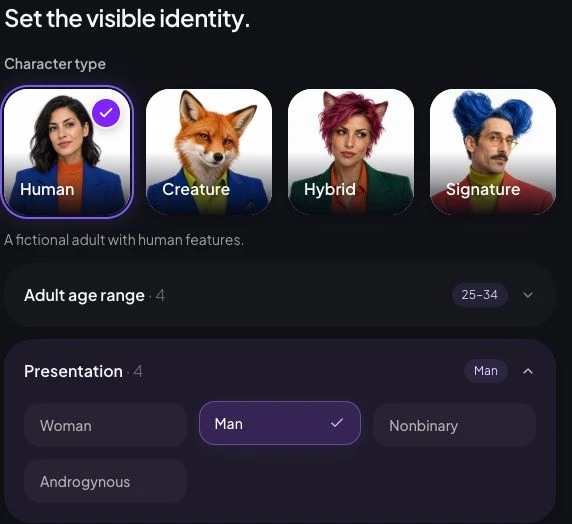
An untested example brief: a fictional 29-year-old adult male home-coffee creator, medium-warm complexion, short dark curls, a soft square face, a silver wristwatch and a navy work shirt. Keep these identity anchors stable. For the first scene, give one natural action: set a clean cup beside an espresso machine in a lived-in kitchen, photographed at eye level in morning window light. This is a suggested input, not a tested result.
- Open Characters and define an adult male presentation, face, hair, body build, wardrobe, and niche. Review the reference before saving.
- Reuse the saved character in a supported photo workflow. Keep the identity anchors fixed while changing one scene or outfit at a time.
- Open the video workflow for a short-video draft. Review movement, anatomy, product details, and audio before use.
- Review saved results in History, choose the strongest variations, then edit and publish through your own social workflow.
Choose settings, inspect and download
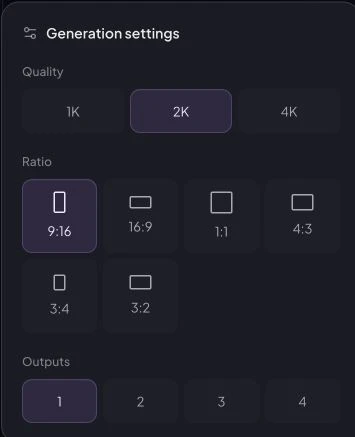
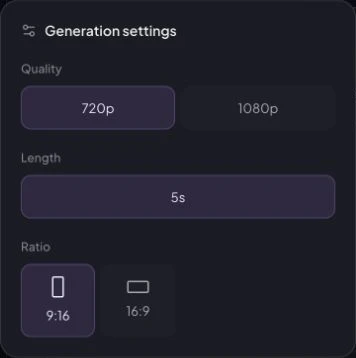
For a photo, choose a saved character, fill Direction, and review Generation settings. A GPT Image 2 example at 2K, 9:16 and one output costs 5 site credits under the current configuration. The menu below demonstrates those controls; it does not show a male output.
For a small motion test, choose Wan 2.6, 720p, five seconds and 9:16. The current silent-video budget is 27 site credits, separate from subscription fees and paid retries. The complete Guided identity budget is 10; the three-stage planning total is 42. Check the form’s quote before submission.
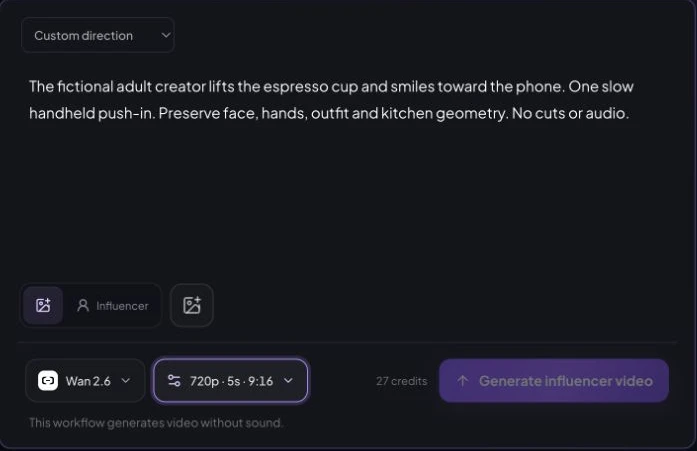
In History, confirm success, inspect the entire clip and download the reviewed result. Check face, hands, wristwatch contact and body proportions before reusing it. The download crop below is historical UI from another fictional task, not this male brief. A traceable male input-to-output record, site debit ledger and retries are unavailable; no paid generation was run to fill those gaps.
For a reusable starting structure, read our AI influencer prompt guide and consistent character guide. Generation and retries use the selected workflow’s credits; opening Studio does not generate content.
Create your male AI influencer →
Plan Content
Measure Engagement
Build Your Profile
Price Your Work
Write Post Copy
Brand Partnerships