


- Build repeatable content pillars; vary the format and scene within them.
- Use industry benchmarks as context, not promises for AI influencers.
- Plan a clear hook, a useful payoff, and one relevant CTA.
- Separate fictional character stories from factual product claims.
7 Content Pillars: Give Every Post a Job
A content pillar is a recurring subject with a clear audience benefit. A format is its container. “Carousel” tells you how the post is delivered; “a practical styling lesson” tells you why somebody would save it.
| Pillar | Value for the audience |
|---|---|
| Lifestyle | Make a recognizable world: routines, wardrobe, locations, and recurring interests. |
| Educational | Give people something useful to save, understand, or try. |
| Trending | Connect a timely format with the character’s established niche. |
| Behind-the-Scenes | Show the human creative process and make the synthetic production transparent. |
| Interactive | Invite a specific choice, question, or contribution that influences the next post. |
| Storytelling | Give followers a reason to return through a continuing fictional narrative. |
| Product/UGC | Explain a product or visualize a use case without inventing a personal testimonial. |
Eli’s connecting idea is city style and everyday stories. His dance, bookshop carousel, and bottle concept should inhabit the same world. For account positioning, use the AI social media influencer strategy guide; here, we focus on posts.
20 AI Influencer Post Ideas You Can Adapt
Start with the audience payoff, then write the scene. These hooks and captions are editable examples. The disclosures are intentional; replace the fictional details with your own original character and use only claims you can support.
Coffee Selfie
Hook: “One cup, one character detail.”
Caption: “Rainy-window mood. Which mug belongs in Eli’s next scene? AI-generated character and setting.”
Make it: Reuse the saved character; change the cafe, crop, and natural hand action. Keep a signature accessory so the face is not the only continuity cue.
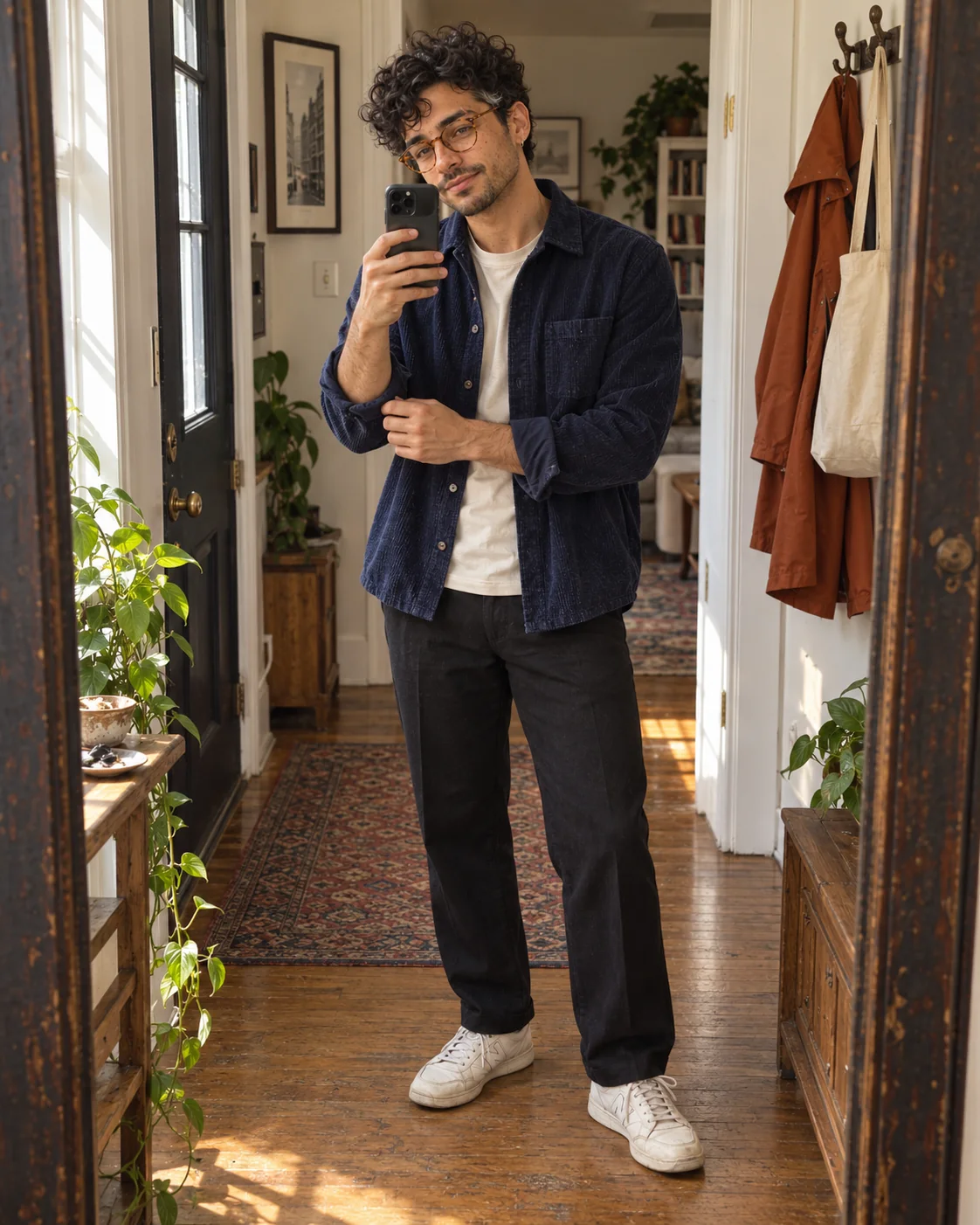
Outfit of the Day
Hook: “One overshirt, two different directions.”
Caption: “Indigo or burgundy for the next look? A fictional wardrobe, styled with AI.”
Make it: Generate a full-length frame with shoes visible. Make one garment the story; check fabric, reflections, fingers, and proportions before cropping.
GRWM: A Three-Shot Routine
Hook: “The detail that makes this character recognizable.”
Caption: “Glasses, jacket, door. Eli’s AI-made morning in three shots.”
Make it: Plan an opening, a detail, and an exit. Generate matching stills, animate selected shots, and edit the sequence; avoid presenting it as a real morning.
Day in My Life—As Fiction
Hook: “A small errand becomes the whole story.”
Caption: “Today’s fictional chapter: market stop, forgotten notebook, unexpected detour.”
Make it: Write three connected beats before generating. Preserve time, wardrobe, and props across locations, then add a clear virtual-character disclosure.
Eli · fictional virtual creatorAI-generated example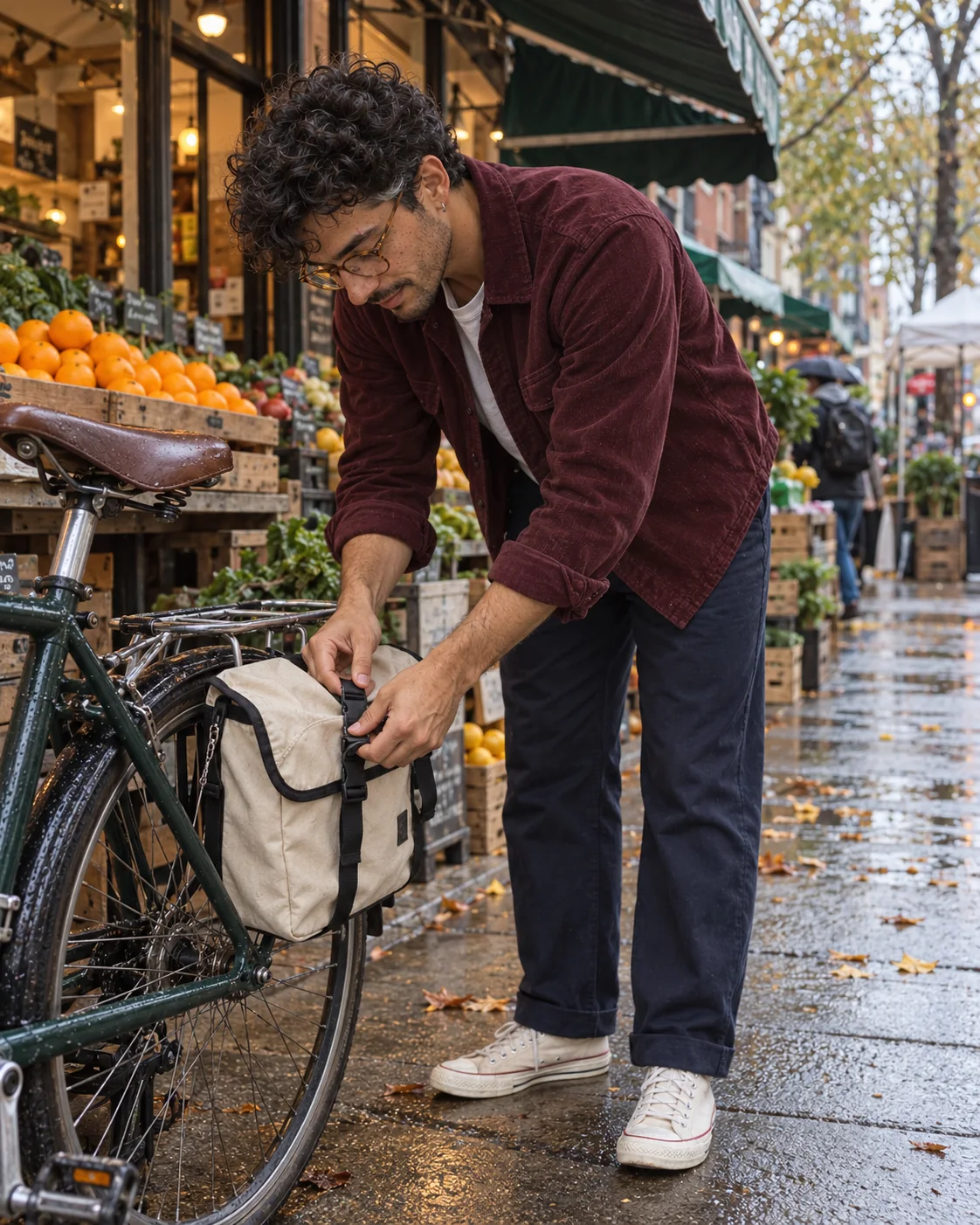
Mini-vlogOriginal AI-generated post concept. Dance Videos
Hook: “Same character. A new rhythm.”
Caption: “Eli tries this choreography in an AI-generated dance scene. Which style next?”
Make it: Use a full-body character image and a dance reference you may use. Transfer motion, inspect feet and identity, and add separately licensed audio. Our example below is a storyboard still, not a video result.
Eli · fictional virtual creatorAI-generated example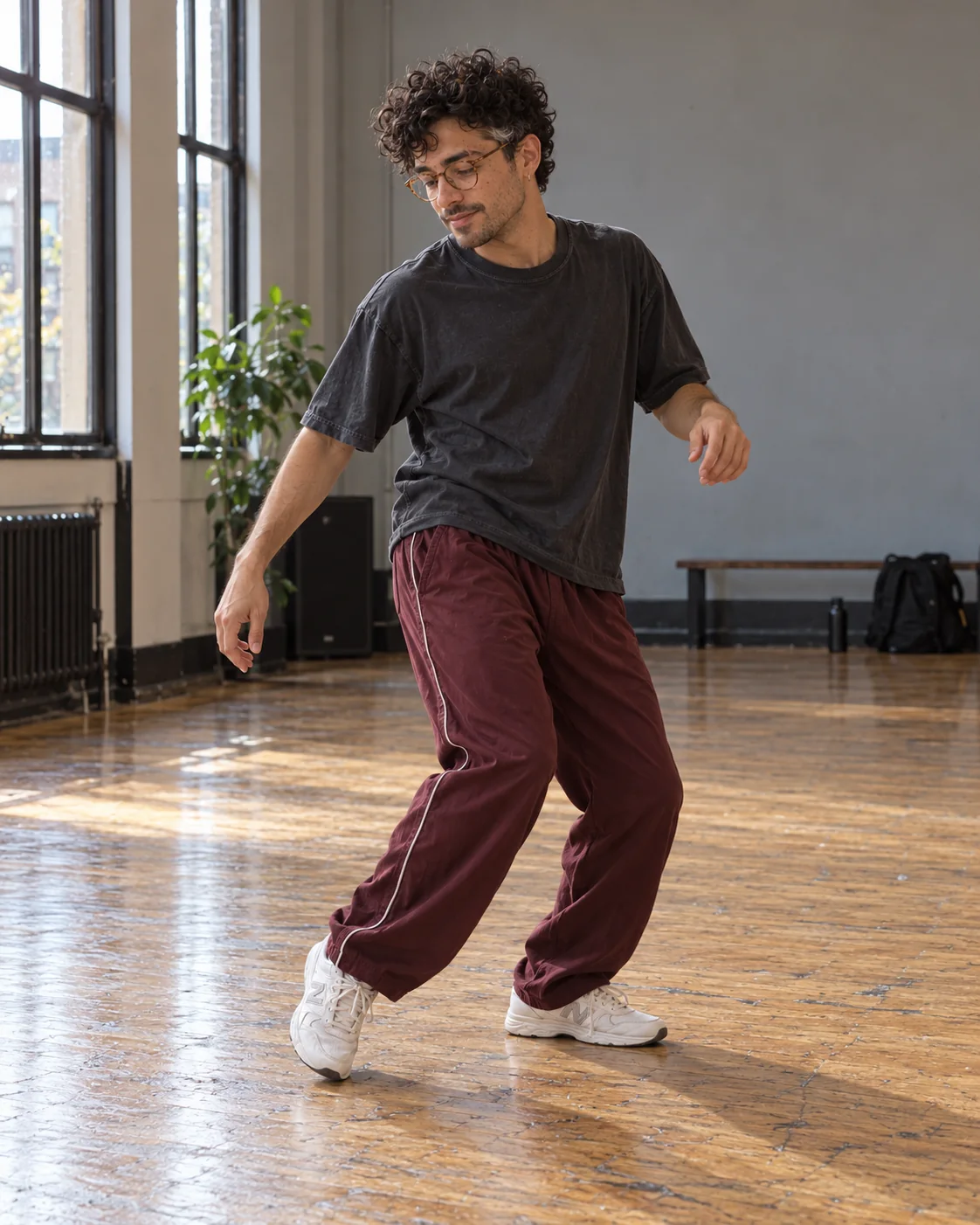
Motion-transfer videoStatic dance concept; not a generated video result. Photo Carousels With a Small Story
Hook: “Wide, medium, detail: three frames that tell more.”
Caption: “A fictional bookshop scene, told through three AI-generated viewpoints. Save the framing recipe.”
Make it: Keep the outfit, light, location, and prop fixed. Change framing deliberately; arrange the strongest image first and a useful takeaway last.

01 · Establish the place 
02 · Show the action 
03 · Add a detail One fictional bookshop sequence, generated as three separate images. Swipe through the frames on mobile. Identity, outfit, book, and light are continuity checks—not performance evidence.
Product Demos Without Fake Testimonials
Hook: “Show what opens, moves, or fits.”
Caption: “AI-generated product visualization: a reusable bottle opening sequence. No real-use test is represented.”
Make it: Use authorized product references, show one observable action, and inspect shape, contact, labels, and cap mechanics. Separate verified specifications from opinions.
Eli · fictional virtual creatorAI-generated example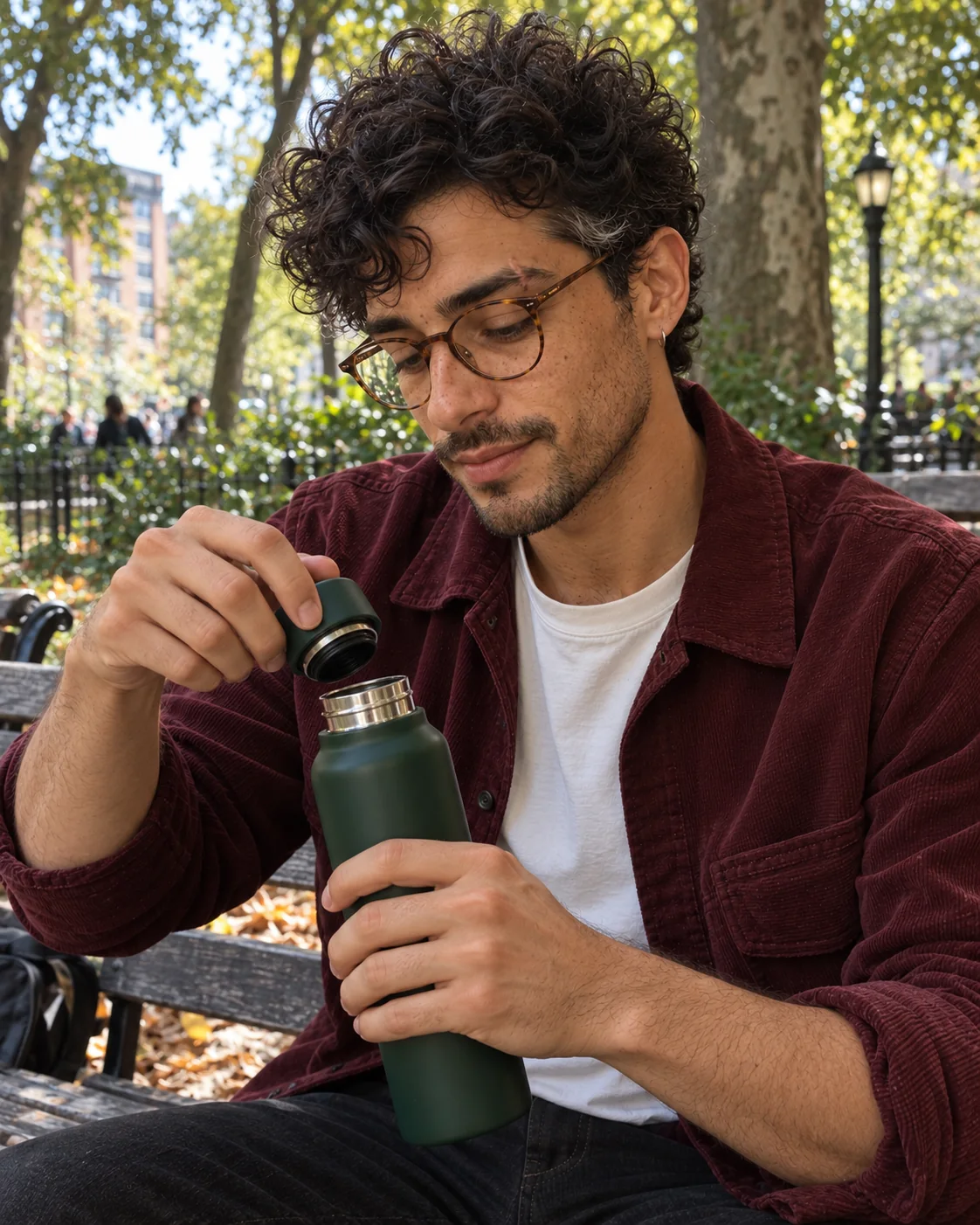
Close-up sequenceFictional product visualization, not a testimonial. A One-Minute Niche Tutorial
Hook: “Fix one small problem before the video ends.”
Caption: “Three framing choices for a stronger outfit photo. Presented by our virtual creator.”
Make it: Teach a narrow, sourced skill in three steps. Use the character as the presenter; demonstrate the actual steps rather than generating fake software screenshots.
Myth Versus Fact
Hook: “A familiar claim needs a closer look.”
Caption: “Myth: a better format guarantees better results. Fact: topic, audience, and execution still matter.”
Make it: Choose one defensible correction, link its source, and separate the evidence from your interpretation. Avoid universal claims based on a single benchmark.
Behind the Scenes of a Virtual Creator
Hook: “The character is virtual. These decisions are deliberate.”
Caption: “How we planned Eli’s next scene: one prop, one action, one consistent identity. AI-generated illustration.”
Make it: Show your actual planning notes or genuine workflow captures. Pair them with an explicitly illustrative creator image, never a fabricated production screenshot.
Eli · fictional virtual creatorAI-generated example
Photo plus process notesOriginal AI-generated post concept. Prompt to Final Frame
Hook: “What changed between the brief and the image?”
Caption: “From scene brief to reviewed frame: the choices that kept Eli recognizable.”
Make it: Publish the actual prompt and corresponding output only when you have them. Annotate a real correction; do not manufacture a before-and-after failure.
This or That
Hook: “You choose the next scene.”
Caption: “Bookshop afternoon or market morning? Vote for the next fictional chapter.”
Make it: Make two alternatives using the same character. Ask one easy question and follow through in the next post; avoid implying votes already exist.
Ask the Character a Question
Hook: “What would you ask a virtual creator?”
Caption: “Ask about the character’s fictional world—or how the team makes it.”
Make it: Collect real audience questions and answer transparently as the creator team. Label imagined backstory; do not fabricate a viewer question or conversation.
The Character’s Origin Story
Hook: “Why these glasses, this color, this world?”
Caption: “Meet Eli: an original virtual character built around city walks, useful style, and small stories.”
Make it: Explain three intentional design choices and the niche they support. Give the character a point of view rather than inventing real credentials.
A Recurring Micro-Series
Hook: “The notebook went missing again.”
Caption: “Fictional episode 02: Eli retraces the market route. Where should the next chapter go?”
Make it: Repeat a recognizable situation with a new obstacle. Keep a continuity sheet for props and unresolved details so episodes reward returning viewers.
A Week in Five Frames
Hook: “Five scenes. One coherent world.”
Caption: “This week in Eli’s AI-generated story: the places, looks, and little details worth keeping.”
Make it: Select published scenes that form a narrative. Add a reflection or question instead of recycling the same selfie with a new date.
A Niche News Explainer
Hook: “What changed—and why should your audience care?”
Caption: “One useful update, with the original source linked. Presented by a virtual character.”
Make it: Verify the news and date, then explain a practical implication. Never generate a realistic image that could be mistaken for documentary evidence of the event.
A Trend Remixed for Your Niche
Hook: “Use the format. Keep your own character.”
Caption: “A familiar format, reworked for Eli’s fictional city-style world.”
Make it: Borrow the structure of a trend, not another creator’s identity or copyrighted footage. Check audio rights and avoid attaching the character to sensitive real events.
A Community Creative Challenge
Hook: “Give Eli one constraint for the next scene.”
Caption: “One color, one location, one object: suggest a combination for our next AI scene.”
Make it: Ask for manageable inputs and credit contributors with permission. Publish an actual response later; keep hypothetical participation clearly hypothetical.
A Product-Styled Editorial Scene
Hook: “Start with a use case, not a package beside a face.”
Caption: “Fictional AI styling concept. If this becomes a paid partnership, the commercial relationship will be disclosed.”
Make it: Design a believable action and check the real product reference. Use a clear ad disclosure when applicable; a synthetic character cannot honestly claim personal results.
What Content Formats Work Best?
Use carousels for sequences and reference value, short video for movement and explanation, and single images for a strong visual moment. No format is a substitute for a relevant idea.
Instagram engagement by post format
Socialinsider · Q3 2026 · average engagement rate by followers
The carousel–Reels gap is only 0.02 percentage points. That does not prove a format caused better engagement. A bookshop sequence suits a carousel; choreography needs video. Evaluate each against its actual objective.
Video formats marketers report as high-ROI
HubSpot · 2026 · percentage of marketers reporting each format
Short-form is a useful starting experiment, not a reason to simulate a live broadcast. A virtual presenter still needs an honest production setup, rights-cleared audio, and clear labeling.
What to Post on Each Platform
Adapt the presentation to the platform rather than exporting one identical post everywhere. The choices below are editorial starting points, not algorithm guarantees or universal length rules.
| Platform | Good starting content | Adaptation | Watch |
|---|---|---|---|
| Recognizable photos, useful carousels, Reels | A strong cover, coherent visual identity, and a caption worth saving | Saves, shares, profile actions; state the engagement denominator | |
| TikTok | Character-led short stories, movement, niche trends | Establish the situation quickly; use relevant sound and disclose realistic AI content | Watch time, completion, meaningful comments |
| YouTube Shorts | Self-contained tutorials and recurring episodes | Deliver a clear payoff; add readable subtitles and required synthetic-content disclosure | Retention and subscribers attributed to the video |
| X | Visual observations, process threads, questions | Make the accompanying text useful; explain the fictional context | Relevant replies, profile visits, qualified clicks |
A 30-Day AI Influencer Content Calendar
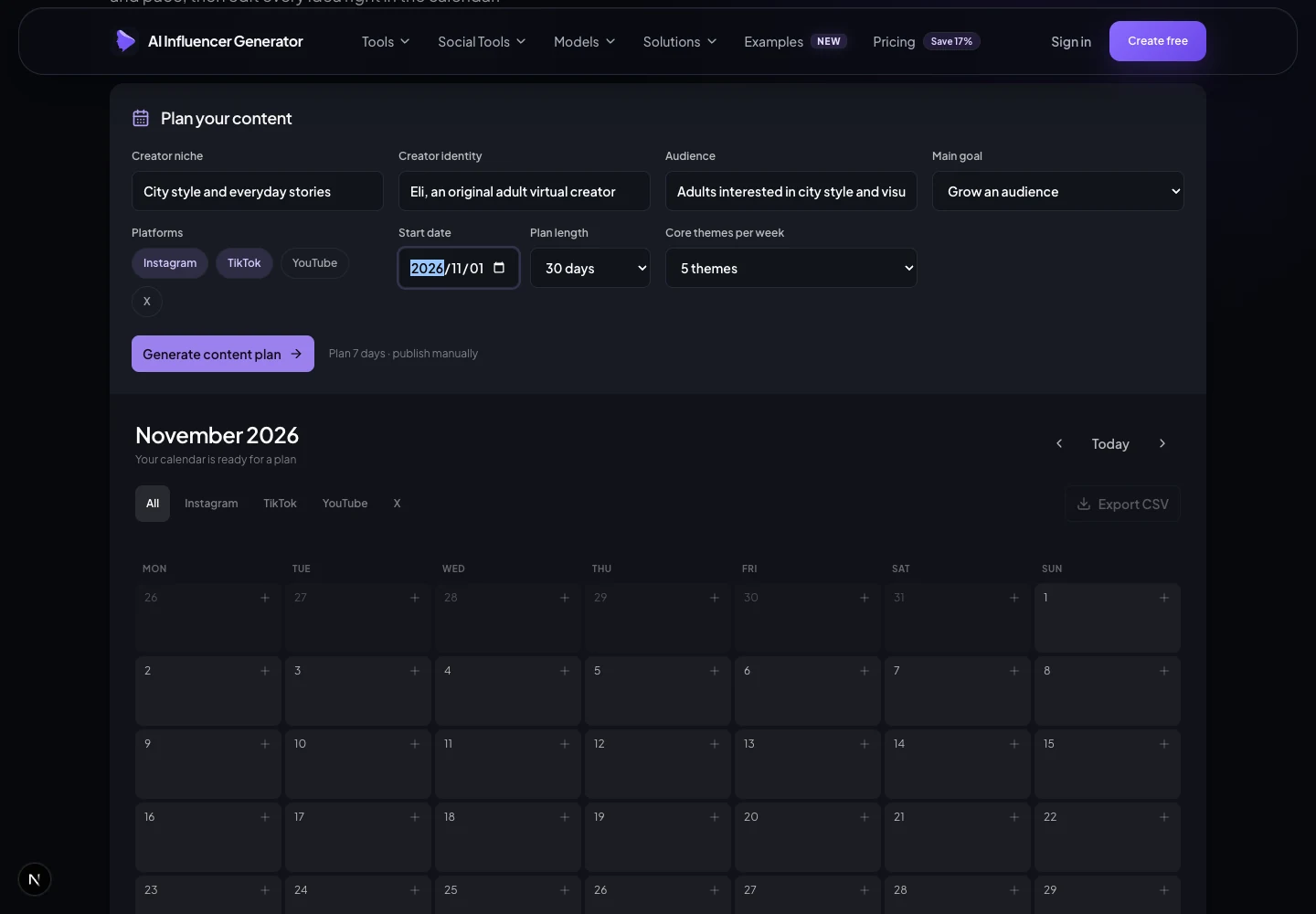
Use this as thirty publishing slots, not a mandatory daily schedule. The sample dates are November 1–30, 2026. Move posts, insert rest days, and replace weak ideas before increasing volume.
Suggested seven-pillar content mix
Editorial recommendation · 30 proposed posts · not survey data
- Lifestyle20% · 6 posts
- Educational20% · 6 posts
- Trending10% · 3 posts
- Behind-the-Scenes10% · 3 posts
- Interactive10% · 3 posts
- Storytelling20% · 6 posts
- Product/UGC10% · 3 posts
| Date | Theme / pillar | Type | Platform | Goal | CTA |
|---|---|---|---|---|---|
| Coffee selfie | Photo | Recognition | Choose the next mug color | ||
| Three framing tips | Carousel | Saves | Save the framing checklist | ||
| Indigo outfit | Photo | Identity | Pick an alternate jacket | ||
| Meet Eli | Photo essay | X | Context | Read the character introduction | |
| Rights-cleared dance | Short video | TikTok | Discovery | Suggest a dance style | |
| Character brief to scene | Carousel | Trust | Ask about the process | ||
| Myth versus fact | Carousel | Understanding | Check the linked source | ||
| Three-shot GRWM | Short video | YouTube Shorts | Completion | Choose the final look | |
| The missing notebook, part 1 | Short video | TikTok | Return visits | Predict the next stop | |
| Bookshop or market? | Poll | X | Participation | Vote on the next location | |
| Bottle-opening concept | Short video | Instagram Reels | Product clarity | Ask for a detail view | |
| Wide, medium, detail | Carousel | Saves | Try the three-frame recipe | ||
| Market morning scene | Photo | Familiarity | Choose a prop for next time | ||
| The missing notebook, part 2 | Short video | TikTok | Series continuity | Watch the previous chapter | |
| A niche trend remix | Short video | Instagram Reels | Discovery | Suggest a niche twist | |
| What we checked before export | Carousel | Trust | Save the quality checklist | ||
| One useful niche update | Thread | X | Understanding | Read the original source | |
| Another outfit, same identity | Photo | Consistency | Choose one signature detail | ||
| Five-frame story recap | Carousel | Context | Pick a favorite chapter | ||
| Questions for the creator team | Question post | Conversation | Leave one production question | ||
| Product-styled concept | Photo | Creative range | Ask how the concept was made | ||
| One-minute framing lesson | Short video | YouTube Shorts | Practical value | Try one framing change | |
| A quieter cafe scene | Photo | Character depth | Choose the next setting | ||
| The notebook returns | Short video | TikTok | Story payoff | Suggest the next small problem | |
| Trend with a different opening | Short video | TikTok | Creative testing | Compare the two openings | |
| Actual prompt and reviewed frame | Carousel | Transparency | Ask about one scene choice | ||
| Three mistakes to avoid | Carousel | Saves | Save before making the next post | ||
| Product detail sequence | Short video | YouTube Shorts | Product clarity | Request a different angle | |
| Next month’s fictional chapter | Photo essay | Anticipation | Choose a story direction | ||
| Community constraint challenge | Question post | X | Ideas | Suggest color, place, and object |
Compare similar posts over the same window. If saves do not lead to profile interest, improve the bridge to the character’s story. Test one major variable at a time. For a sustainable schedule with production and review days, use our 30-day AI influencer content plan with daily briefs and templates.
Adapt the topics to your niche, then edit the calendar before producing assets.
How to Create These Posts With AI Influencer Generator
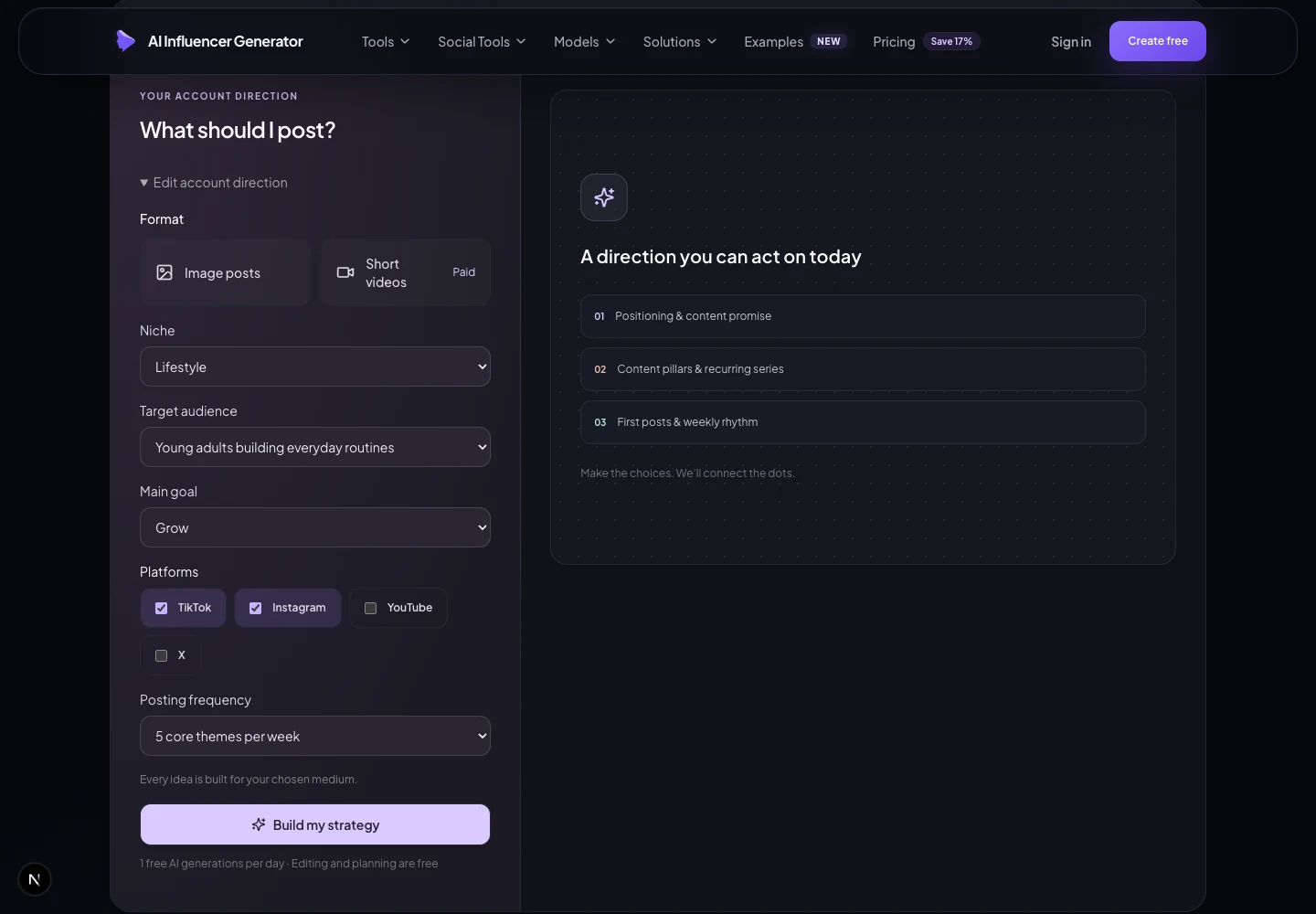
Separate identity, planning, production, and publishing. Our editorial example images are not outputs from the screenshots below.
Create an original adult character
Open Characters, define the appearance and niche, and save the identity after reviewing the face and proportions.
Plan the account and the next batch
Use the AI Influencer Strategy Generator for positioning and pillars, then the Content Calendar Generator to organize and edit the publishing plan.
Make stills and sequences
Reuse the character in the photo workflow or a suitable template. For slides, open the AI Carousel Generator. Vary action, composition, and setting.
Choose the appropriate video workflow
Use AI Video for a scene-based clip and Motion Transfer when a permitted reference supplies the movement. Check the displayed plan requirement and credit quote before generating; video access is not promised free.
Write, review, and publish
Draft the hook, payoff, disclosure, and CTA. Review anatomy, continuity, facts, rights, and audio; export and publish through the intended platform. Planning does not guarantee automatic publishing.
Common Mistakes: Repetition, Claims, and Disclosure
Consistency means a recognizable character, not thirty near-identical pictures. Change the audience value, setting, camera distance, action, and emotional beat. Keep a continuity sheet so variation does not become a different person.
Avoid unsupported engagement targets, invented comments, and captions implying real experiences. “I used this for a month” is not an honest claim for a fictional character that never used the product. Attribute genuine human testing accurately.
AI disclosure and advertising disclosure answer different questions. Clearly identify the virtual creator; use platform labeling where required. YouTube requires disclosure of realistic AI-generated or altered scenes. Check TikTok’s current AI-content labeling guidance and the upload controls on each platform before release.
For U.S.-facing endorsements, the FTC says material brand relationships must be obvious, including paid and gifted relationships. Put the disclosure where people will see it, not behind a vague biography note. A label does not make an unsupported product claim truthful.
Frequently Asked Questions
What should an AI influencer post first?
Start with a disclosed character introduction, a recognizable lifestyle scene, and a useful niche post. Together they establish the identity, the fictional world, and a reason to follow.
How often should an AI influencer post?
There is no universal daily requirement. Choose a sustainable schedule with time for quality checks and replies. The calendar offers thirty publishing slots; move posts or add rest days when needed.
Are Reels always better than photos or carousels?
No. Socialinsider’s Q3 2026 follower-based benchmarks were 0.50% for carousels, 0.48% for Reels, and 0.35% for images. These industry figures do not predict an individual AI influencer’s results. Match the format to the story.
How can I keep the same character across many posts?
Reuse the saved character, approved references, and an identity sheet. Vary the scene while checking face structure, hair, accessories, proportions, and hands before publishing.
What is a good engagement rate for an AI influencer?
These studies establish no universal AI-influencer benchmark. Compare similar posts using the same formula: follower-based engagement differs from engagement divided by reach or views.
How much of the content should promote products?
Our suggested allocation is three product concepts in thirty posts, or 10%. This is an editorial starting point, not a research finding or proven optimum. Adjust to audience interest and commercial purpose.
Do I need to disclose that the influencer is AI-generated?
Identify the virtual creator and follow current platform rules. YouTube requires disclosure of realistic synthetic content. AI labels and advertising disclosures are separate; paid, gifted, or affiliate relationships may need an additional notice.
Can a virtual influencer review a product?
Present verified information or an explicitly fictional visualization, without invented personal use or results. Attribute a human operator’s genuine test accurately rather than assigning that experience to the character.
Generate Your Content Strategy →
Need inspiration for distinctive positioning? Study the top AI influencers on Instagram, then build an original identity rather than copying theirs.
Sources and Editorial Method
Researched October 18, 2026. Charts cite original research; the pillar mix and calendar are recommendations. Images illustrate a fictional character. Product screenshots show the interface without submitting generation.
- Socialinsider: 2026 Instagram Organic Benchmarks — Q3 update and follower-based definition; quarterly sample not separately specified.
- HubSpot: 2026 marketing statistics and State of Marketing — reported high-ROI formats, not return percentages.
- HubSpot: 2026 Social Media Marketing Report — separate 1,100+ professional survey; not the denominator substituted for the ROI chart.
- YouTube synthetic-content disclosure; TikTok AI-generated-content guidance; FTC influencer disclosures.
Plan Content
Measure Engagement
Build Your Profile
Price Your Work
Write Post Copy
Brand Partnerships