
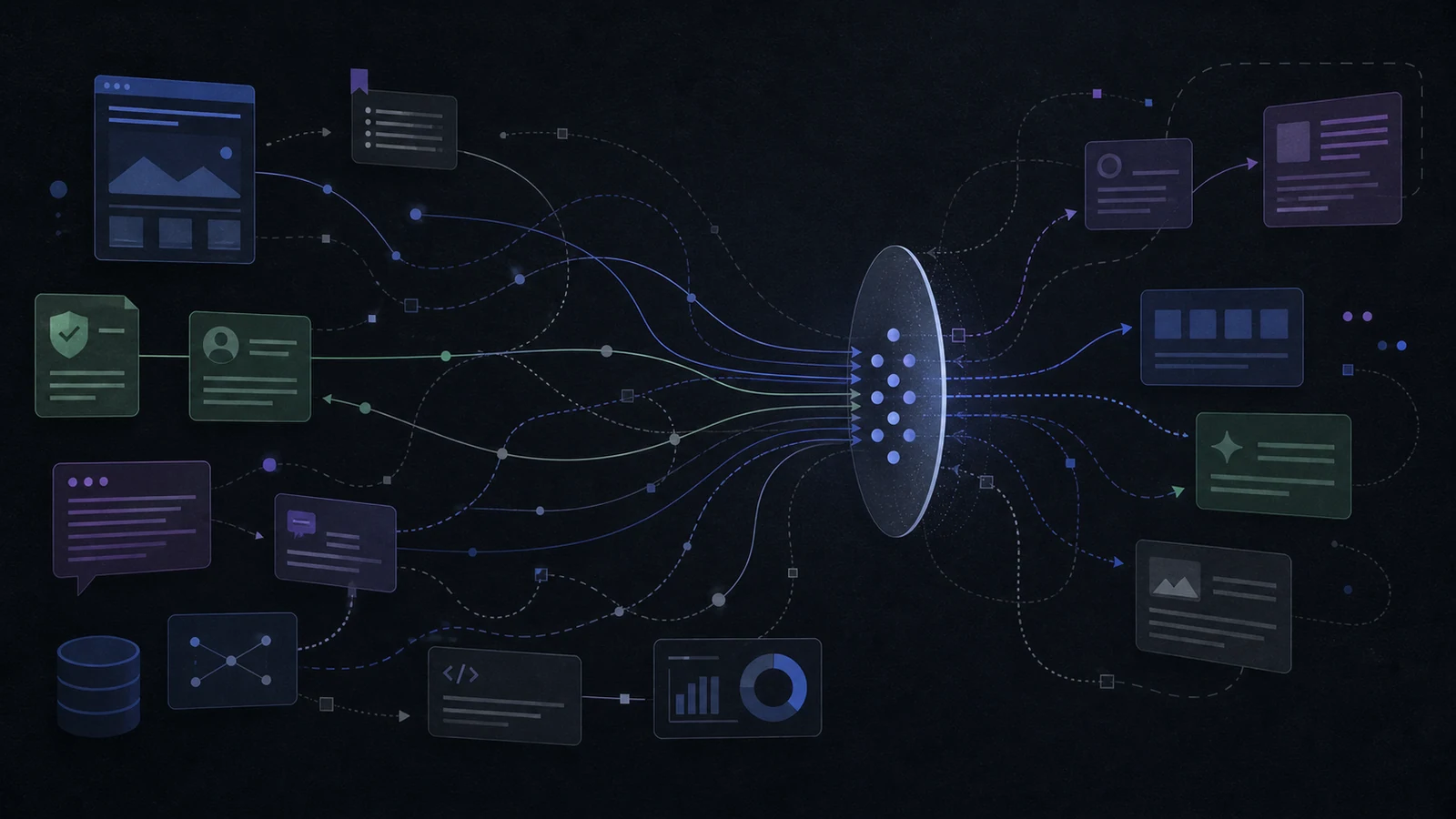
Brand visibility in generative AI search results may be influenced by how clearly, consistently, and credibly a brand is represented across sources that AI systems can access and interpret. Unlike traditional search, where a page can rank as a blue link, generative AI results often summarize, compare, recommend, or cite brands inside an answer. This guide explains what factors influence brand visibility in generative ai search results and how to build a practical generative ai branding strategy without chasing shortcuts.
What makes a brand visible in generative AI search results?
A brand may become more visible in generative AI search results when accessible sources clearly connect it to a topic, category, product, service, location, audience, or problem. That clarity may be supported by accurate information across your website, independent mentions, structured data, reviews, expert content, and the broader language people use when discussing your brand online.
Traditional SEO still matters, but it is no longer the whole picture. Generative AI search tools can synthesize information and identify entities instead of only listing pages. Retrieval and selection methods vary by system, and no single public formula explains which brands will appear in a direct answer. If your brand is unclear, inconsistently described, thinly documented, or absent from accessible sources, a system may have less usable context for mentioning it.
The practical goal is not to “trick” AI into naming your company. It is to make your brand easy to understand, verify, and associate with the right customer needs. Strong generative AI branding starts with clarity: what you do, who you serve, what makes you different, where you operate, and why a user should trust you.
How generative AI search differs from traditional search
Generative AI search changes the visibility game because it compresses discovery into an answer. A user may ask for “best accounting software for small agencies,” “how to choose a family lawyer,” or “brands like X but more affordable,” and the AI may respond with a curated explanation rather than a list of links.
That means your brand can appear in several ways:
- As a named recommendation in an AI-generated answer
- As a cited source supporting part of the response
- As a comparison point against competitors
- As an example of a product, service, method, or category
- As background information the AI uses without directly naming you
- As a brand omitted from the answer because signals are too weak or unclear
This is why generative AI visibility is broader than ranking a single keyword. It involves entity recognition, topical authority, brand trust, content accessibility, and the quality of the web ecosystem around your name.
In traditional search, a brand might win traffic by targeting a keyword with one excellent page. In AI search, that page still helps, but the system may also consider your product pages, help center, schema, reviews, author bios, comparison pages, news mentions, directory listings, social references, and how consistently others describe you.
Owned clarity
Specific pages, consistent entity details, useful answers
Third-party corroboration
Independent descriptions and sources that can be checked
Technical access
Public, crawlable, indexable content and accurate markup
Measurement
Repeatable prompt samples, citations, context, and change logs
Brand entity clarity is the foundation
AI systems need enough accessible context to distinguish your brand as an entity. An entity is a recognizable thing: a company, product, person, location, concept, or organization. If your brand name is generic, overlaps with other businesses, or is inconsistently written, it becomes harder for AI systems to connect the right information to the right brand.
Entity clarity begins on your own website. Your homepage, about page, contact page, product pages, and metadata should describe your brand in consistent language. If you are a regional service business, say where you operate. If you are a software company, name the category you belong to. If you serve a specialized audience, make that audience clear instead of relying on vague statements like “solutions for modern teams.”
Helpful entity signals include:
- A consistent brand name across your website and third-party profiles
- A clear description of your product, service, or organization type
- Consistent location details, if location matters
- Founder, leadership, or team information when relevant and appropriate
- Product names that are not confused with unrelated terms
- Links between your website, social profiles, directories, and trusted listings
- An about page that explains what the brand does in plain language
A common mistake is assuming clever brand messaging is enough. Creative copy can be valuable, but literal clarity can make the page easier for people and machines to interpret. If your homepage says you “unlock human potential through adaptive transformation,” but never says you provide leadership coaching, workplace training, or HR consulting, both users and AI systems may struggle to categorize you.
Topical authority shapes whether AI sees you as relevant
Across observed AI-search experiences, clear topical associations may make a source or brand easier to retrieve and summarize, but this is not a universal ranking rule. If your brand wants visibility for a category, it needs enough depth and consistency around that category to be seen as relevant.
Topical authority is built through a connected body of content, not isolated posts. A cybersecurity company, for example, may need clear pages on services, industries served, compliance concerns, threat types, implementation processes, and buyer questions. A wellness brand may need content explaining ingredients, use cases, safety considerations, lifestyle fit, and comparisons within its category.
The best content ecosystems answer real questions at different stages of the decision journey:
- Problem awareness: The user is trying to understand an issue.
- Solution exploration: The user is comparing possible approaches.
- Category evaluation: The user is learning what good providers or products have in common.
- Brand comparison: The user is deciding which option fits best.
- Implementation: The user wants guidance after choosing a product or service.
For generative AI branding, each stage matters. AI systems often respond to nuanced prompts, not just short keywords. A user might ask, “What should a midsize ecommerce brand look for in a returns management platform?” If your site has rich, practical content around ecommerce operations, returns workflows, integrations, customer experience, and cost considerations, your brand has more contextual relevance than a site with only a sales page.
Content quality influences trust and extractability
Generative AI search relies heavily on content that is easy to interpret. High-quality content does more than use the right keyword. It explains concepts clearly, gives context, defines terms, answers likely follow-up questions, and avoids vague claims.
AI-friendly content is usually human-friendly content. It has descriptive headings, direct answers, concise explanations, examples, and enough detail to be useful. It also avoids burying important facts behind slogans, images, scripts, or gated assets that search systems may not fully access.
A strong page should make it easy to extract answers such as:
- What does the brand offer?
- Who is it for?
- What problem does it solve?
- How does the product or service work?
- What features, benefits, or use cases are clearly supported?
- What locations, industries, or customer types are relevant?
- What makes the brand distinct without relying on unsupported hype?
This does not mean every page should sound robotic. The goal is to combine clarity with voice. A brand can be warm, bold, technical, playful, or premium while still making its core information unmistakable.
Why do third-party mentions matter so much?
Third-party mentions can matter because AI-search answers may draw on sources beyond your own website. Independent descriptions can corroborate what a brand says about itself, although no single mention guarantees inclusion. Your site tells AI what you say about yourself; independent sources help confirm whether others describe you in similar ways.
These mentions can come from many places: industry publications, review platforms, partner pages, podcast transcripts, event pages, directories, comparison articles, professional associations, local listings, app marketplaces, and credible media coverage. The strongest mentions are specific. A sentence that connects your brand to a category, audience, product type, location, or use case is more valuable than a vague name drop.
Not all third-party references carry the same weight. A thoughtful review on a respected industry site may help more than a low-quality directory listing. A partner page that accurately describes your integration may be more useful than a generic backlink. A trade publication explaining your approach may create stronger association than a press release repeated across thin syndication sites.
To improve this signal, focus on earning mentions that clarify your brand:
- Contribute expert commentary to relevant industry conversations.
- Build partner pages that accurately describe shared value.
- Keep directory and marketplace profiles complete and consistent.
- Encourage customers to use specific, honest language in reviews.
- Publish original resources worth citing.
- Make your product category and use cases clear in public profiles.
The aim is not simply link volume. It is corroboration. Aligned descriptions across credible sources can reduce ambiguity around a brand identity, but they do not guarantee that an AI system will cite or recommend it.
Structured data helps machines understand your brand
Structured data gives search systems explicit clues about the meaning of your content. It can identify your organization, products, reviews, articles, events, frequently asked questions, local business details, and other important elements. While structured data does not guarantee visibility, it reduces ambiguity.
For brands, organization schema and local business schema can be especially useful when implemented correctly. Product schema can help clarify product names, categories, descriptions, and availability details. Article schema can support editorial content. Breadcrumb schema can help explain site hierarchy.
Structured data should match the visible content on the page. If markup claims something that users cannot verify on the page itself, it can create confusion and undermine trust. Keep it accurate, current, and aligned with your real offerings.
A practical structured data checklist includes:
- Use organization or local business markup where appropriate.
- Include the official brand name and website.
- Connect verified social and profile links when relevant.
- Mark up products, services, articles, and reviews only when the page supports them.
- Keep names, addresses, phone numbers, and descriptions consistent.
- Validate markup after major site changes.
- Avoid using schema to make claims that are not visible or supportable.
Structured data is best viewed as reinforcement. It will not compensate for weak content or poor reputation, but it can help AI systems interpret strong content more accurately.
Reviews and sentiment create practical confidence signals
Reviews influence generative AI visibility because they provide language from customers, clients, and users. That language often reveals what people associate with a brand: speed, support, quality, ease of use, reliability, pricing, outcomes, or pain points.
AI systems may use review content to understand how a brand is perceived, especially for local businesses, software products, ecommerce brands, hospitality, professional services, and other review-heavy categories. A brand with many detailed, consistent reviews has a richer public footprint than a brand with sparse or generic feedback.
The quality of review content matters. Reviews that mention specific services, products, staff interactions, locations, or use cases create clearer associations than reviews that only say “great company.” Negative reviews are not automatically fatal, but patterns can shape perception. If many people mention the same complaint, that pattern can become part of how the brand is understood.
Brands can improve this area ethically by:
- Asking real customers for honest reviews after meaningful interactions
- Making review requests simple and timely
- Responding professionally to both positive and negative feedback
- Correcting operational issues that appear repeatedly in reviews
- Avoiding fake reviews, incentives that distort feedback, or copied review language
- Monitoring how customers naturally describe the brand
Reviews are not just reputation assets. They are language assets. They show how the market talks about you, and that language can influence what AI systems believe you are known for.
Authority, expertise, and credibility support inclusion
Generative AI search results are more likely to mention brands that appear credible within the context of the query. Credibility can come from expertise, transparent authorship, strong documentation, professional experience, original research, customer education, or recognition from relevant sources.
For informational content, author credibility can matter. If your site publishes advice on finance, health, law, cybersecurity, or other high-stakes subjects, anonymous or thin content may struggle to earn trust. Clear author bios, editorial standards, review processes, and evidence-based explanations help users and systems evaluate reliability.
For product and service brands, credibility can also come from documentation. Detailed help centers, implementation guides, security pages, case studies, product specifications, methodology explanations, and transparent policies all help establish seriousness. The more complex or risky the buying decision, the more important this becomes.
Credibility signals may include:
- Named authors or contributors where appropriate
- Clear company information and contact paths
- Evidence-based claims rather than exaggerated promises
- Detailed product or service documentation
- Transparent policies, terms, and support information
- Mentions from respected industry sources
- Clear explanations of methods, processes, or standards
The key is to support claims. If a brand says it is “trusted,” explain by whom if that information is available and appropriate. If a product is “easy to implement,” provide the setup steps or onboarding process. If a service is “specialized,” show the specific industries, problems, or methods involved.
Freshness and consistency affect AI confidence
Generative AI systems can be sensitive to outdated or conflicting information. If your website says one thing, your directory profiles say another, and old articles describe a product you no longer offer, AI systems may have trouble determining what is true.
Freshness does not mean changing pages for the sake of activity. It means keeping important information accurate. Product names, service areas, pricing pages, leadership details, office locations, support policies, integrations, and compliance information should be updated when they change.
Consistency is especially important for brands with multiple locations, merged companies, renamed products, or evolving positioning. If your brand has rebranded, make the connection explicit. If an old product became part of a larger platform, explain that clearly. If you serve a new audience, update both core pages and public profiles so the signal is reinforced.
A simple maintenance rhythm can help:
- Review core brand pages quarterly or after major business changes.
- Check high-visibility third-party profiles for outdated descriptions.
- Update product and service pages when offerings change.
- Refresh important guides when advice, terminology, or processes evolve.
- Remove or redirect obsolete pages that create confusion.
- Keep internal links aligned with current positioning.
Stable, consistent brand information may reduce ambiguity when AI systems retrieve and summarize sources.
Technical accessibility makes content usable
Even excellent content can underperform if search systems cannot access or interpret it. Generative AI search depends on discoverable, crawlable, and indexable information. Technical SEO, therefore, remains part of AI visibility.
Important content should not exist only inside images, videos without transcripts, gated PDFs, interactive tools, or JavaScript elements that are difficult to render. Those formats can still be useful, but the essential information should also appear in accessible HTML text. Clear site architecture, internal linking, fast pages, and clean metadata all support discoverability.
Technical factors that influence AI visibility include:
- Crawlable pages with important information in text form
- Logical internal links between related topics
- Descriptive title tags and meta descriptions
- Canonical tags that avoid duplicate confusion
- XML sitemaps that reflect current important pages
- Fast, mobile-friendly page experiences
- Accessible video transcripts and image alt text
- Clear navigation for products, services, resources, and locations
Technical quality does not create authority by itself, but it lets authority be found. If a search crawler cannot reliably access your content, that content may be unavailable for retrieval; access alone does not guarantee indexing, citation, or inclusion.
Homepage and brand overview
Clear category, audience, and primary offer
Product and tool pages
Capabilities, inputs, outputs, limits
Resources
Guides, articles, comparisons
Help
Setup, workflows, troubleshooting
Evidence pages
Examples, policies, verifiable claims
Cross-link pages where the relationship helps the reader verify a claim or complete the next task. More links are not automatically better.
Competitive context influences who gets named
Generative AI answers often compare options. Your brand’s visibility depends not only on your own signals but also on the strength and clarity of competing brands. Competitors with clearer documentation and corroborating sources may be easier to identify in some answer contexts, but reviews and mentions are not confirmed universal ranking factors.
This makes competitive analysis important. Search your category the way a buyer would ask an AI assistant. Look beyond head terms and test prompts involving use cases, budgets, industries, locations, integrations, alternatives, and decision criteria. Then study which brands appear and why.
Useful prompt patterns for research include:
- “What are the best tools for [specific use case]?”
- “Which [service type] is good for [audience]?”
- “Compare [your brand] with [competitor].”
- “What are alternatives to [competitor] for [need]?”
- “What should I look for in a [category] provider?”
- “Which companies specialize in [niche problem]?”
Do not treat AI answers as fixed rankings. Results can vary by platform, prompt phrasing, location, personalization, and available sources. Instead, look for patterns. If the same competitors appear repeatedly, they likely have stronger category associations or more accessible proof.
How can brands improve generative AI branding?
Brands can improve generative AI branding by making their identity, expertise, and relevance easier to verify across owned and third-party sources. The best approach combines SEO fundamentals, brand strategy, digital PR, content quality, technical accessibility, and reputation management.
Start with your positioning. Before creating more content, define the associations you want AI systems and people to understand. A vague brand cannot build precise visibility. Write down your category, primary audience, key use cases, service areas, differentiators, and proof points. Then audit whether your website and public footprint actually communicate those points.
A practical improvement plan looks like this:
- Clarify your brand description. Create a plain-language explanation of what you do, who you help, and where you fit in the market.
- Strengthen core pages. Update homepage, about page, product pages, service pages, and contact information so they are specific and consistent.
- Build topic clusters. Publish connected resources around buyer questions, use cases, comparisons, implementation, and common objections.
- Add structured data. Use accurate schema to identify your organization, products, articles, and relevant page types.
- Improve third-party profiles. Make sure directories, marketplaces, partner listings, and review sites describe your brand consistently.
- Earn credible mentions. Pursue interviews, expert commentary, partnerships, guest contributions, and original research that relevant sources may cite.
- Monitor reviews and sentiment. Encourage honest reviews and respond in a way that reinforces trust.
- Audit AI results regularly. Test prompts, note where your brand appears or is missing, and trace likely reasons.
- Maintain accuracy. Update pages and profiles whenever offerings, locations, or positioning change.
This work compounds. Each clear page, credible mention, detailed review, and consistent profile gives AI systems another reason to understand your brand correctly.
Measurement requires a broader visibility model
Measuring visibility in generative AI search is more complex than tracking traditional rankings. AI answers can vary, and not every brand mention produces a direct click. Still, brands can track meaningful indicators.
Look at both direct and indirect signals. Direct signals include whether your brand appears in AI answers for important prompts, whether your pages are cited, and whether your competitors appear more often. Indirect signals include branded search growth, referral traffic from AI platforms when available, review language, third-party mentions, and engagement with informational content.
A useful measurement framework includes:
- Prompt visibility for priority topics and use cases
- Frequency of brand mentions across AI platforms
- Quality of context when the brand is mentioned
- Citations to owned content or third-party sources
- Competitor presence for the same prompts
- Branded search demand over time
- Referral traffic from AI experiences where trackable
- Growth in credible third-party mentions
- Improvements in review detail and sentiment
Quality matters as much as presence. A brand mention in the wrong context can be unhelpful. A comparison that misstates your offering may indicate inconsistent information online. A missing citation for a topic you own may reveal a content or authority gap.
The goal is to understand whether AI systems are forming the right associations. If they are not, improve the underlying signals rather than trying to manipulate the output directly.
Common mistakes that reduce AI search visibility
Many brands weaken their visibility without realizing it. They publish content, but it is too generic. They update their website, but leave old profiles untouched. They chase mentions, but fail to explain their category clearly.
Avoid these common mistakes:
- Using vague positioning. Phrases like “innovative solutions” or “end-to-end platform” do not explain what the brand actually does.
- Publishing thin keyword pages. Readers need substantive answers, not lightly rewritten pages targeting every variation of a term.
- Ignoring third-party consistency. Outdated directories, old product descriptions, and mismatched profiles create uncertainty.
- Overusing promotional claims. Unsupported superlatives are less useful than specific details and evidence.
- Hiding important information. Gated content, image-only text, and inaccessible videos reduce extractability.
- Neglecting reviews. Sparse or generic review profiles limit real-world context.
- Forgetting comparison intent. Buyers often ask AI tools to compare options, so brands need clear differentiators and category fit.
- Treating AI visibility as a one-time task. The information environment changes as competitors publish, customers review, and products evolve.
The strongest brands build a durable information footprint. They make it easy for both people and machines to answer: what is this brand, when is it relevant, and why should it be trusted?
A practical checklist for stronger AI visibility
Use this checklist to evaluate the main factors that influence brand visibility in generative AI search results:
- Your homepage clearly says what the brand does.
- Your about page explains the company, audience, and positioning.
- Product or service pages include specific use cases and benefits.
- Important information appears in crawlable text, not only visuals or gated files.
- Your brand name, descriptions, and contact details are consistent across the web.
- Structured data is accurate and aligned with visible page content.
- Your content covers the full buyer journey, not only sales terms.
- Reviews mention specific products, services, experiences, or outcomes.
- Third-party sources describe your brand in relevant, consistent terms.
- You have credible content that demonstrates expertise.
- Old pages, profiles, and listings are updated or removed when they become inaccurate.
- You regularly test AI prompts and document visibility patterns.
- Competitor mentions are reviewed to identify content, authority, or reputation gaps.
- Claims on your site are supported by details users can verify.
This checklist is not a quick hack. It is a way to build brand clarity at scale. When accurate information appears across owned content and credible external sources, systems and readers have more corroborating context; inclusion in an AI answer is still not guaranteed.
The future of brand visibility is clarity plus credibility
Generative AI search rewards brands that are easy to understand and difficult to misinterpret. Visibility grows when your website, content, reviews, profiles, and outside mentions all reinforce the same clear identity. If your brand is relevant to a topic but the web cannot prove it, AI systems may overlook you.
The most effective strategy is to build for humans first and machines second. Explain your offer plainly. Publish genuinely useful resources. Earn credible mentions. Keep information consistent. Make your expertise visible. Over time, those actions create the signals that support stronger generative ai branding.
For marketers, founders, and content teams, the question is not whether AI search will replace every other channel. The better question is whether your brand is understandable enough to be included when AI systems summarize your market. Brands that invest in clarity, authority, and trust now will be better positioned wherever search experiences go next.
AI Influencer Generator can help maintain a reusable visual character for brand content. It does not measure or guarantee visibility in AI search results.
Create a reusable visual character for your brand
Plan Content
Measure Engagement
Build Your Profile
Price Your Work
Write Post Copy
Brand Partnerships