
To make an AI influencer more likely to go viral, combine a memorable original character with a clear hook, a shareable premise and a satisfying payoff. Study successful videos at the level of actions, framing and pacing; adapt the structure with authorized references rather than copying someone’s identity or footage. Generate consistent source clips, edit them for one platform, disclose realistic AI content and test alternative openings. Compare watch time, shares and follower conversion with your account’s own baseline. There is no algorithm formula, prompt or posting schedule that guarantees virality.
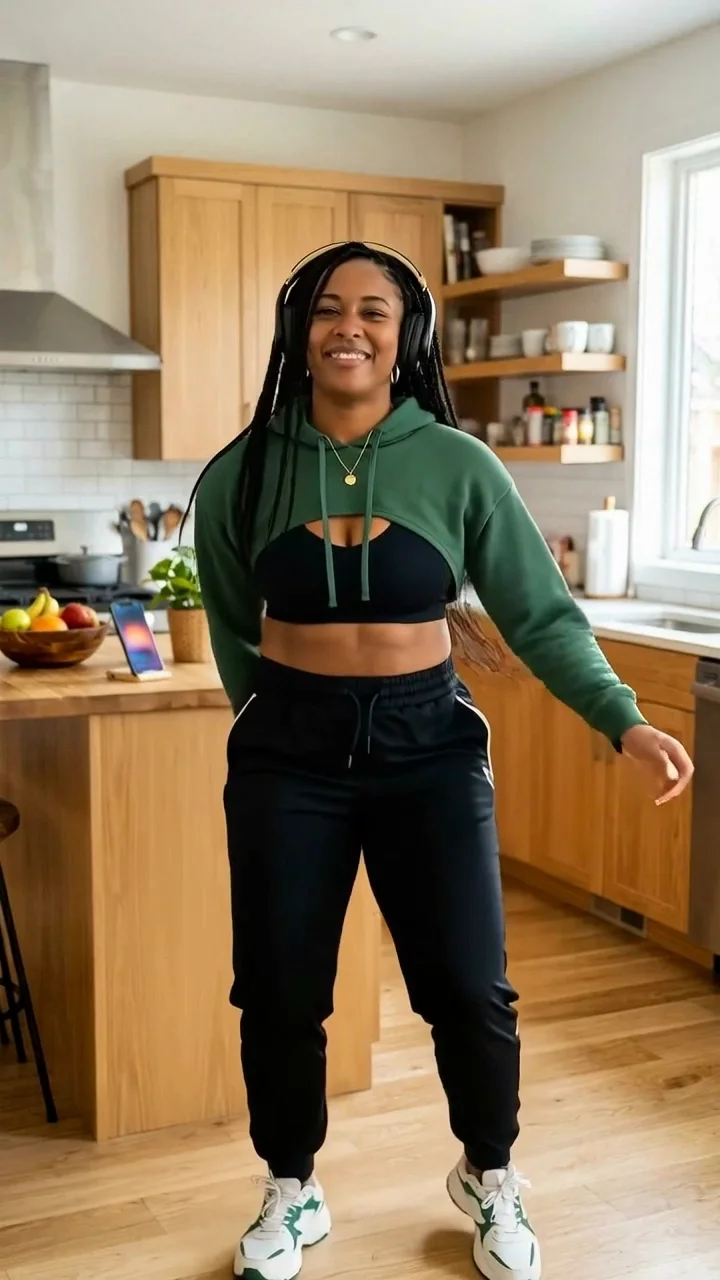 Movement · a readable action
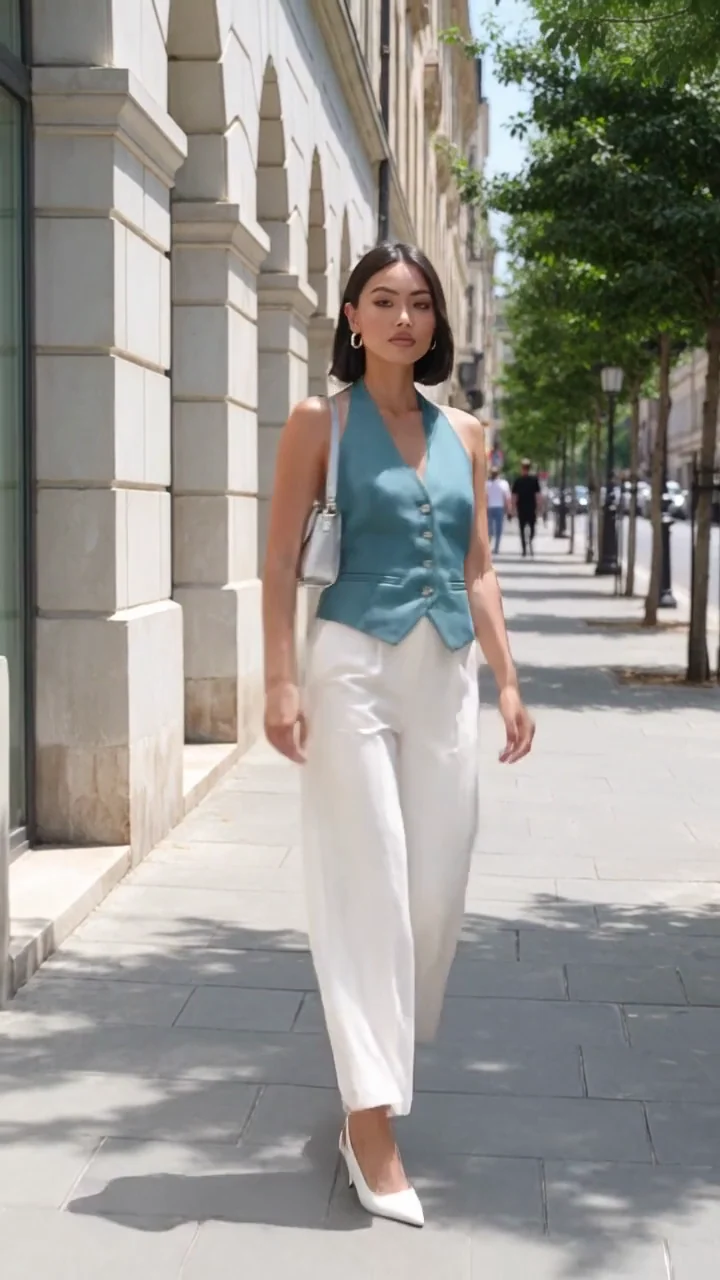 Style · a recognizable silhouette
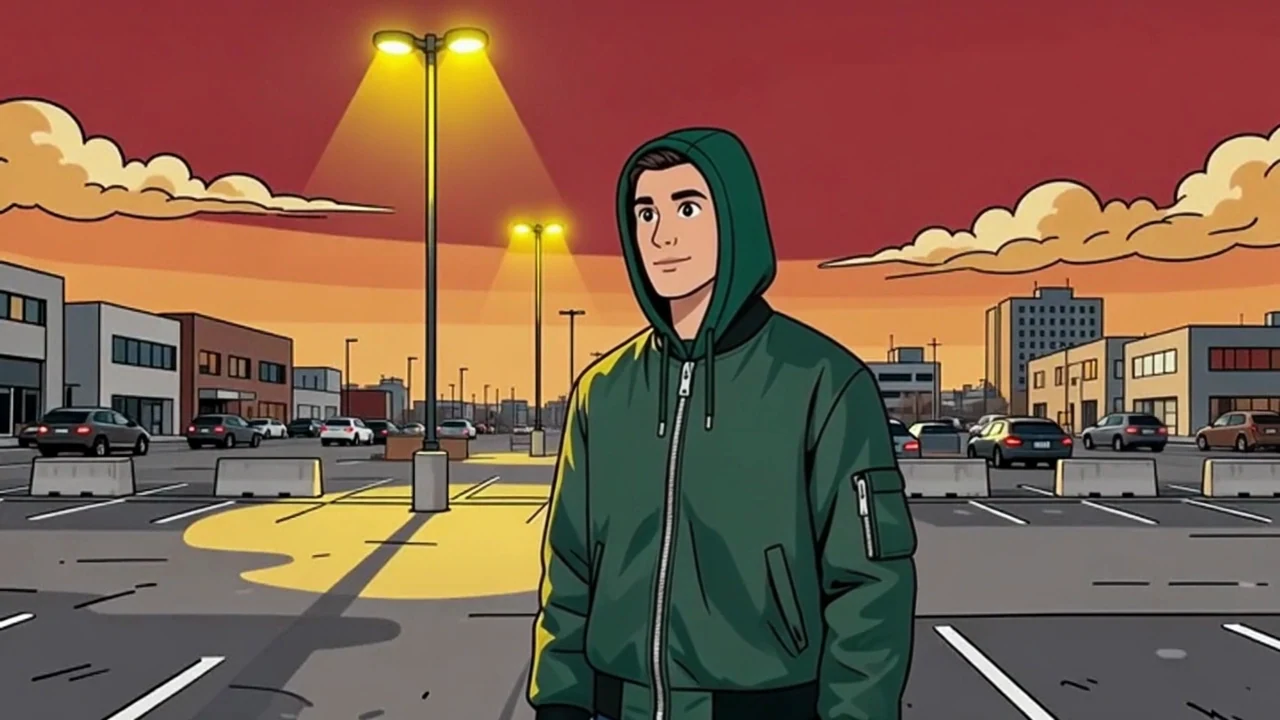 Character · an expressive beat
Key Takeaways
- Recognizability gets attention; a useful or entertaining idea gives people a reason to share.
- Public views document attention, not causation, profit or a guaranteed recipe.
- Video Remake adapts a reference’s broader structure; Motion Transfer centers on movement.
- Use the six-video pilot to learn, with equal observation windows and no invented results.
What Makes an AI Influencer Go Viral?
A memorable character needs an idea that works before viewers know the account. Recognition, clarity and payoff are creative ingredients, not validated mathematical multipliers.
Viral Content Framework
- 01Recognizable character
A silhouette, voice or repeated behavior viewers can identify.
- 02Strong hook
A specific reason to keep watching now.
- 03Shareable idea
A joke, observation or useful comparison worth sending.
- 04Story and payoff
A question that receives a visible answer.
- 05Repeatable format
Stable rules with room for another episode.
- 06Platform fit
Readable framing, sound and pacing for the destination.
Real Examples of Viral AI Influencers
These cases connect recognizable personas with recurring formats. Counters retain our investigations’ original dates and limitations; they are not fresh account analytics. We did not produce these posts.
| Case | Documented metrics | Date and evidence |
|---|---|---|
| Jean Philanthrope | 268.2K followers; 15.4M views on the representative clip | October 9, 2026. Original profile-grid counters; rounded historical snapshot. |
| Uncle Grandpa IRL | 187.1K followers; 12.5M views on the pinned hallway dance | October 9, 2026. Original profile-grid counters; account described itself as unofficial fan/parody. |
| Dikshit Hardik | 8.7M and 13.1M reel views in a historical screenshot; 60K profile followers observed later | Screenshot shared October 8; profile checked October 9, 2026. Screenshot capture time unknown; reel views not independently rechecked behind login. |
What Does the Research Say About Reach and Engagement?
Reach and engagement answer different questions. These general Instagram and TikTok studies help select a format and metric; none measures an AI-influencer-specific probability of going viral.
Instagram engagement rate by format
Median engagement / reach (%) · zero baseline
- Carousels6.90%
- Single images4.44%
- Reels3.31%
Instagram Reels reach advantage: two separate comparisons
Each comparison format = 1.00× · zero baseline
TikTok content-format engagement
Publisher-reported median engagement rate (%) · zero baseline
- Video3.39%
- Photos / sets1.92%
The practical reading: test Reels for discovery, then inspect watch time and conversion. Carousels’ higher engagement rate does not make them the universal winner for reach.
Original posts in US Instagram recommendations
Meta’s January 2026 disclosure describes Q4 2025, up 10 percentage points. It is not a global statistic, an AI-content share or a promise that original content will be recommended. Underlying sample size was not disclosed.
How to Make an AI Influencer Go Viral in 7 Steps
Build a repeatable process from character recognition to measurement. Each step below produces a concrete creative decision.
Step 1. Create a Character People Remember
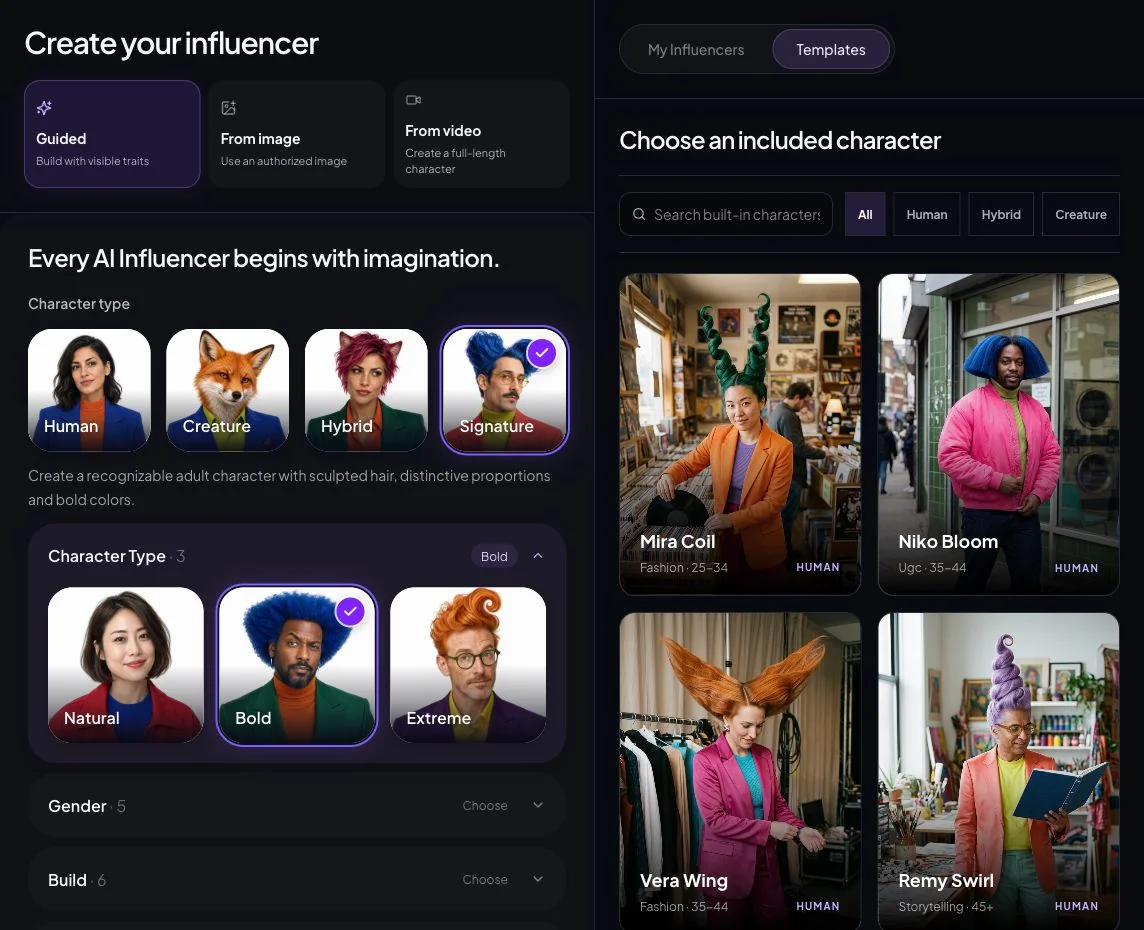
Choose a few stable identifiers: hair silhouette, clothing language, voice, personality and one recurring behavior. Make them serve the niche. A distinctive chef needs a coherent food world, not just a dramatic face.
Save an approved adult identity and reference sheet. Separate fixed face/hair details from episode variables. Use Character Builder and our full persona tutorial.
See the real Signature character controls
Step 2. Find Viral Content Ideas in Your Niche
Build references around audience situations. In TikTok Creative Center, filter by region, date and category; its ad examples teach advertising craft. Inspect Reels and Shorts directly, including ordinary-performing episodes from the same account.
| Observe | Write down |
|---|---|
| Video concept / opening hook | One-sentence premise; what appears before any explanation? |
| Character behavior / scene | What does the subject actually do, and why does this location matter? |
| Camera / editing rhythm | Framing, movement, cut points and where the payoff arrives |
| Viewer response | Specific comments, questions or remix behavior; public counters have limits |
| Adaptation | What structure can transfer? What identity, footage, audio or IP needs permission? |
Adapt the narrative mechanism with original writing and performance. Public availability and attribution do not establish permission.
Step 3. Write a Hook That Earns Attention
A strong hook sets an honest expectation the video fulfills. Show a subject and specific question; avoid invented tests or false emergencies.
| Weak | Stronger | Why |
|---|---|---|
| Meet my AI influencer | The dramatic entrance was easy. The parcel was not. | Introduces a situation and an obstacle |
| Watch this transformation | Same doorway. Same person. A very different plan. | Defines what stays stable and what changes |
| This is going viral | Can the hat survive the revolving door? | Promises an observable answer |
Ten reusable English hook examples
| Hook type | Example |
|---|---|
| Curiosity | Why does the smallest suitcase need the biggest umbrella? |
| Unexpected character | The opera-inspired commuter has one rule for rush hour. |
| Humor | POV: your outfit is ready, but the weather has other plans. |
| Visual surprise | Watch what changes when the door opens. |
| Question | Would you choose the practical bag or the dramatic one? |
| Story setup | She has ten seconds to leave—and one very awkward package. |
| Creative reveal | One reference image. Two completely different entrances. |
| Challenge | Same character. New obstacle. Can the hat survive? |
| Payoff promise | Wait for the final pose, then choose the next setting. |
| Series | Episode 3: the commuter meets a revolving door. |
Hook A vs. Hook B
Hook ASame eight-count, new character energy
Hook BWait for the finishing pose
Step 4. Design a Short Video with a Clear Payoff
Plan the ending first. TikTok’s Creative Codes uses Hook → Body → Close for advertising. Adapt that structure to organic stories; it is not a ranking rule.
Viral Video Anatomy · proposed 14-second edit
- 0–2s · HookCharacter + movement promise
- 2–11s · BodyOne legible movement phrase
- 11–14s · CloseClean finish + next-episode question
| Time | Action | Camera | Audio | Viewer goal |
|---|---|---|---|---|
| 0–2s | Show the creator and an honest movement hook | Full body; readable stance | Licensed beat or natural sound | Understand the premise |
| 2–7s | First clear phrase | Keep limbs inside frame | Maintain rhythm | Follow the action |
| 7–11s | A contrasting phrase or direction | Avoid an unnecessary cut | Same audio bed | Anticipate the finish |
| 11–14s | Finish; add a specific episode question | Hold the final pose | Clean ending | Receive the payoff |
Step 5. Recreate Viral Video Formats with Your AI Influencer
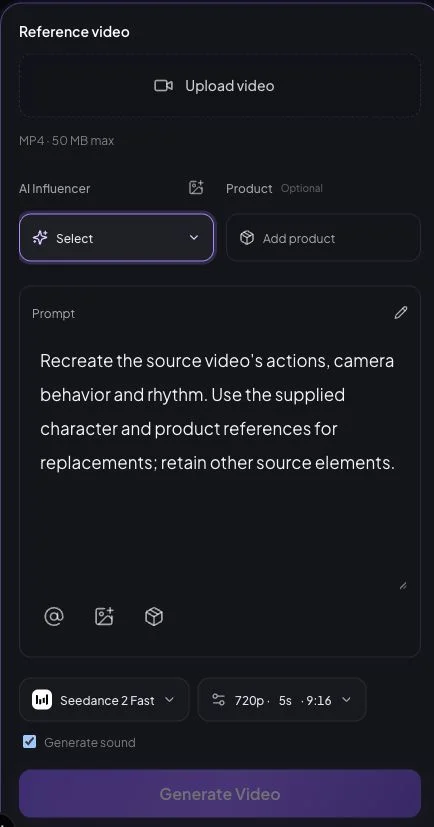
Use Video Remake when you want reference actions, pacing, camera behavior and scene structure. Use Motion Transfer when the central requirement is transferring a movement to an approved character.
- Choose your own video, an authorized clip or a template whose rights cover your intended use.
- Select the template or upload the reference. Wait for preparation and confirm Video1 is ready; trim to the model’s supported range if requested.
- Select a saved AI Influencer or add an authorized identity image.
- Bind the actual materials in the editor. Current structured slots are @Video1 and @AIInfluencer; “@Video” is only shorthand in conversation.
- Explicitly replace the character, scene or expression you want changed. Source elements can remain unless your direction replaces them. Review model, duration, aspect ratio, sound and quote.
- Generate, then inspect the whole clip for identity drift, hand contact, feet, motion, camera continuity and the intended payoff. Re-edit captions and audio separately when needed.
Step 6. Adapt Your Content for TikTok, Reels and Shorts
Adapt one idea for each destination. Review framing, text placement, sound rights and the call to action separately.
| Platform | Content style | Discovery surface | Useful metrics | Publishing considerations |
|---|---|---|---|---|
| TikTok | Immediate premise; readable character action | For You, search | Watch time, full-watch rate where available, shares | Review AI labeling, audio rights and privacy settings |
| Instagram Reels | Clear first frame; premise connected to the profile | Reels, Explore, feed | Non-follower reach, watch time, shares/reach | AI-person profile label; caption safe areas and account eligibility |
| YouTube Shorts | Self-contained idea; clear title and ending | Shorts feed, search | Engaged views, stayed to watch, average view duration | AI use disclosure; compare the same view definitions over time |
Keep faces and hands clear of app controls. Add readable captions, destination-licensed sound and a series-specific CTA. Check the exported crop on a phone.
Step 7. Publish, Measure and Improve
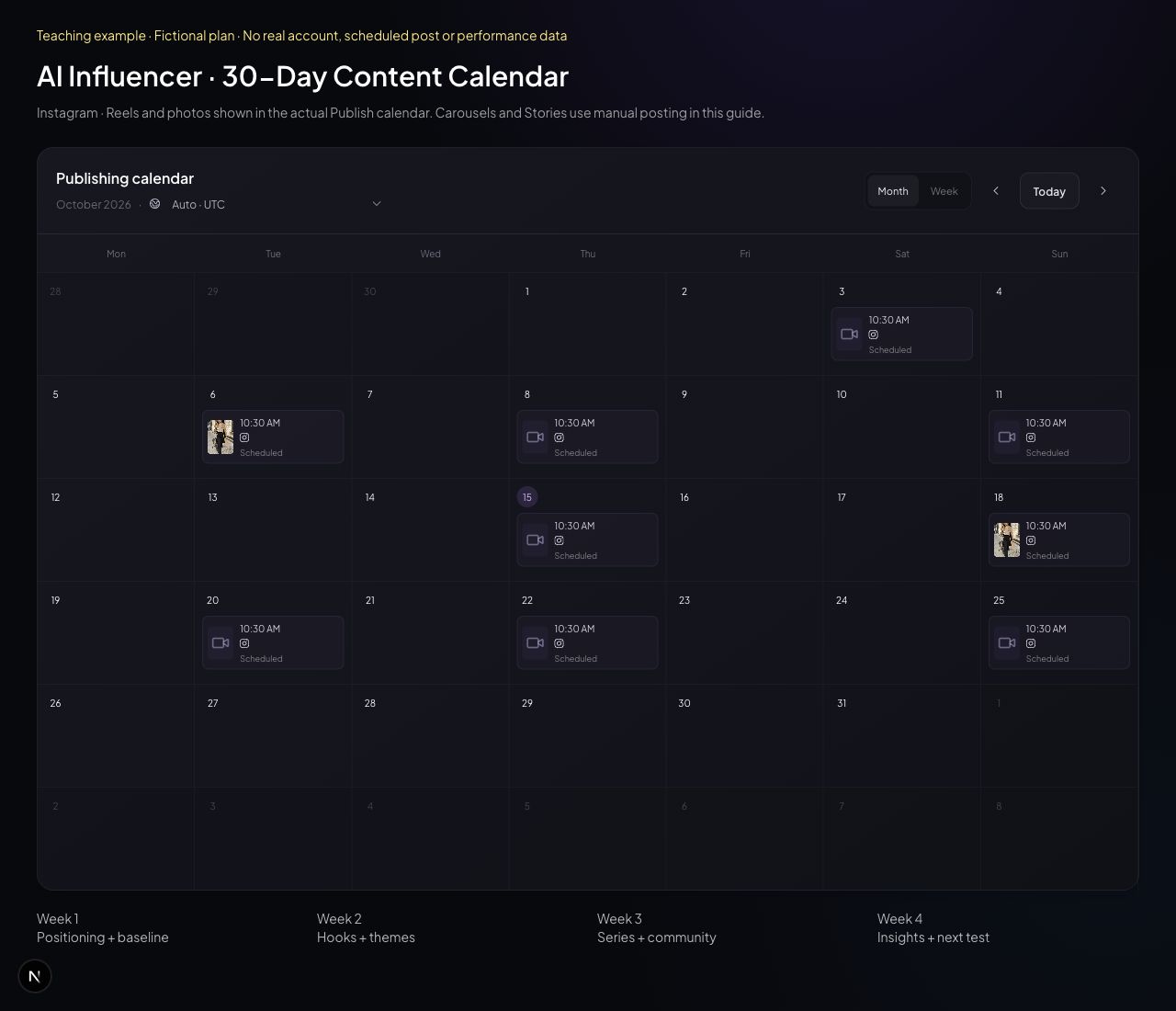
Queue approved clips in Publish, confirm the destination, timezone and final status, then measure audience response in each platform’s native analytics. Our scheduler tracks publishing activity; it does not automatically import TikTok, Instagram or YouTube performance.
See the actual Publish calendar
The creative feedback loop
- 01Idea
- 02Generate
- 03Publish
- 04Analyze
- 05Improve
6 AI Influencer Video Ideas Worth Testing
Test creative mechanisms before changing the persona. These original briefs and platform suggestions are starting points, not recovered case prompts or measured winners.
For still-led planning, use Carousels to explore coordinated poses; use AI Influencer Video for source clips. A generated shot still needs editorial selection and a coherent ending.
A 7-Day AI Influencer Viral Content Test
Launch six videos: three concepts with two hooks each. Keep identity, body, ending, duration and treatment stable within each pair. This observational pilot is neither randomized nor a promise of seven-day virality.
| Day | Video concept | Hook | Format | Hypothesis | Metric | Result |
|---|---|---|---|---|---|---|
| 1 · Setup | Three themes, one approved persona | Write A/B openings for each | Six comparable 10–15s edits | Only the first beat changes within a pair | Record the last 10–20 comparable posts | — |
| 2 · A1 | Everyday obstacle | The dramatic entrance was easy… | Vertical mini-story | Contrast earns attention | Watch time; shares/reach at 72h | — |
| 3 · B1 | Motion phrase | Same eight-count, new energy | Vertical movement | Movement is legible immediately | Completion; shares at 72h | — |
| 4 · C1 | Two outfit concepts | Same doorway, different plan | Vertical match-cut | Clear change earns a replay | Watch time; follows/view at 72h | — |
| 5 · A2 | Same obstacle edit as A1 | Can the parcel fit through? | Same body and ending | A specific question beats contrast | Compare with A1 at the same age | — |
| 6 · B2 | Same motion edit as B1 | Wait for the finishing pose | Same body and ending | Payoff promise improves retention | Compare with B1 at the same age | — |
| 7 · C2 | Same outfit edit as C1 | Which look gets the final step? | Same body and ending | A choice question improves response | Compare with C1 after 72h | — |
Choose one platform and a consistent publishing window. Record results at 72 hours and seven days. Day 7’s 72-hour result cannot mature until Day 10. Compare matured windows and note weekday, trend and audience differences. Scale only after reviewing results.
How Do You Know If Your AI Influencer Video Is Going Viral?
Compare with the last 10–20 similar organic posts, matching platform, format, duration and measurement age. Look for an unusually strong result against that baseline. New accounts first need comparable posts.
| Metric | Definition or formula | How to use it |
|---|---|---|
| Views / reach | Platform-defined plays vs. unique accounts where available | Keep counts and definitions separate; replays are not unique people |
| Average watch time | Native average watched duration; denominator varies | Compare similar lengths and the platform’s stated definition |
| Completion rate | Use native full-watch metric, or completed plays ÷ eligible starts × 100 if supplied | Do not estimate completion from average watch time |
| Shares / saves per reach | Each count ÷ reach × 100, using matching scope | Analyst rates; mark unavailable when the denominator is missing |
| Profile visits | Native profile activity where available | Check whether attention leads to interest in the persona |
| Follows per view | Attributed follows ÷ views × 100, matching post and period | Analyst conversion rate; avoid claiming unattributed followers |
| Performance vs. baseline | Post metric ÷ median of 10–20 comparable posts | A diagnostic index, not a platform virality score |
YouTube distinguishes views, engaged views and “stayed to watch.” Shorts average duration uses engaged views. Match definitions before comparing platforms; zero denominators or unavailable fields are “not calculable.”
| Measure | Hypothetical input | Calculation / next question |
|---|---|---|
| Reach index | 3,000 reach; baseline median 1,000 | 3× baseline. Does the result repeat? |
| Share rate | 60 shares / 3,000 reach | 2%. Is that above this account’s matched baseline? |
| Follow conversion | 12 attributed follows / 4,000 views | 0.3%. Does the profile deliver the video’s promise? |
| Next test | Good attention, weak conversion | Keep the idea; clarify the series and profile before raising output |
Can AI Influencer Videos Go Viral Without Being Restricted?
Compliant AI content can receive distribution. Labels do not override rights violations, misleading claims or recommendation ineligibility.
- TikTok: official guidance requires labels for realistic AI images, audio and video. For video, review More options → AI-generated content before posting. TikTok says that setting does not affect distribution if the content follows its guidelines.
- Instagram: the August 31, 2026 announcement applies to profiles featuring an AI-generated person, not every human using AI editing. Enable AI-generated profile in Edit profile when applicable. Proactively labeling does not change profile reach; undisclosed profiles may lose recommendation eligibility. Check Account Status and appeal errors. Profile labels and individual-content AI labels serve different purposes.
- YouTube: current GenAI guidance requires disclosure for realistic, meaningful synthetic changes. Use the applicable AI use setting in Studio. Disclosure alone does not limit audience or monetization eligibility; other policies still apply.
Use authorized characters, performances, footage and music. Disclose commercial relationships; avoid invented testimonials or personal product-testing claims. Bring an original point of view beyond a face replacement.
Frequently Asked Questions
Can an AI influencer really go viral?
Yes. The dated Jean Phil, Uncle Grandpa IRL and Dikshit Hardik records demonstrate substantial attention. They do not establish a repeatable success rate or a particular tool's contribution.
What makes an AI influencer video viral?
Recognition, a clear viewing reason, a shareable premise and a satisfying payoff can help. Judge performance against comparable account posts, rather than a universal view threshold.
How do you make viral AI influencer videos?
Study a useful format, write an original premise and hook, storyboard the payoff, generate with a stable authorized identity, edit for one platform and test measured variations. No workflow or prompt guarantees virality.
Can AI influencers go viral on TikTok?
Yes, but realistic AI-generated content needs disclosure and other rules still apply. TikTok says enabling its AI-generated content setting does not affect distribution when the content follows its Community Guidelines.
Can AI influencers go viral on Instagram?
Yes. Reels can support discovery, while useful carousels can earn engagement. Profiles featuring an AI-generated person should use the AI-generated profile label. Undisclosed profiles may lose recommendation eligibility.
How can I recreate a viral video with an AI influencer?
In Video Remake, bind an authorized Video1 and AI Influencer, then explicitly replace the scene or expression. Motion Transfer focuses on movement. Review quality and rights before publishing.
Does AI-generated content get fewer views?
These studies establish no universal AI reach penalty. Platforms distinguish proper disclosure from eligibility problems; labeling does not rescue prohibited, misleading, low-value or unauthorized content.
How many videos should I test before changing my strategy?
Six videos can launch a pilot, not prove a strategy. Compare matching observation windows with 10–20 similar past posts where available, then repeat promising ideas.
Start with one clear premise in Video Remake, review the result, and test the next opening. Use a character’s Content Strategy and Creator Kit in My Influencers to keep the series coherent.
Sources & Methodology
Research checked October 15, 2026; case counters retain October 8–9 dates. We reviewed original-source records, official policies, Buffer methodology and the workbench. No live growth experiment, earnings audit or recovered creator prompts are claimed.
- Buffer: State of Social Media Engagement 2026; format guide; separate historical Reels reach study.
- Meta: 2026 AI Drives Performance; TikTok Creative Codes.
- TikTok AIGC; Instagram profile labels; YouTube GenAI disclosure; YouTube analytics definitions.
- Original posts and full evidence notes are linked in each case. Third-party video stays on the original platform; no unlicensed case video or portrait was downloaded and republished.
Keep learning: TikTok account and production setup · cross-platform strategy · social video engagement · Instagram audience growth.
Plan Content
Measure Engagement
Build Your Profile
Price Your Work
Write Post Copy
Brand Partnerships