
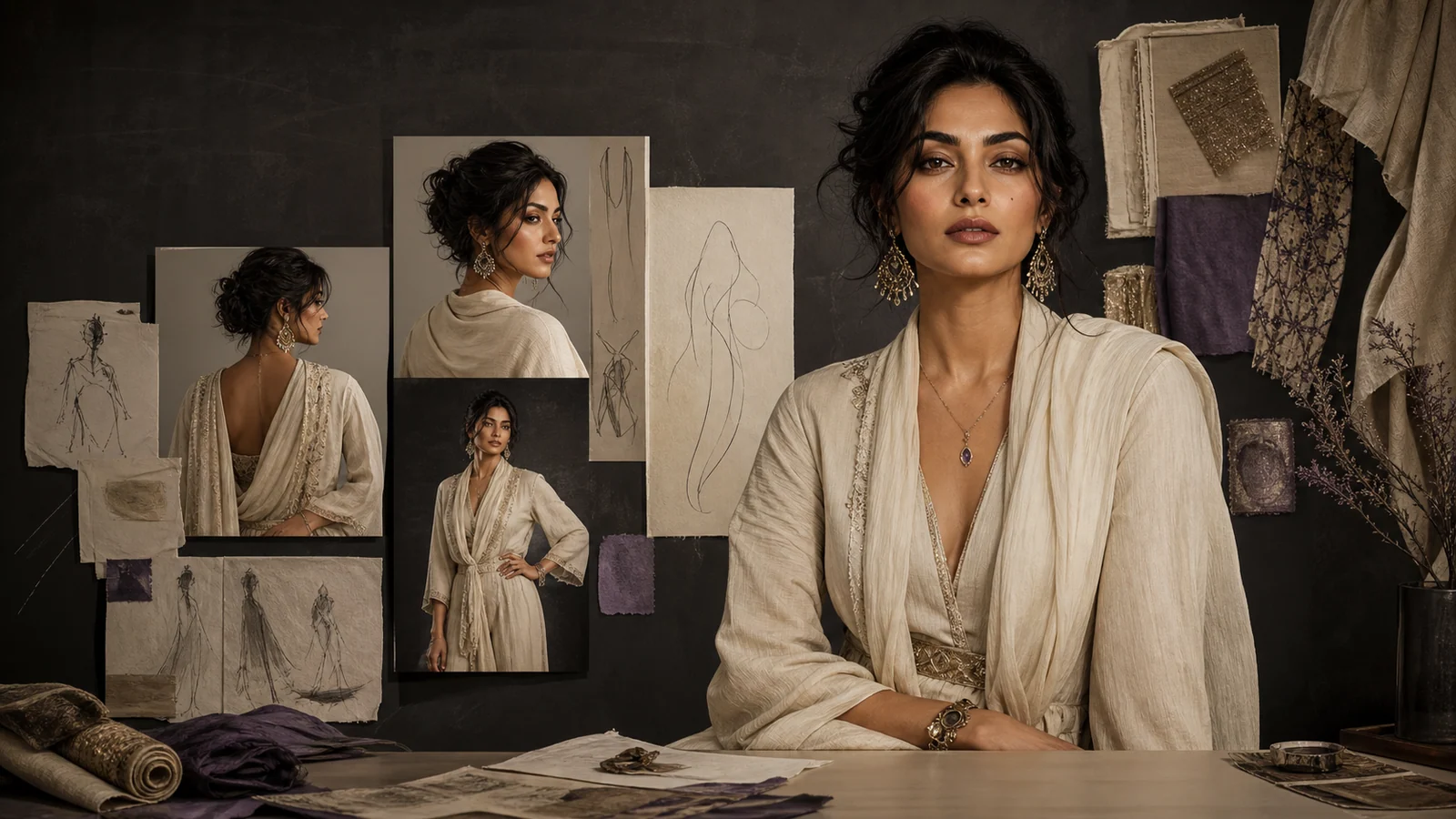
Create an AI model girl: the complete input-to-result walkthrough
This walkthrough takes an original fictional adult model from a written brief to a saved identity, reviewed photos, and a first video. Use it for the practical how to create an AI model girl workflow; the related guides below provide additional character concepts and prompt variations.
1. Write the input you will keep
Separate identity from the scene. Your identity brief should stay stable; your scene prompt can change for each image. The following is a worked planning example, not the recorded prompt for the published media linked below.
IDENTITY: Original fictional adult woman, age 29, oval face, warm brown eyes, dark shoulder-length curls, medium complexion, small silver hoop earrings.
FIRST PHOTO: Navy overshirt, waist-up view, standing beside a cafe window, one hand around a ceramic cup, soft morning light, relaxed expression.
KEEP: Adult age, facial structure, eyes, hairline, curls, and signature earrings.
CHANGE LATER: Outfit, location, action, and camera framing.
2. Create, review, and save the identity
Open Character Builder in Studio. Start with guided choices, a fictional starter, or an adult reference you are authorized to use. Check the generated identity before saving it: face shape, apparent adult age, hair, and expression should agree with your brief. Follow the character creation and locking instructions for the current save flow.
Confirm that the character appears in your saved characters before making the series. Keeping a prompt in a document or downloading an image does not, by itself, save a reusable identity in Studio.
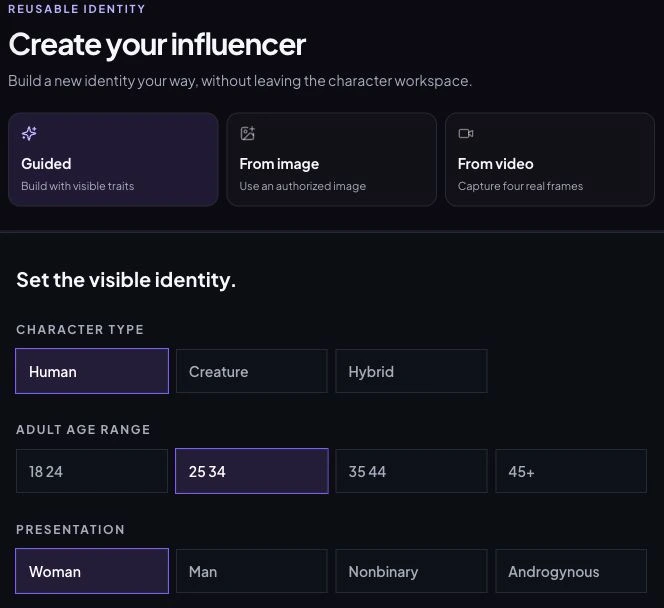
For the written-brief route, choose Guided, set the adult age range and presentation, then use the available appearance choices. For an authorized portrait, choose From image instead. These are alternative input methods; do not expect a written description alone to lock an exact face.
Create an adult fictional character in Studio3. Generate one photo and audit the result
Choose that saved identity in the AI Influencer Image Generator. Add only the first scene brief, choose the available framing and quality, and review the credit estimate before submitting.
- Identity: compare eyes, nose, jaw, hairline, and adult age with the saved reference.
- Physical details: inspect fingers, cup contact, earrings, clothing seams, and reflections at full size.
- Publication: check for accidental logos, invented text, resemblance to a real person, or an implied endorsement.
If the face drifts, return to the approved reference and simplify the scene. If only the hand or prop fails, reduce that action before generating another paid attempt. Keep the approved image and its settings in your review notes.
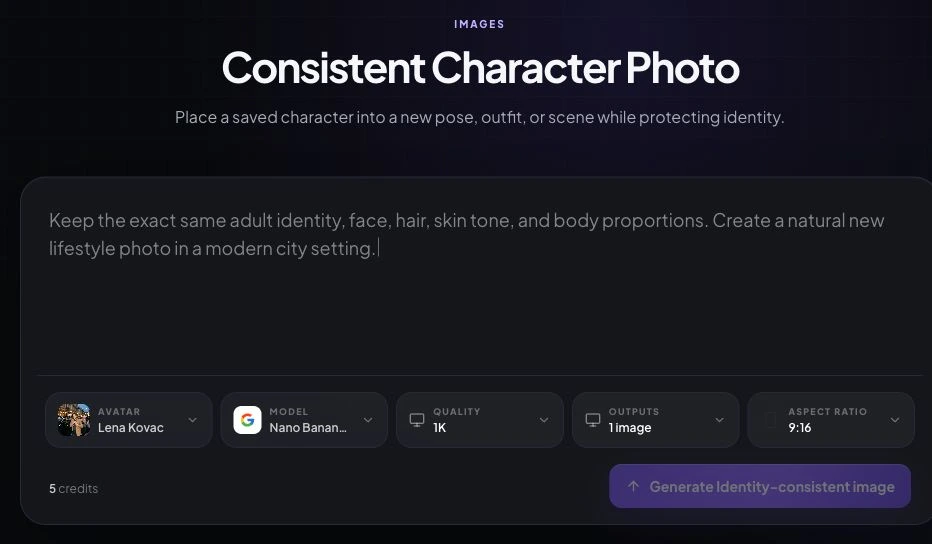
Settings to choose before generating
| Control | First attempt | Why it matters |
|---|---|---|
| Avatar | Your approved saved character | A scene prompt describes the scene; the avatar supplies the identity. |
| Model | One currently compatible image model | Keep it unchanged while comparing your first two scenes. |
| Quality / Outputs | One image at the quality suitable for your review | Inspect one result before paying for a larger batch. |
| Aspect ratio | Choose the intended placement | Portrait framing and a square avatar require different crops. |
| Credit quote | Read the amount shown now | Model, quality, and output count can change the cost. |
Open the saved-character photo workspace to inspect these controls. Choosing settings does not submit a generation.
4. Test a second scene before scaling
Reuse the same saved character in the consistent character workflow. Change the cafe to a bookshop while keeping the identity and outfit steady. Compare both faces side by side. Once that works, change the outfit in a separate attempt rather than changing every variable at once.
5. Make the first short video
Use the saved character in the AI Influencer Video Generator, or choose Image to Video when the approved still must be the starting frame. Begin with a small action, such as looking toward the window while the camera remains steady. Check the available duration, ratio, and credit quote; review the entire clip before downloading or publishing.
Inspect real photo and video examples
For a real character-to-video comparison, open Imani's workout fit-check example: it separates the fictional character image, authorized task reference, and generated clip. The same section also shows Valentina's jewelry scene. These are separate fictional identities and separate production examples, not outputs from the cafe brief above.
The example gallery with prompts and generation settings lets you inspect recorded work before choosing a workflow. For your own series, retain the identity reference, an approved still, the revised prompt, the quoted cost, and the reviewed video together.
Diagnose the failure before changing the prompt
- A different face: confirm the saved avatar is selected. Keep its identity steady, shorten the scene, and change one variable.
- Plastic skin: remove beauty-filter language and use ordinary window light with visible skin texture. Review the result at full size.
- Broken fingers or props: give each hand one simple purpose. First test the portrait without the cup; add the interaction only after the identity works.
- Wrong crop: set the aspect ratio before submitting and name the framing in the prompt.
- Video identity drift: use an approved still as the first frame in Image to Video Studio and start with a small movement.
A model portrait becomes an influencer project when it has a recognizable identity, a niche, and an ongoing content role. Read what an AI influencer is before planning a public creator account.
Looking for the current product workflow? Use the step-by-step Studio guide to creating a reusable AI woman for Character Builder, saved identity, photo, video, and History.
An AI girl model is a fictional adult digital character built with text prompts, image tools, and one steady visual style. This guide shows how to plan her identity, write stronger prompts, refine images, and keep the result ethical, polished, and clear across many generations. If you are learning how to create ai model girl content for fashion, social media, stories, or brand visuals, start with a clear plan, not random prompt guessing.
What does it mean to create an AI model girl?
Creating an AI model girl means designing an original adult female character and making images that match her look, mood, setting, and purpose. She is not a real person, and she should not be shown as one. The goal is a believable visual identity: face shape, hair, wardrobe, pose, light, mood, and creative direction that can be repeated.
Think of the character as a digital fashion model or virtual brand ambassador. Before you open any AI tool, choose her role. Is she a luxury skincare model, a casual streetwear influencer, a traditional ethnic fashion concept, a futuristic gaming avatar, or a lifestyle magazine character? That choice shapes every prompt you write.
A strong concept usually includes:
- Age clarity: describe her as an adult woman, not a minor.
- Visual identity: face, hair, skin tone, body type, style, and expression.
- Fashion direction: casual, bridal, magazine, streetwear, business, festive, or cinematic.
- Cultural context: use respectful detail when you draw from regional or ethnic ideas.
- Use case: profile images, campaign concepts, storyboards, product mockups, or art references.
Start with a clear character brief
A character brief keeps your AI model steady. Without one, each image can look like a different person. Write a short profile before you generate anything, then reuse the same core details in every prompt.
- Name or label: Aanya, adult South Asian fashion model concept.
- Core look: oval face, expressive brown eyes, long dark wavy hair, warm medium skin tone.
- Style: modern ethnic fashion mixed with clean magazine photography.
- Personality: confident, calm, elegant, approachable.
- Visual mood: soft natural light, premium magazine look, realistic detail.
- Boundaries: no real celebrity resemblance, no sexualized styling, no underage appearance.
This step is especially useful if you are searching how to create ai model girl assets for a series of images. A steady brief lets you change the outfit, location, or pose while keeping the same core identity.
Write prompts that control the result
A prompt is more than a description. It is creative direction. The clearer you are about the subject, scene, camera style, light, and limits, the more useful your result becomes.
- Subject: adult fictional female model, visual traits, expression.
- Wardrobe: outfit type, colors, textures, accessories.
- Setting: studio, street, café, festive interior, garden, rooftop, runway.
- Pose and framing: close-up portrait, half-body, full-body, walking pose, seated pose.
- Lighting: golden hour, softbox studio light, cinematic shadows, natural window light.
- Style: realistic fashion photography, magazine, beauty campaign, lifestyle shoot.
- Quality cues: sharp focus, natural skin texture, balanced composition.
- Negative guidance: where supported, avoid distorted hands, extra fingers, fake text, harsh makeup, or celebrity likeness.
Example prompt for a realistic fashion portrait
Adult fictional South Asian female fashion model, warm medium skin tone, long dark wavy hair, expressive brown eyes, elegant confident expression, wearing a cream embroidered kurta with delicate gold jewelry, standing near a softly lit studio backdrop, natural makeup, realistic fashion magazine photography, softbox lighting, detailed fabric texture, sharp focus, balanced composition, no celebrity resemblance, no childlike featuresExample prompt for a Desi-inspired concept
If you want a beautiful desi girl model ai prompt generator style, build prompts around respectful styling and specific visual context rather than stereotypes.
Adult fictional Desi female model, graceful posture, modern festive lehenga in deep emerald and gold, subtle traditional jewelry, soft natural makeup, warm indoor celebration lighting, elegant South Asian fashion magazine shoot, realistic photography, refined background, confident expression, detailed embroidery, natural skin texture, no celebrity likeness, no overdone features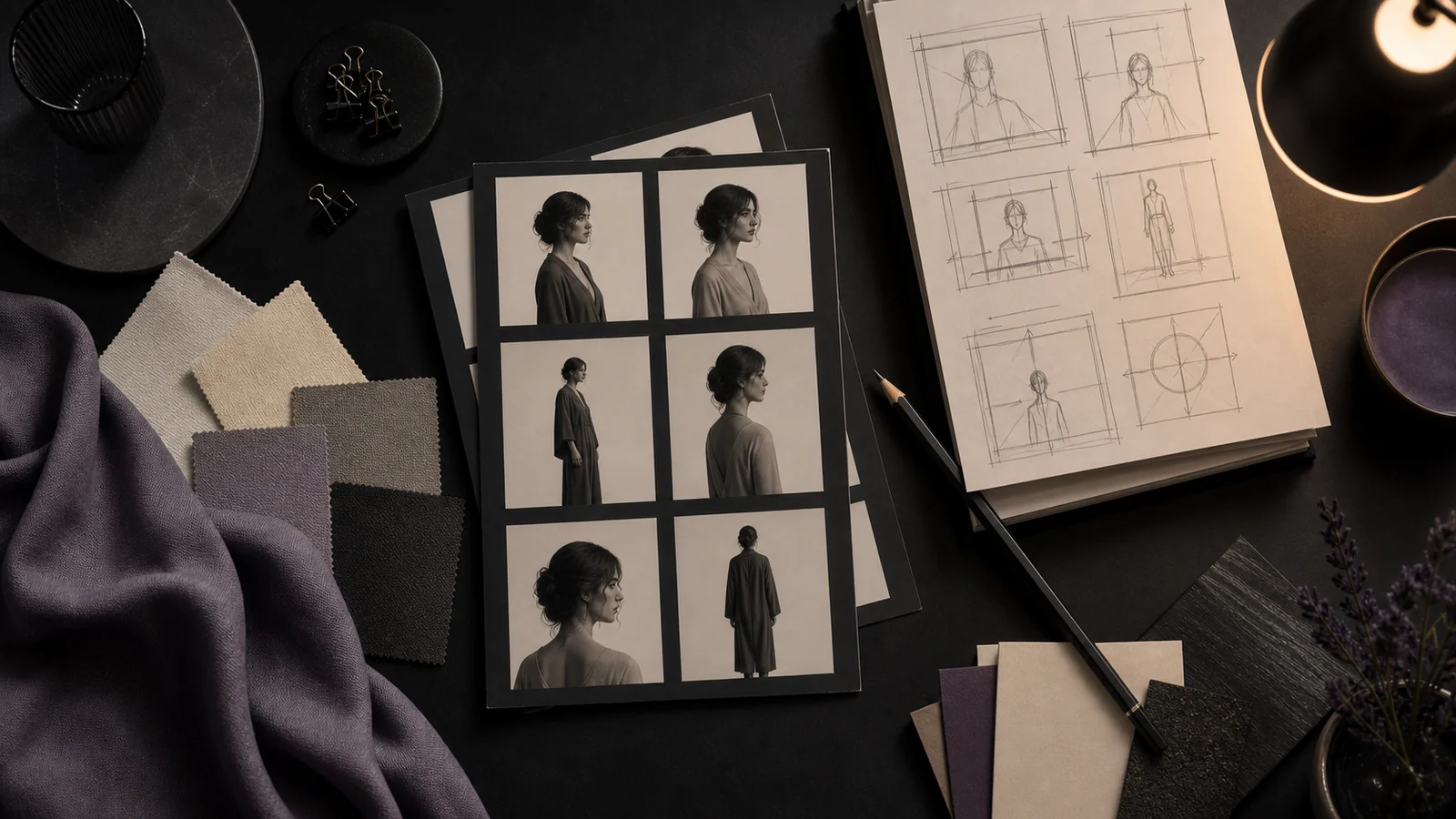
How do you make the model look consistent?
Consistency comes from repeating the same identity details and changing only the variables you want to test. Keep the character's face, hair, skin tone, expression style, and core mood steady. Then adjust one thing at a time, such as the outfit, background, pose, or light.
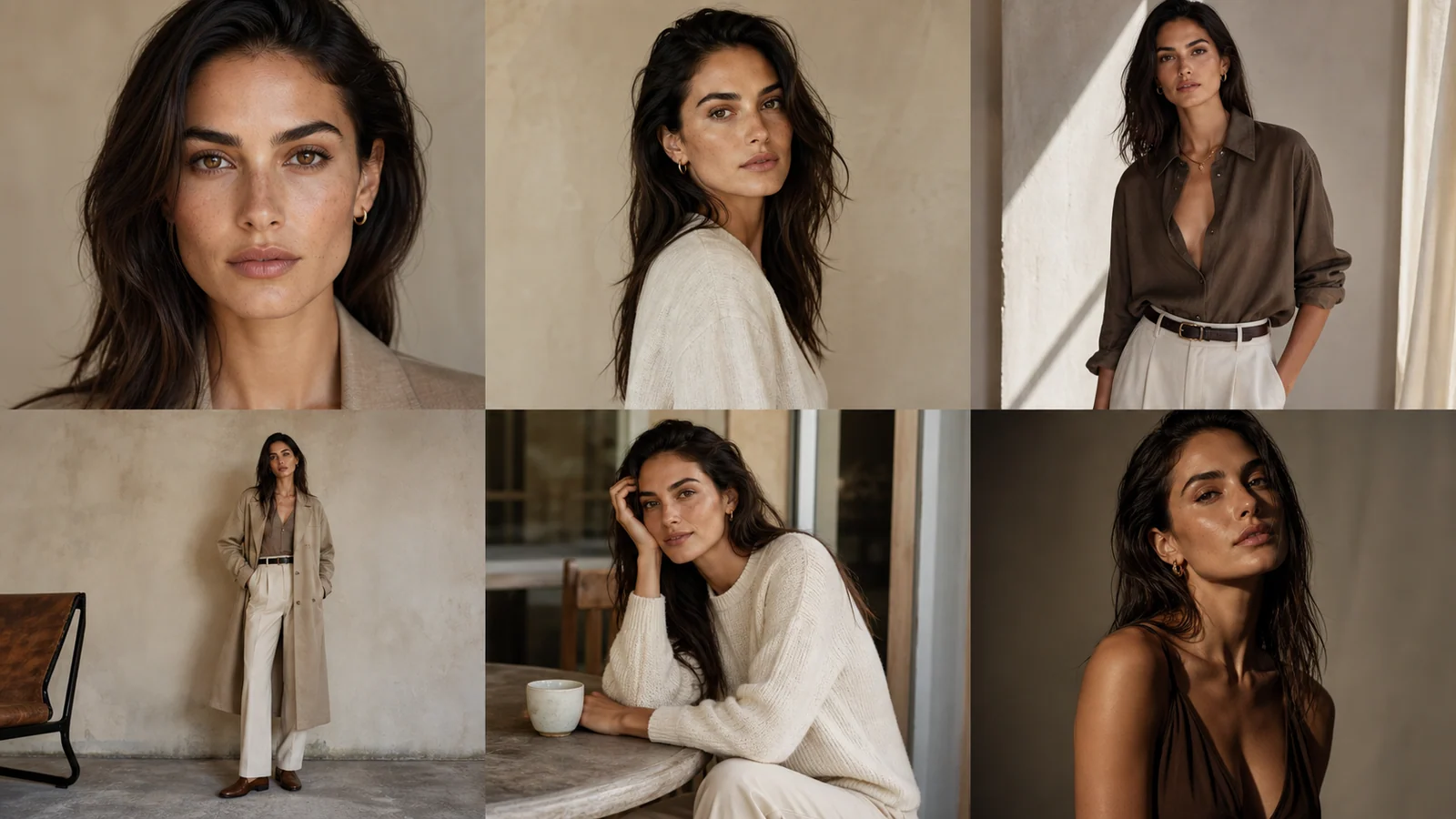
For your first set, create a small identity pack instead of one random image:
- Front-facing beauty portrait
- Three-quarter face portrait
- Half-body fashion pose
- Full-body outfit shot
- Casual lifestyle image
- Premium studio magazine image
After review, choose the strongest image as your visual reference. Some image tools offer authorized reference images, seed values, style locking, or character consistency features. Use those controls only where the selected tool supports them. In AI Influencer Generator, save a character and use the Consistent Character Generator to create planned images around that reusable identity.
Avoid over-editing early. Make batches, compare them, and refine the prompt from what worked.
Build a reusable prompt formula
Once you find a style you like, turn it into a reusable formula. This saves time and helps you build a polished visual library.
Adult fictional female model + steady identity details + outfit + location + pose + lighting + camera style + mood + quality details + exclusions.Example:
Adult fictional female model named Aanya, warm medium skin tone, long dark wavy hair, oval face, expressive brown eyes, calm confident expression, wearing [outfit], in [location], [pose], soft natural lighting, realistic fashion magazine photography, premium lifestyle campaign mood, detailed textures, sharp focus, no celebrity resemblance, no underage appearance, no distorted hands, no fake logosSwap only the bracketed parts when you need variety. This method is one of the easiest answers to how to make ai girl model images that feel linked instead of random. For a complementary workflow, see How to Make AI Girl Model.
Refine images with an editor's eye
After generation, review the image like a creative director. Look beyond whether the model is pretty. Check whether the image supports the goal you had in mind.
- Does the model clearly look like an adult fictional character?
- Are the hands, eyes, teeth, jewelry, and fabric details believable?
- Does the outfit match the cultural or fashion direction in a respectful way?
- Is the light flattering and consistent with the scene?
- Is there any unwanted text, watermark, logo, or broken background object?
- Does the image avoid resembling a real celebrity or private person?
- Can this look be repeated in another setting?
Small prompt changes can fix many issues. If the face looks too fake, ask for natural skin texture and realistic photography. If the outfit loses detail, name the fabric, embroidery, color, and shape. If the pose looks awkward, make it simpler. Use the AI Photo Editor only for corrections you can inspect before publishing.
Ethical and creative boundaries matter
AI model creation is stronger when it respects consent, identity, and audience trust. Do not create lookalikes of real people without permission. Do not imply that the model is a real person if she is fictional. Avoid prompts that sexualize minors, blur age, or use private people as references.
If you publish the images, consider saying that the character is AI-generated. This is especially important for commercial pages, influencer-style profiles, product promotion, or ads. Clear disclosure builds trust and helps viewers understand what they are seeing. Review commercial-use terms before relying on any output for a business use.
A simple first-project workflow
Start small. Your first goal is not to create a perfect virtual influencer in one session. Your goal is to create one steady adult character and a few strong images that prove the concept works.
- Write one short character brief.
- Create 5 to 10 portrait prompts using the same identity details.
- Select the best face and style direction.
- Make outfit variations while keeping the same core description.
- Create a full-body image and a lifestyle image.
- Review for quality, realism, ethics, and consistency.
- Save your best prompt as a reusable template.
- Build future images slowly, changing one creative element at a time.
Final tips for better results
Good AI model design is part imagination and part direction. The strongest results usually come from clear briefs, respectful visual choices, steady identity details, and careful editing. Whether your goal is fashion imagery, social content, concept art, or brand storytelling, treat the character as a creative asset with defined rules.
If you are learning how to create ai model girl visuals, begin with one adult fictional character, one aesthetic, and one repeatable prompt formula. Once that base works, you can explore new outfits, locations, seasons, campaigns, and story worlds without losing the identity you built.
Q&A
Why should the AI model girl be described as an adult fictional character?
Making the age and fiction clear keeps the project ethical, clear, and trustworthy. It avoids age doubt and helps viewers avoid mistaking the character for a real person, especially in influencer-style profiles, ads, and brand visuals.
What is the most important step before writing prompts?
Create a clear character brief. It defines the model's core look, personality, style, visual mood, and limits. Reusing those details across prompts helps the images feel like the same character instead of a random mix.
How can I keep the same AI model while changing outfits or locations?
Keep identity details steady and change only one or two creative variables at a time. Repeat the face shape, hair, skin tone, expression style, and mood, then swap the outfit or setting. Use reference or seed controls only when your selected tool supports them; AI Influencer Generator lets you save and reuse a character identity.
What should I check after generating an image?
Review realism, consistency, and safety. Check that the model looks adult and fictional, hands and facial details are believable, cultural details are respectful, and there are no unwanted logos, watermarks, fake text, broken objects, or resemblance to a real person.
How should Desi-inspired AI model prompts be handled respectfully?
Use thoughtful visual detail instead of clichés or overdone features. Focus on textiles, embroidery, jewelry, color palettes, light, setting, and an elegant fashion direction.
Plan Content
Measure Engagement
Build Your Profile
Price Your Work
Write Post Copy
Brand Partnerships