

AIInfluencerGenerator.ai helps brands, creators, and marketing teams build AI influencer characters, generate campaign-ready visuals, and bring virtual personalities into a repeatable content workflow. As audiences become more comfortable with digital-first storytelling, an AI influencer marketing platform gives teams a practical way to create scalable personas and test creative ideas without starting from scratch every time.
An AI influencer marketing platform is a tool that helps users create and activate virtual influencer characters for marketing content. Instead of relying only on one-off photoshoots, scattered design tools, or disconnected campaign files, teams can use a focused production platform to design a consistent AI persona and generate visual assets. Publishing and performance evaluation still happen in the social, advertising, and analytics tools that own those jobs.
For brands, this can mean building a digital spokesperson who reflects a specific style, niche, audience, or product category. For creators, it can mean developing a virtual character that supports storytelling, expands content output, or opens new formats that would be difficult to produce manually. AIInfluencerGenerator.ai is designed around that need: helping users create scalable AI influencer characters and campaign content in one focused creative environment.
The value is not simply that the influencer is “AI.” The real advantage is consistency. A strong AI influencer marketing platform allows teams to maintain a recognizable face, visual style, tone, and content direction across many posts, campaigns, and channels.
Create a consistent AI influencer in StudioWhy virtual influencers are becoming a practical marketing asset
Virtual influencers are no longer just experimental characters used for novelty. They can function as branded personalities, niche educators, lifestyle figures, product models, entertainment hosts, or social-first campaign characters. When built thoughtfully, they give teams a flexible creative asset that can appear in different scenes, outfits, moods, and concepts while staying recognizable.
This matters because modern marketing demands a high volume of content. A single campaign may need teaser posts, product shots, short videos, story assets, paid ad variations, landing page visuals, and follow-up content. Producing all of that with traditional workflows can require multiple vendors, locations, schedules, and revisions.
An AI influencer marketing platform simplifies the creative part of the process by keeping the character at the center. Once the influencer’s identity is defined, teams can generate related photos and videos for different ideas without rebuilding the persona every time. That makes it easier to move from concept to content, especially when testing multiple creative angles.
AI Influencer Generator supports this shift by focusing on the core challenge: creating AI influencer characters that look consistent enough to carry campaigns, not just isolated images that feel disconnected from one another.
What brands and creators can build with an AI influencer
Brands and creators use AI influencers to turn a defined virtual persona into content that supports awareness, product storytelling, and campaign testing. The production platform becomes a bridge between character creation and marketing execution, helping users move from “we have an idea” to “we have assets we can review, publish elsewhere, and measure.”
A brand might create a polished virtual fashion creator to model seasonal looks, a wellness personality to introduce product benefits, or a tech-focused character to explain new features in a more approachable format. A creator might build an AI persona as a recurring character for lifestyle content, short-form videos, visual storytelling, or niche community engagement.
The most effective use cases usually start with a clear purpose. The AI influencer should not exist only because the technology is interesting. It should have a role in the content strategy.
- Brand ambassador: a recurring virtual face that appears across product launches, announcements, and evergreen content.
- Product model: a consistent character used to showcase apparel, accessories, beauty products, digital goods, or lifestyle scenes.
- Educational guide: a persona that explains concepts, answers common questions, or introduces product use cases.
- Story-driven character: a virtual personality with a recognizable aesthetic, routine, or point of view that gives audiences a reason to follow along.
- Creative testing asset: a flexible character used to compare different visual styles, captions, offers, and campaign angles.
The important point is alignment. The character’s appearance, tone, values, and content environment should match the audience and the brand. AIInfluencerGenerator.ai gives teams a starting point for building that consistency into the character instead of trying to patch it together after assets have already been produced. The AI social media influencer solution shows how one character can support several social content jobs without pretending that every channel needs the same asset.
A repeatable AI influencer campaign workflow
A successful AI influencer campaign needs more than a good-looking character. It needs a repeatable workflow that connects creation, content production, publishing, and performance review. Without that structure, teams risk generating attractive assets that do not support a clear marketing goal.
Here is a simple workflow brands and creators can use with AI Influencer Generator as the central creative production platform.
1. Define the character’s role
Start by defining the character’s role. Is this influencer a luxury lifestyle figure, a fitness coach, a skincare educator, a travel personality, a gaming avatar, or a friendly product guide? The clearer the concept, the easier it becomes to create content that feels intentional.
At this stage, teams should think through visual identity and personality together. That includes adult age range, style, facial features, wardrobe direction, expressions, setting, tone, and niche. The goal is to create a character that can support many pieces of content while still feeling like the same person. Use the character creation guide to turn those decisions into stable identity anchors.
2. Produce consistent campaign assets
Once the character is created, the next step is producing campaign assets. Consistency is critical here. If every image looks like a different person, the influencer will not feel believable or memorable.
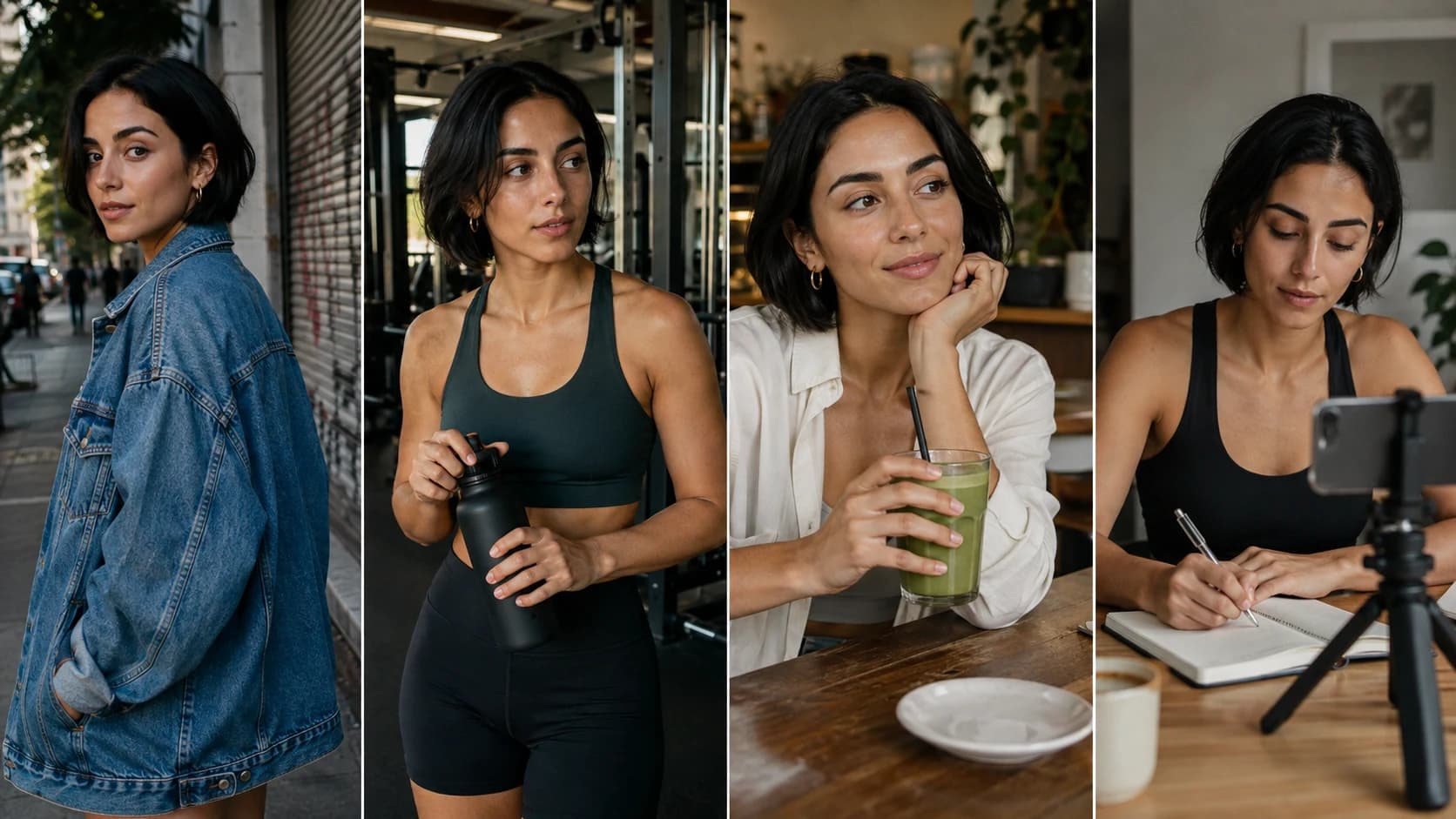
An AI influencer marketing platform should help users generate photos and videos that preserve the character’s identity across different scenes and creative directions. For example, the same AI influencer might appear in studio product shots, outdoor lifestyle content, short-form video concepts, seasonal visuals, or promotional campaign scenes.
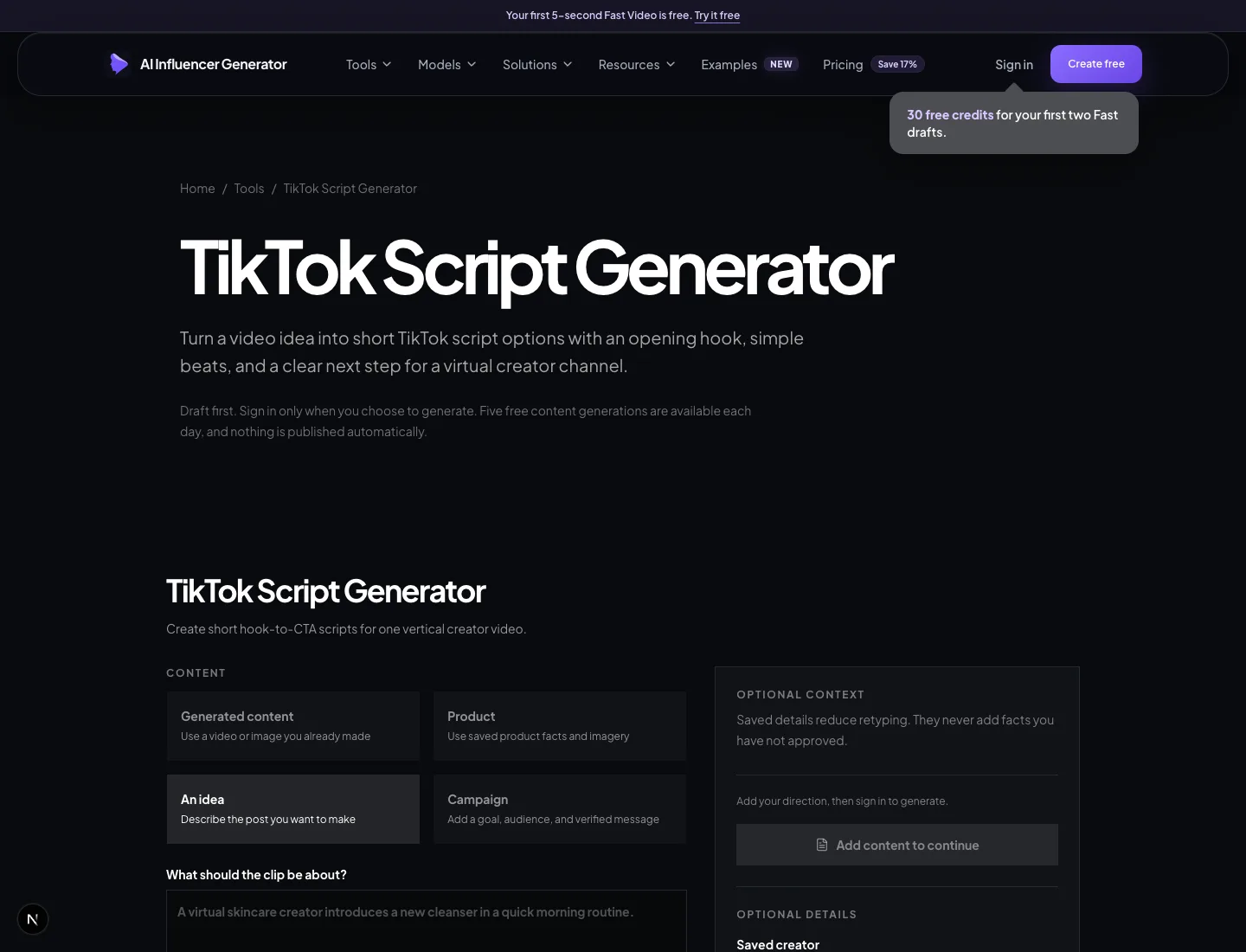
This is where scalability becomes useful. Instead of building every asset from zero, teams can create variations around a stable persona. The AI Instagram post generator supports still-image ideas, while the AI influencer video generator handles character-led video drafts.
3. Shape assets into channel-specific posts
After generating assets, teams can shape them into campaign posts. That might include organic social content, paid creative, launch announcements, product education, email visuals, or website graphics. The best campaigns usually connect the visuals with clear messaging rather than letting the image do all the work.
Before publishing, review each asset for brand fit. The character should look consistent, the message should be clear, and the content should match the platform where it will appear. A short-form video concept may need a different structure than a carousel, and a paid ad may need a stronger call to action than an awareness post.
4. Publish and measure in the tools that own the data
Once content is live, performance tracking turns creative output into learning. Teams should review which visuals, formats, captions, offers, and character presentations generate the strongest response. AI Influencer Generator does not publish posts or provide campaign attribution; social platforms, ad dashboards, and dedicated analytics tools own that workflow.
An influencer analytics platform helps marketers evaluate content performance instead of relying on guesswork. Even when analytics are gathered from several external systems, the goal is the same: identify what worked, what underperformed, and what should change in the next round of creative.
Performance review should influence future generations. If polished studio images outperform casual scenes, that insight can guide the next campaign. If educational videos produce stronger engagement than product-only posts, the AI influencer’s role can shift toward explanation and storytelling.
Create a consistent AI influencer in StudioScale content without losing the character
One of the biggest challenges in marketing is not coming up with ideas. It is producing enough quality content to keep campaigns active while maintaining a consistent brand identity. AI influencers help solve that problem by giving teams a reusable creative subject.
With AIInfluencerGenerator.ai, the character can become a campaign anchor. Instead of treating every visual as a separate project, teams can build content around a defined persona. This makes it easier to create variations for different goals, such as awareness, product education, seasonal promotion, audience testing, or retargeting.
Consistency also helps audiences recognize the character. Recognition can support stronger storytelling because each new post adds to the same visual universe. Over time, the influencer becomes more than a single asset. It becomes a repeatable brand presence.
That does not mean every post should look identical. Strong AI influencer content still needs variety. The character can appear in different settings, formats, and moods while keeping core identity elements intact.
- Product-focused images that show the AI influencer using, wearing, or presenting an item.
- Lifestyle scenes that place the character in relatable environments.
- Short videos that introduce offers, explain benefits, or tell a quick story.
- Behind-the-scenes-style posts that make the character feel more active and dimensional.
- Campaign variations that test different hooks, visuals, and calls to action.
The cross-platform strategy guide explains how to assign those assets different jobs instead of reposting the same creative everywhere.
Use an influencer analytics workflow to guide the next batch
Analytics matters because AI influencer campaigns should improve with every publishing cycle. Creative teams can generate many assets, but without performance data, they cannot easily tell which character poses, messages, formats, or visual styles are actually helping the campaign.
An influencer analytics platform gives structure to that learning process. It helps teams look beyond surface-level output and focus on audience behavior. Are people stopping to watch? Are they clicking? Are they saving the post? Are they responding to the character, the product, the message, or the format?
- Which character style or setting earns the most engagement?
- Do audiences respond better to product-led content or story-led content?
- Which videos hold attention longer?
- Which campaign visuals produce stronger click-through or conversion intent?
- Which posts feel aligned with the brand but still generate fresh interest?
The answers help teams refine both the influencer and the campaign strategy. A virtual influencer should evolve based on what audiences actually respond to, while still staying true to its defined identity. The AI influencer management guide maps creation and measurement to their correct owners.
Human direction remains part of the platform
AI can help generate characters and content, but strategy still comes from people. The best results happen when marketers give the platform a clear direction, review outputs carefully, and connect creative assets to real campaign goals.
That means teams should define the audience before defining the avatar. A character built for Gen Z fashion content may need a different visual language than one created for business education or luxury travel. The audience should influence the character’s styling, content themes, tone, and publishing rhythm.
Teams should also set boundaries. Decide what the AI influencer will and will not represent. Create guidelines for product claims, personality, visual style, and campaign topics. This keeps the character useful for marketing without becoming inconsistent or confusing.
- The AI influencer has a clear niche and purpose.
- The visual identity is consistent across sample assets.
- The tone matches the brand and audience.
- Campaign content includes a clear message or action.
- Generated photos and videos are reviewed before publishing.
- Performance metrics are tracked in the relevant external tools after launch.
- Insights are used to improve the next content batch.
This balance of AI production and human direction is what makes virtual influencer marketing practical. The platform accelerates creation, but the team still guides meaning, positioning, and quality. When a synthetic character endorses a product or has a material brand connection, follow the FTC’s disclosure guidance for social media influencers and make the disclosure hard to miss.
Where AI Influencer Generator fits
AIInfluencerGenerator.ai is built for marketers and creators who want a focused way to create AI influencer characters and produce content around them. Rather than treating AI visuals as random experiments, AI Influencer Generator helps position the character as a repeatable asset for campaigns.
That is especially valuable for teams that need visual variety without losing identity. A creator can develop a recognizable digital personality. A brand can build campaign content around a virtual ambassador. A marketing team can generate creative directions, review external performance data, and use those insights to shape future assets.
The platform fits naturally into a broader marketing stack. It supports the creative side of influencer campaigns, while social platforms, analytics tools, and campaign dashboards support distribution and measurement. Together, that workflow connects imagination with performance.
For teams exploring an AI influencer marketing platform, the key is to choose a solution that makes character consistency and campaign content central. AI Influencer Generator is positioned as the production platform for creating scalable AI influencer characters and turning those characters into usable marketing assets.
AI influencers are changing how teams think about content production, brand storytelling, and campaign testing. They give brands and creators a way to build consistent virtual personalities and generate related photos and videos at scale, while publishing and evaluation stay in the external systems built for those jobs.
The opportunity is not to replace strategy, creativity, or audience understanding. The opportunity is to give those things a faster, more flexible production system.
Create a consistent AI influencer in StudioFrequently asked questions
What is an AI influencer marketing platform?
An AI influencer marketing platform helps users define a virtual creator, produce consistent character-led images or videos, and turn those assets into a repeatable marketing workflow. Publishing, audience management, and performance measurement may still happen in separate social, advertising, and analytics tools.
What can AI Influencer Generator do today?
AI Influencer Generator supports fictional adult character creation and character-led image and short-video production. A human operator reviews the assets, publishes them through external channels, and measures results in the relevant social, advertising, or analytics platform.
How do you keep an AI influencer consistent?
Define stable identity traits, niche, voice, wardrobe direction, and content boundaries before producing a campaign. Reuse the approved character, change one creative variable at a time, and review the face, hands, styling, products, setting, and message before publishing.
Does AI Influencer Generator publish posts or track campaign analytics?
No. AI Influencer Generator focuses on character and creative asset production. Social platforms, ad managers, campaign tools, and analytics products remain responsible for scheduling, publishing, engagement data, attribution, and reporting.
Plan Content
Measure Engagement
Build Your Profile
Price Your Work
Write Post Copy
Brand Partnerships