
- Choose a portfolio-led one-page kit or a two-page partnership kit with verified analytics.
- Separate intended audience, measured performance and proposed terms.
- Price production, distribution and paid usage separately.
- Disclose the virtual identity and keep the human contact visible.
Where Can You Download a Free AI Influencer Media Kit Template?
Download either template as a real PDF or editable, self-contained HTML. Each includes a blank version and a filled fictional example. No email signup is required. Open the HTML editor, replace text and photos, save the edited file, then use Print / Save as PDF.
Template A: One-Page AI Influencer Media Kit
For a new character or production-led creator. Lead with positioning, relevant work and a defined offer; an established following is not required.
Template B: Two-Page Brand Partnership Media Kit
For creators ready to document real accounts. Page one introduces identity and work; page two holds reporting, packages and permissions.
Absent evidence says Not Yet Available. The fashion sample demonstrates the structure for an established account without inventing that account. Replace missing fields with verified data only when you have it.
The HTML works offline with embedded images and system fonts. Copy individual fields or all fields, replace photos locally and save changes. Ready-made PDFs do not change when you edit HTML: print your edited document to create a new PDF.
Long edits can exceed the intended size. The print control checks overflow and asks you to shorten content rather than silently cutting it. Inspect the final PDF before sharing.
What Should an AI Influencer Media Kit Include?
A buyer should understand who the character is, what evidence exists and what it could buy. Keep the kit scannable, with one clear statement for each decision.
Character identity
Name, adult fictional identity, visual signatures and who operates the account. Keep the creator and the responsible business distinct.
Niche
A specific creative territory and point of view. Explain what this character makes useful or memorable.
Audience
Separate intended audience from measured demographics. Show actual location, age or interests only when supported by analytics.
Platforms
Clickable public account or portfolio URLs, account status and relevant formats. A platform logo alone is not evidence of an active account.
Real performance metrics
Platform, reporting dates, sample size and formula alongside native counts. Missing numbers are Not Yet Available, never invented.
Content portfolio
Three to six relevant, reviewed examples. Label speculative work as concepts and link a video rather than pretending a still proves motion quality.
Brand fit
Describe the category, audience problem and creative treatment you could serve. Hypothetical fit does not mean an existing relationship.
Collaboration packages
State deliverables, quantity, aspect ratio, clip length where agreed, review stages and whether account publishing is included.
Rates
Your proposed fee or Quote on request. Identify currency, included scope and validity; keep a detailed rate card separate.
Usage rights
Define channels, territory, duration, organic versus paid use, editing permissions, exclusivity and source-file access in writing.
AI disclosure
Explain the fictional presenter, AI-assisted production and human review. Add separate advertising disclosure when a material brand relationship exists.
Contact
A monitored business contact and responsible operator, with a clear next step and reporting or document update date.
How should real metrics be presented?
Use native account analytics and a stated window. Followers are a snapshot; views, reach and interactions need their actual definitions. Do not sum post-level reach and call it unique monthly people, or combine platforms into one unexplained engagement rate.
For Instagram engagement by reach, name the included actions and formula: for example, (likes + comments + saves + shares) ÷ reach × 100. Show the reporting period and post sample. An average of post rates differs from total interactions divided by total post reach; choose one method and name it. Missing reach makes the rate unknown.
Industry benchmarks provide context; they never become your results. Intended audience is positioning, not proof that those people already follow the character.
What Do Fashion, Lifestyle and Product UGC Media Kits Look Like?
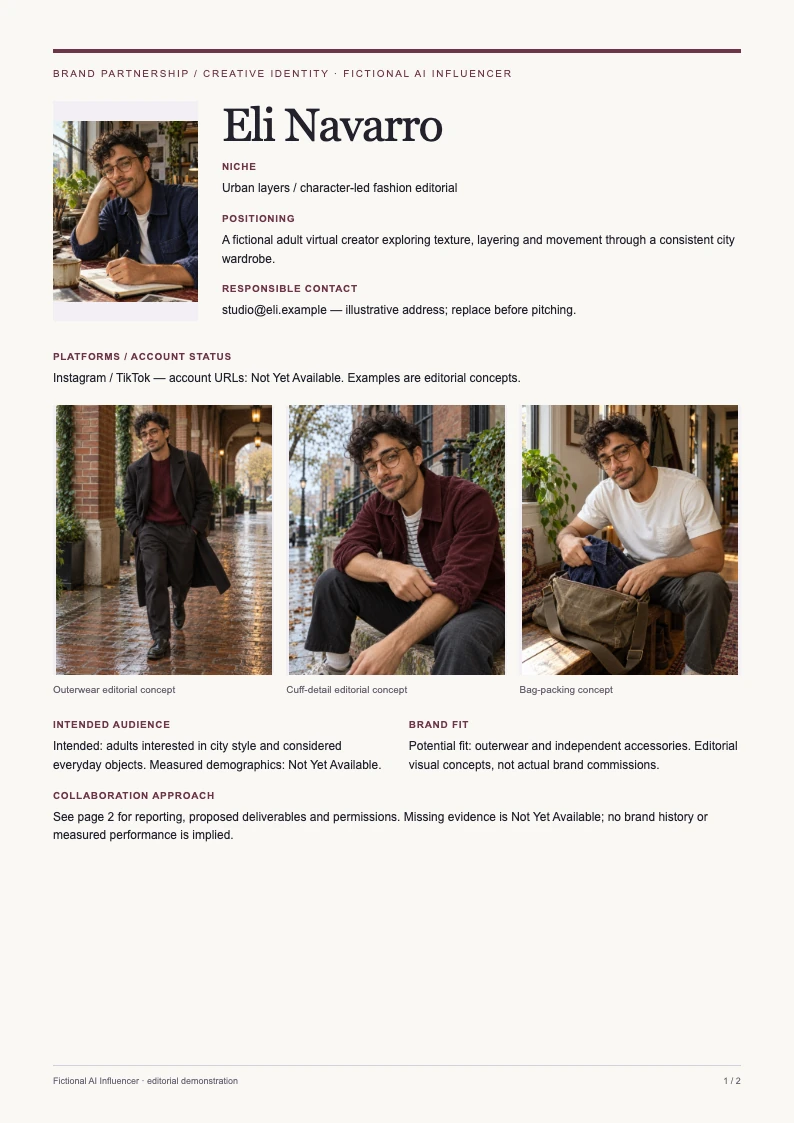
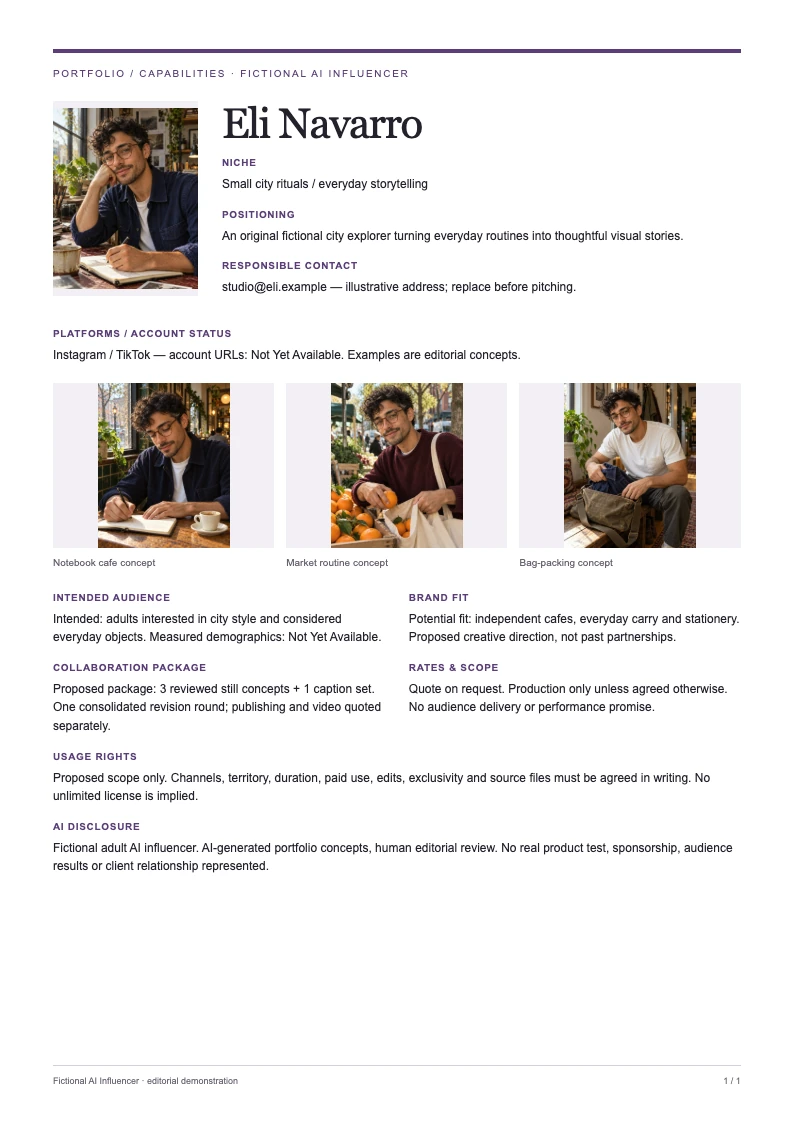
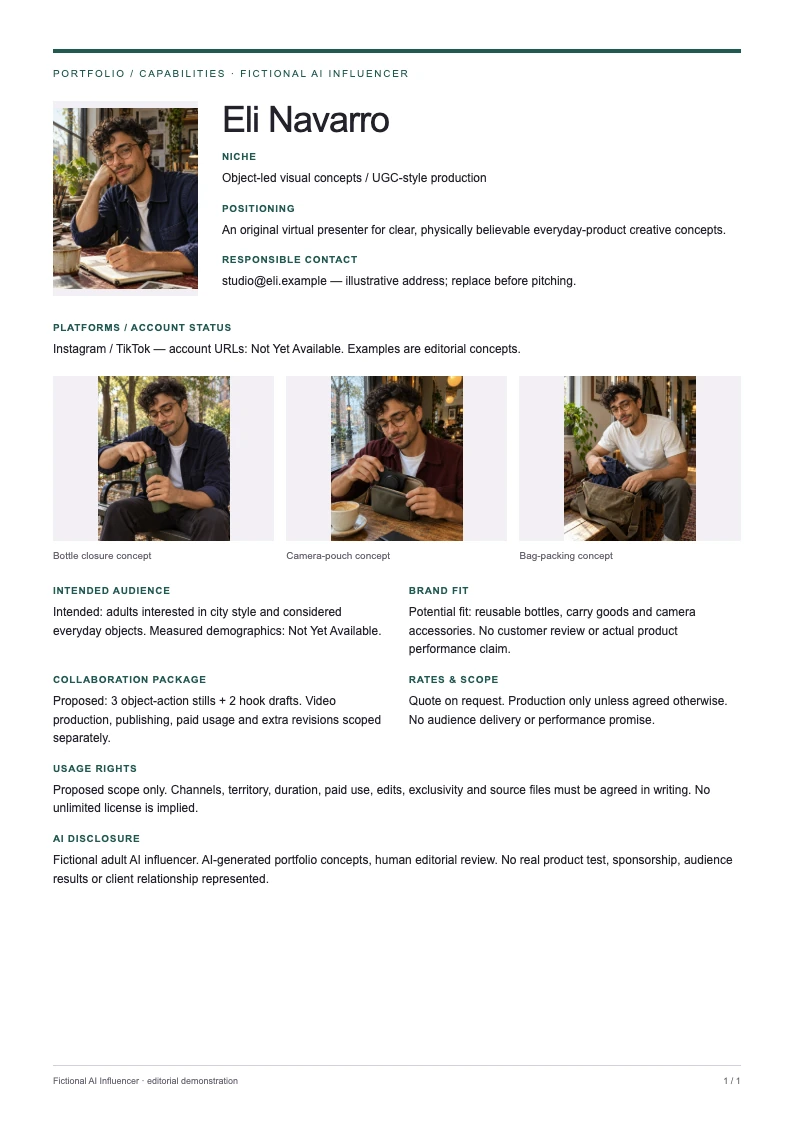
One fictional character can support different commercial presentations without changing identity. These three complete editorial examples use Eli’s consistent face and reviewed concepts. None claims followers, commissioned brands, revenue or campaign results.
Fashion: an editorial partnership document
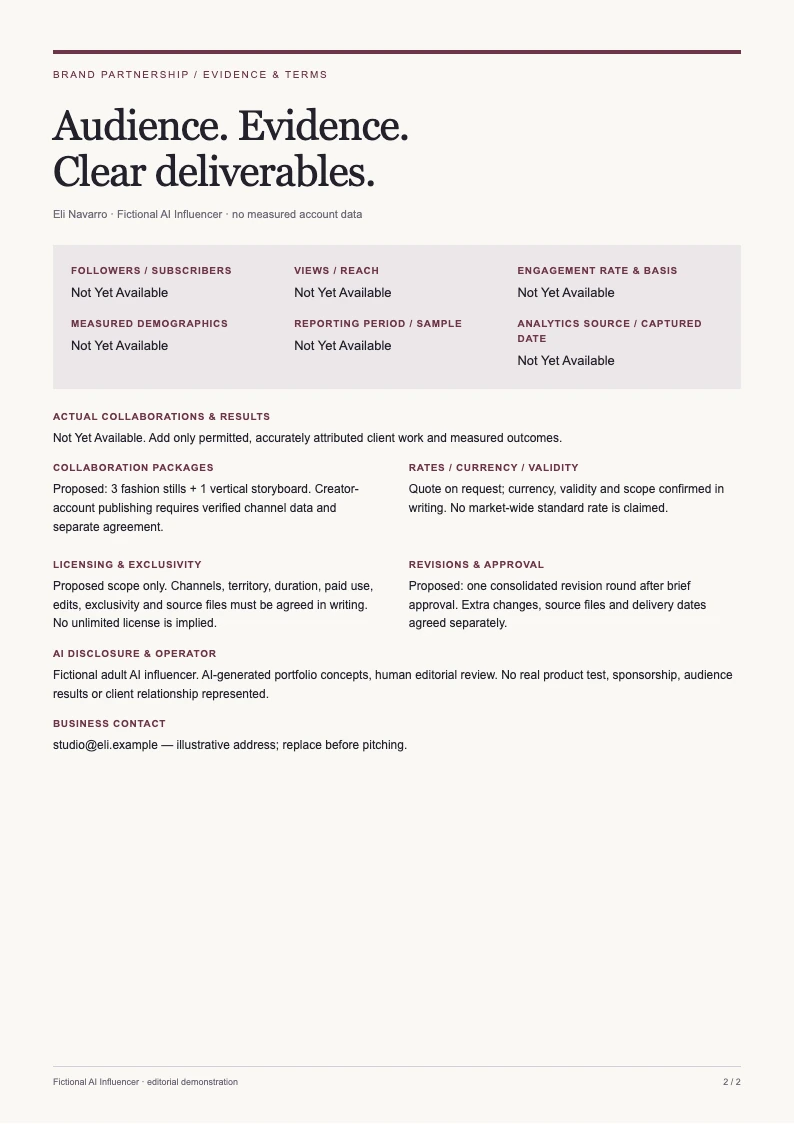
The fashion version emphasizes texture, layering and wardrobe coherence. Its separate evidence page keeps unknown reporting out of the visual story. A buyer can evaluate creative direction while requesting verified channel evidence before purchasing distribution.
Lifestyle: a concise creator introduction
The lifestyle version uses routine scenes and a compact offer. Intended audience is separated from measured demographics. It can introduce a specific creative proposal without pretending to be an established account.
Product UGC: production capability comes first
The UGC version shows object actions: closing a bottle, packing a camera and organizing a bag. It proposes creative deliverables rather than audience access. These synthetic concepts are not first-person reviews or evidence of product performance.
What Do Brands Value When Choosing Creators?
Fit and credibility matter alongside creative quality. IAB’s 2025 research explains why evidence and scope should be easy to evaluate. It covers U.S. creator advertising overall, not a dedicated AI influencer market or your earning potential.
U.S. Creator Advertising Spend
USD billions · historical estimates and projections published November 2025 · scale $0–50B
A growing category does not set an individual creator’s fee. Describe a relevant offer, identify the available evidence and make the buyer’s evaluation easier.
What Brands Value When Choosing Creators
Share rating each criterion “very important” · U.S. creator ad buyers · scale 0–100%
Main Goals of Creator Campaigns
Share selecting each as a top-three goal · U.S. creator ad buyers · scale 0–50%
of surveyed advertisers had concerns about AI in creator marketing overall. Transparency belongs in the commercial conversation.
IAB report, page 31, and official release. Survey n=453, July 28–August 12, 2025. Concern does not mean rejecting all virtual creators; the study does not establish that disclosure alone increases deal conversion.The survey recruited agency or brand decision-makers planning at least $1M in advertising and $100K in creator marketing in 2025. It does not represent every small business. Market estimates also use company financial information and Advertiser Perceptions research; they are not merely an average of respondent budgets.
How Do You Create Your Media Kit Step by Step?
Create and review the assets first, then assemble the document around truthful evidence. AI Influencer Generator provides identity and production workflows; the kit organizes what a brand needs to know.
Define an original adult persona
Start in Characters. Choose a niche, intended audience, visual signatures and tone. Our AI influencer persona guide covers those decisions. A recognizable character needs a point of view, not just a polished face.
Prepare profile assets with Creator Kit
For a saved character, open Content Strategy → Creator Kit. This existing feature prepares Instagram/TikTok profile assets and copy, including avatars, covers and bios. Review controls and credit quotes before generating. Creator Kit is a profile-asset workflow, not a brand-facing media kit.
Build a focused image portfolio
Use AI Photo Generator for character scenes. Use AI Product Image Generator with an authorized product reference. Preserve shape, label, grip, light and contact. A misleading product scene is weaker evidence than a clear creator-only concept.
Add motion only when you can show the result
Create UGC-style concepts in the existing AI Video workflow for a suitable brief. Review output, audio rights and plan requirements. Link an actual permitted clip; a storyboard still cannot prove video quality.
Align the offer with your content strategy
Use Content Strategy to organize coherent themes. Choose three to six relevant examples rather than every generation. Label speculative work, explain your contribution and remove pieces that imply an unearned partnership.
Assemble, check and export
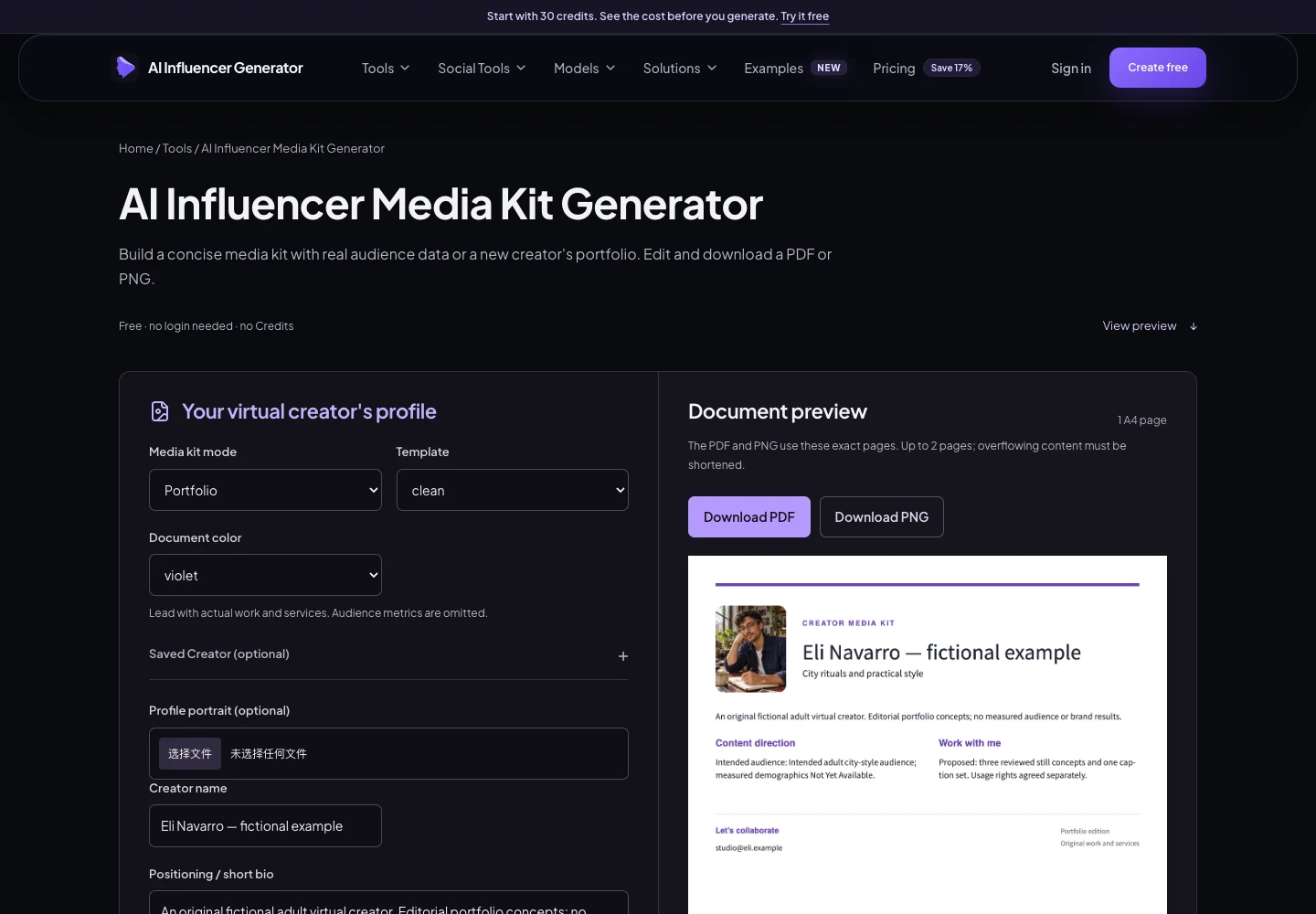
Open the existing AI Influencer Media Kit Generator: Portfolio mode for capability, Audience mode for actual reporting. Add your portrait and work, then use PDF/PNG export. Or edit the standalone templates above. Inspect every page and test public links before pitching.
| Document / feature | Purpose | What it does not prove |
|---|---|---|
| Media kit | Identity, evidence, relevant work and collaboration offer. | A guaranteed audience, contract or outcome. |
| Rate card | Your proposed deliverables, fees and permissions. | A universal rate or account valuation. |
| Creator Kit | Profile assets and copy for a saved character. | A partnership document or campaign history. |
Build recognizable assets, review them, then package your strongest work for a relevant brief.
How Much Should an AI Influencer Charge?
Quote work and permissions separately; there is no single industry-wide AI influencer price. A production-led creator can sell asset creation without audience access. A sponsored post also includes publishing on a real channel, which needs credible reporting.
| Quote line | Define before pricing |
|---|---|
| Production | Assets, scripts, hooks, duration, editing, model costs, review and delivery format. |
| Account publishing | Actual channel, posting commitment, availability and reporting. |
| Usage license | Organic/paid channels, time, territory, adaptations and advertiser permissions. |
| Extra work | Revision rounds, regeneration, new hooks, source files and rush delivery. |
| Exclusivity | Restricted category, duration and opportunities you would give up. |
Use Influencer Rate Card Generator to organize your own fees. Keep currency, inclusions and validity visible. The examples use Quote on request because their fictional creator has no verified commercial record; supplier API cost is not a customer-facing creative fee.
The media kit summarizes an offer; the rate card carries detailed line items. Confirm terms in writing, including product-reference rights and whether the brand permits synthetic presenters. Read how AI influencers make money for business-model context.
How Do You Pitch a Brand With Your Media Kit?
Send a short, specific proposal explaining relevance and requesting a conversation. Verify one brand detail, choose a useful deliverable and attach a readable, current PDF or public link. Do not imply that a virtual character personally used a product.
Subject: A visual concept for [Brand] × [Creator name] Hi [Name], I’m [Operator], the human creator behind [Creator name], an original fictional AI influencer focused on [niche]. I noticed [specific, verified brand detail] and have a concept for [clear deliverable and audience value]. My media kit is attached: [link]. The portfolio pieces are [concepts / accurately described commissioned work]; audience data is [verified reporting period / not yet available]. Would a short discussion about the brief, budget and usage rights be useful? Best, [Name / monitored business contact]
Replace every bracketed field and illustrative contact address before sending. Without audience data, pitch production capability directly. Establish fit and scope rather than promising sales or virality.
Which Media Kit Mistakes Should You Avoid?
Do not let visual polish conceal missing evidence. Avoid fake logos, invented testimonials, unrelated analytics, guaranteed conversions and undisclosed speculative work. Separate concepts from completed client assignments, and obtain permission before sharing confidential work.
Keep type readable, links public and contacts current. Refresh the reporting window when replacing metrics. If an export needs more than two pages, shorten it or link extended work instead of shrinking everything.
Identify the virtual creator and follow destination-specific synthetic-media rules. Material commercial relationships need separate advertising disclosure; see FTC guidance for U.S.-facing endorsements. Disclosure cannot validate fabricated experience or unsupported claims. Review legal rules for AI influencer content before a commercial release.
Frequently Asked Questions
Can I make an AI influencer media kit without followers?
Yes. Use the one-page portfolio template to show identity, relevant creative work, services, rights and contact. Label your intended audience as intended. Do not invent followers or imply that speculative work was commissioned.
What should I enter when I have no performance data?
Use Not Yet Available. In a live document, omit an irrelevant metric or explain that the account is new. Never substitute industry benchmarks, a target or another creator’s analytics for your own results.
How many pages should a media kit be?
One focused page is useful for a new portfolio-led creator. Two pages allow an established account to show verified audience reporting and commercial scope. Link to extended work instead of shrinking every detail into unreadable type.
How often should I update it?
Refresh after a reporting period, a material portfolio change or a change to availability, contact or rates. Date the metrics and version the document; check links before each pitch.
Must I disclose that the influencer is AI-generated?
Make the fictional identity and responsible operator clear. Follow each destination’s synthetic-media rules and add separate appropriate advertising disclosure for material brand relationships. Do not imply real personal product use.
Can I edit and download these templates for free?
Yes. Download the editable standalone HTML, replace the fields and images, save the edited HTML and print to PDF. The prebuilt blank and example PDFs are also real downloads. Studio asset generation has separate access and credit costs.
Does a media kit guarantee a brand deal?
No. It helps a buyer evaluate fit, evidence and scope. A brand may still require human review, rights checks, specific creative standards, genuine audience data or restrictions on synthetic presenters.
Use the existing builder, or edit the free templates around your strongest original work.
Sources and Editorial Method
Researched October 18, 2026. Figures were checked against the original PDF. Market estimates, survey attitudes and editorial recommendations are distinguished. No creator earnings or client results were invented.
- IAB 2025 Creator Economy Ad Spend & Strategy Report, November 20, 2025: market estimates; page 13 criteria; page 22 goals; page 31 AI concerns; page 41 methodology. Survey n=453, July 28–August 12, 2025.
- IAB overview and official release. The overview rounds spending figures; this guide uses the PDF’s $37.1B/$43.9B.
- Later: How to Make a Media Kit for Influencers, June 4, 2025, informed the checklist. Templates, fictional examples and portfolio images here are original.
- Influencer Engagement Rate Calculator for a stated metric basis; FTC disclosure guidance for commercial relationships.
Plan Content
Measure Engagement
Build Your Profile
Price Your Work
Write Post Copy
Brand Partnerships